Wehrpass vs Soldbuch: 9 Key Differences Every Collector Should Know
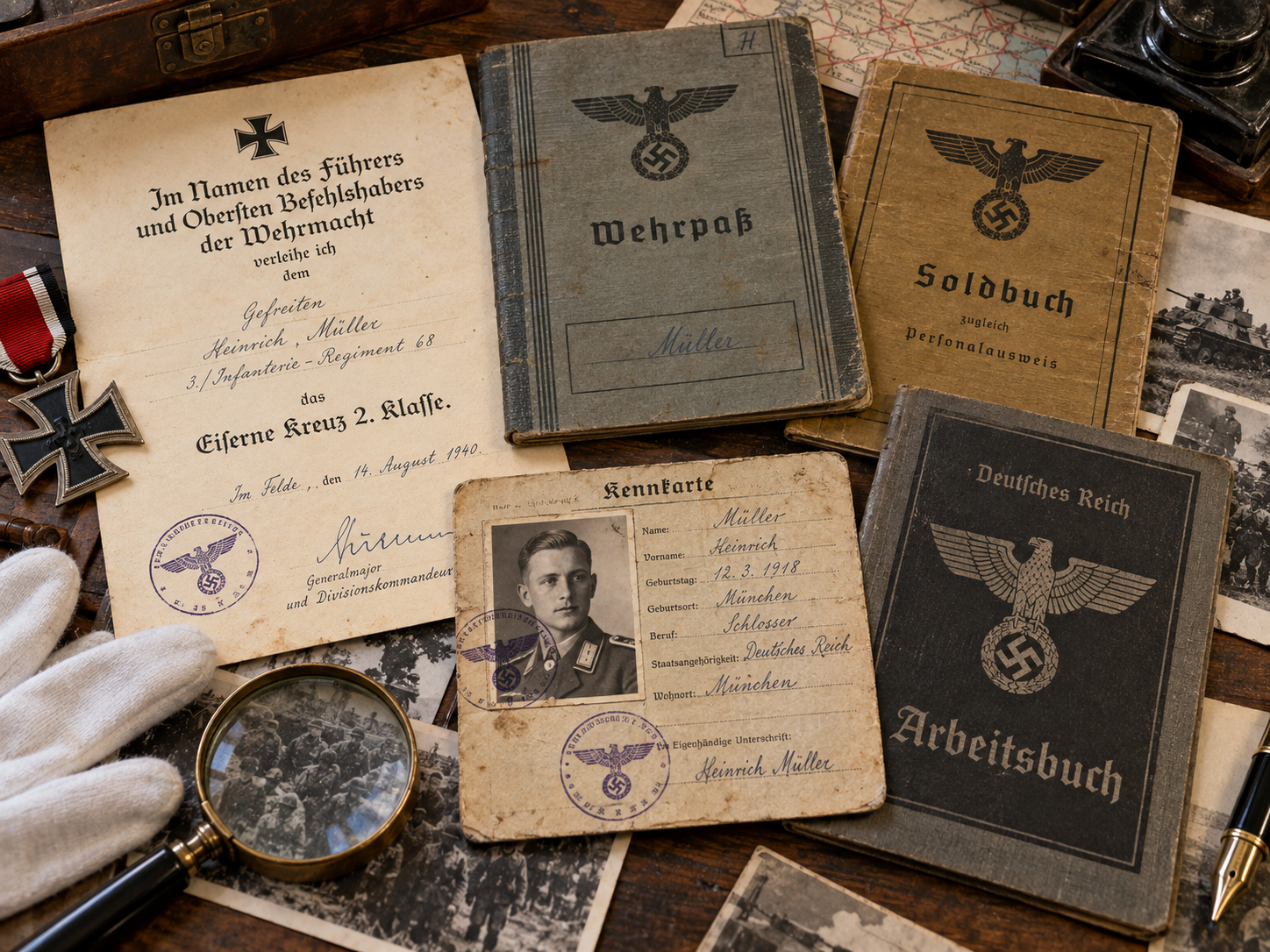
At first glance, the two booklets can look surprisingly similar. Both may contain a photograph, personal data, military units, promotions, decorations, medical information and official stamps. Both can reconstruct important parts of a serviceman’s career. And both are frequently encountered in collections of Second World War German documents.
But they were not interchangeable.
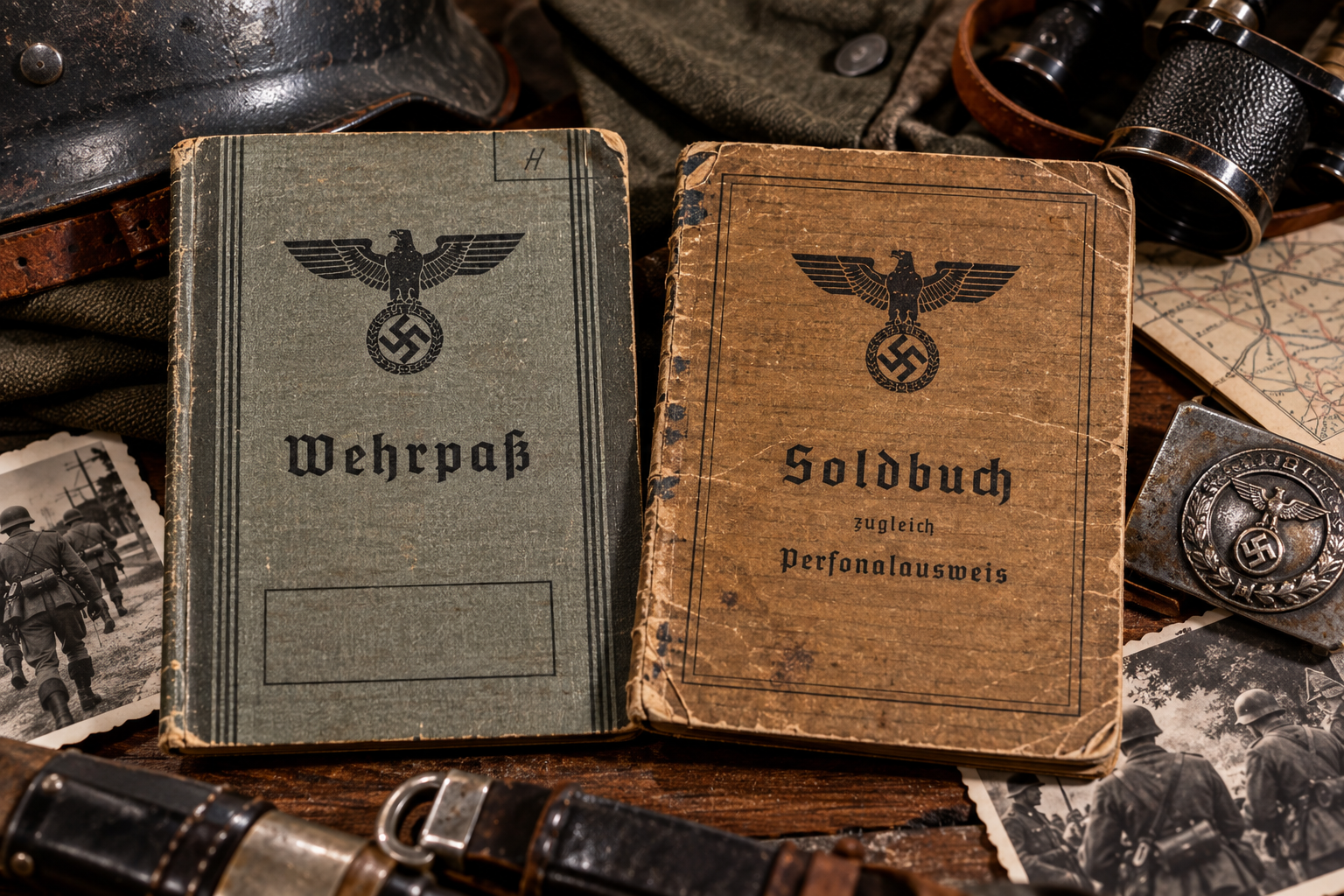
The Wehrpass was primarily a military service record. The Soldbuch functioned as the serviceman’s pay book and day-to-day military identification document. During active service, the Wehrpass was generally maintained within the military administrative system, while the Soldbuch normally remained with the serviceman.
That difference in purpose explains many of the differences collectors see today.
Wehrpass vs Soldbuch at a Glance
| Feature | Wehrpass | Soldbuch |
|---|---|---|
| Main purpose | Military service record | Pay book and military identification |
| Typical use | Administrative record of military status and career | Document carried during active service |
| Photograph | Common | Common |
| Unit information | Usually structured as part of service chronology | Often reconstructed from several entries |
| Promotions and awards | Often recorded | Often recorded |
| Pay information | Not its central purpose | Central function |
| Equipment / clothing | Limited | Frequently recorded |
| Medical information | May appear | Often particularly useful |
| Typical surviving wear | Frequently moderate | Often heavier |
| Collector strength | Career chronology | Day-to-day service detail |
The simplest collector’s distinction is:
The Wehrpass tells the military career. The Soldbuch travelled with the soldier.
That is simplified, but it is a useful starting point.
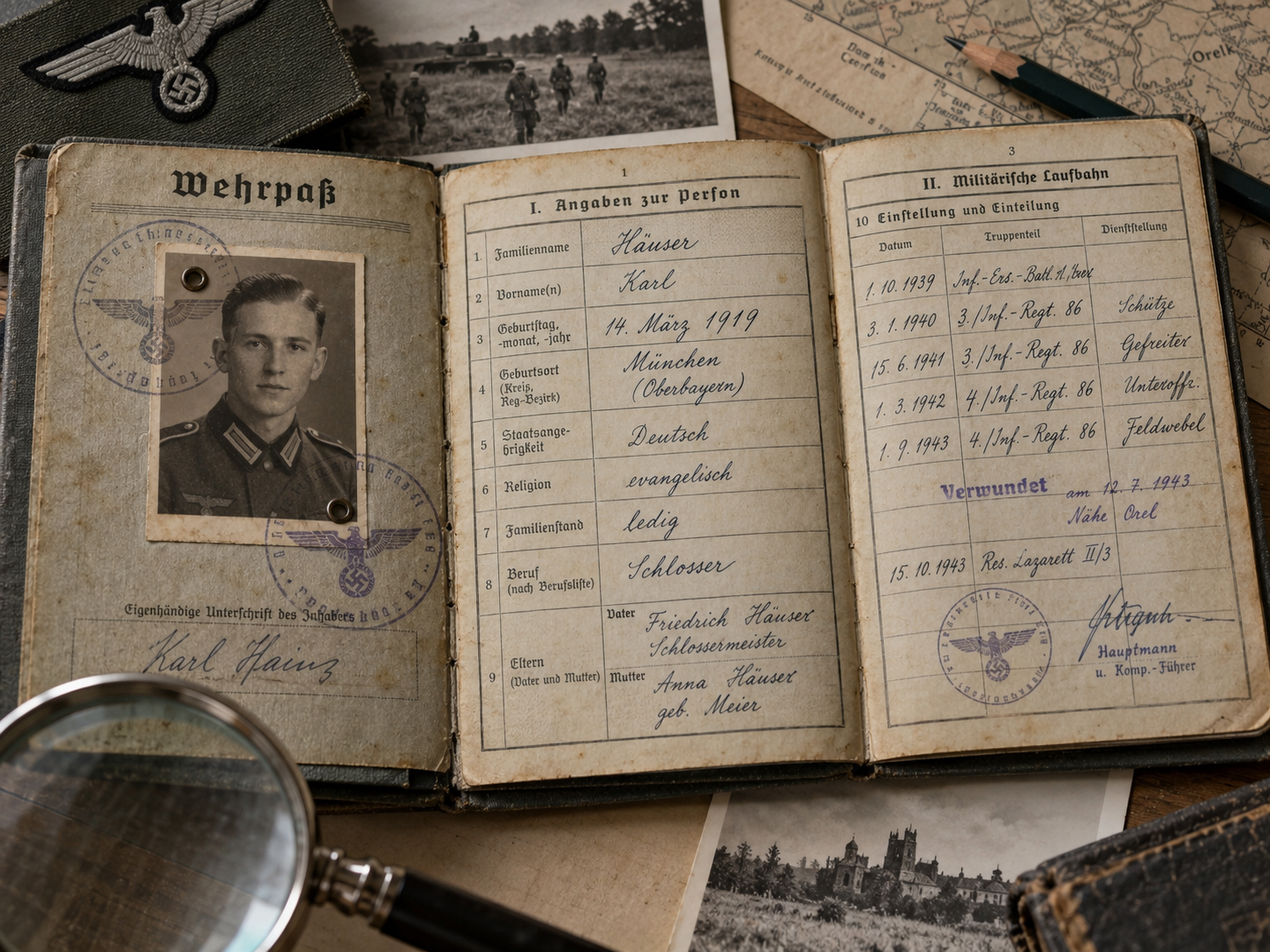
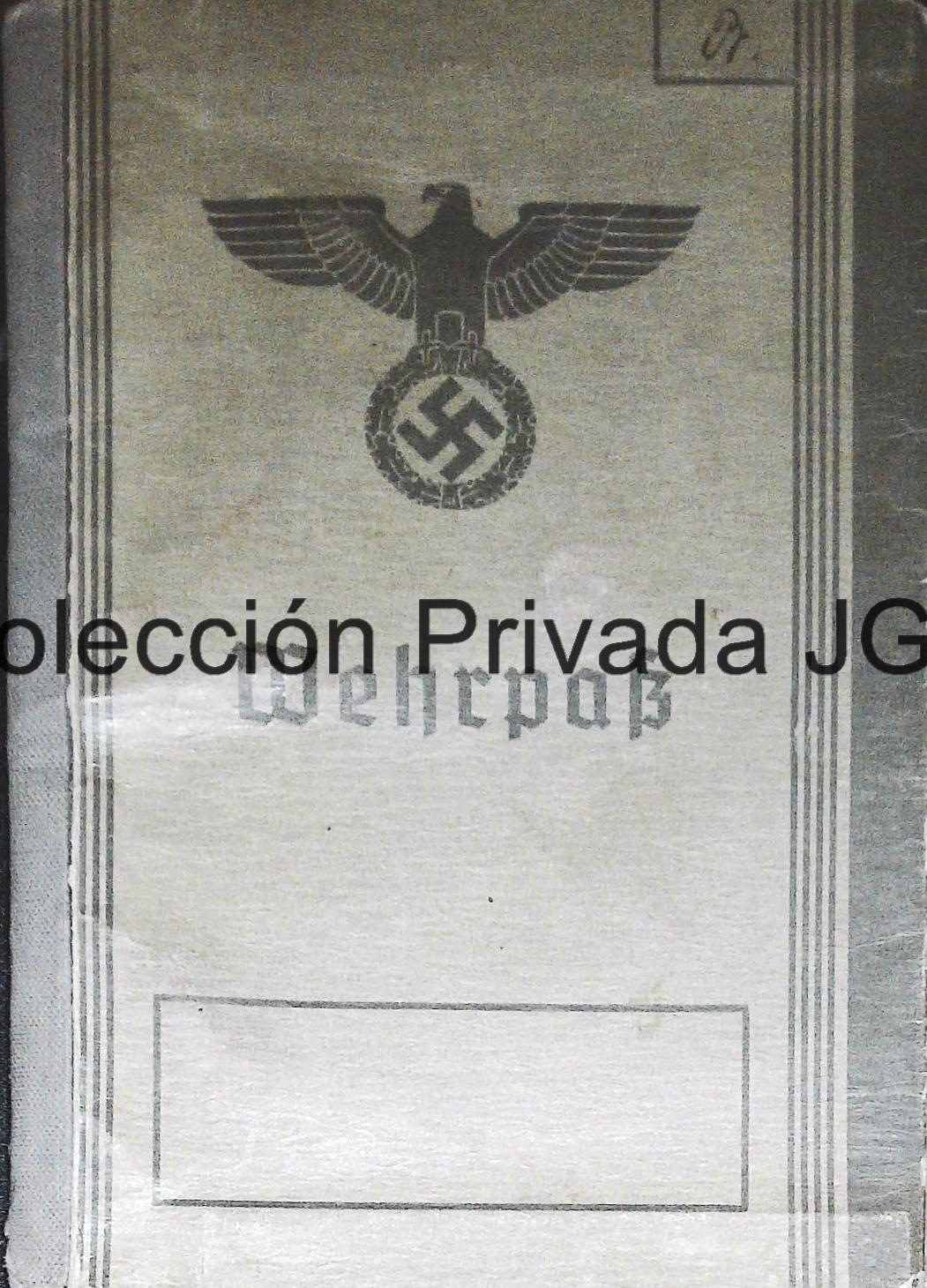
What Is a Wehrpass?
The Wehrpass was one of the principal personal military records used within the German system of conscription and military administration.
It could document personal information, military classification, training, unit assignments, promotions, decorations, campaigns, wounds and other aspects of a man’s military career.
Unlike the Soldbuch, the Wehrpass was not principally intended to function as the serviceman’s everyday identification document during active service. Once a man entered active service, the booklet was generally handled within the administrative system and updated as his career developed.
This is one reason why many surviving Wehrpässe appear relatively orderly even when the serviceman experienced years of active service.
For a collector, the strength of the Wehrpass is often chronology.
A well-completed example may allow the researcher to follow an individual from military registration through training, successive units, promotions, campaigns, decorations and eventual discharge, death or another change in military status.
This makes the Wehrpass particularly useful when the objective is to reconstruct a serviceman’s career rather than simply identify him.
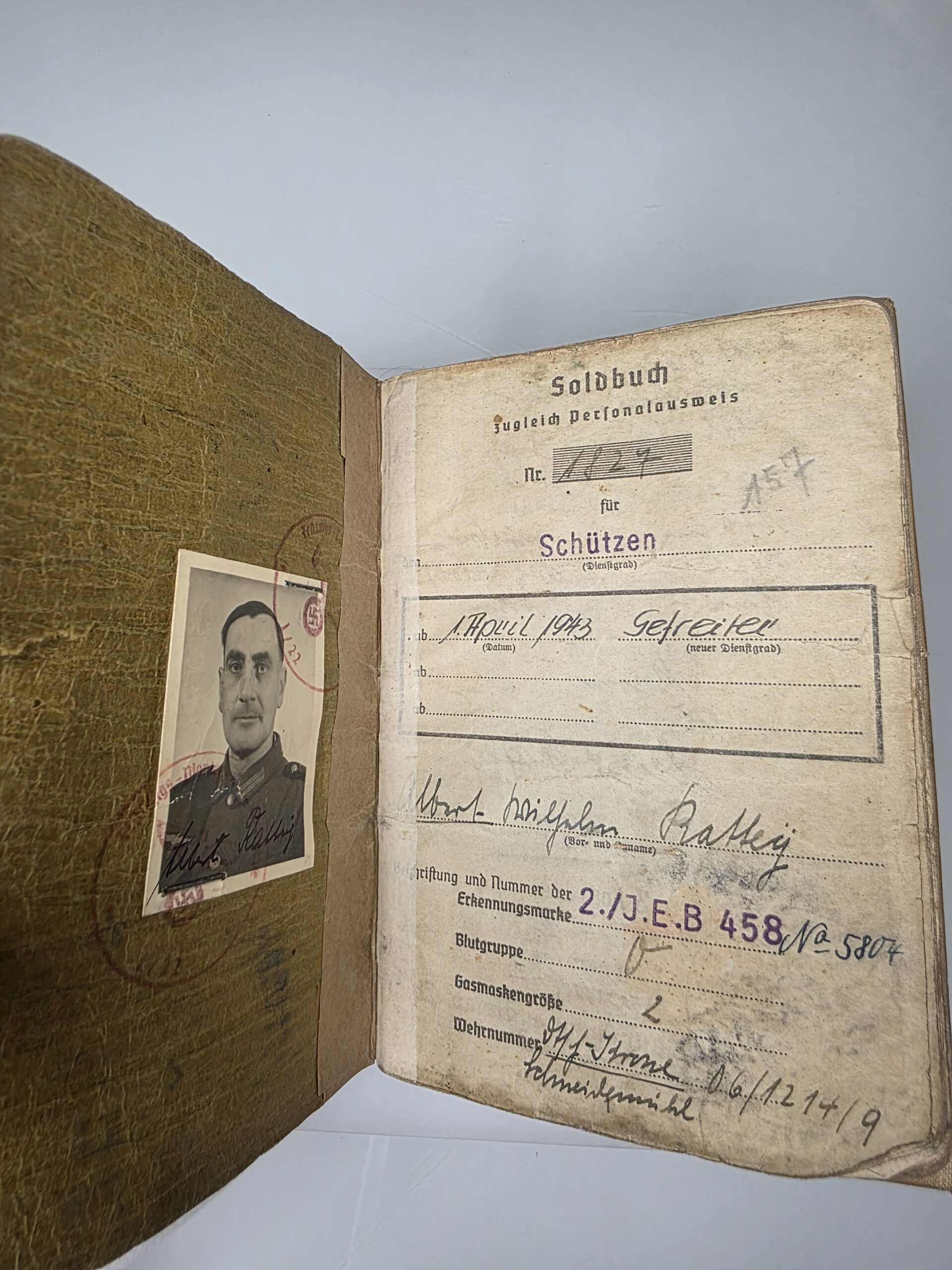
What Is a Soldbuch?
The Soldbuch had a more immediate practical role.
The information inside could include personal details, photograph, rank, unit references, pay-related entries, equipment, clothing, weapons, vaccinations, hospital stays, leave periods, promotions and decorations.
Because the document accompanied the serviceman, it became part of his daily military life.
That physical reality matters to collectors.
A Soldbuch may have been opened repeatedly by administrative clerks, pay offices, hospitals and military authorities. It might have travelled through barracks, trains, field positions and medical facilities.
Consequently, genuine wartime Soldbücher are often found with worn covers, softened edges, staining, repairs, annotations and other evidence of repeated handling.
Heavy wear does not make a Soldbuch authentic by itself, but appropriate use wear can form part of the overall assessment of the document.
1. They Had Different Jobs
The most important distinction in any Wehrpass vs Soldbuch comparison is purpose.
The Wehrpass recorded the broader military status and career of the individual.
The Soldbuch had to function in everyday military administration.
That is why the same soldier could be associated with both documents.
The overlap between them can initially be confusing. A collector may find the same rank, unit or decoration recorded in both.
This does not mean the documents were duplicates in the modern sense. Each served a different administrative purpose.
2. The Soldbuch Travelled With the Serviceman
From a collector’s point of view, this is one of the most important practical differences.
The Soldbuch normally remained with the serviceman.
The Wehrpass, during active service, was generally maintained through the military administrative system rather than being carried continuously in the field.
This difference helps explain why Soldbücher frequently display more handling wear.
It also changes the character of the document.
A Wehrpass can feel like a structured military record.
A Soldbuch can feel much more immediate. Entries were created as practical events happened: a hospital admission, equipment issue, promotion, leave period or another administrative transaction.
Neither is inherently more historically important. They simply preserve different types of evidence.
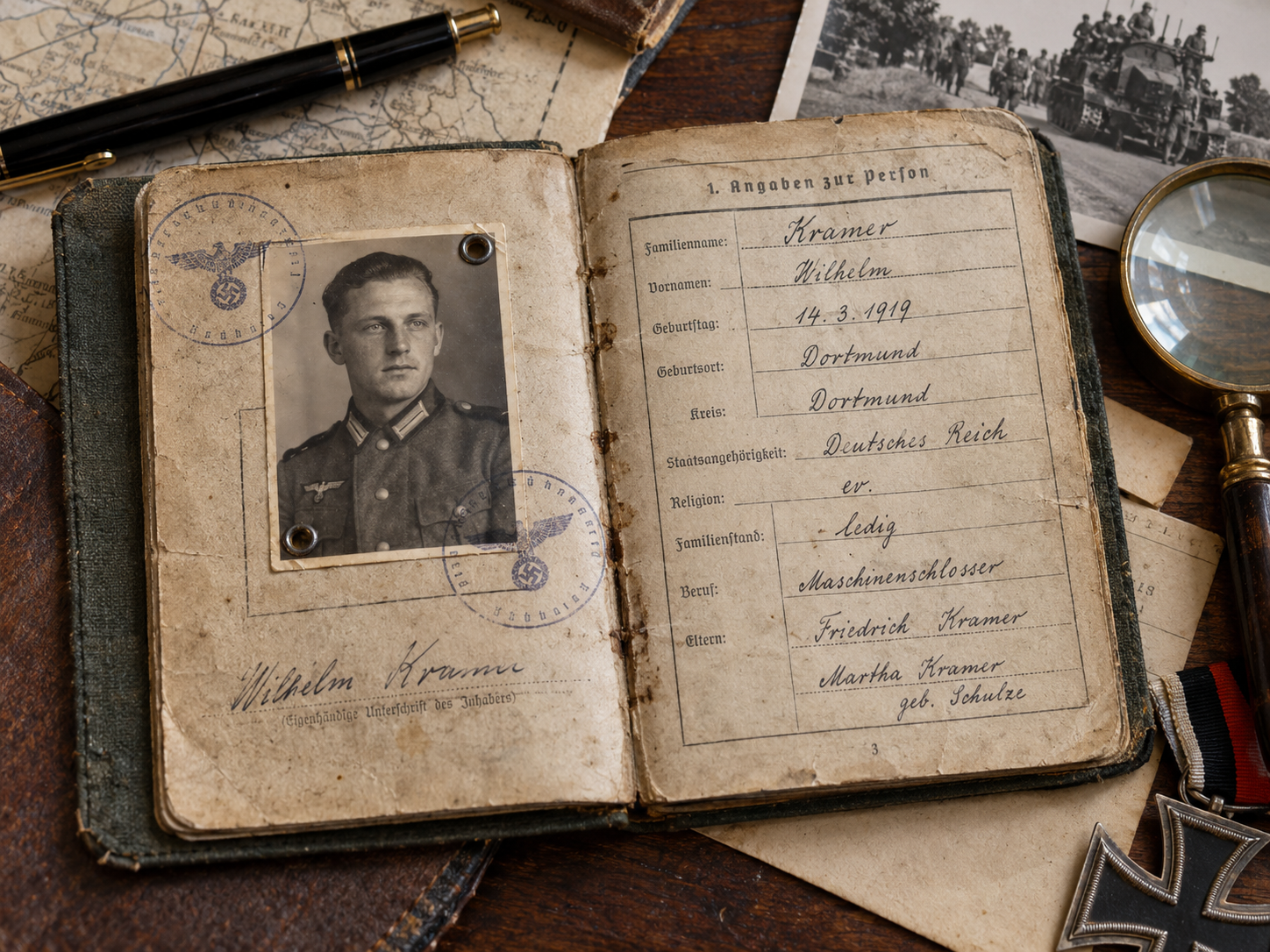
3. The Wehrpass Often Gives a Clearer Career Chronology
One of the first things I examine in a Wehrpass is the sequence of military units and dates.
A well-filled Wehrpass can provide an unusually clear framework for reconstructing a military career. Training units may be followed by field units, replacements, transfers, promotions and campaign entries.
The dates can then be compared with unit histories and archival records.
This is particularly useful when researching an individual who served in several formations.
A Soldbuch can also provide unit information, sometimes extensively, but the chronology may require more interpretation.
Researchers may need to compare unit stamps, dates of entries, pay information, medical entries and other annotations to reconstruct movements.
For this reason, I would generally describe the Wehrpass as the better career map, while the Soldbuch is often the richer day-to-day administrative record.
4. The Soldbuch Contains More Practical Service Information
A collector opening a Soldbuch often encounters details that would have mattered directly to the serviceman.
Pay, clothing, equipment, vaccinations, hospital treatment and leave can all appear.
These records can seem mundane compared with a campaign entry or decoration, but historically they can be extremely useful.
Military history is not only battles and awards.
A hospital entry may reveal when a serviceman temporarily disappeared from his unit. A clothing or equipment entry can help establish when the booklet was actively in use. A leave entry may provide a precise date when the soldier was away from the front.
A promotion may appear alongside administrative evidence showing how the change affected his status.
The Soldbuch therefore rewards careful page-by-page study.
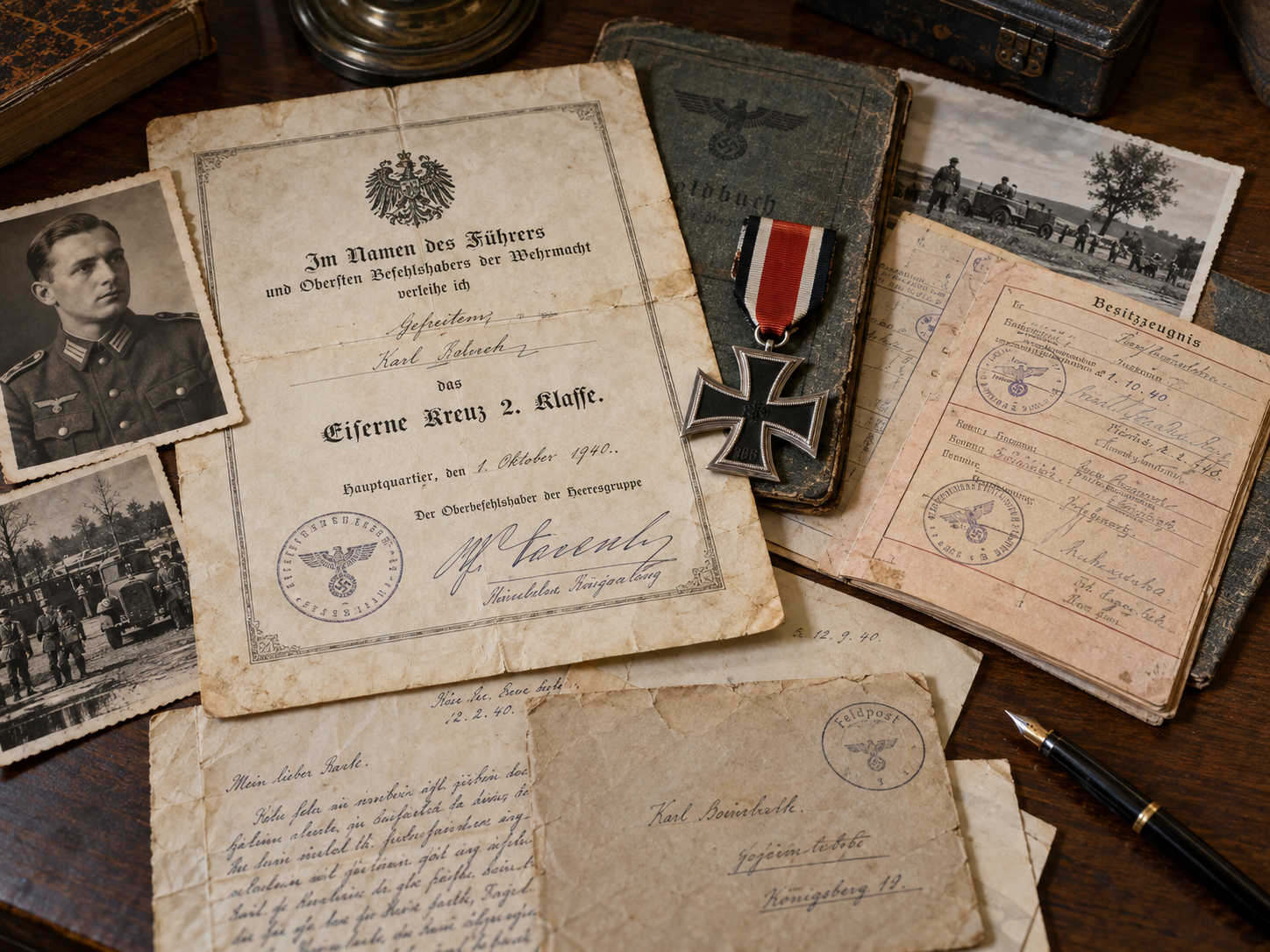
5. Photographs Can Tell a Different Story
Both documents may contain photographs, but collectors often notice a visual difference.
Photographs in Wehrpässe and Soldbücher vary according to when and under what circumstances the document was issued or updated. Civilian and uniformed portraits can both be encountered, so the photograph should always be assessed together with its stamps, attachment method, entries and chronology.
Soldbuch photographs commonly show the holder in military uniform.
This is a useful tendency rather than an absolute rule.
Photographs were replaced, documents were reissued and administrative circumstances varied.
A collector should never authenticate a booklet simply because the photograph appears to fit the expected pattern.
The photograph should instead be examined as part of the complete document: attachment method, stamps crossing the image, paper, ageing, handwriting, chronology and consistency with the rest of the entries.
6. Condition Should Be Interpreted Differently
Collectors sometimes expect every genuine wartime document to look heavily aged.
That is a mistake.
The expected condition depends partly on how the document was used.
A Soldbuch that accompanied a serviceman for several years may reasonably display pronounced handling.
A Wehrpass held within administrative custody may survive in much cleaner condition.
Conversely, neither a clean Soldbuch nor a worn Wehrpass should automatically be condemned.
Storage after the war can alter condition dramatically. Some documents spent decades in family drawers. Others were exposed to damp, adhesives, folding, sunlight or poor repairs.
Condition should therefore be judged in context, not against a simplistic rule that “old equals damaged”.
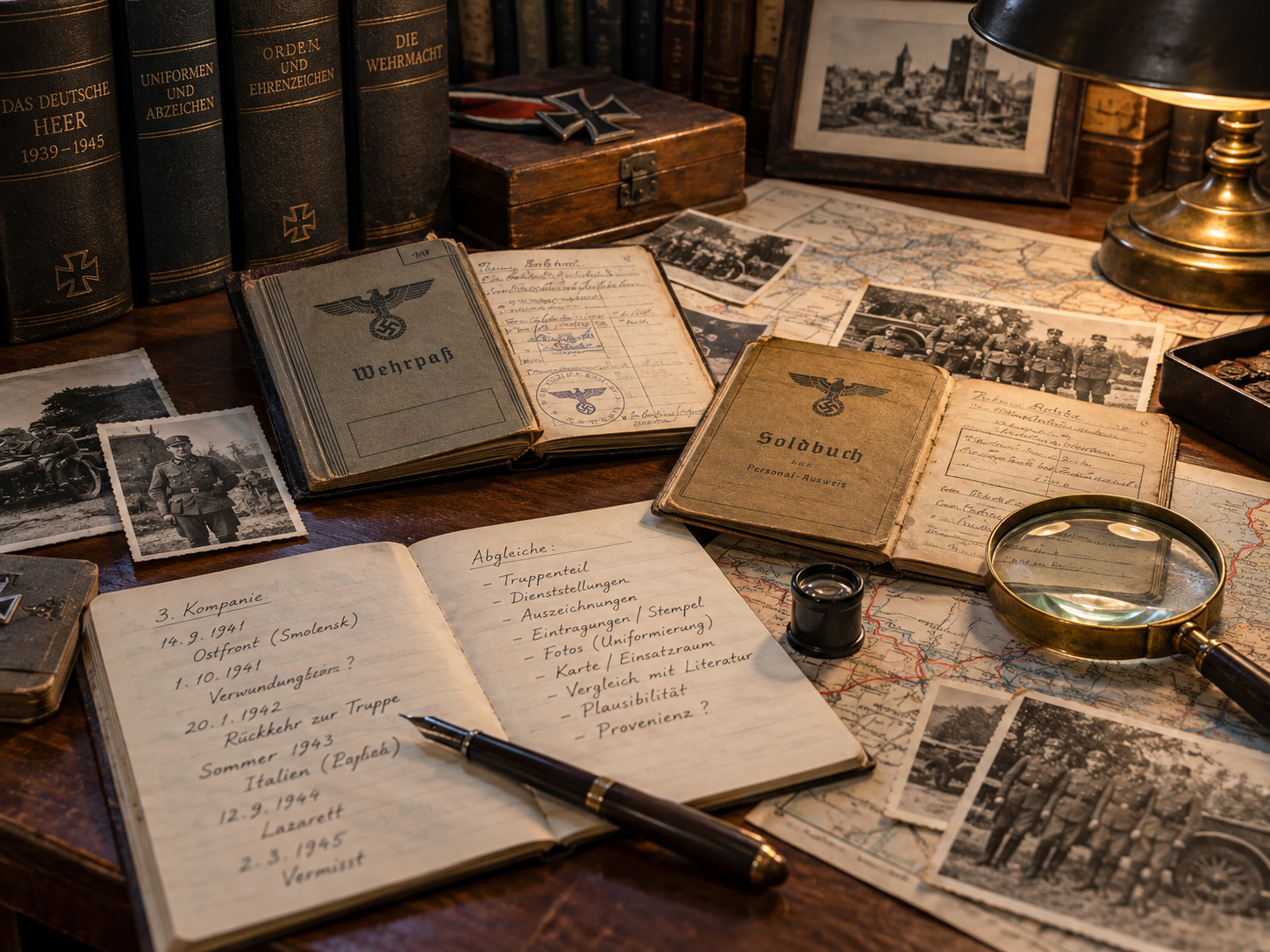
7. Awards May Appear in Both
Decorations are among the entries collectors search for first.
Awards such as the Iron Cross, War Merit Cross, Eastern Front Medal and various badges may appear in Wehrpässe and Soldbücher.
But the collector should study more than the name of the decoration.
Look at the date, handwriting, ink, stamp or signature, surrounding entries and whether the award makes sense within the serviceman’s known career.
A spectacular award entry that contradicts the unit chronology should create questions rather than excitement.
The strongest document is not necessarily the one with the most impressive entry.
It is the one whose information remains internally coherent.
8. Death and Casualty Information Can Be Particularly Important in a Wehrpass
Wehrpässe associated with servicemen who died during the war can contain significant later entries relating to death, military status or administrative closure of the record.
These documents become especially interesting when preserved with letters, photographs, death notices or other family material.
A single Wehrpass is a military record.
A Wehrpass preserved with the deceased serviceman’s correspondence and photographs can become a small personal archive.
From a collecting perspective, preserving those relationships is far more important than separating the group into individually saleable objects.
9. Their Research Value Is Different, Not Higher or Lower
Collectors sometimes ask which is “better”: Wehrpass or Soldbuch.
There is no universal answer.
For reconstructing the chronology of a military career, I often prefer a detailed Wehrpass.
For understanding the serviceman’s practical day-to-day administrative life, a well-used Soldbuch can be extraordinary.
The strongest research situation is when both documents survive for the same person.
Information can then be cross-checked between them.
A promotion in the Wehrpass may correspond with a later rank entry in the Soldbuch. A hospital stay may help explain a gap in active service. A decoration may appear in both records.
Unit information can be compared against dates, stamps and external archival evidence.
This is where collecting becomes historical research rather than simply ownership.
Can One Soldier Have Both a Wehrpass and Soldbuch?
Yes.
This is one of the most common misunderstandings among new collectors.
The Wehrpass and Soldbuch were not competing alternatives where a soldier received one or the other.
Their functions were different, so both could form part of the administrative record surrounding the same serviceman.
The fact that both survive together today can substantially improve research potential.
A matched pair provides overlapping evidence about one military career.
Add photographs, Feldpost letters, award documents, Arbeitsbuch records or family papers and the research value increases further.
What Should Collectors Look For in a Wehrpass?
When examining a Wehrpass, I usually begin with the holder rather than the cover.
The name, date of birth, photograph and issuing authority establish the basic identity.
Then I move through the military chronology.
Unit entries, dates, training, promotions, awards, wounds and campaign information should form a plausible sequence.
The document should be read as a whole.
One unusual stamp does not prove authenticity.
One strange entry does not prove forgery.
Wartime bureaucracy was produced by thousands of clerks and military offices, and genuine documents can contain corrections, different inks, amended entries and administrative inconsistencies.
The question is whether the complete document makes historical and material sense.
What Should Collectors Look For in a Soldbuch?
With a Soldbuch, I pay particular attention to signs of continued use.
The photograph and opening pages establish identity, but the later administrative entries often contain the real story.
Ranks, units, medical treatment, equipment, pay-related information, leave and decorations should be compared chronologically.
Stamps matter, but they should never be studied in isolation.
A convincing stamp on an otherwise inconsistent document proves very little.
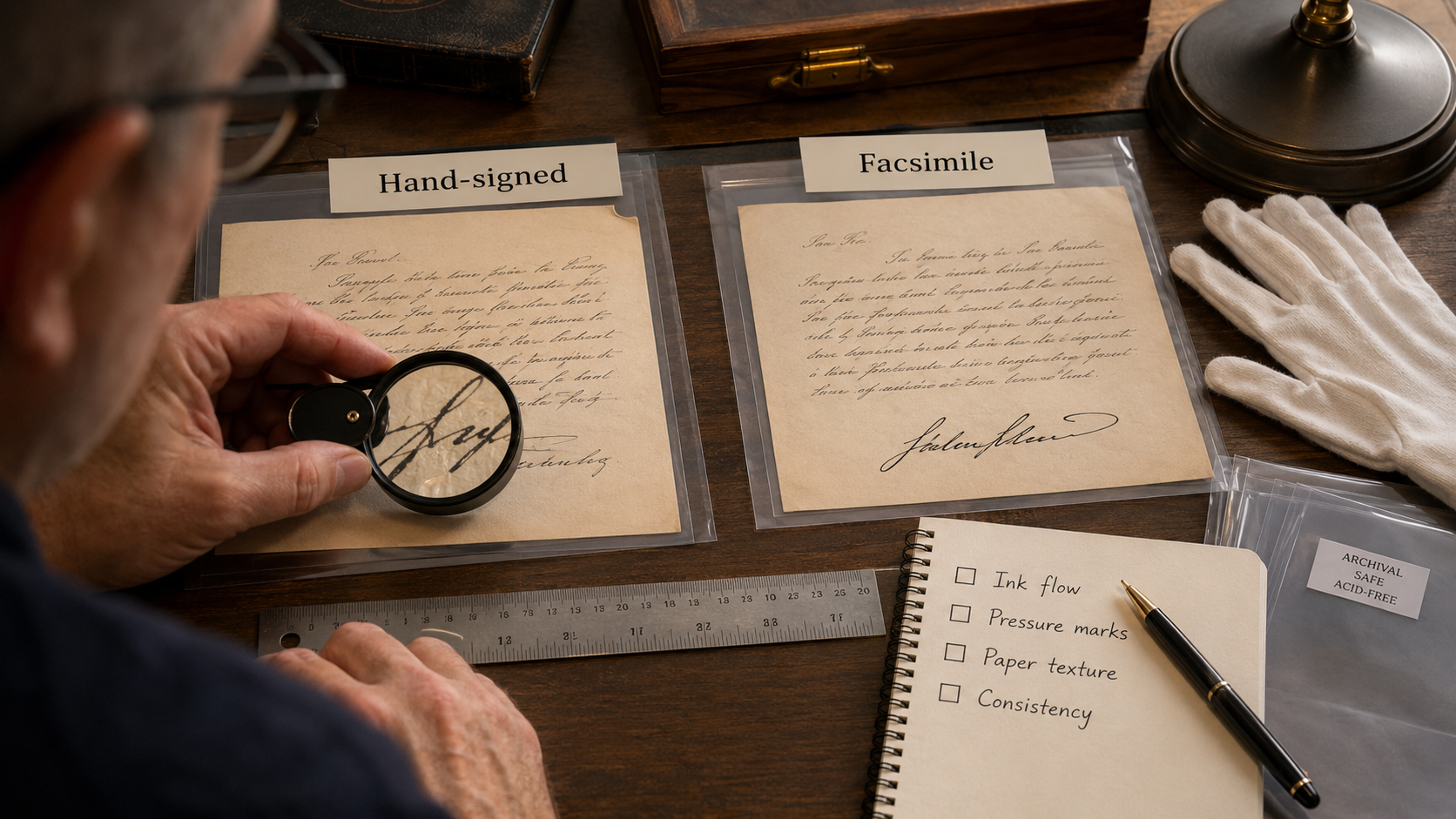
The strongest evidence comes from multiple characteristics agreeing with each other:
- paper;
- printing;
- handwriting;
- entries;
- dates;
- stamps;
- photograph;
- physical wear;
- historical context.
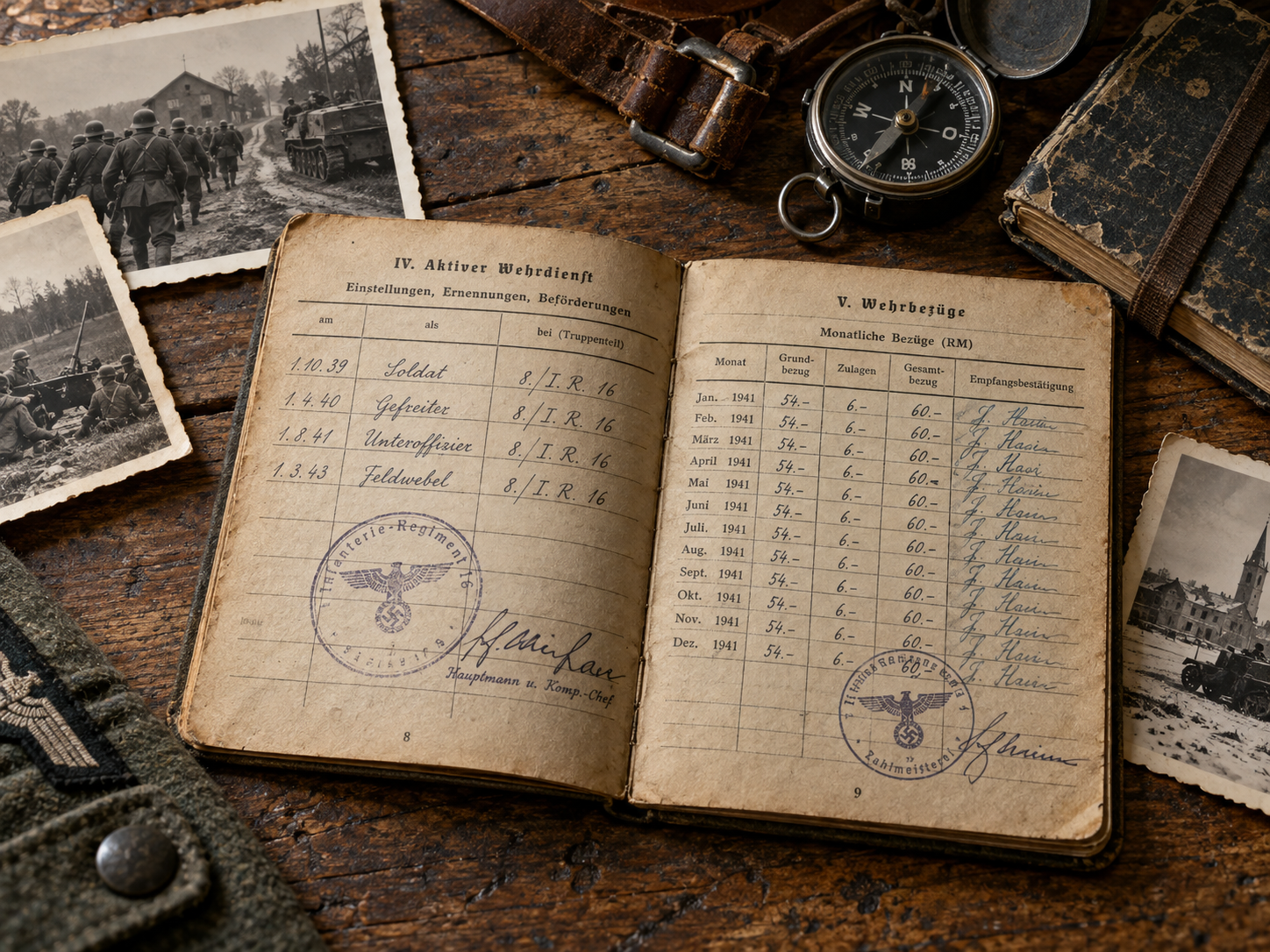
Wehrpass vs Soldbuch: Which Is Rarer?
Neither term alone is enough to determine rarity.
Large numbers of German military personnel documents were produced during the period.
Collector scarcity depends primarily on what is inside.
An ordinary incomplete Wehrpass with minimal service may be considerably less interesting than a Soldbuch connected with a documented campaign, unusual unit or extensive medical history.
The reverse can also be true.
A Wehrpass documenting multiple campaigns, decorations, wounds and death in service may have considerably greater historical significance than an otherwise ordinary Soldbuch.
The cover identifies the document type.
The entries determine the story.
Which Is More Valuable: Wehrpass or Soldbuch?
There is no fixed hierarchy.
Market value depends on the individual document.
Collectors may consider:
- branch of service;
- military units;
- combat history;
- decorations;
- photographs;
- signatures;
- named individuals;
- casualty information;
- completeness;
- condition;
- provenance;
- associated material.
A named document group with strong provenance can be far more desirable than an isolated booklet.
It is also important to separate historical interest from market price.
A modestly priced Wehrpass may contain enough information to support weeks of research.
A more expensive Soldbuch may attract attention because of a particular unit or decoration while containing less biographical material.
For me, research potential is one of the most important factors.
Examples from the Autographs & Militaria Collection
A useful example is the WWII German Wehrpass group connected with the 256th Infantry Division, preserved with an Ostmedaille, Eastern Front entries, wound information, death notification, photographs and additional family material.
The importance of that group is not simply the Wehrpass itself.
Its strength comes from the relationship between the documents and objects that survive together.
Collectors who want the broader context should also read:
WW2 German Documents: Complete Collector’s Guide to Wehrpass, Soldbuch, Kennkarte & Award Papers
And for the medal context:
How to Research a Named Wehrpass or Soldbuch
The first step is transcription.
Record the holder’s:
- full name;
- date and place of birth;
- military units;
- ranks;
- dates;
- awards;
- clearly legible locations.
Then establish a timeline.
Do not immediately attempt to interpret every handwritten word.
A reliable sequence of dated entries often makes difficult abbreviations easier to understand later.
The Bundesarchiv is one of the principal institutional sources for research into German military personnel records.
External records should then be compared with the document rather than used to force a preconceived interpretation.
Research works best when the object and the archive support each other.
Common Wehrpass and Soldbuch Mistakes
The most common mistake is assuming that the two documents are interchangeable.
Another is valuing the booklet before reading it.
Collectors may also focus too heavily on a famous unit name, award entry or visually impressive stamp without examining whether the surrounding chronology supports it.
A further mistake is separating related groups.
A Soldbuch, Wehrpass, photograph and packet of letters belonging to one serviceman may each have individual monetary value.
Together, however, they preserve relationships that cannot be reconstructed once the archive is dispersed.
Provenance is information.
Once lost, it is often impossible to recover.
Wehrpass vs Soldbuch FAQ
What is the main difference between a Wehrpass and a Soldbuch?
A Wehrpass primarily recorded military status and career, while a Soldbuch functioned as a pay book and military identification document used during active service.
Did German soldiers have both a Wehrpass and a Soldbuch?
They could. The documents served different administrative purposes. During active service, the Soldbuch normally remained with the serviceman while the Wehrpass was generally handled through military administration.
Was the Soldbuch carried in the field?
Yes. Its function as a practical military identification and pay document meant that it normally accompanied the serviceman, which helps explain the heavy wear seen on many surviving examples.
Which document contains more military history?
A detailed Wehrpass often provides a clearer chronological overview of units, campaigns and military career.
A Soldbuch may contain richer practical information concerning equipment, medical treatment, leave and everyday service.
Are Wehrpässe usually in better condition than Soldbücher?
Often, but not always.
Because the Soldbuch travelled with the serviceman, it frequently received more handling.
Post-war storage, however, can be just as important as wartime use in determining present condition.
Can awards appear in both documents?
Yes.
Decorations and badges may be entered in both Wehrpässe and Soldbücher.
Every entry should be assessed in the context of the document as a whole.
Is a Wehrpass or Soldbuch automatically valuable because it belonged to a combat soldier?
No.
Value depends on the combination of historical content, units, dates, decorations, provenance, condition and collector demand.
Can a Wehrpass help identify where a soldier served?
Often, yes.
Unit assignments and dated service entries can provide a framework that can then be compared with unit histories and archival sources.
Final Thoughts
The Wehrpass vs Soldbuch distinction becomes much easier once we stop thinking of them as two versions of the same booklet.
The Wehrpass was fundamentally a record of military service.
The Soldbuch was a working military document that travelled with the serviceman.
One tends to provide structure.
The other often preserves the traces of everyday military administration.
For collectors, both are valuable because they can turn an anonymous military object into a named human record.
The most interesting examples are not necessarily those connected with the most famous units or highest decorations.
They are the documents that allow us to reconstruct a life accurately.
Read every entry.
Preserve related material together.
Separate confirmed information from interpretation.
And whenever possible, compare the surviving document with archival evidence.
That is where a simple wartime booklet becomes historical research.
Historical Responsibility Notice
Documents associated with Nazi Germany and the German armed forces of the Second World War are presented by Autographs & Militaria exclusively as historical objects for collecting, preservation, education and research.
Their study and documentation do not represent endorsement, promotion or glorification of the regime, its ideology or the organisations represented.

References & Further Reading
- Bundesarchiv — Wehrgesetz und Wehrdienst 1935–1945 Stasi-Unterlagen-Archiv
- Bundesarchiv — Personal records from WWI and WWII
Stasi-Unterlagen-Archiv - Deutsches Historisches Museum — Soldbuch de Willy Hildemann, 1944
Deutsches Historisches Museum (DHM) - Deutsches Historisches Museum — Soldbuch zugleich Personalausweis, 1943 Deutsches Historisches Museum (DHM)
- Deutsche Digitale Bibliothek / Deutsches Historisches Museum — Wehrpass de 1939 con anotación “gefallen”
Biblioteca Digital Alemana - Deutsche Digitale Bibliothek / DHM — Wehrpass de un soldado muerto en la Unión Soviética en 1942
Biblioteca Digital Alemana
Abrir Wehrpass de 1942 - DHM LeMO — testimonio sobre recibir un Soldbuch y no entregar el Wehrpass Deutsches Historisches Museum (DHM)
Abrir testimonio DHM LeMO - Bundesarchiv — Erkennungsmarkenverzeichnisse
Stasi-Unterlagen-Archiv
Services & Expertise
Positive Reviews
Authenticity Focused

Document Authentication & Certification
Certificates issued for collector and archival purposes

Graphology & Signature Analysis
Independent professional service
About the Author: Juan García Nicolás

Popular products
-
 Original Werner von Blomberg Signed Reichswehr Document 1934 – Army Chemist Appointment
Original price was: 490,00 €.440,00 €Current price is: 440,00 €.
Original Werner von Blomberg Signed Reichswehr Document 1934 – Army Chemist Appointment
Original price was: 490,00 €.440,00 €Current price is: 440,00 €.
-
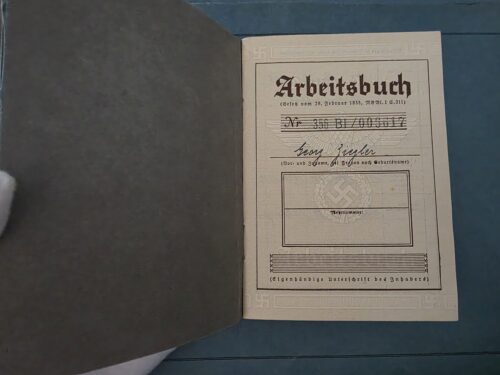 WWII German Arbeitsbuch – Georg Ziegler Original Work Book
49,00 €
WWII German Arbeitsbuch – Georg Ziegler Original Work Book
49,00 €
-
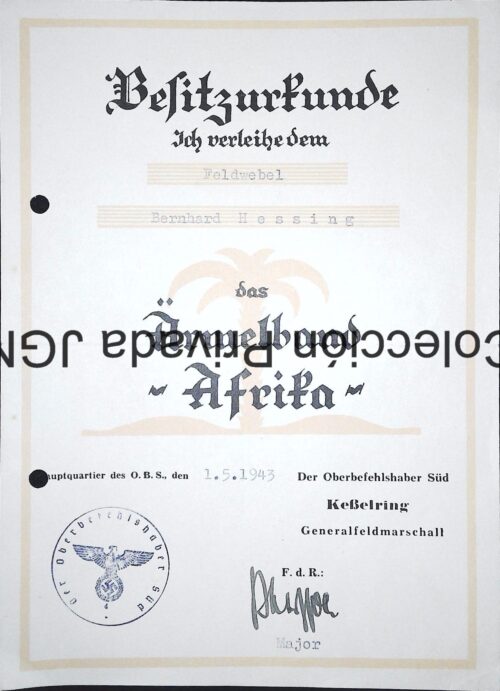 Italo-German Africa Campaign Medal & Bernhard Hessing Documents 1942–43
Original price was: 690,00 €.590,00 €Current price is: 590,00 €.
Italo-German Africa Campaign Medal & Bernhard Hessing Documents 1942–43
Original price was: 690,00 €.590,00 €Current price is: 590,00 €.
-
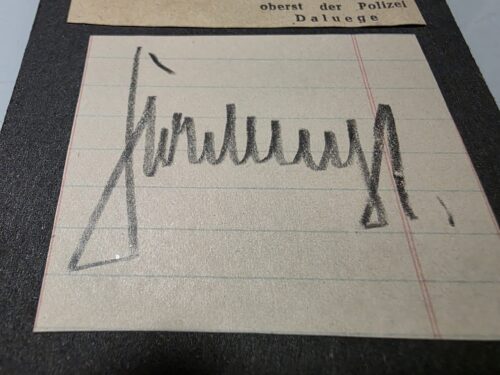 Original Kurt Daluege Pencil Signature with WWII Newspaper Clipping
Original price was: 395,00 €.300,00 €Current price is: 300,00 €.
Original Kurt Daluege Pencil Signature with WWII Newspaper Clipping
Original price was: 395,00 €.300,00 €Current price is: 300,00 €.
-
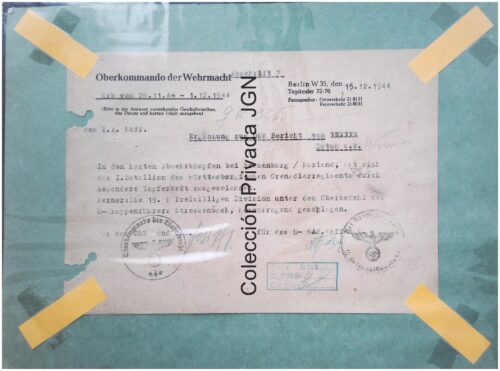 Original OKW Kurland Battle Report 1944 – Wehrmacht Document
Original price was: 160,00 €.90,00 €Current price is: 90,00 €.
Original OKW Kurland Battle Report 1944 – Wehrmacht Document
Original price was: 160,00 €.90,00 €Current price is: 90,00 €.
-
 Original 1939 Legion Condor Spanish Cross in Silver Award Certificate
Original price was: 359,00 €.259,00 €Current price is: 259,00 €.
Original 1939 Legion Condor Spanish Cross in Silver Award Certificate
Original price was: 359,00 €.259,00 €Current price is: 259,00 €.
-
 WWII German Wound Badge in Black with Miniature Pin and Original Packet
199,00 €
WWII German Wound Badge in Black with Miniature Pin and Original Packet
199,00 €
-
 Adam Opel Arbeitsbuch – Rüsselsheim Welder & Factory Worker, 1930s IIWW
30,00 €
Adam Opel Arbeitsbuch – Rüsselsheim Welder & Factory Worker, 1930s IIWW
30,00 €
-
 Original 1940 Otto Kortschak Death Sentence and Hitler Clemency Document
Original price was: 300,00 €.190,00 €Current price is: 190,00 €.
Original 1940 Otto Kortschak Death Sentence and Hitler Clemency Document
Original price was: 300,00 €.190,00 €Current price is: 190,00 €.
-
 Rudolf Hess Autograph – Signed NSDAP Wochenspruch Poster, 1938
Original price was: 1.600,00 €.1.490,00 €Current price is: 1.490,00 €.
Rudolf Hess Autograph – Signed NSDAP Wochenspruch Poster, 1938
Original price was: 1.600,00 €.1.490,00 €Current price is: 1.490,00 €.