Products on sale
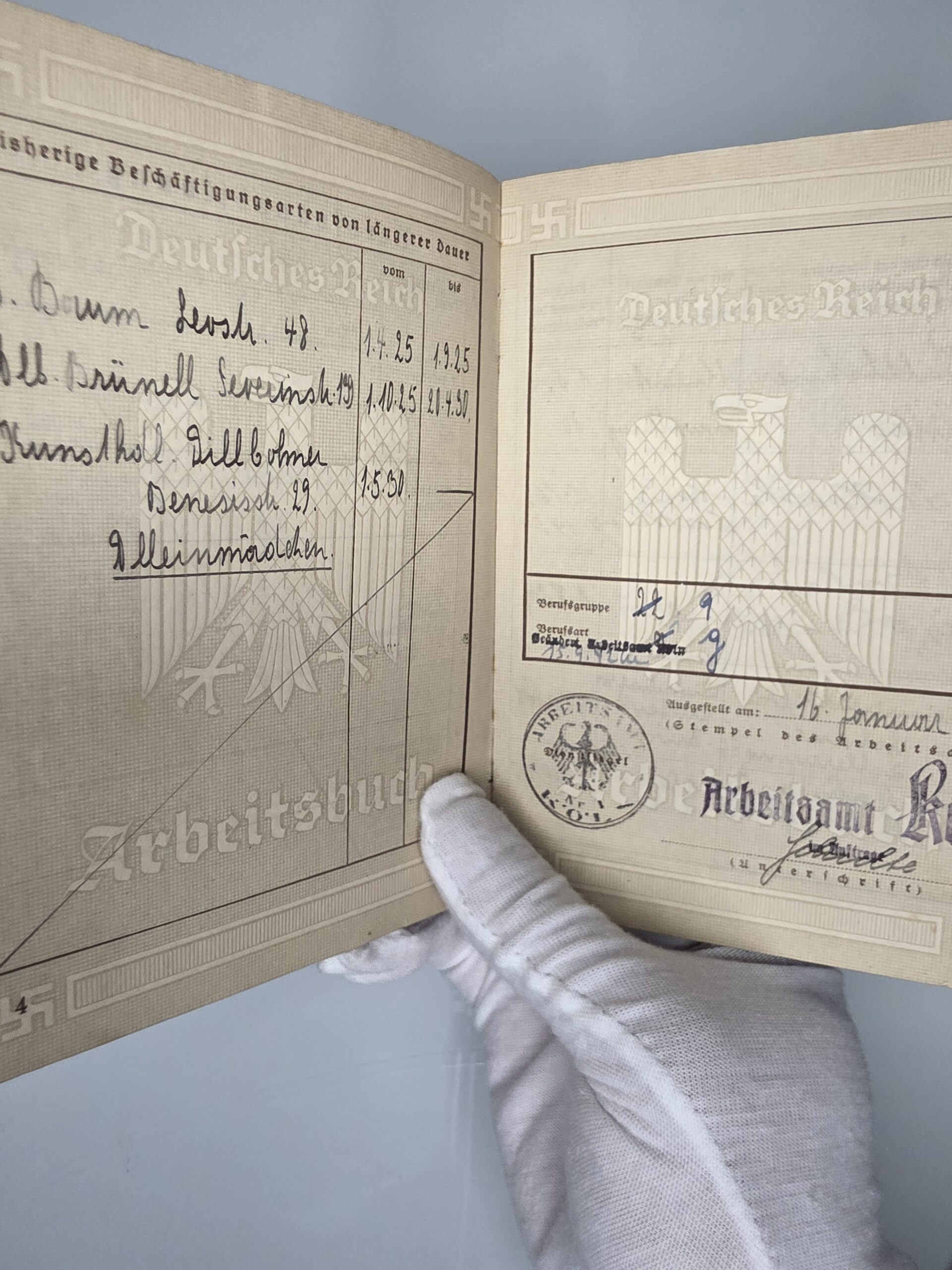
Third Reich Arbeitsbuch – Original German Worker’s Employment Book
30,00 €

WWII German Wehrpass – Rudolf Klinger 1943 Zweitschrift with Photo & Typhus Card
Original price was: 110,00 €.99,00 €Current price is: 99,00 €.

(no title)
Original price was: 299,00 €.245,00 €Current price is: 245,00 €.

Third Reich Tax Documents – 1937 Bavarian Ministry & Nuremberg Archive
Original price was: 150,00 €.99,00 €Current price is: 99,00 €.
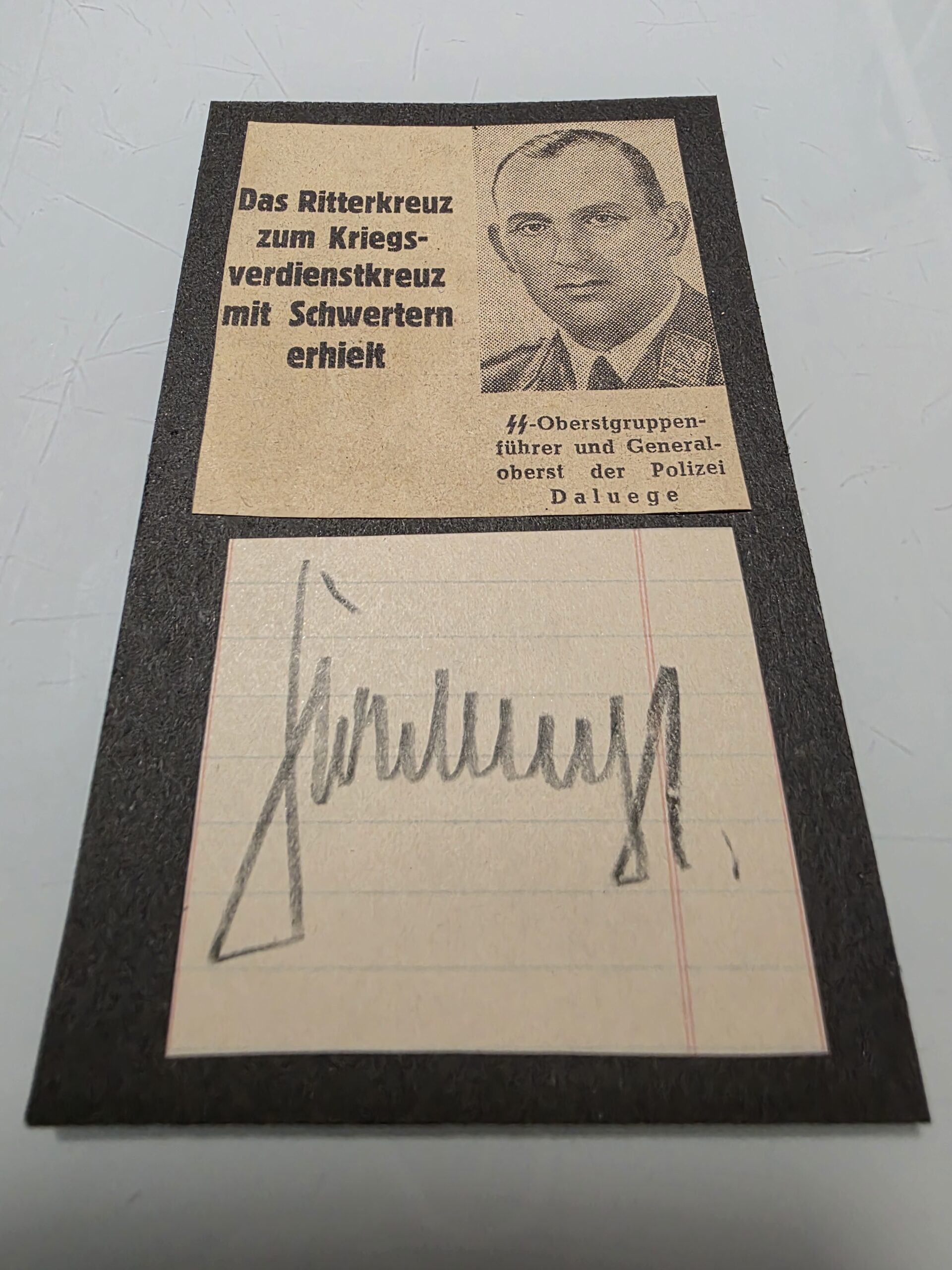
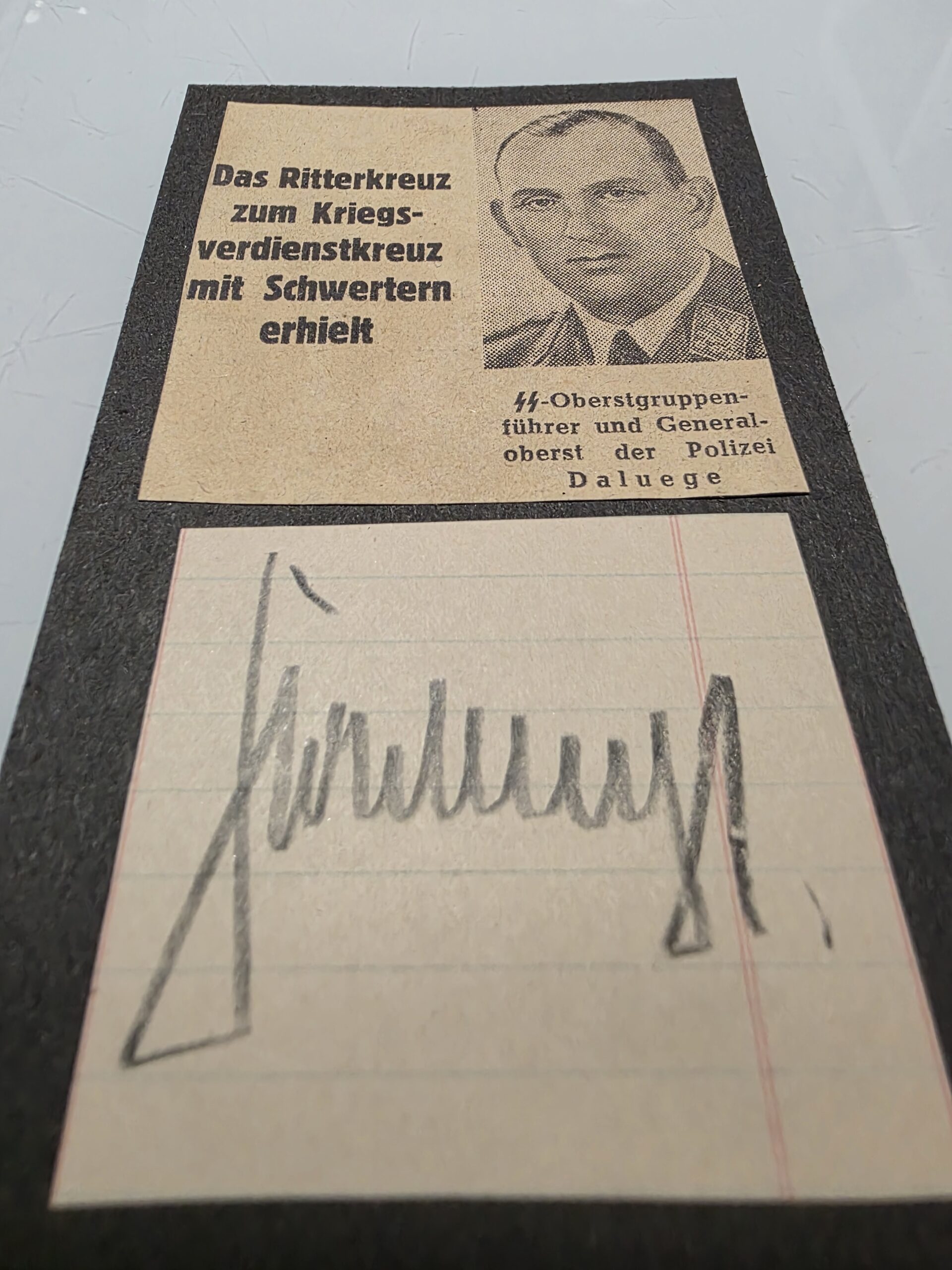
Original Kurt Daluege Pencil Signature with WWII Newspaper Clipping
Original price was: 395,00 €.300,00 €Current price is: 300,00 €.
24% Off
Interested in this item? Please contact us directly by email, WhatsApp or through the enquiry form below for availability or other information. Kindly include the item SKU/reference number in your message so we can identify the piece.
Description
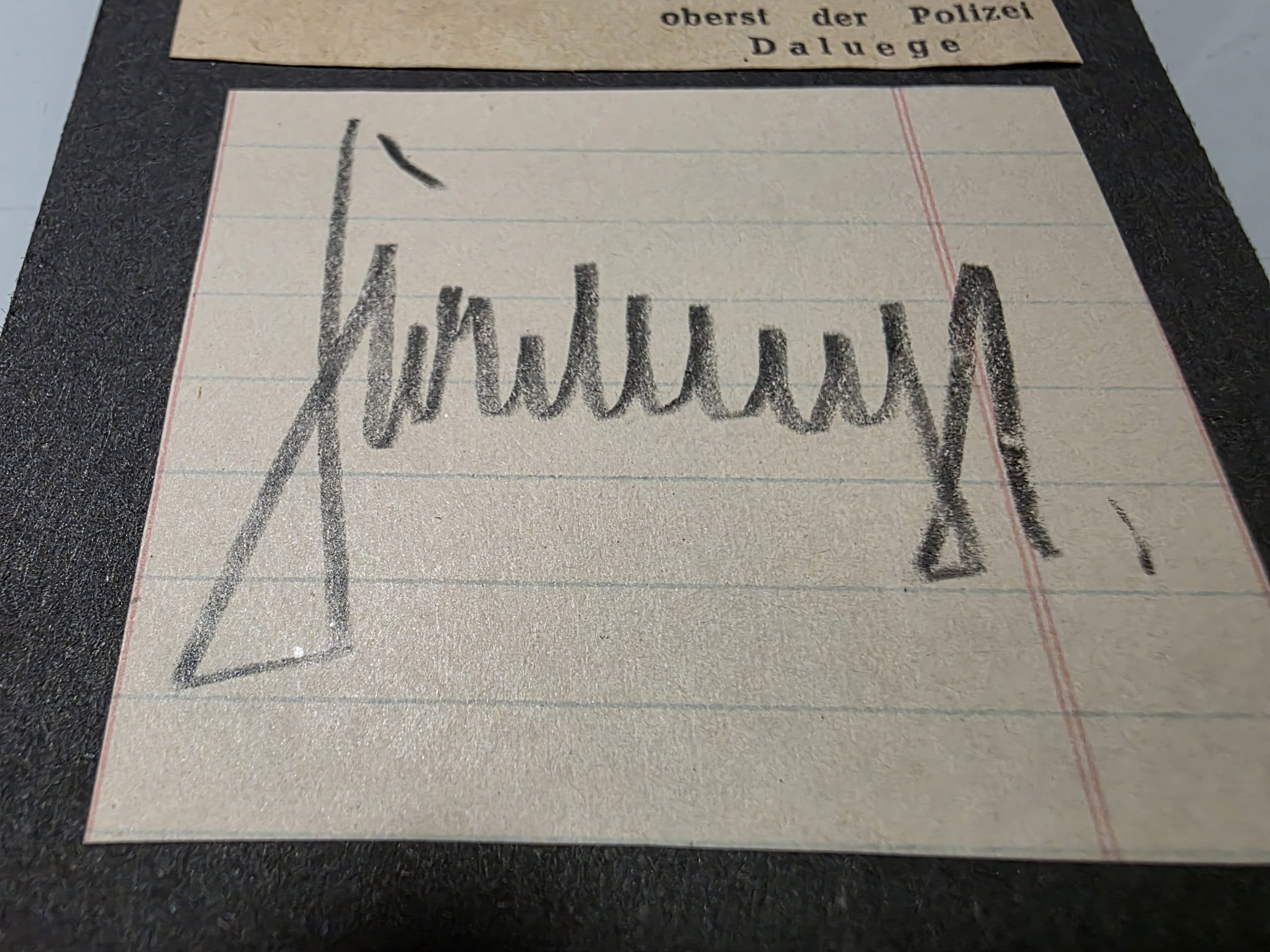
Original Kurt Daluege Pencil Signature
This original Kurt Daluege signature is a historical autograph fragment executed in dark pencil on a small piece of lined period paper.
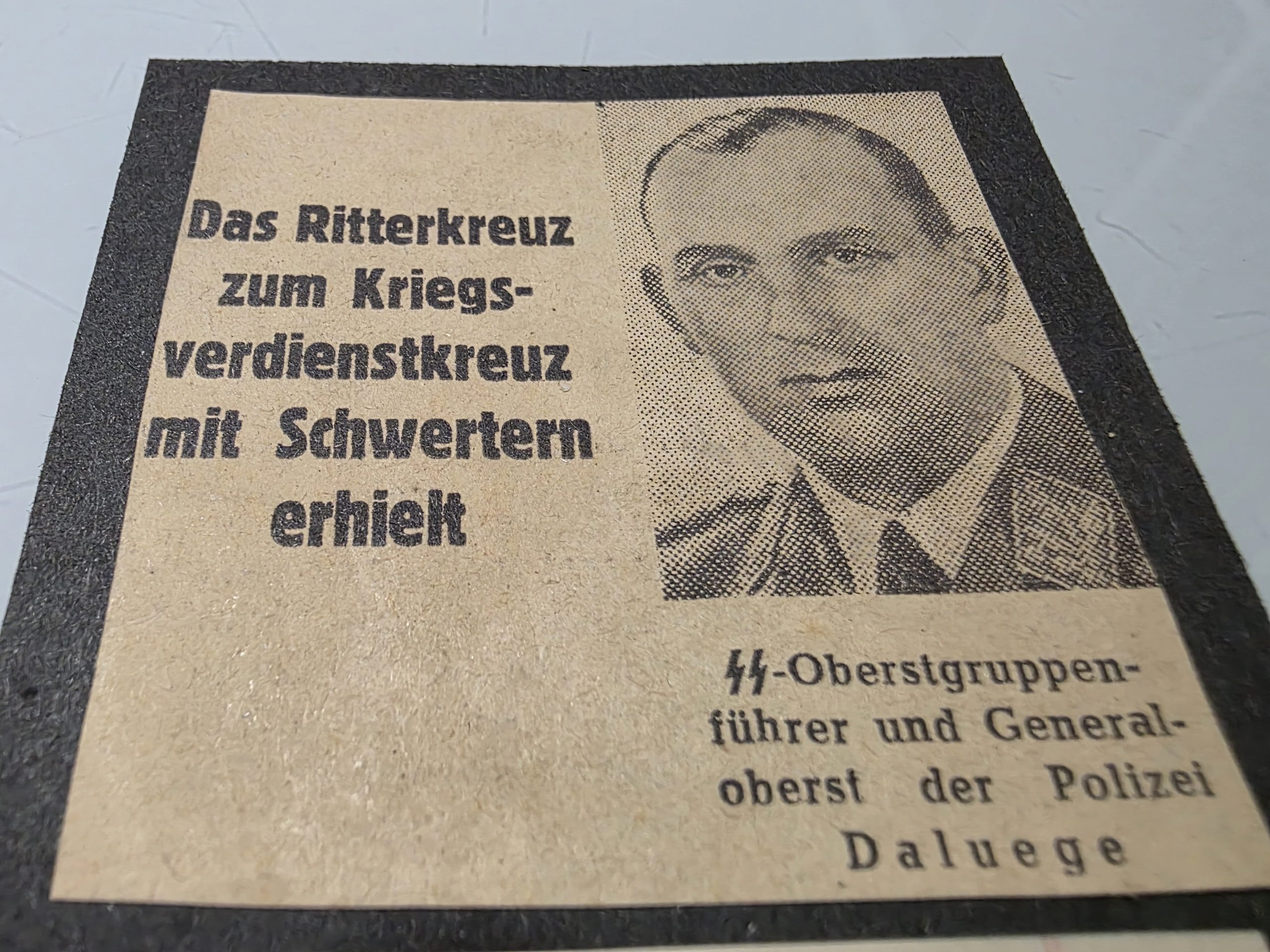
The signed paper has been cut from a larger notebook sheet or document and mounted on a rectangular black backing card. Above the autograph is a separate period German newspaper clipping carrying a printed portrait of Daluege and announcing the award of the Knight’s Cross of the War Merit Cross with Swords.
The presentation combines an original handwritten autograph with a contemporary printed reference connected directly with one of Daluege’s wartime awards.
It should be described accurately as a cut signature with a period newspaper clipping, rather than as a signed photograph, signed newspaper article or complete signed document.
A previous specialist dealer catalogue appears to record this exact piece as stock number 69818, describing it as a period paper cut-out glued to black paper, bearing a bold pencil signature by Daluege on period notepad paper.
Pencil Autograph on Period Lined Paper
The signature occupies most of the lower paper fragment and is written in a soft but clearly visible graphite medium.
Its visual characteristics include:
- A tall and strongly angled initial movement.
- A long descending stroke at the left.
- A compact sequence of connected central letters.
- Repeated rounded and angular movements.
- A prominent terminal stroke descending near the right margin.
- Two small additional pencil marks beside the principal autograph.
The signature is written across pale blue horizontal lines and a red vertical notebook margin. These printed lines confirm that the fragment was cut from an ordinary period writing pad or notebook rather than from an official letterhead.
The autograph remains bold and complete. Although the original letter, date and recipient are no longer present, the large format and distinctive handwriting make it visually suitable for display.
Period Newspaper Clipping
The upper section contains a separate printed newspaper cutting with a portrait and the wording:
“Das Ritterkreuz zum Kriegsverdienstkreuz mit Schwertern erhielt…”
followed by:
“SS-Oberstgruppenführer und Generaloberst der Polizei Daluege.”
English translation:
“The Knight’s Cross of the War Merit Cross with Swords was awarded to SS Senior Group Leader and Colonel-General of Police Daluege.”
The clipping is likely to date from September 1943 or shortly afterwards. Specialist award records give 7 September 1943 as the date on which Daluege received the Knight’s Cross of the War Merit Cross with Swords.
The clipping is not signed. Its importance lies in the direct contextual connection it creates between the autograph and Daluege’s wartime rank and decoration.
Kurt Daluege and the German Order Police
Kurt Daluege was a senior German police and SS official. From 1936, he headed the newly centralised Ordnungspolizei, which brought the uniformed German police forces together under SS control.
He eventually held the ranks of SS-Oberst-Gruppenführer and Generaloberst of Police. Harvard Law School’s Nuremberg Trials Project identifies him as a German SS general and Deputy Reich Protector of Bohemia and Moravia.
After Reinhard Heydrich’s death in 1942, Daluege served as acting or deputy protector in Bohemia and Moravia. During this period, he was associated with severe reprisals and repression, including the destruction of Lidice. He was convicted after the war and executed in Prague in October 1946.
The autograph is therefore connected not only with German police administration but also with the occupation of Czechoslovakia, wartime repression and the broader history of the Holocaust and Nazi policing.
Knight’s Cross of the War Merit Cross with Swords
The newspaper cutting concerns Daluege’s receipt of the:
Ritterkreuz des Kriegsverdienstkreuzes mit Schwertern
or:
Knight’s Cross of the War Merit Cross with Swords.
The award recognised significant wartime service outside the traditional battlefield bravery criteria associated with the Iron Cross. The version with swords indicated service connected more directly with military or war-related activity.
Daluege’s award record describes his role in reorganising the Order Police, creating wartime police formations and organising police air-defence units. The award date is recorded as 7 September 1943.
The clipping gives the otherwise detached autograph a specific historical association with this award.
Original Cut Signature Versus Complete Document
A cut signature is an autograph removed from a larger document, letter, card or notebook page.
Such pieces are collected because they preserve the original handwriting in a compact form. However, they do not retain the full documentary context of a signed letter, including the date, recipient, subject and issuing office.
The historical value of this example lies in:
- The original pencil handwriting.
- The strong and clearly visible signature.
- Its prior specialist-dealer cataloguing.
- The accompanying period award announcement.
- The coherent black-card presentation.
- Its association with a high-ranking wartime police official.
A complete signed document normally commands a higher price, but cut signatures remain desirable when the autograph is clear and supported by provenance or period contextual material.
Condition
The signed fragment displays age toning, small marks, minor surface dirt and natural paper wear.
The pale blue ruling and red notebook margin remain visible. The graphite signature retains good contrast, with some natural variation in density caused by the pencil medium.
No major tear appears to cross the autograph. The paper has been mounted onto black backing material, so its reverse cannot currently be examined.
The newspaper clipping shows age toning, light edge wear and the dotted printing texture typical of period press reproduction. The portrait and principal printed wording remain clear.
The black backing card presents light handling wear and small surface marks.
The photographs form an essential part of the condition description.
This item is offered exclusively as an original historical collectable for preservation, research, documentation and education. Its sale does not endorse the ideology, persecution or crimes associated with the person or regime represented.
Additional information
| Availability | Available |
|---|
Only logged in customers who have purchased this product may leave a review.
Related products
Third Reich Arbeitsbuch – Original German Worker’s Employment Book
30,00 €
WWII German Wehrpass – Rudolf Klinger 1943 Zweitschrift with Photo & Typhus Card
Original price was: 110,00 €.99,00 €Current price is: 99,00 €.
10% Off
(no title)
Original price was: 299,00 €.245,00 €Current price is: 245,00 €.
18% Off
Third Reich Tax Documents – 1937 Bavarian Ministry & Nuremberg Archive
Original price was: 150,00 €.99,00 €Current price is: 99,00 €.
34% Off
Reviews
There are no reviews yet.