Products on sale
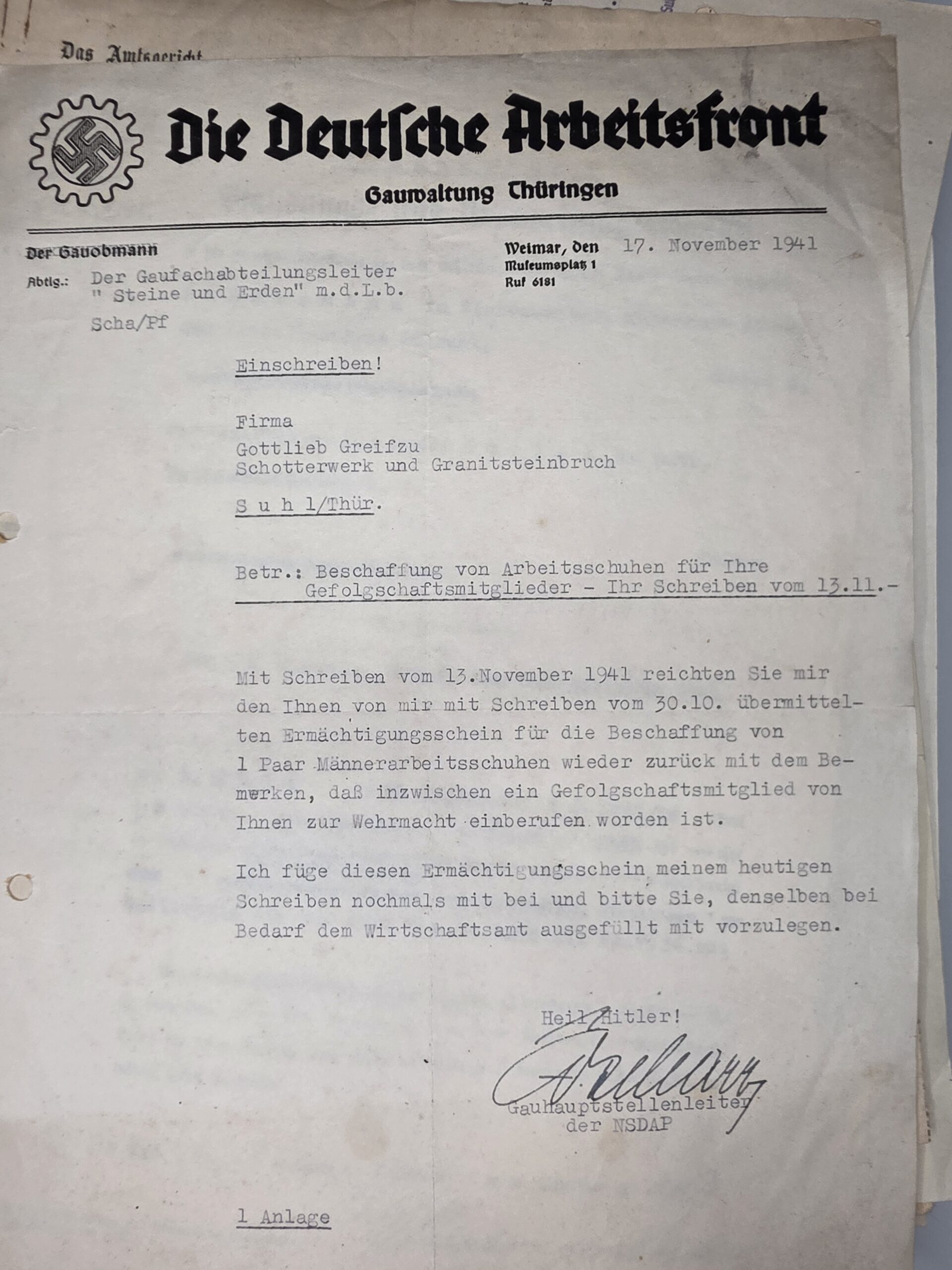
German Document Archive 1911–1967 – DAF, University and Business Papers
Original price was: 249,00 €.199,00 €Current price is: 199,00 €.

WWII German Document Collection – U-Boat Training, DAF & Arbeitsbuch Archive
Original price was: 490,00 €.440,00 €Current price is: 440,00 €.
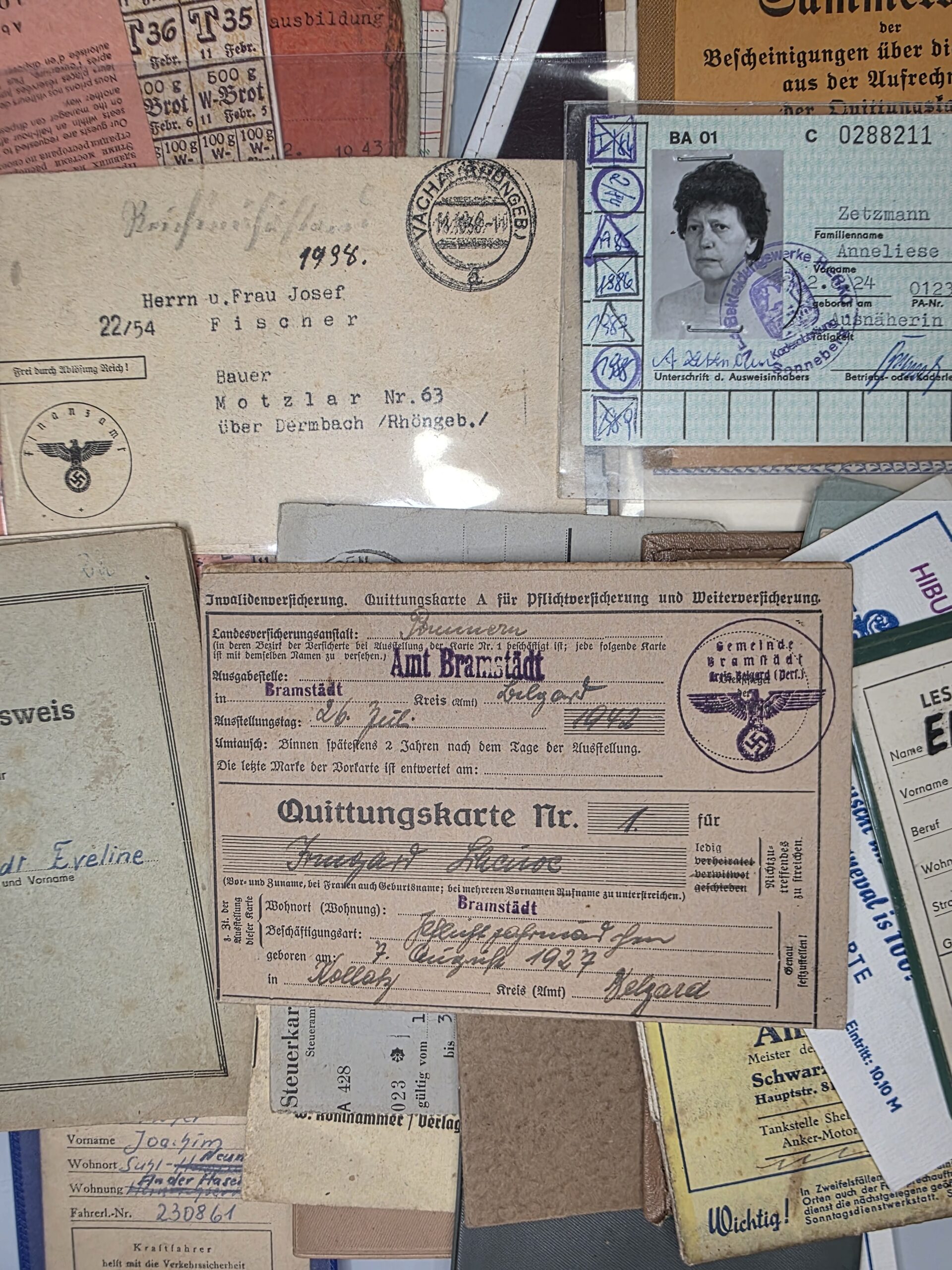
WWII German Document Archive 1938–1945 – Wehrmacht, IDs & Ration Papers
Original price was: 275,00 €.240,00 €Current price is: 240,00 €.

WWII German Wehrpass Archive – Feldpost & WWI Militärpass
Original price was: 380,00 €.340,00 €Current price is: 340,00 €.
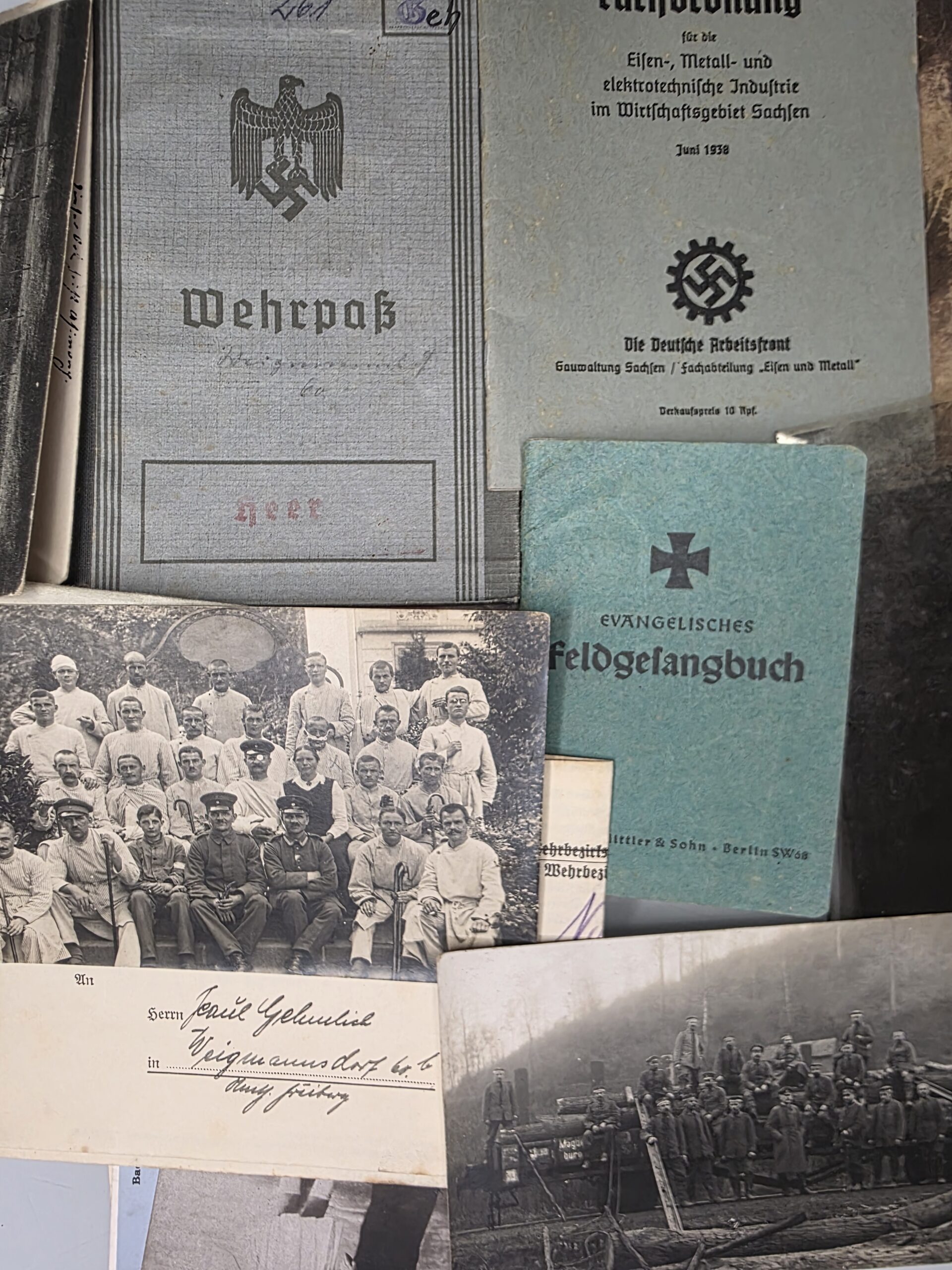
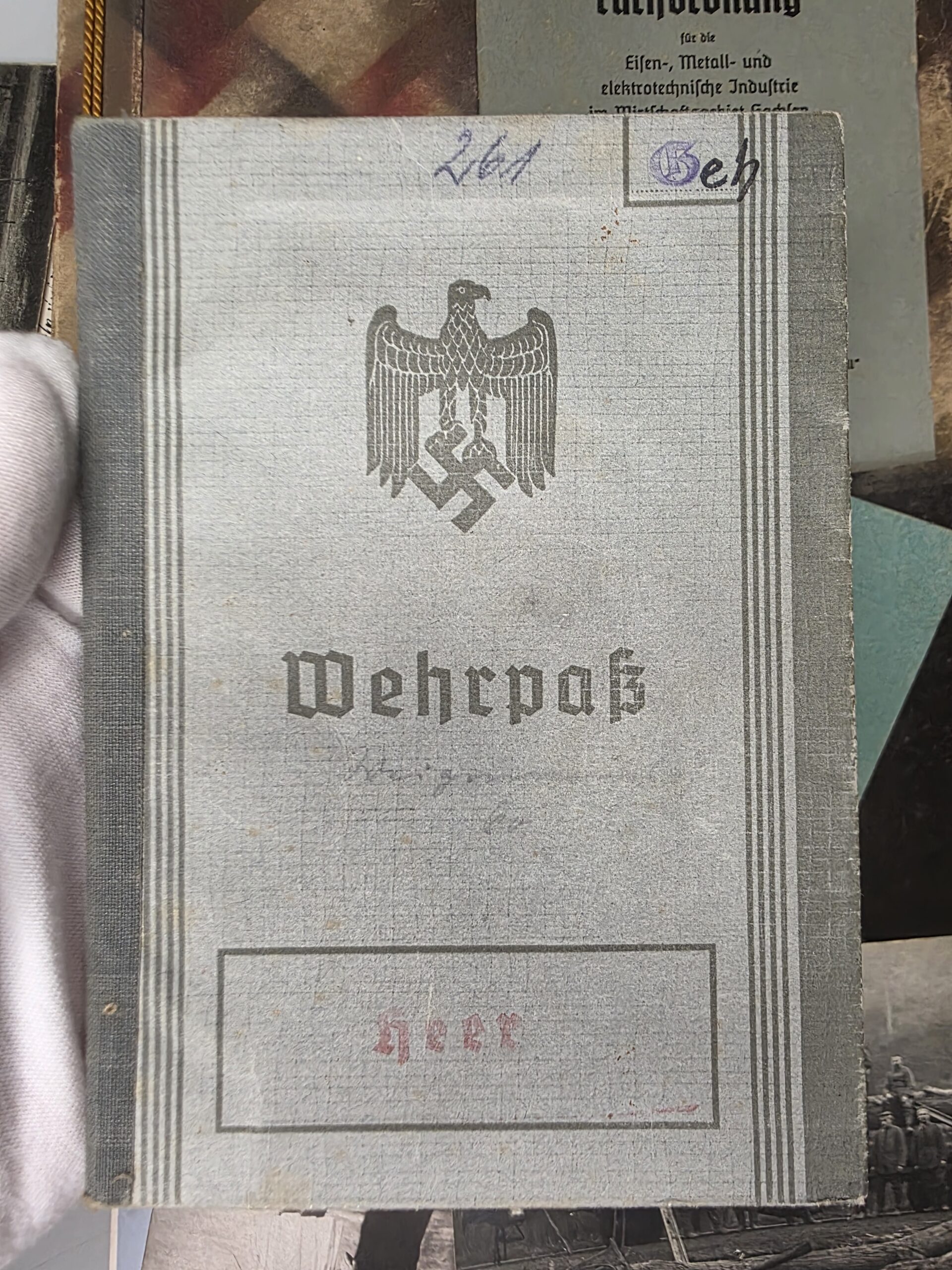

WWII German Wehrpass Group – 256th Infantry Division, Ostmedaille & Death Letter
590,00 €
Interested in this item? Please contact us directly by email, WhatsApp or through the enquiry form below for availability or other information. Kindly include the item SKU/reference number in your message so we can identify the piece.
Description
WWII German Wehrpass and Family Archive
This WWII German Wehrpass forms the central piece of a substantial family archive containing military records, official correspondence, photographs, postcards, books and civilian documentation dating from the early twentieth century through the post-war period.
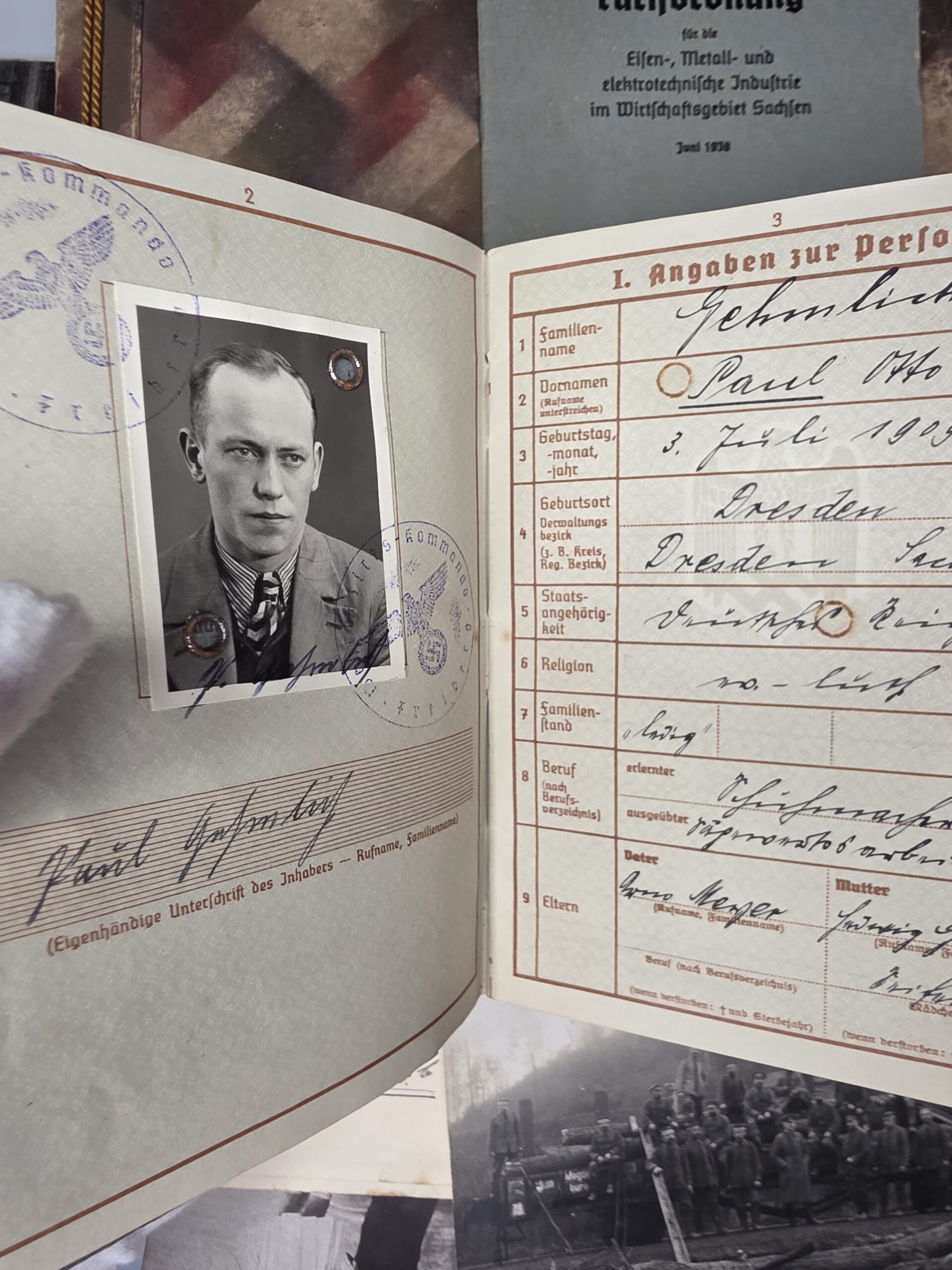
Issued in Freiberg, Saxony, in 1937, the Wehrpass contains the holder’s identification photograph, official stamps and handwritten entries across numerous pages. The soldier, whose forename is Paul, entered active service on 15 April 1940 with the 3rd Company of Infanterie-Ersatz-Bataillon 394 at Freiberg.
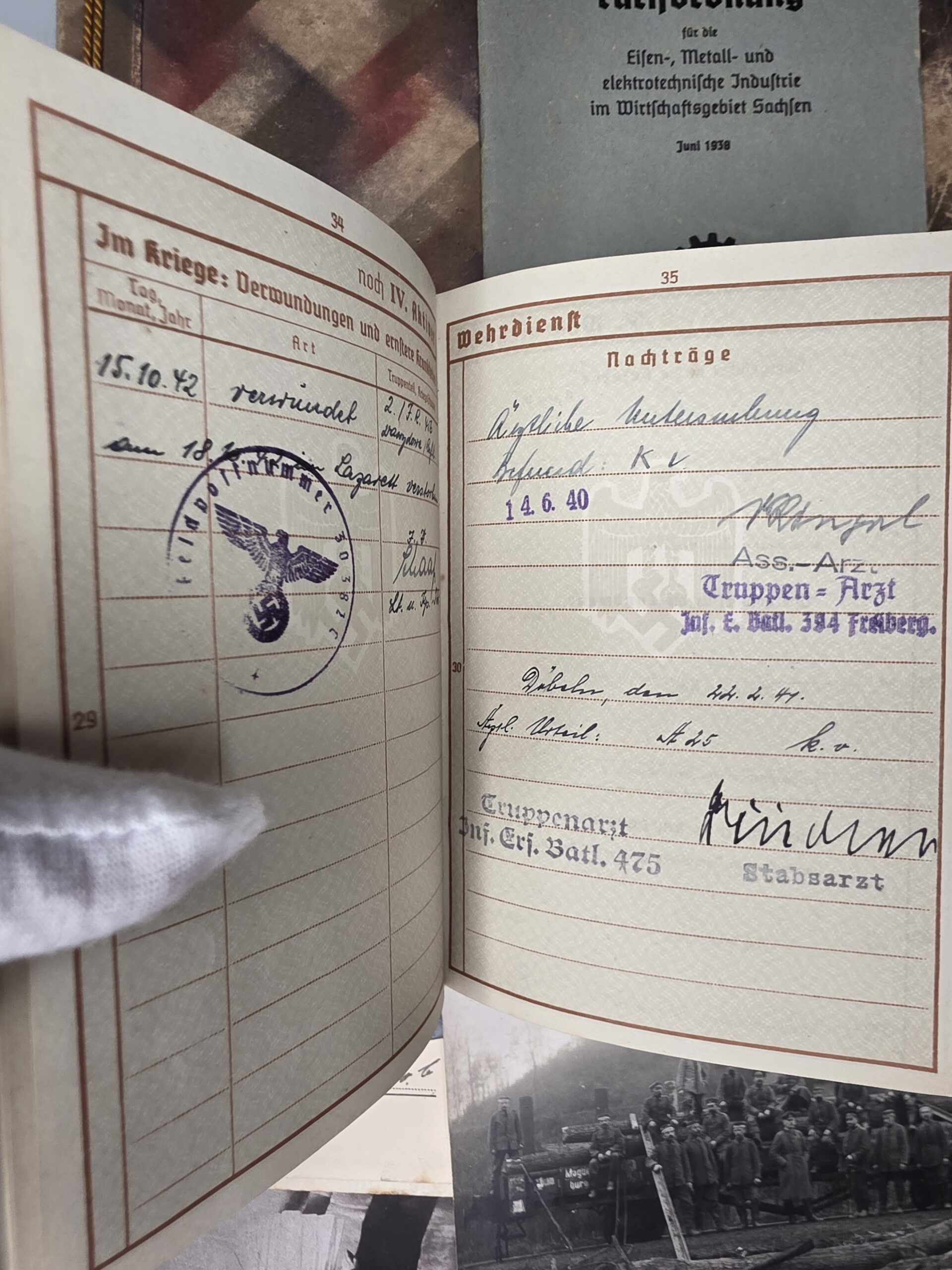
His subsequent record connects him with Infanterie-Regiment 456 and the 256. Infanterie-Division. The Wehrpass records campaign service, promotion to Gefreiter, the award of the Ostmedaille and a wound sustained during the fighting in Russia in October 1942.
The group also includes an official letter from Wehrmeldeamt Freiberg concerning his death. Preserved together with family photographs and civilian papers, the material provides a more complete personal record than an isolated military identity book.
Personal and Service Information
The opening pages retain the original portrait photograph attached with eyelets and crossed by official Wehrbezirkskommando stamps. Personal information is entered in period handwriting, with the holder’s own signature visible below the photograph.
The photograph shows Paul in civilian dress, wearing a shirt, patterned tie and jacket. This is consistent with the Wehrpass having been prepared during his pre-service registration rather than after he had already become an active soldier.
Entries indicate that he was born in Dresden and was registered through the Freiberg military district. His civilian occupation and family information are also recorded, although a complete transcription should be taken directly from the original document before publication.
On 15 April 1940, he was taken into service with:
3./Infanterie-Ersatz-Bataillon 394, Freiberg
The book contains further unit, medical, campaign and administrative entries bearing official stamps and signatures.
Service with the 256th Infantry Division
The supplied description associates the soldier with the 256. Infanterie-Division, particularly through Infanterie-Regiment 456. The visible stamp on the Ostmedaille entry appears to identify this regiment.
The 256th Infantry Division was formed in 1939 and initially served in Western Europe. Its wartime record included operations in the Netherlands, Belgium and France, followed by occupation and coastal-security duties.
In 1941, the division was transferred east and took part in the invasion of the Soviet Union with Army Group Centre. Its operational route included the advance through the Białystok–Minsk area and subsequent fighting deeper inside Soviet territory.
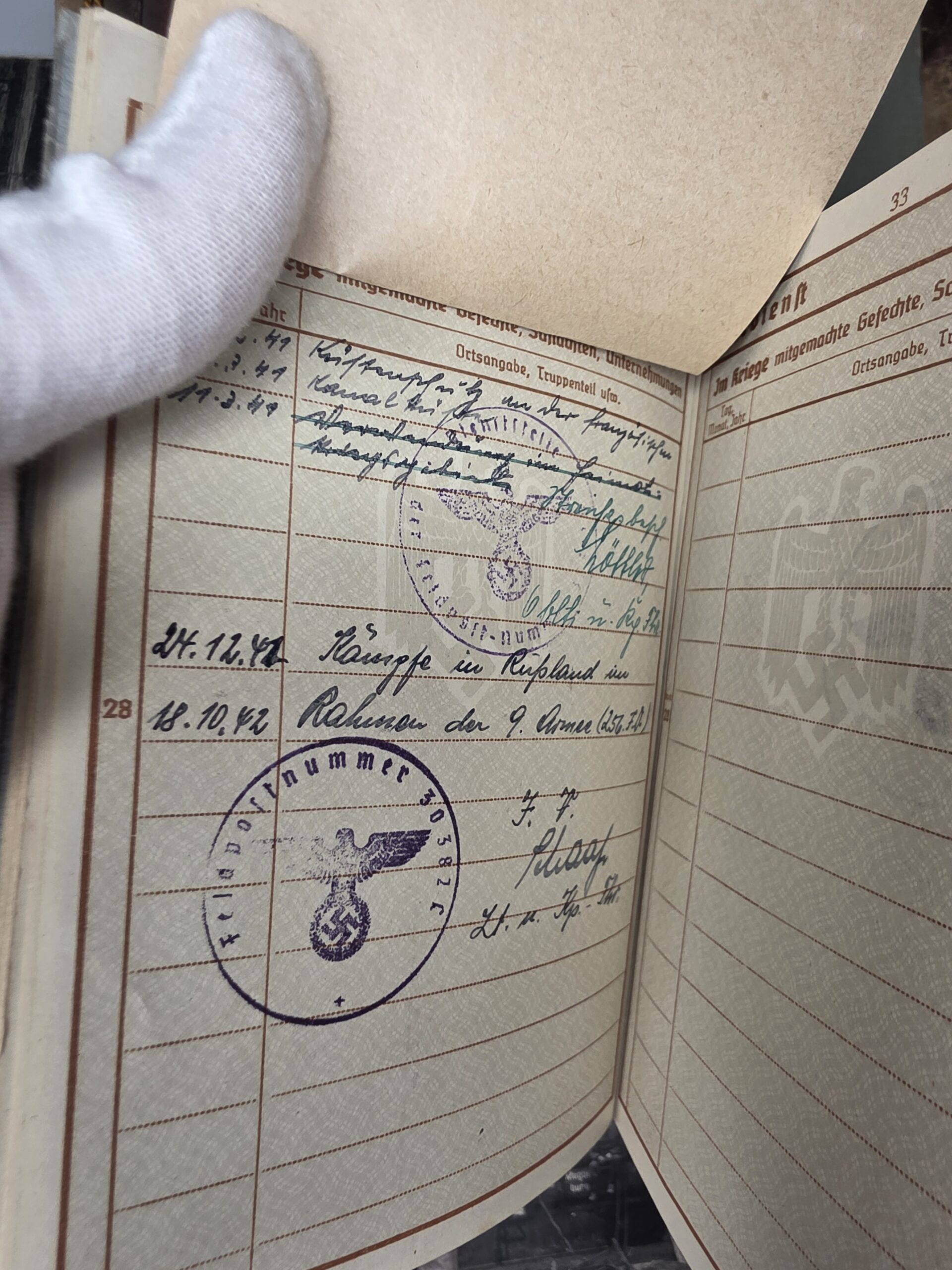
The Wehrpass reportedly contains a mounted campaign sheet and handwritten entries describing service beginning with coastal protection, followed by the double battle of Białystok and Minsk and later combat in Russia. These entries are particularly important because they connect an individual soldier to the operational history of his regiment and division.
The campaign record should be read as a contemporary military document rather than as proof that the soldier was personally present at every location occupied by the division unless each entry explicitly confirms his participation.
Promotion and Ostmedaille
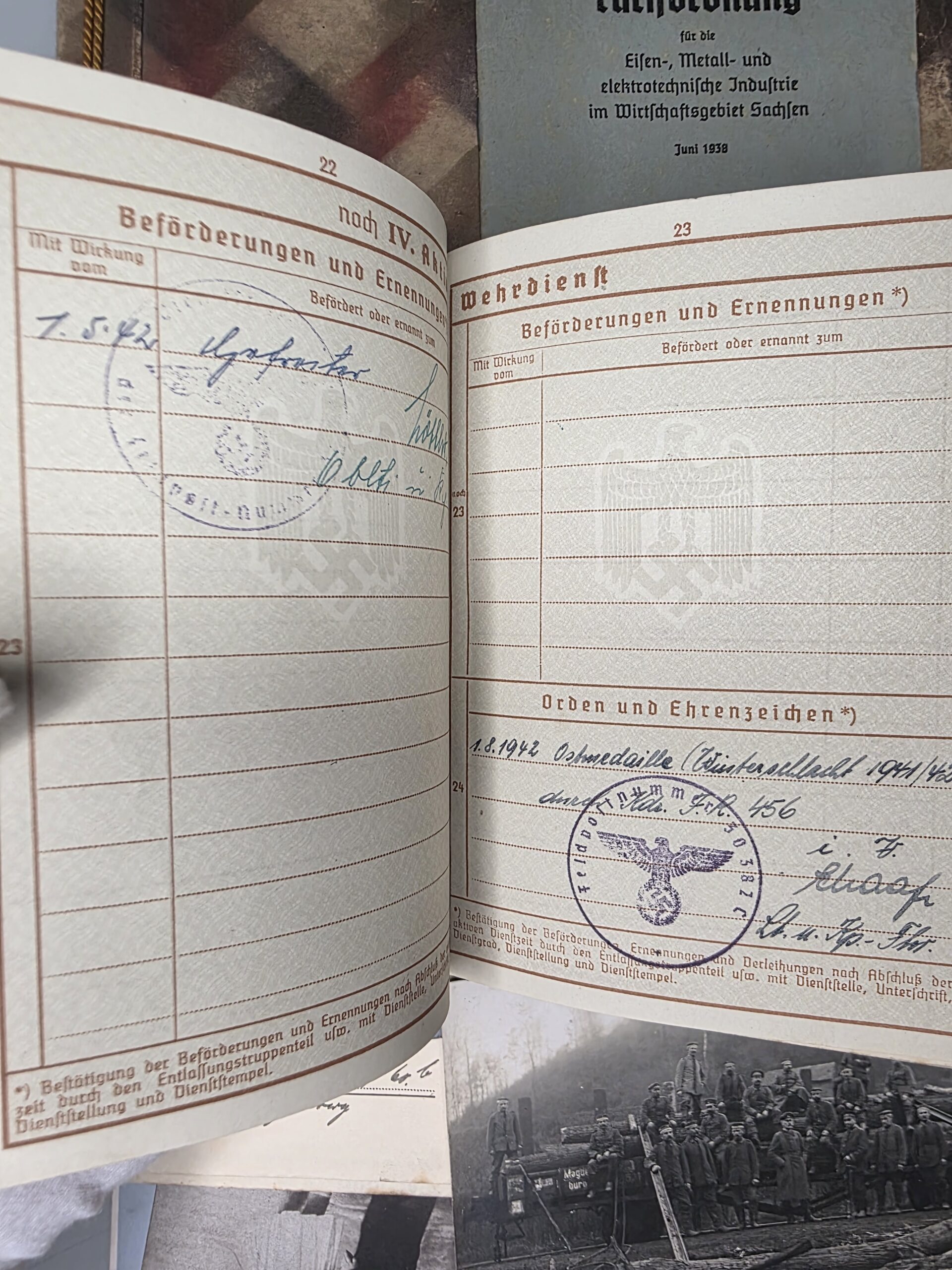
Page 22 records the soldier’s promotion to Gefreiter, apparently effective from 1 May 1942.
Page 23 contains an entry dated 1 August 1942 for the:
Ostmedaille – Medaille Winterschlacht im Osten 1941/42
Commonly known among collectors as the Eastern Front Medal or “Frozen Meat Medal,” it was instituted for service during the severe winter campaign of 1941–1942. The qualification conditions concerned service in the designated eastern operational area during the relevant winter period.
The original German award title is handwritten in the Wehrpass and accompanied by an official Infanterie-Regiment 456 stamp and authorising signature. This is an award entry only; the physical medal is not visible among the supplied contents and should not be described as included.
Wound and Final Campaign Entries
Page 34 records that the soldier was wounded on 15 October 1942. The entry is accompanied by an official unit stamp. A following line appears to document treatment in a reserve military hospital.
Another entry dated 21 December 1942 refers to fighting in Russia, while the auction description connects the record with operations under the German 9th Army.
The group includes a letter dated 8 January 1943 from Wehrmeldeamt Freiberg concerning the death of the husband. The original German wording apparently states that he had suffered a wound “on the field of honour,” reflecting the formulaic official language used in wartime casualty communications.
The letter creates an important documentary connection between the service and medical entries in the Wehrpass and the information subsequently communicated to his family.
No exact date or place of death should be added unless it can be transcribed directly from the letter or another accompanying document.
Additional Military and Civilian Material
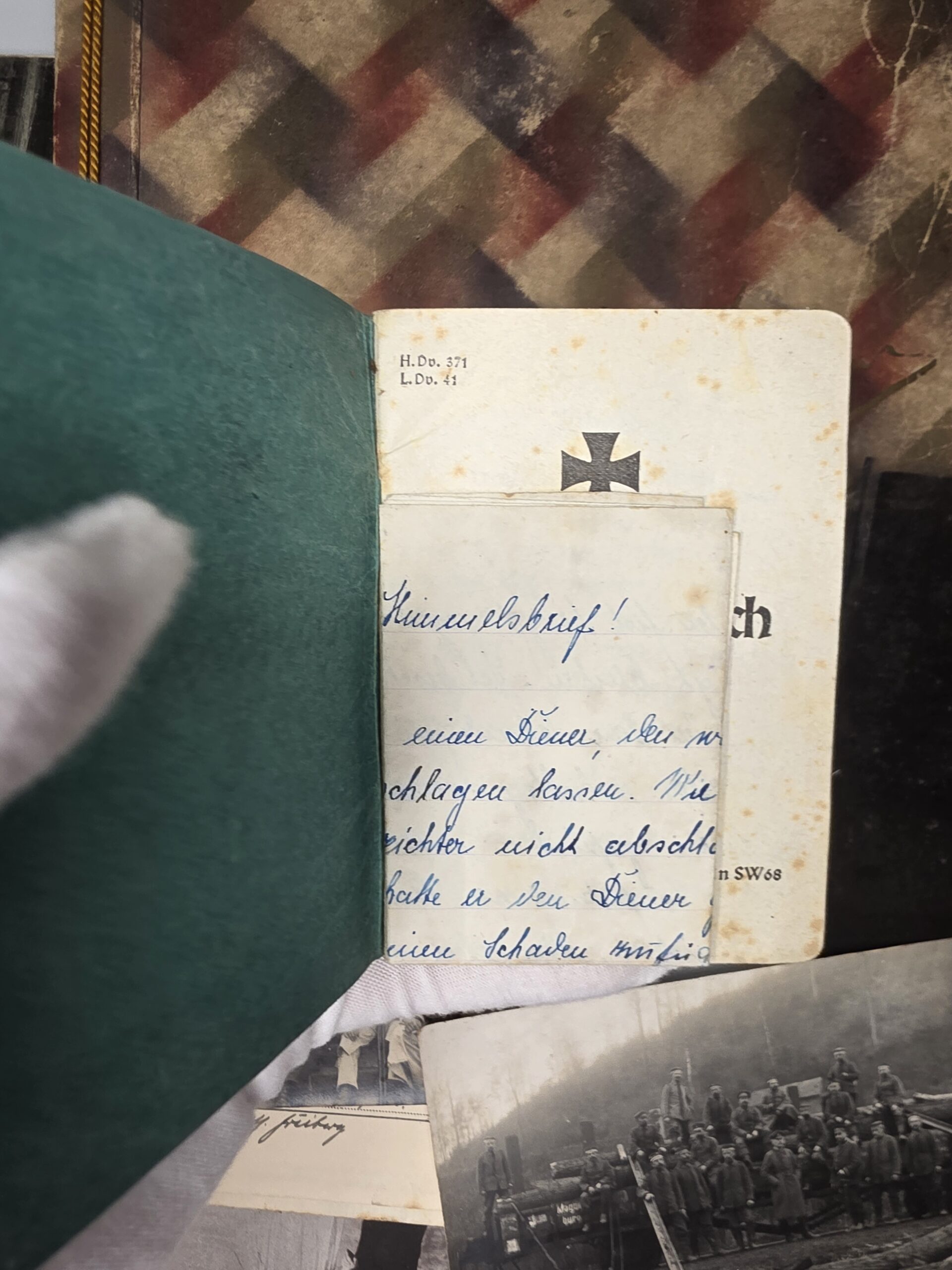
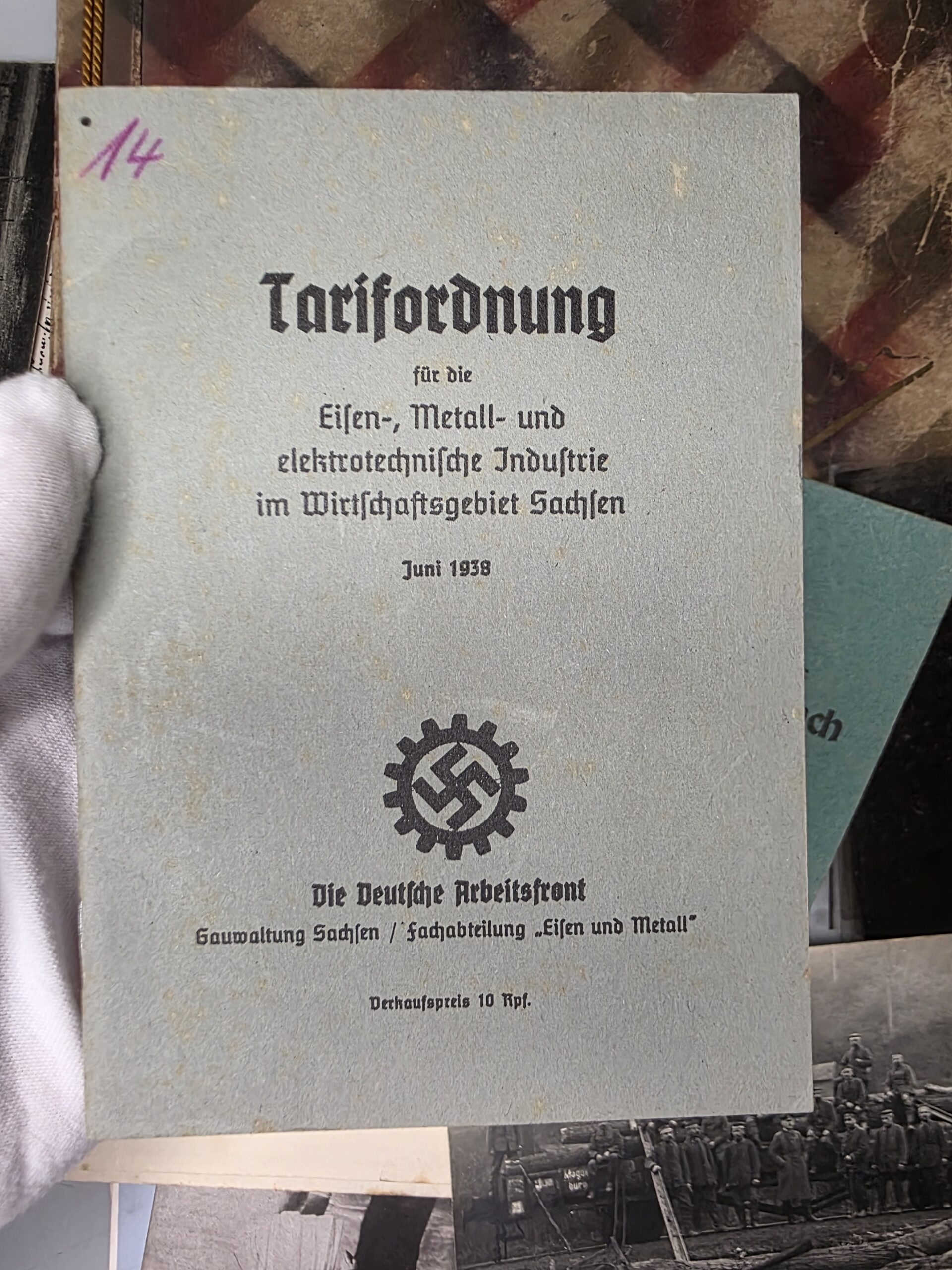
The estate includes more than the Wehrpass. Visible and described material includes:
- Official letters dated 1936, 1937 and 1943
- DAF wage regulations for the iron, metal and electrical industries in Saxony, dated June 1938
- An Evangelisches Feldgesangbuch or Protestant military hymnbook
- Employment certificates and other civilian records
- Photographic negatives
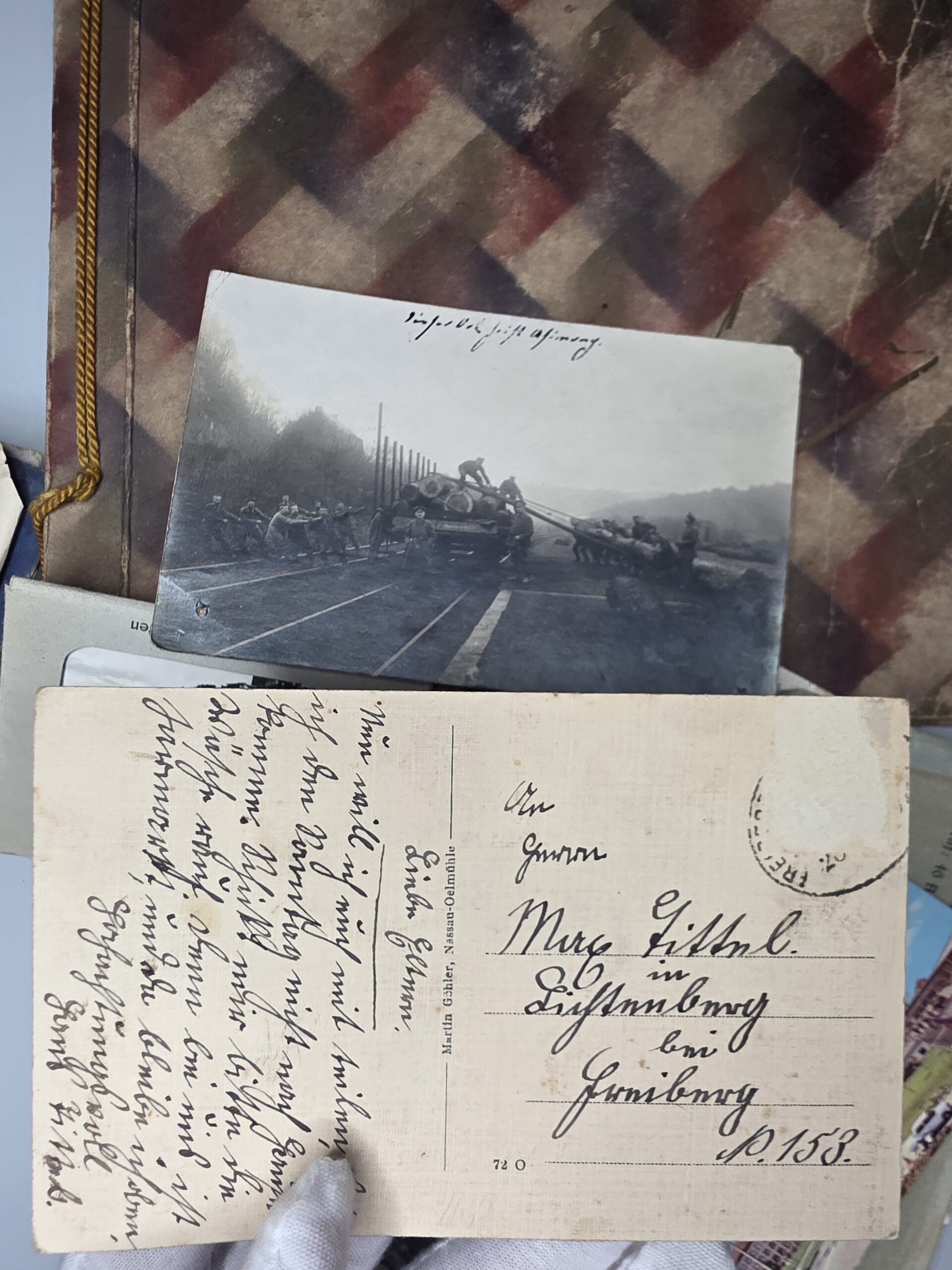
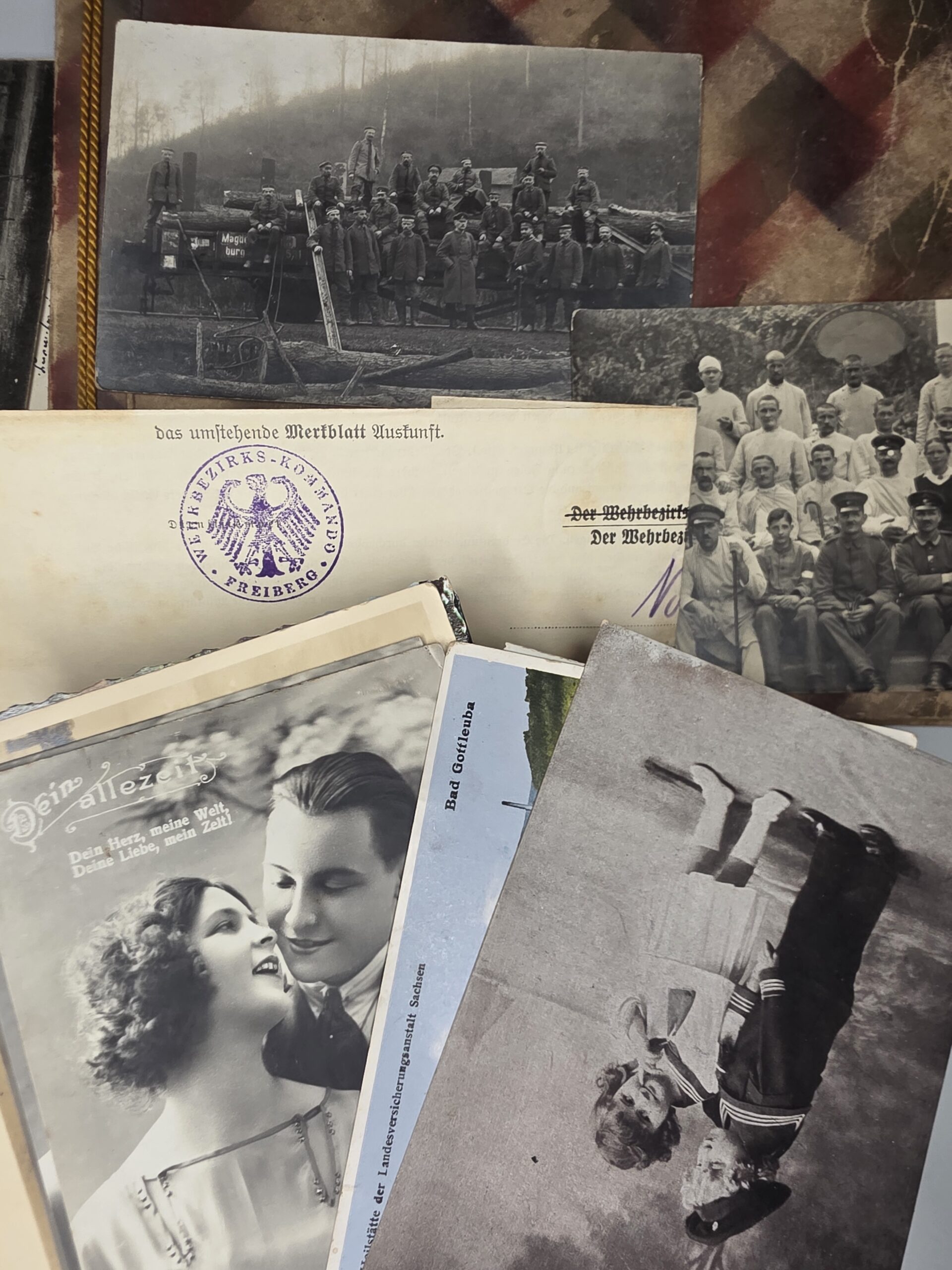
- Group and workplace photographs
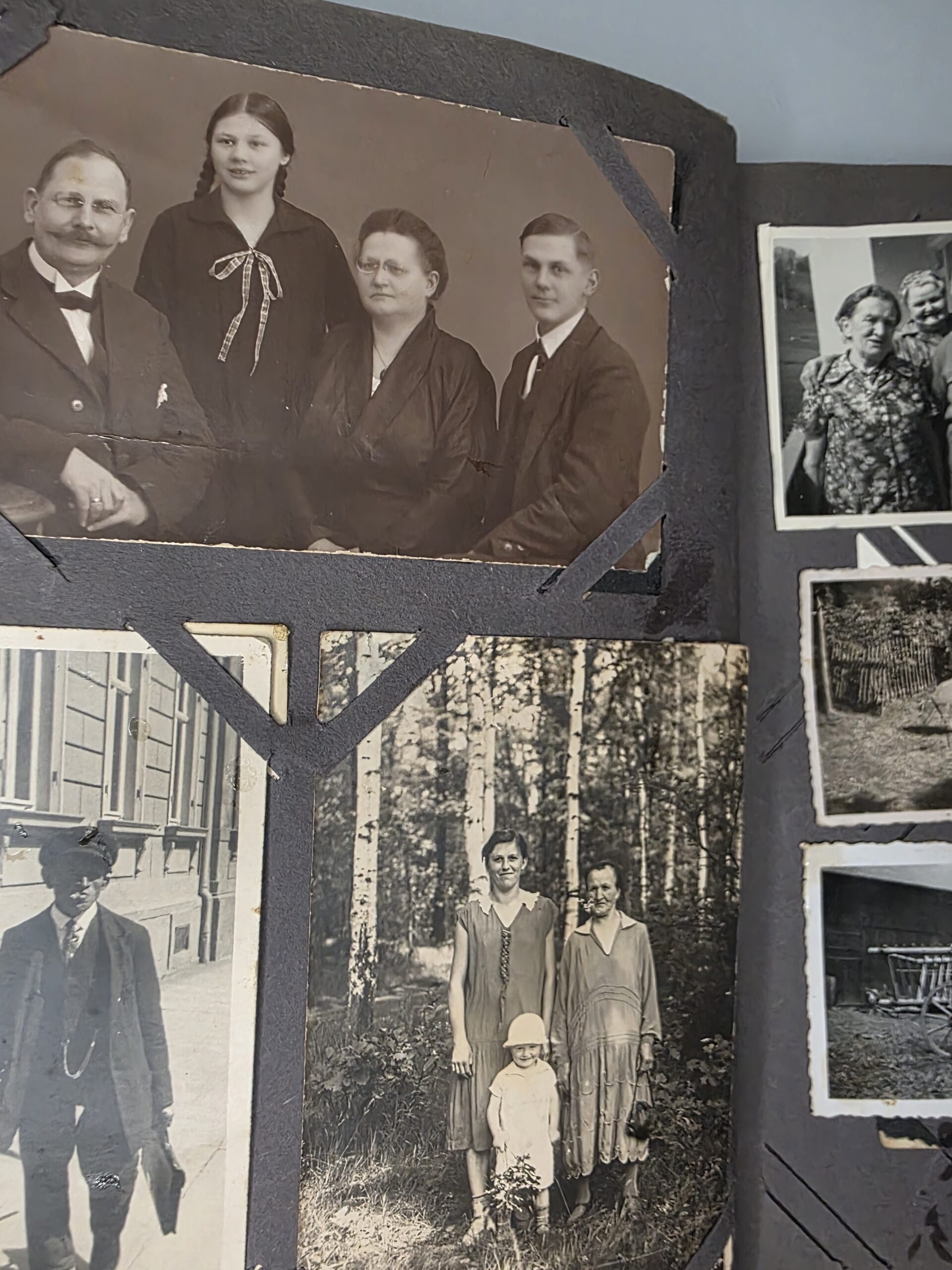
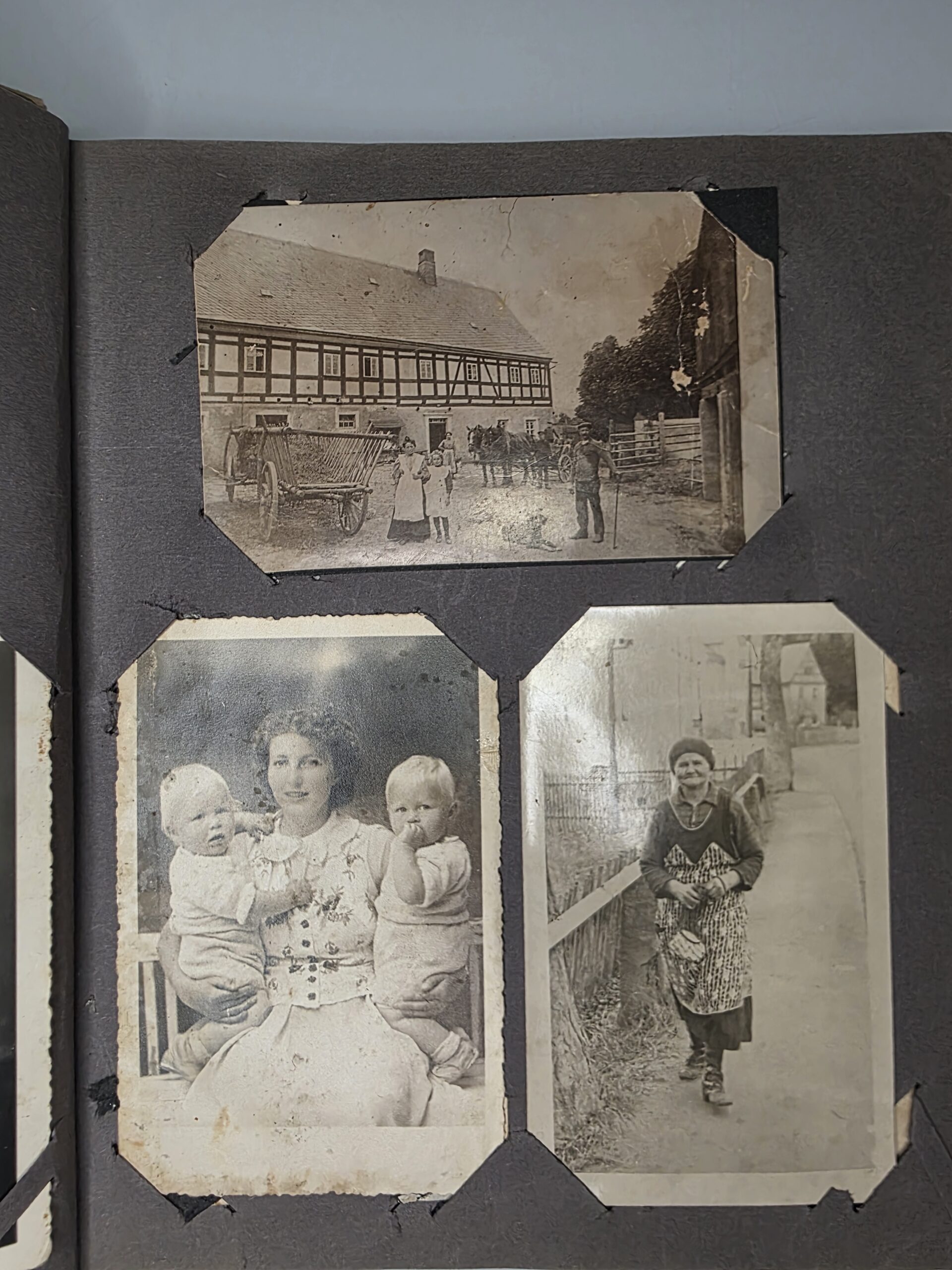
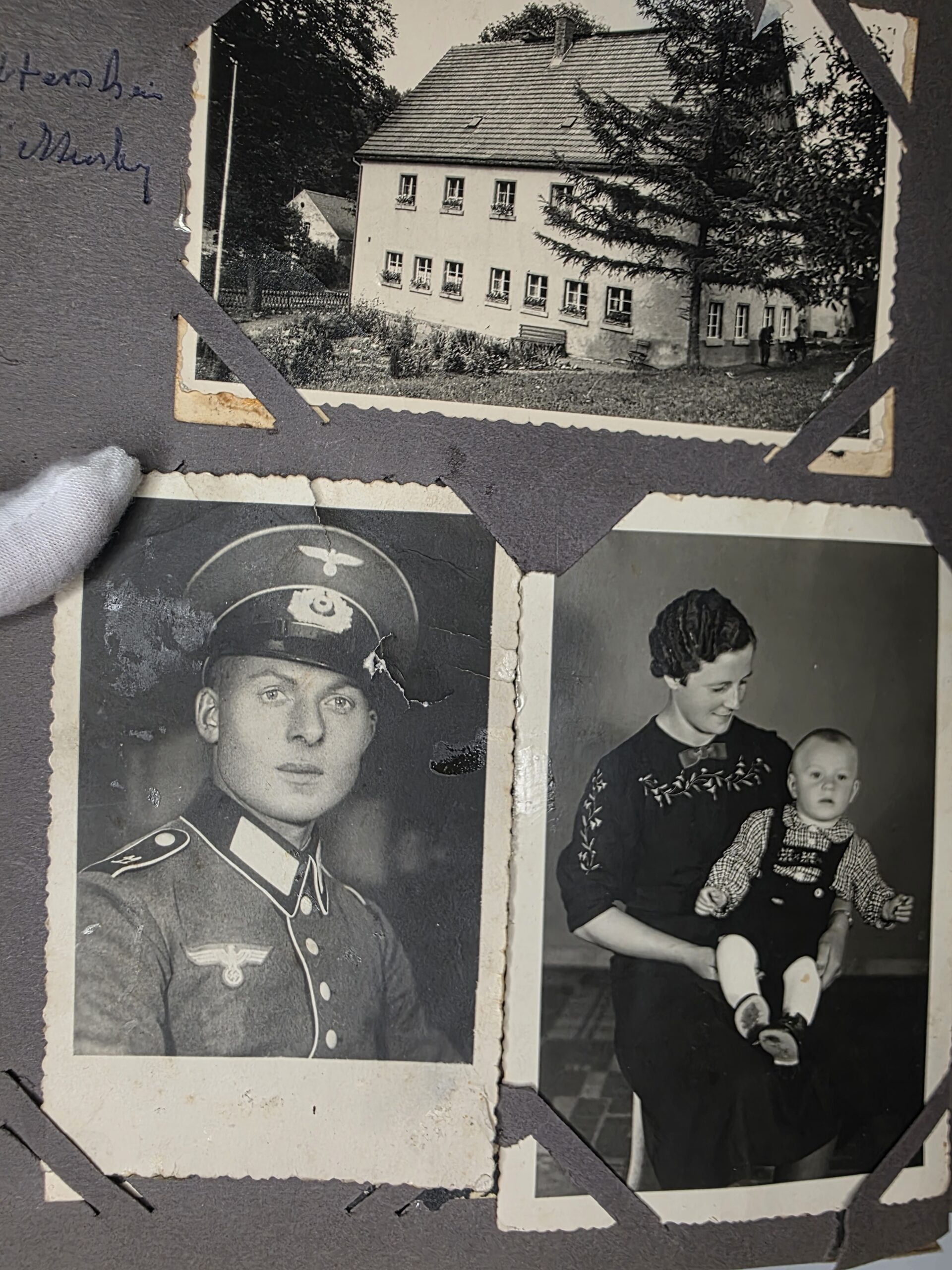
- Personal and family photographs
- A photograph album extending back to approximately 1900
- Saxon topographical postcards
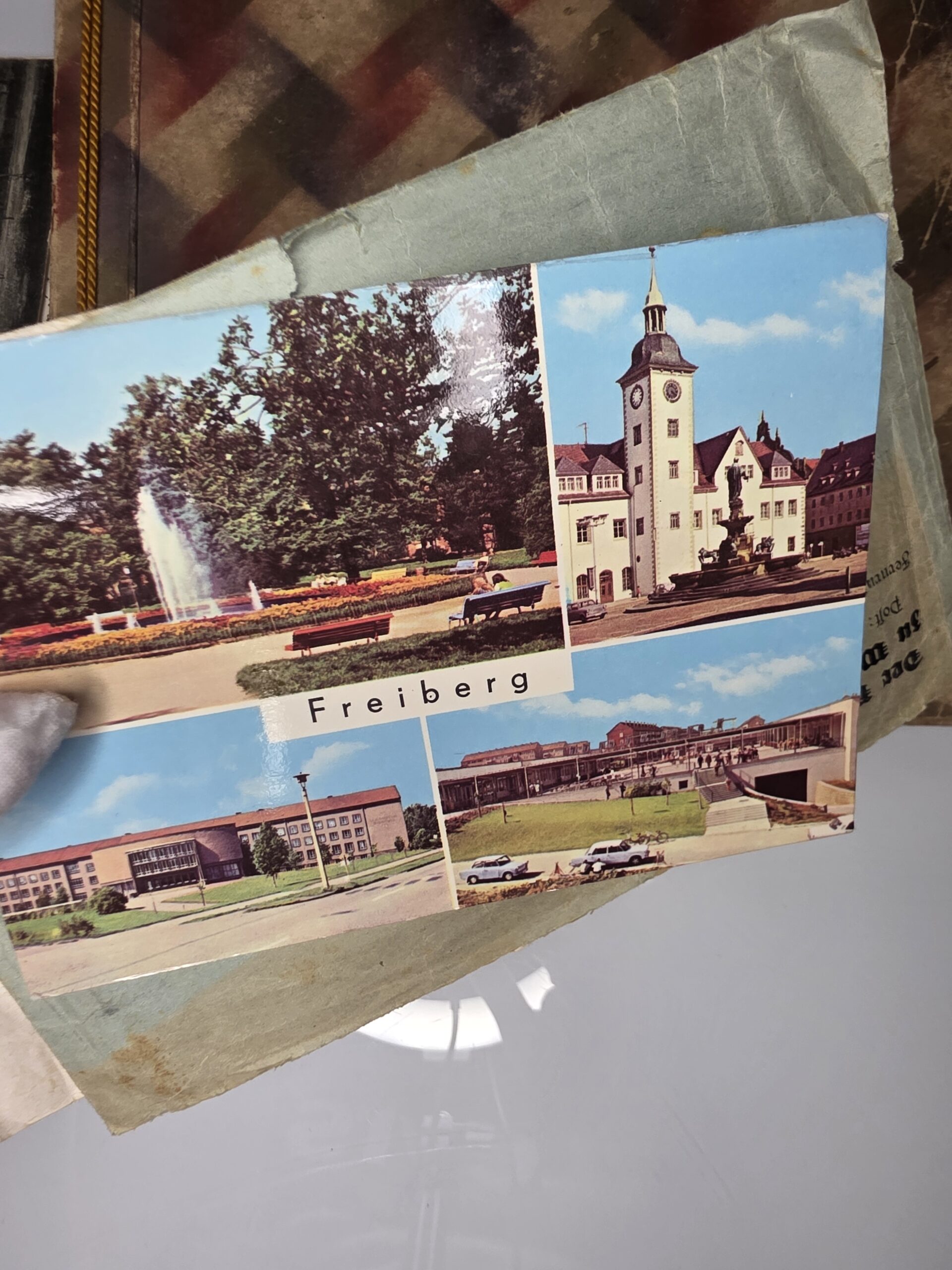
- Freiberg postcards
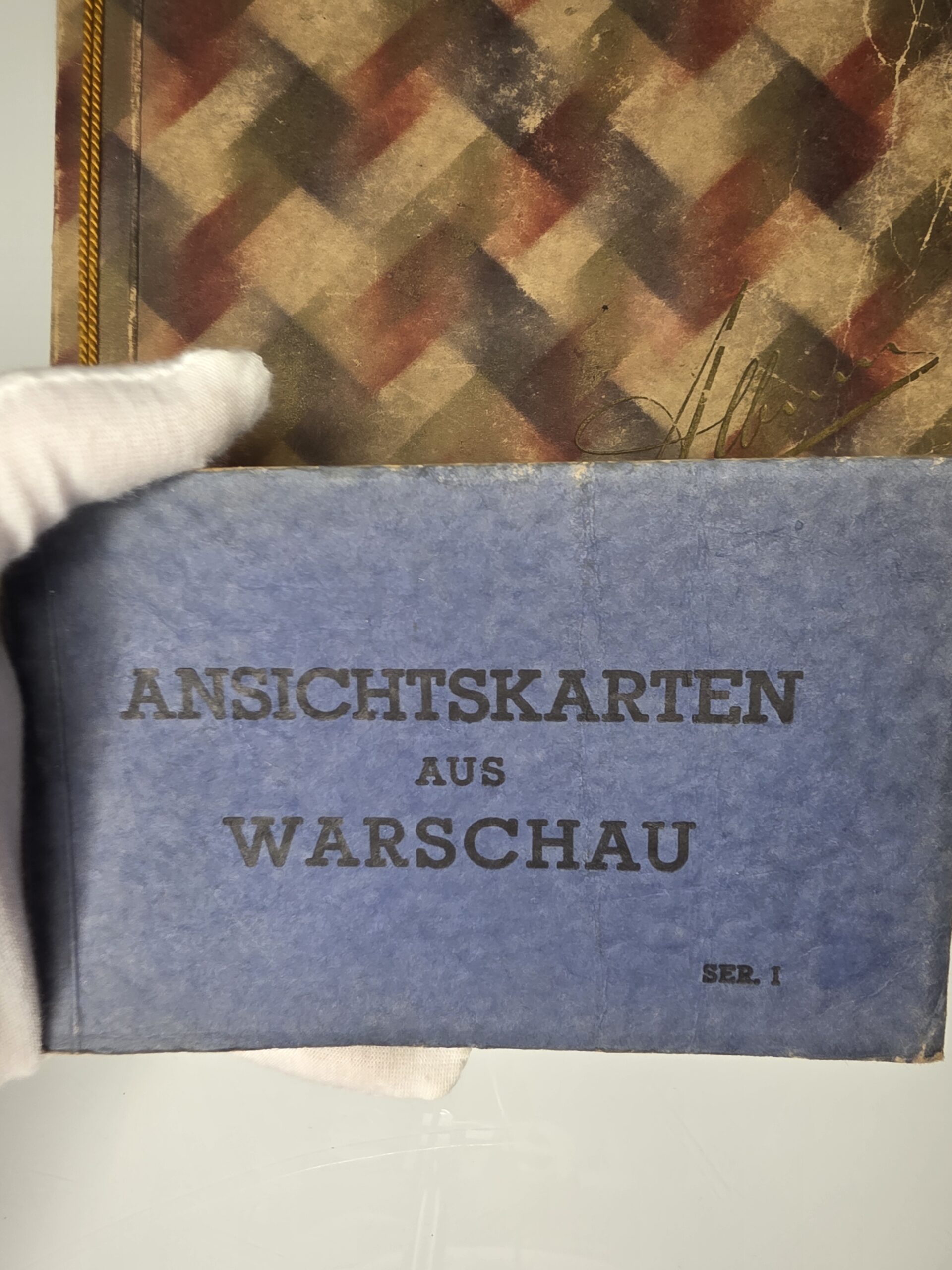
- Warsaw view-card booklet
- Written and postal-used cards dated approximately 1931–1976
- Unused patriotic postcards dating from 1917
- Later family and commemorative material
The photographs show both military and civilian portraits, family groups, children, buildings, social occasions and workplace scenes. Together, these materials place the soldier within a broader family and regional setting.
The Wehrpass as a Historical Record
A Wehrpass was a German military-service record maintained as part of the conscription and personnel system. It differs from a Soldbuch, which was carried by the serving soldier for day-to-day identification and pay administration.
The Wehrpass could record personal information, training, units, promotions, campaigns, awards, wounds and other service details. In cases involving death or disappearance, the completed Wehrpass was often returned to the next of kin through the relevant military-registration authority.
That administrative practice helps explain why a Wehrpass, casualty correspondence and family papers may survive together in the same estate. A reference overview of the document’s purpose and structure is available from Wehrmacht Awards’ Wehrpass guide.
Collector’s Interest
The strongest element of DOC172 is the relationship between the records. The Wehrpass does not simply contain a portrait and unit stamp; it documents:
- Pre-war military registration
- Entry into active service
- Replacement-unit assignment
- Field-unit service
- Promotion to Gefreiter
- Eastern Front campaign history
- Award of the Ostmedaille
- A documented combat wound
- Hospital treatment
- Official death correspondence
- Associated family material
Collectors normally place greater value on a military record with identifiable campaign, award, wound and casualty content than on a minimally completed Wehrpass.
The wider estate also has value for research into Freiberg, Saxon family history, German industrial employment, postal history and everyday civilian life before and after the war.
Condition and Authenticity
The Wehrpass is in good period condition with expected handling, page wear, minor marks and age toning. Its cover retains the printed eagle and Wehrpaß title. The identification photograph, official stamps, handwritten entries and signatures remain clearly visible.
The accompanying books, documents, postcards and photographs vary in condition. Expected characteristics include creasing, edge wear, corner mounting, surface marks, fading, postal wear and age-related toning. The family album shows some photographs held by period corner mounts.
The materials are presented as original period items. Their typography, construction, stamps, handwriting, photographic processes and patterns of wear appear consistent with their respective periods. No forensic examination or third-party certificate has been stated.
All photographs form part of the condition and content description. The archive should be preserved and offered as one coherent group.
Historical Responsibility Notice
This group is offered strictly for historical, documentary, educational and collecting purposes. Military and political symbols are shown only because they form part of the original historical material. Autographs & Militaria has no political or ideological affiliation with the organisations or regime represented.
Additional information
| Availability | Available |
|---|
Only logged in customers who have purchased this product may leave a review.
Related products
German Document Archive 1911–1967 – DAF, University and Business Papers
Original price was: 249,00 €.199,00 €Current price is: 199,00 €.
20% Off
WWII German Document Collection – U-Boat Training, DAF & Arbeitsbuch Archive
Original price was: 490,00 €.440,00 €Current price is: 440,00 €.
10% Off
WWII German Document Archive 1938–1945 – Wehrmacht, IDs & Ration Papers
Original price was: 275,00 €.240,00 €Current price is: 240,00 €.
13% Off
WWII German Wehrpass Archive – Feldpost & WWI Militärpass
Original price was: 380,00 €.340,00 €Current price is: 340,00 €.
11% Off
Reviews
There are no reviews yet.