WW2 German Documents: Complete Collector’s Guide to Wehrpass, Soldbuch, Kennkarte & Award Papers
WW2 German documents are among the most informative historical objects available to collectors.
A medal can tell us that a decoration existed. A document can sometimes tell us who received it, where that person lived, where they served, what units they belonged to, where they worked and how their life intersected with the institutions of wartime Germany.
This is why documents have always interested me beyond their appearance as collectible objects.
A handwritten entry, official stamp, photograph or change of unit may appear insignificant in isolation. When several documents belonging to the same person survive together, however, they can reconstruct part of an individual biography that would otherwise have disappeared.
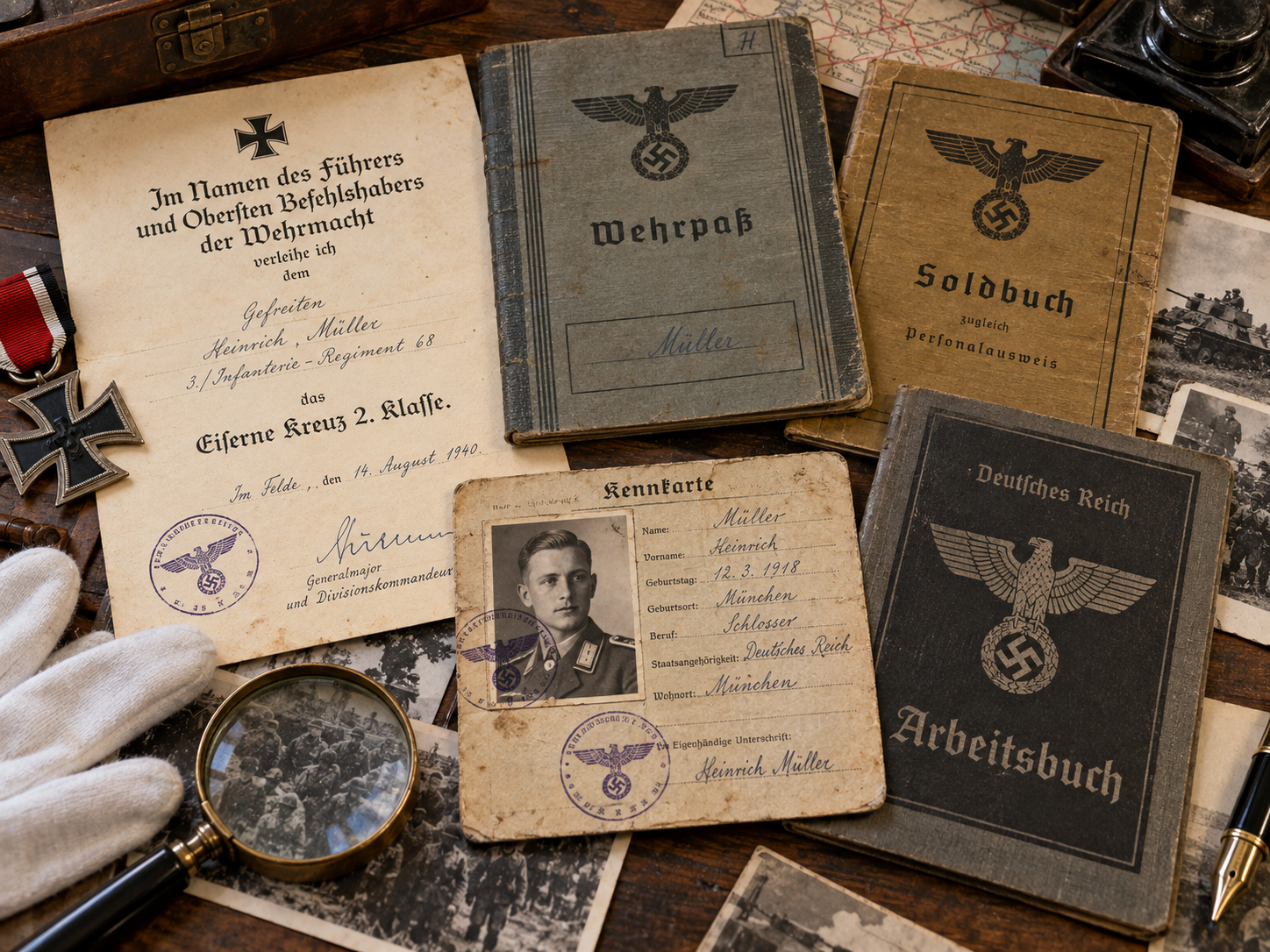
This guide introduces the principal types of German documents encountered by collectors from the Second World War period, including Wehrpass, Soldbuch, Kennkarte, Arbeitsbuch, award certificates and personal document groups.
It also explains what collectors should examine when assessing authenticity, provenance, condition and historical research potential.
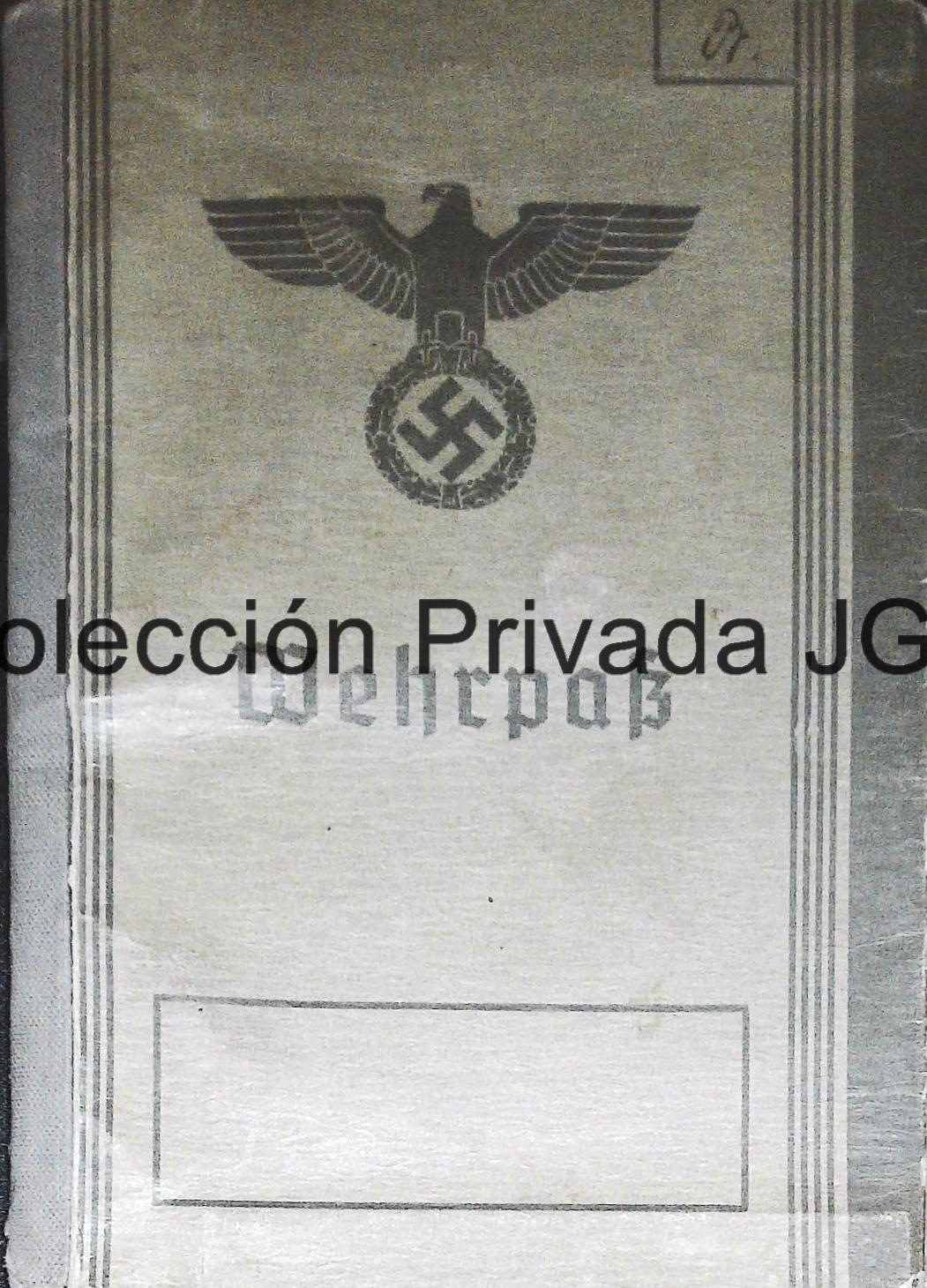
WW2 German Documents at a Glance
German wartime bureaucracy produced an enormous variety of documents.
The German Federal Archives today preserves millions of personnel-related military records, including Wehrpässe, Soldbücher, Wehrstammbücher and medical documents. This demonstrates the extraordinary scale of the surviving documentary record.
| Document | General purpose | Collector research value |
|---|---|---|
| Wehrpass | Military service record | Very high |
| Soldbuch | Soldier’s pay/identity book | Very high |
| Kennkarte | Civil identification | High |
| Arbeitsbuch | Employment record | High |
| Award document | Confirmation of decoration | High to very high |
| Feldpost correspondence | Military mail | Variable |
| RAD documents | Labour-service records | High |
| Medical documents | Health/hospital information | High |
| POW documents | Captivity/release documentation | High |
| Document groups | Multiple related records | Often exceptional |
The value of a document is not determined simply by rarity.
Its real interest often lies in how much information can be reconstructed from it.
What Is a Wehrpass?
The Wehrpass was a military service record associated with Germany’s system of military registration and conscription.
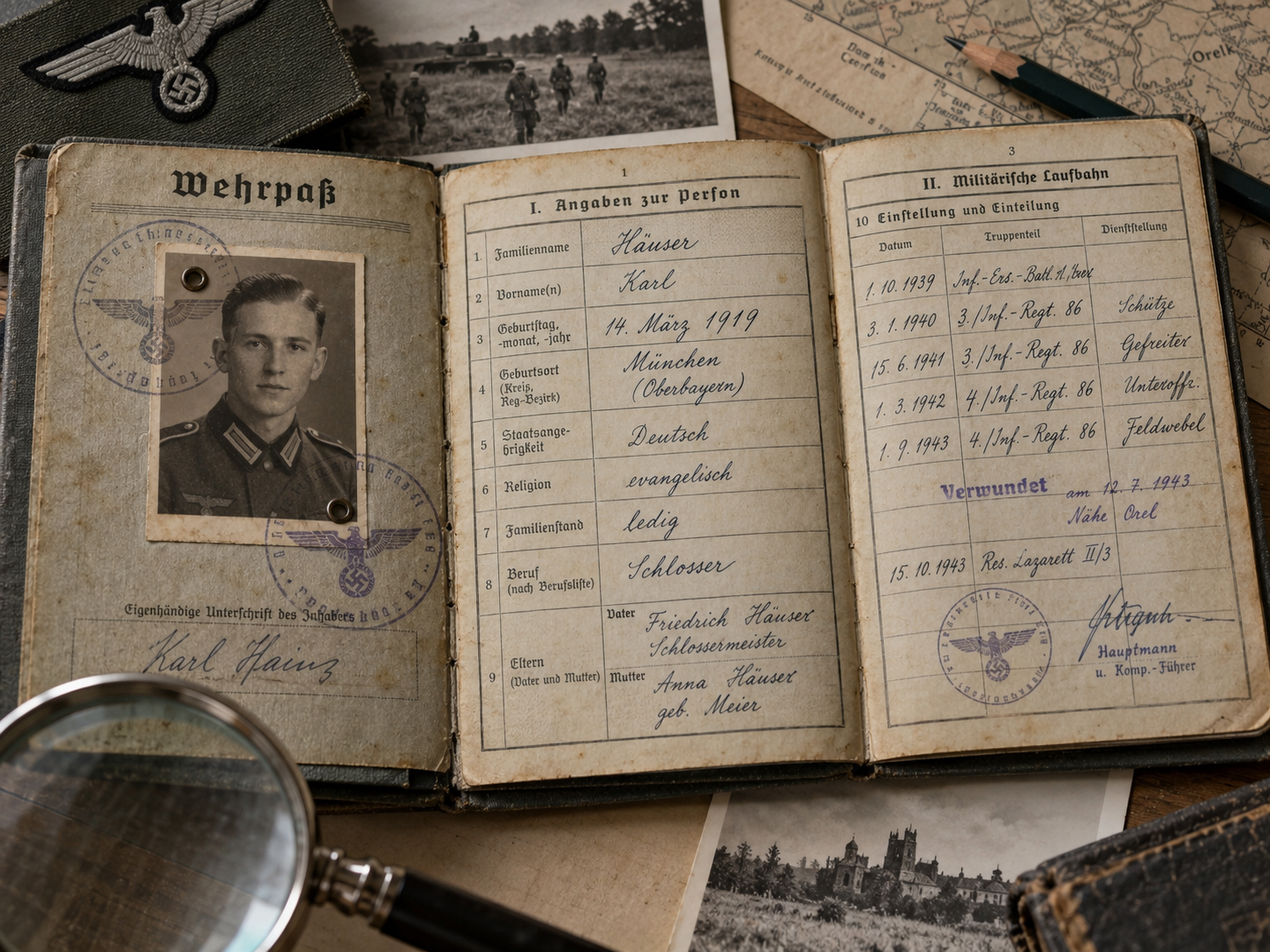
Surviving museum examples show Wehrpässe issued by Wehrbezirkskommandos and containing photographs, handwritten entries, official stamps and military information. The Deutsches Historisches Museum preserves multiple examples dating from the wartime period, including documents recording casualties and military status. Deutsche Digitale Bibliothek
A Wehrpass can contain information such as:
- personal details;
- photograph;
- military classification;
- units;
- training;
- promotions;
- campaigns or areas of service;
- awards;
- wounds or medical information;
- and, in some cases, details relating to death or discharge.
Once a man entered active military service, the Wehrpass normally became part of the administrative record rather than being the identity document he carried daily.
That distinction becomes important when comparing it with the Soldbuch.
What Makes a Wehrpass Interesting to Collect?
Two Wehrpässe may appear nearly identical externally while containing completely different historical stories.
One may belong to someone who never saw active combat.
Another may document successive units, campaigns, decorations, wounds and ultimately death in service.
The cover therefore tells us very little.
The content is the collectible.
What Is a Soldbuch?
The Soldbuch served a different practical purpose.
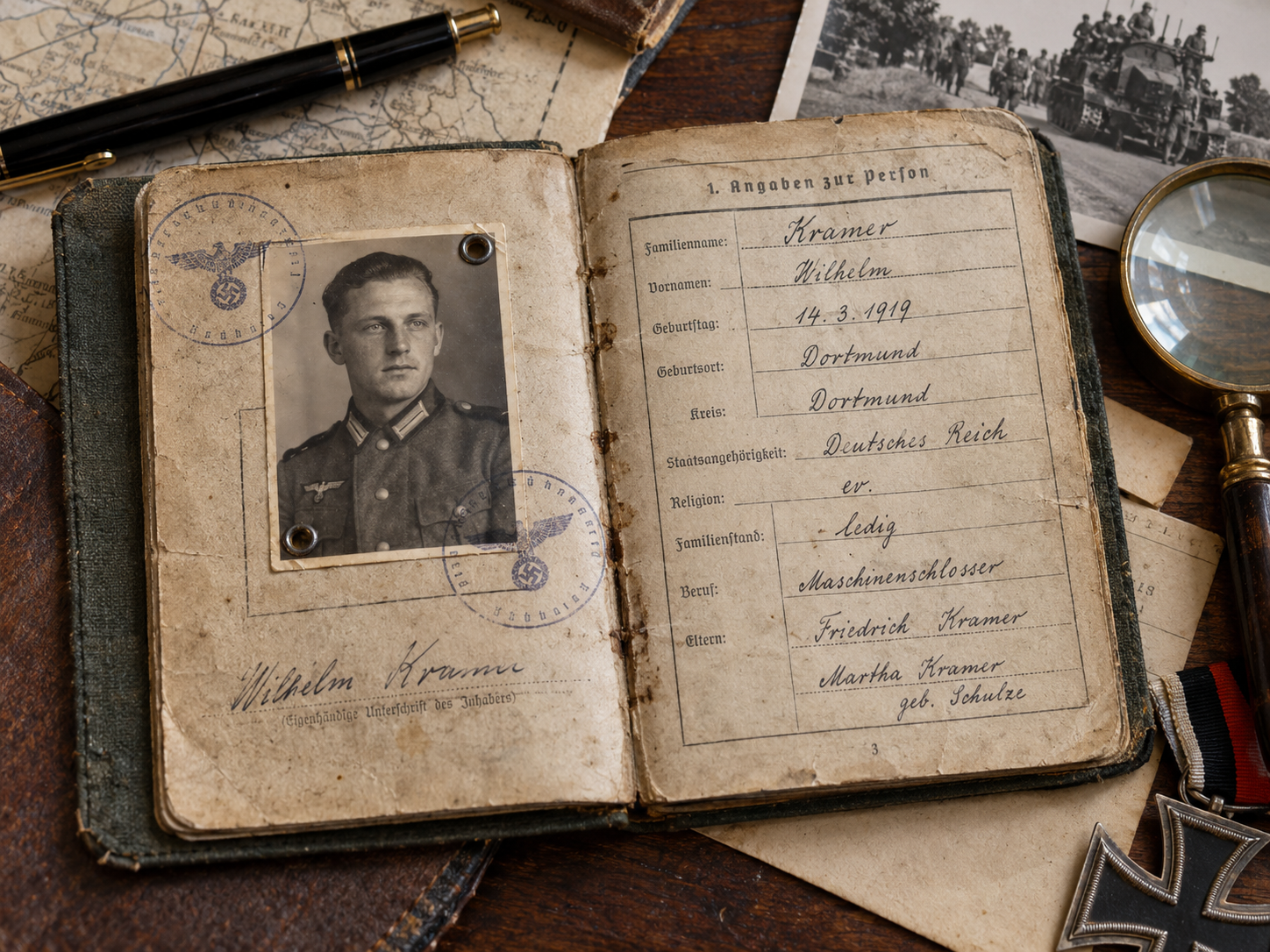
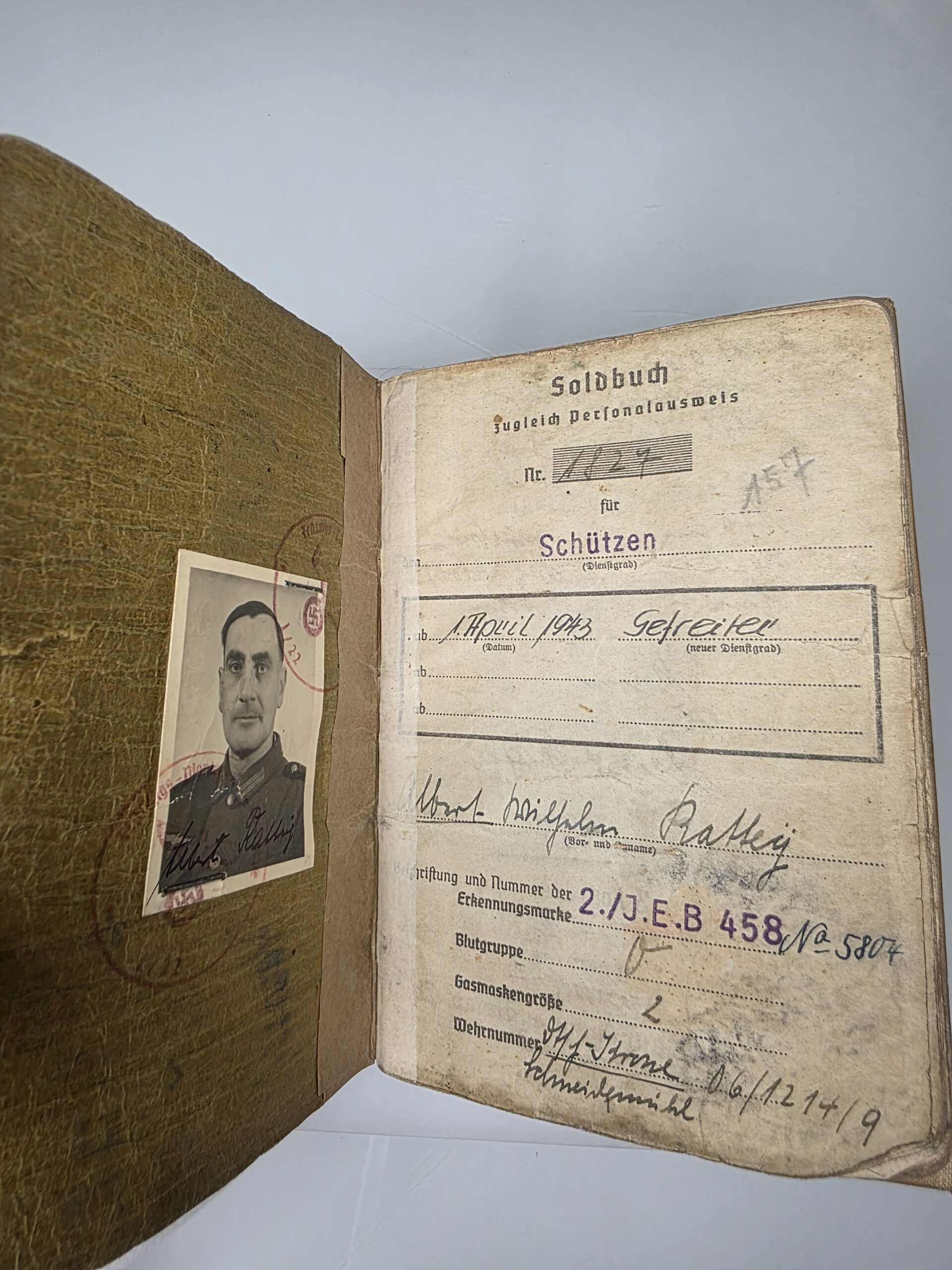
It was the soldier’s personal military pay and identification book and was normally carried by the serviceman.
Although the exact entries vary, Soldbücher may contain a photograph, personal details, unit references, pay-related information, equipment or clothing entries, medical or hospital information, leave entries and decorations.
This makes them particularly interesting because the document travelled with the individual.
Consequently, surviving Soldbücher may show considerably more physical wear than documents retained primarily in administrative custody.
German archival collections preserve Wehrpass and Soldbuch material together within wartime personnel records, while surviving personal archives also demonstrate that individuals could have both documents associated with their military careers. German Federal Archives (Bundesarchiv)
Wehrpass vs Soldbuch: What Is the Difference?
| Feature | Wehrpass | Soldbuch |
|---|---|---|
| Main role | Military service record | Pay book and military identification |
| Normally carried in active service | Generally no | Yes |
| Photograph | Usually | Usually |
| Unit information | Yes | Yes |
| Awards | Can be recorded | Can be recorded |
| Medical information | May appear | Frequently relevant |
| Equipment/pay entries | Less central | Important |
| Research value | Military career chronology | Day-to-day military record |
| Typical condition | Often better preserved | Frequently more worn |
The two documents overlap, but they should not be treated as interchangeable.
A complete research project may use information from both to reconstruct different aspects of the same person’s career.
What Is a Kennkarte?
The Kennkarte was a civilian identity document rather than a military service book.
A regulation dated 22 July 1938 introduced the Kennkarte as a general police identity document for use within the German Reich, with the regulation entering into force on 1 October 1938. Wikisource
For collectors, surviving Kennkarten can contain some of the most visually and personally distinctive information found in wartime documents:
photographs, fingerprints, signatures, names, places of birth, addresses, official seals and identification numbers.
They are therefore particularly useful for social and family history.
A Kennkarte should not be confused with a military Soldbuch or Wehrpass.
Its function was civilian identification.
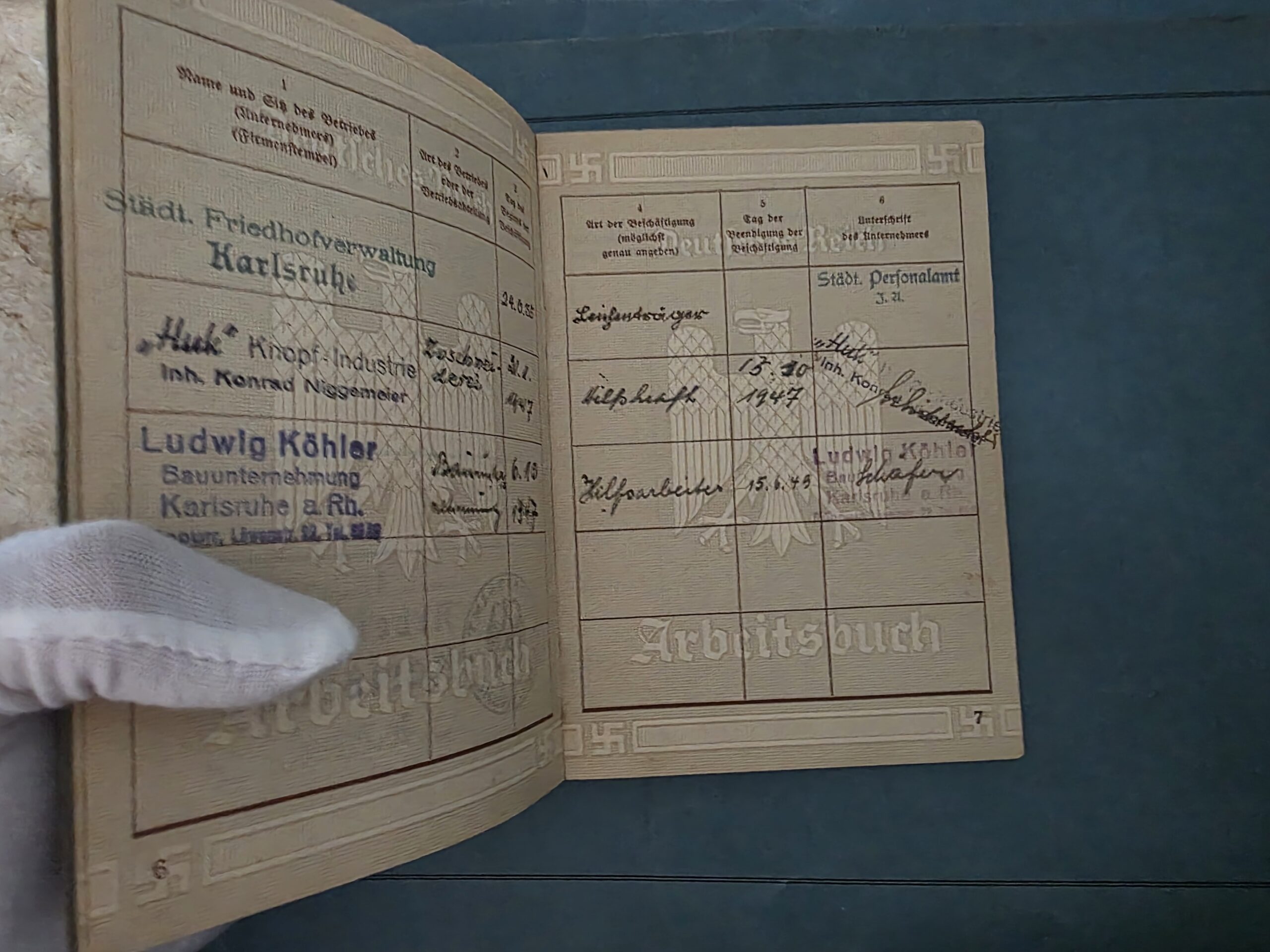
What Is an Arbeitsbuch?
The Arbeitsbuch was an employment record.
The system was introduced in 1935 as part of state labour administration. Surviving examples record professional training and employment periods, and labour offices were responsible for issuing and administering the documents. Deutsche Digitale Bibliothek
Arbeitsbücher can contain:
personal data, occupations, employers, dates of employment, official stamps and handwritten administrative entries.
For collectors they can be particularly useful when combined with military papers.
An Arbeitsbuch may help reconstruct what a person did before military service, between periods of service or after returning to civilian employment.
This is why I consider civilian paperwork an important part of militaria research rather than something completely separate from it.
German Award Documents
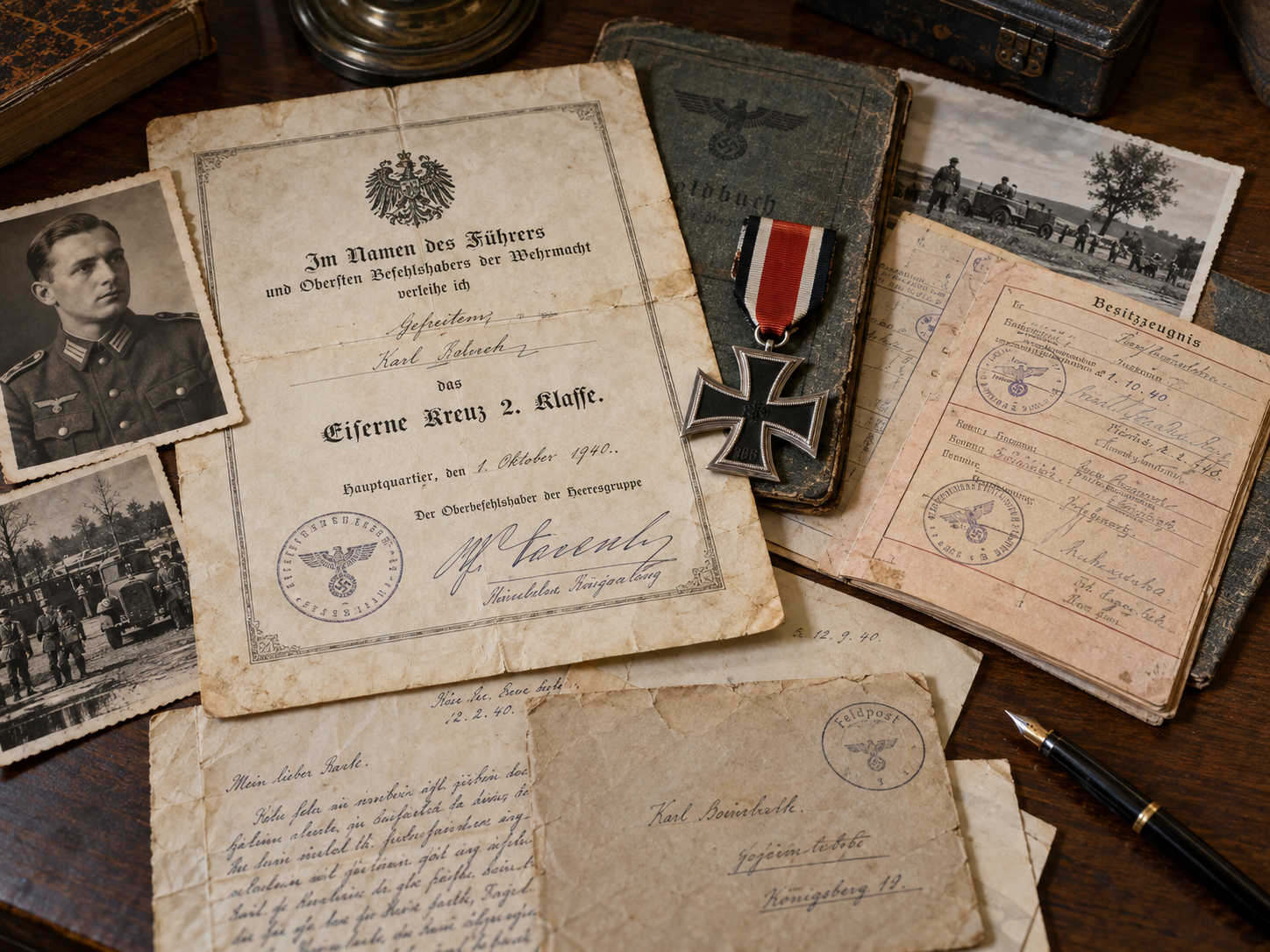
Medals and badges were often accompanied by documentation confirming an award.
These certificates can range from relatively simple field-issued documents to larger formal award certificates.
For collectors, an award document can sometimes be more informative than the medal itself because it may identify:
the recipient, military unit, date of award, issuing authority and sometimes the person who authorised or signed the document.
This makes award documents an important bridge between militaria collecting and autograph/document research.
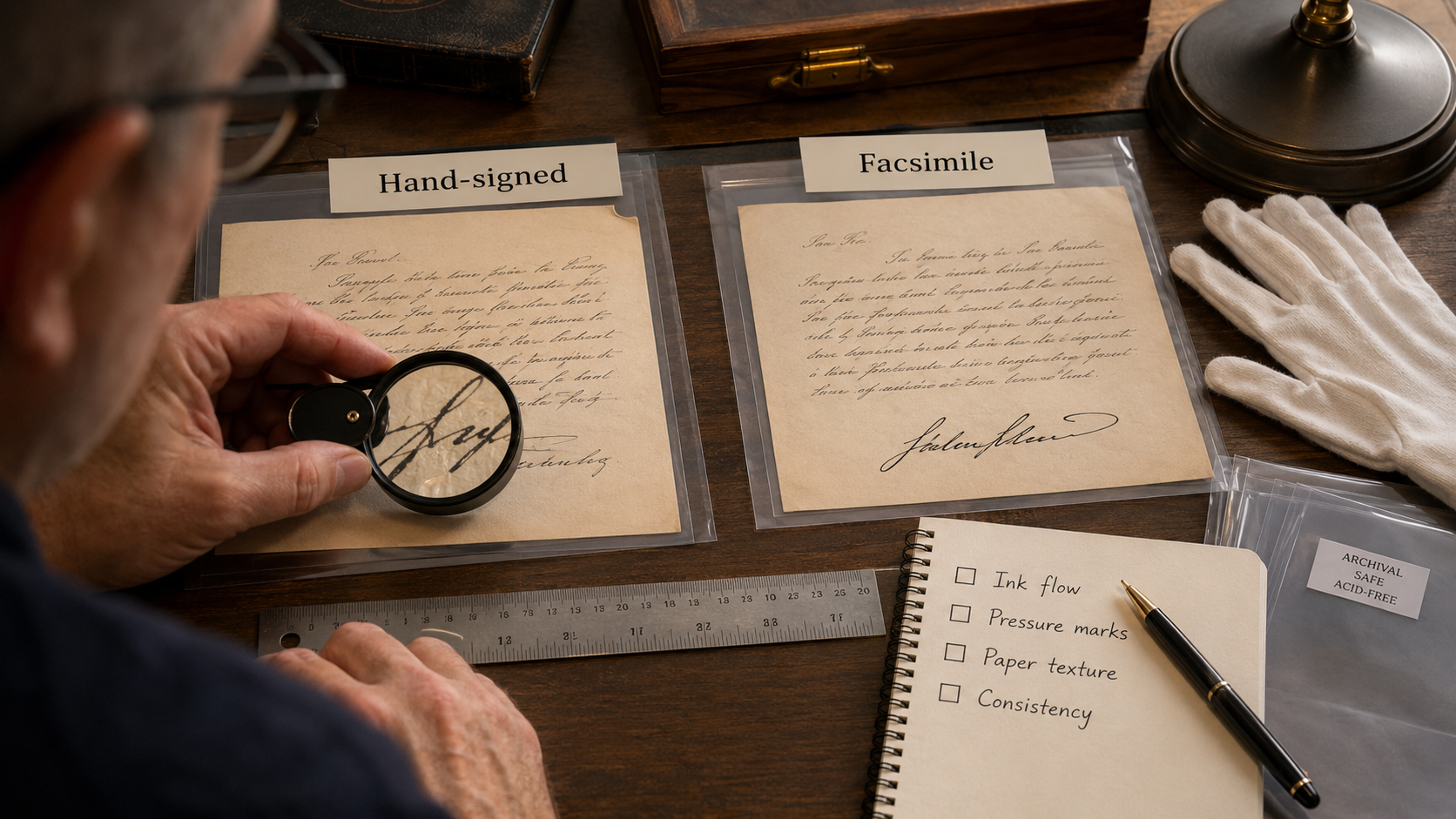
Original Signature or Facsimile?
Not every signature appearing on an official German document was individually handwritten.
Some documents used printed, stamped or facsimile signatures.
That distinction can have a major effect on attribution and collector value.
The presence of a famous name beneath a document does not automatically mean that the individual personally signed it.
Collectors should therefore examine ink, printing method, repetition patterns, document type and known administrative practice before describing a signature as original.
Other WW2 German Documents Collectors Encounter
Beyond the major document types, a collection may include:
RAD papers, Feldpost letters, military orders, hospital documents, medical books, POW records, discharge documents, death notifications, railway documentation, employment cards, membership papers, family records and administrative correspondence.
The German Federal Archives and Arolsen Archives preserve enormous collections illustrating how extensive this wartime documentary bureaucracy became. German Federal Archives (Bundesarchiv)
Collectors should avoid assuming that an unusual document is automatically rare simply because they have not encountered it before.
Identification should come before valuation.
How to Examine a WW2 German Document
When I examine a historical document, I prefer to treat it as a complete object rather than search for one feature that supposedly proves authenticity.
| Area | What to examine |
|---|---|
| Paper | Texture, thickness, ageing and consistency |
| Printing | Typography, printing method and layout |
| Ink | Handwritten vs printed/stamped entries |
| Stamps | Correct authority and contextual consistency |
| Photograph | Attachment method, seals and relationship with page |
| Handwriting | Natural variation, pressure and writing movement |
| Signatures | Original, facsimile, stamped or printed |
| Dates | Chronological consistency |
| Units | Whether military entries make historical sense |
| Alterations | Erasures, additions, replaced photographs or pages |
| Provenance | Relationship with other documents from the same person |
The most important principle is the same one we discussed with the Iron Cross:
authenticity should emerge from several consistent characteristics, not from one isolated test.
Common Warning Signs
A collector should investigate carefully when a document shows contradictory evidence.
Fresh-looking ink on heavily aged paper, inconsistent typefaces, suspiciously perfect high-value signatures, mismatched photographs, incorrect stamps or historically impossible combinations of dates and units can all justify further research.
However, irregularity alone does not prove forgery.
Wartime paperwork was created by thousands of offices and individuals under changing circumstances.
Corrections, overwriting, replacement photographs, handwritten amendments and administrative inconsistencies can occur on genuine documents.
Context matters.
Provenance and Document Groups
One of the strongest collecting principles is simple:
keep related documents together whenever possible.
A Wehrpass may be common.
An Arbeitsbuch may be common.
A group of photographs may individually appear ordinary.
But if all of them demonstrably belonged to the same person, together they can become a coherent historical archive.
Separating such groups destroys information.
For that reason, when I acquire a documented group, I prefer to preserve the relationship between the objects even when individual pieces might be easier to sell separately.
This approach is central to how material is documented in the Autographs & Militaria collection.
Are WW2 German Documents Valuable?
There is no universal price.
Value depends on a combination of:
document type, completeness, historical content, unit, recipient, photographs, signatures, awards, campaigns, provenance, rarity and condition.
A relatively ordinary Wehrpass with little recorded service may remain accessible.
A named archive connected with an unusual unit, documented combat history or significant historical individual can belong to an entirely different category.
This is another reason fixed internet price guides should be treated cautiously.
Research first. Value second.

Condition: Should Old Documents Be Restored?
Usually, aggressive restoration should be avoided.
Historical paper naturally develops toning, small tears, folds, staining and handling marks.
Collectors should distinguish between stabilisation and cosmetic restoration.
Removing original pages, laminating documents, applying adhesive tape or attempting to clean paper chemically can cause permanent damage.
Stable archival storage is normally preferable.
Use acid-free materials, avoid prolonged direct light, handle photographs and paper carefully and keep humidity reasonably stable.
Collector’s Note
The most interesting document is not necessarily the rarest.
A relatively ordinary Wehrpass containing clear unit information and surviving alongside photographs and employment records may tell a much richer story than an expensive document with no provenance.
For me, that is the attraction of this field.
The objective is not simply to possess old paper.
It is to understand what the document was, why it existed and what it can still tell us about the person who once carried or received it.
WW2 German Documents FAQ
What is the difference between a Wehrpass and a Soldbuch?
A Wehrpass primarily recorded military service and was generally maintained administratively during active service. A Soldbuch functioned as the serviceman’s pay and identification book and was normally carried by the individual.
Are Wehrpass and Soldbuch documents valuable?
They can be, but value depends heavily on content. Units, campaigns, awards, wounds, photographs, provenance and associated documents can be more important than the document type alone.
What is a Kennkarte?
A Kennkarte was a civilian identity document introduced under regulations issued in 1938. It may contain photographs, fingerprints, personal information, signatures and official stamps. Wikisource
What is a German Arbeitsbuch?
An Arbeitsbuch was an employment record used to document work history and help administer labour. The system was introduced in 1935. Deutsche Digitale Bibliothek
Does a Hitler signature on a document mean Hitler signed it personally?
No. Some official documents contain printed, stamped or facsimile signatures. The method of reproduction must be examined before attributing a signature as handwritten.
Can stamps prove that a document is original?
No. Stamps should be studied together with paper, printing, handwriting, dates, photographs, provenance and historical context.
Should WW2 documents be cleaned?
Usually not. Aggressive cleaning, tape, lamination and inappropriate repair can permanently damage historical paper.
Final Thoughts
WW2 German documents offer collectors something that many other historical objects cannot: information about individual people.
A Wehrpass can record military service.
A Soldbuch can preserve traces of a soldier’s daily administrative life.
A Kennkarte may preserve a civilian’s photograph, fingerprint and signature.
An Arbeitsbuch can reconstruct employment history.
An award document can connect a decoration directly to its recipient.
And when several documents survive together, they can become a small historical archive.
For that reason, good collecting should go beyond identification.
Preserve provenance.
Research the names.
Keep groups together.
Document what is known and distinguish it clearly from what is assumed.
The paper may be ordinary.
The information it preserves often is not.
Historical Responsibility Notice
Documents associated with Nazi Germany are presented by Autographs & Militaria exclusively as historical objects for collecting, preservation, education and research.
Their documentation does not represent endorsement, promotion or glorification of the regime or its ideology.
References & Further Reading
Bundesarchiv — Personnel records of military origin: preserva grandes fondos de Wehrpass, Soldbuch y otros documentos militares. Bundesarchiv – military personnel records
Deutsche Digitale Bibliothek / Deutsches Historisches Museum — Wehrpass examples. Deutsche Digitale Bibliothek – Wehrpass example
Arolsen Archives — Wartime registration and employment records. Arolsen Archives – War Time Card File
Deutsche Digitale Bibliothek — Arbeitsbuch des Deutschen Reiches. Deutsche Digitale Bibliothek – Arbeitsbuch
1938 Kennkarte regulation — original historical legal text. Verordnung über Kennarten, 22 July 1938
Services & Expertise
Positive Reviews
Authenticity Focused

Document Authentication & Certification
Certificates issued for collector and archival purposes

Graphology & Signature Analysis
Independent professional service
About the Author: Juan García Nicolás

Popular products
-
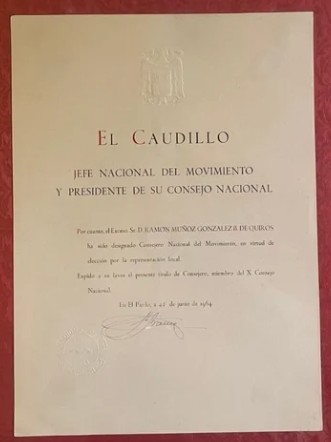 Francisco Franco Signed Council of the Movement Document – 1964 Appointment
Original price was: 890,00 €.790,00 €Current price is: 790,00 €.
Francisco Franco Signed Council of the Movement Document – 1964 Appointment
Original price was: 890,00 €.790,00 €Current price is: 790,00 €.
-
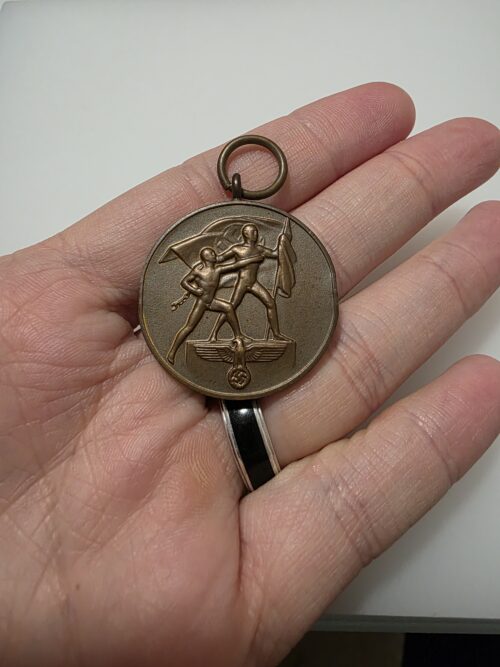 WWII German Sudetenland Medal 1938
39,00 €
WWII German Sudetenland Medal 1938
39,00 €
-
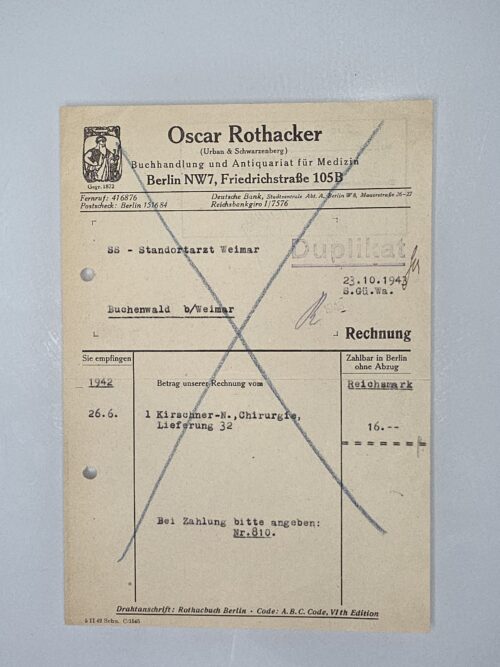 Buchenwald Camp Medical Correspondence: Rare 2-Document Group 1942–1943
Original price was: 495,00 €.375,00 €Current price is: 375,00 €.
Buchenwald Camp Medical Correspondence: Rare 2-Document Group 1942–1943
Original price was: 495,00 €.375,00 €Current price is: 375,00 €.
-
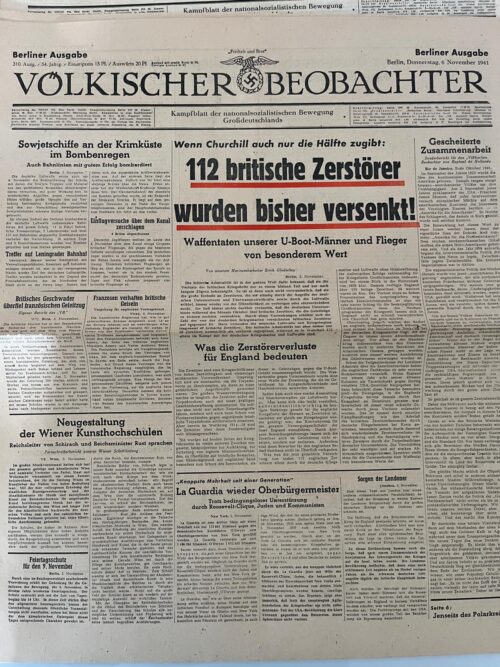 Original Völkischer Beobachter Berlin Edition Newspaper – 6 November 1941
Original price was: 79,00 €.69,00 €Current price is: 69,00 €.
Original Völkischer Beobachter Berlin Edition Newspaper – 6 November 1941
Original price was: 79,00 €.69,00 €Current price is: 69,00 €.
-
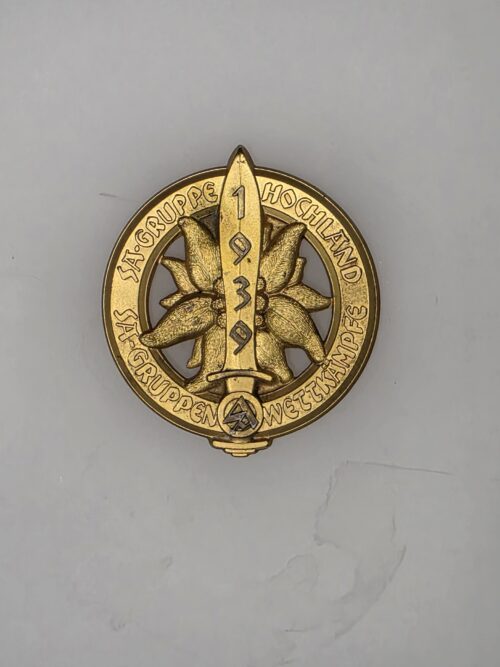 SA Gruppe Hochland 1939 Winner Badge – Original First Prize Plaque
Original price was: 395,00 €.325,00 €Current price is: 325,00 €.
SA Gruppe Hochland 1939 Winner Badge – Original First Prize Plaque
Original price was: 395,00 €.325,00 €Current price is: 325,00 €.
-
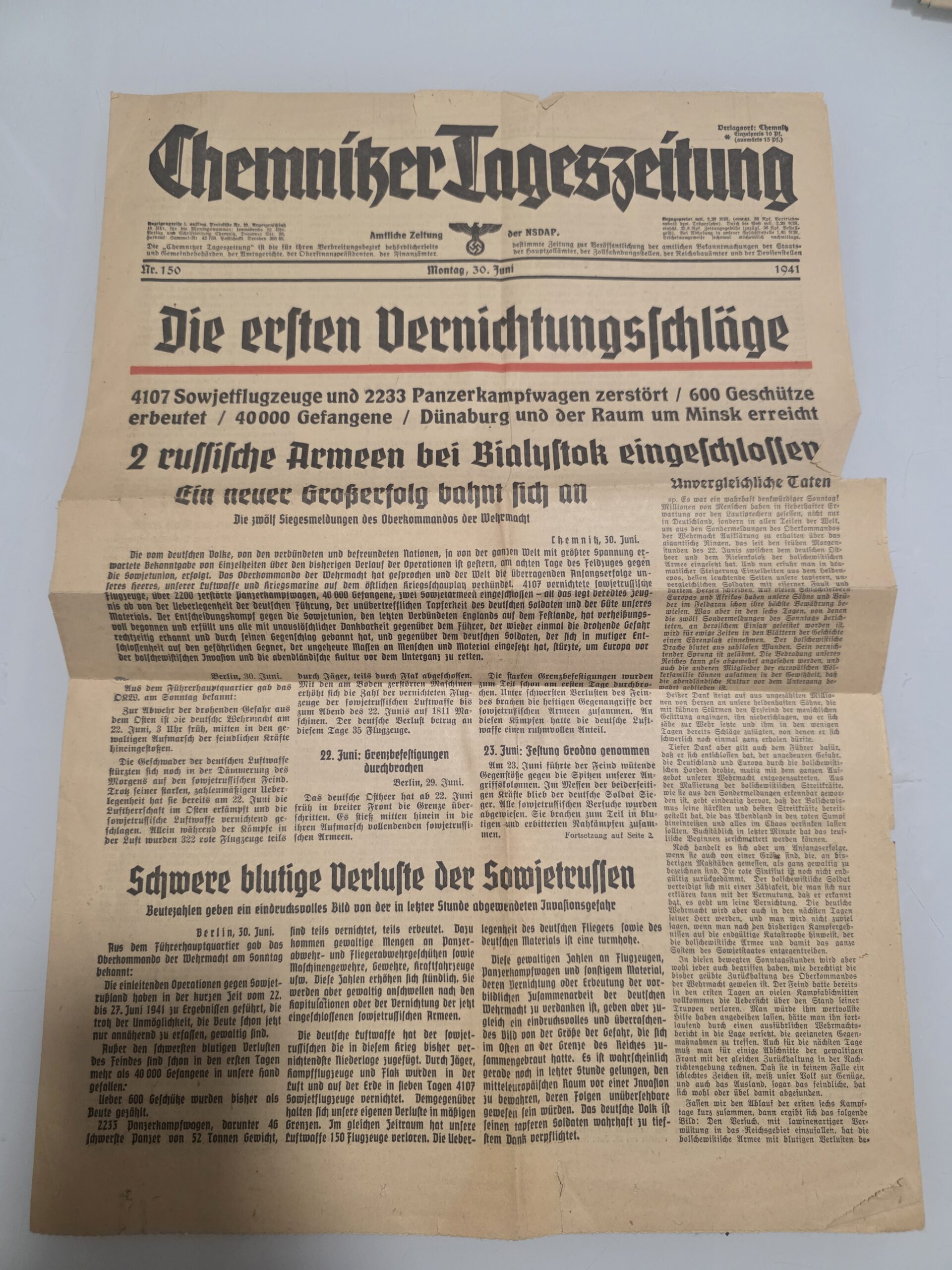 Original WWII German Newspapers 1939 & 1941 – Völkischer Beobachter + Chemnitzer Tageszeitung
119,00 €
Original WWII German Newspapers 1939 & 1941 – Völkischer Beobachter + Chemnitzer Tageszeitung
119,00 €
-
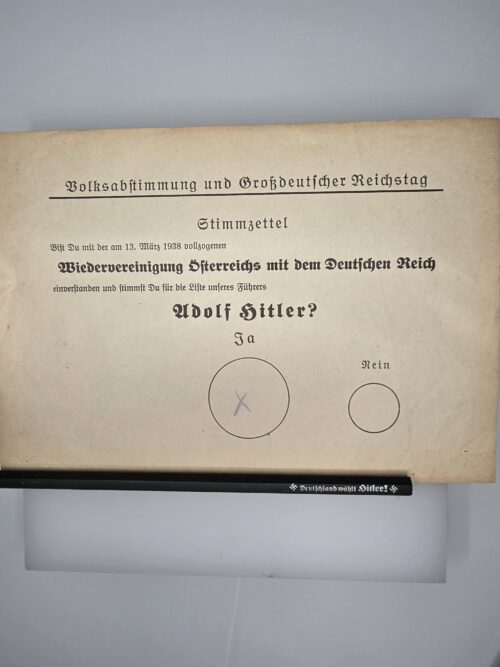 Original 1938 Anschluss Referendum Ballot and Hitler Election Pencil
Original price was: 200,00 €.149,00 €Current price is: 149,00 €.
Original 1938 Anschluss Referendum Ballot and Hitler Election Pencil
Original price was: 200,00 €.149,00 €Current price is: 149,00 €.
-
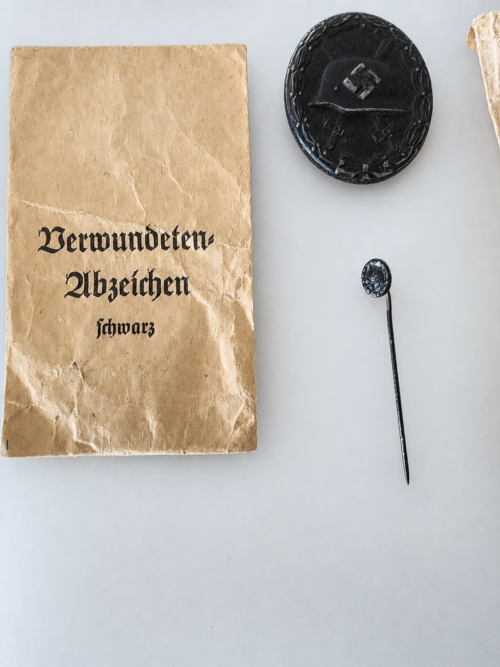 WWII German Wound Badge in Black with Miniature Pin and Original Packet
199,00 €
WWII German Wound Badge in Black with Miniature Pin and Original Packet
199,00 €
-
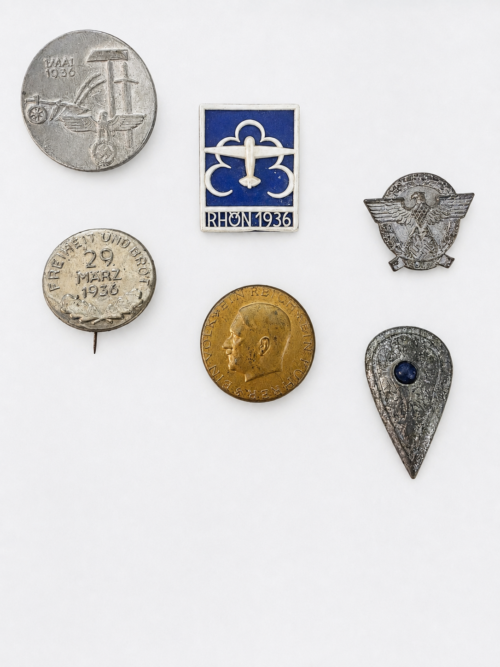 Original Third Reich German Badge Lot 1936 – Six Period Tinnies and Pins
99,00 €
Original Third Reich German Badge Lot 1936 – Six Period Tinnies and Pins
99,00 €
-
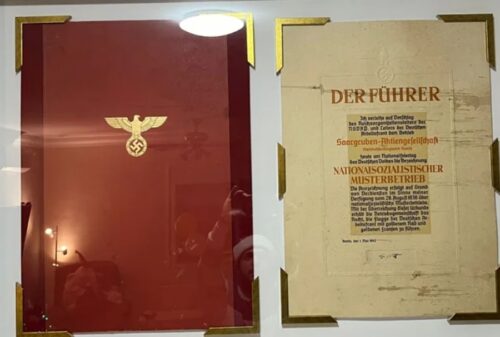 Certified Original Adolf Hitler Signature on 1942 National Socialist Model Company Award Document with Presentation Folder – Framed Historical Piece
Original price was: 9.000,00 €.7.900,00 €Current price is: 7.900,00 €.
Certified Original Adolf Hitler Signature on 1942 National Socialist Model Company Award Document with Presentation Folder – Framed Historical Piece
Original price was: 9.000,00 €.7.900,00 €Current price is: 7.900,00 €.