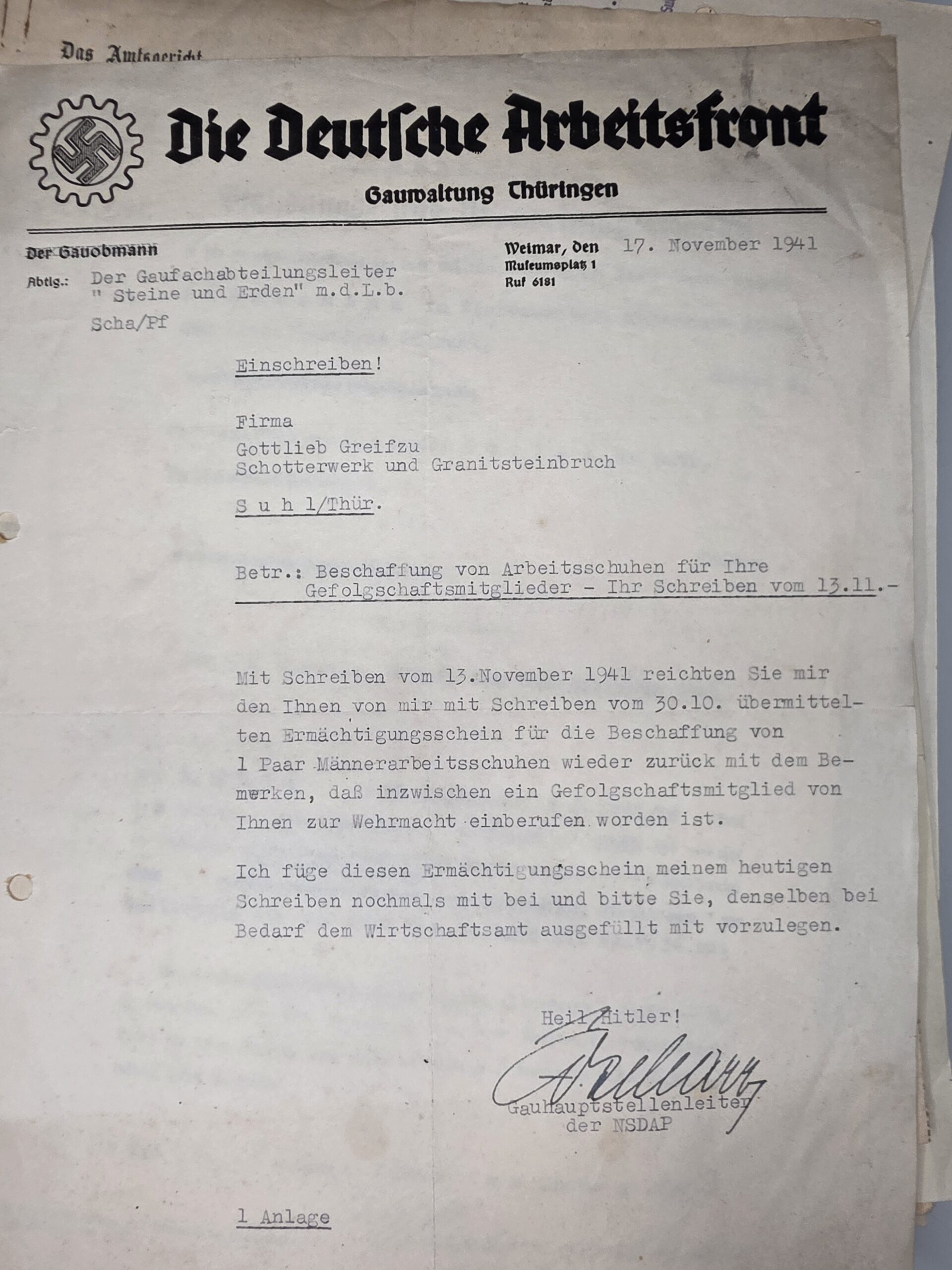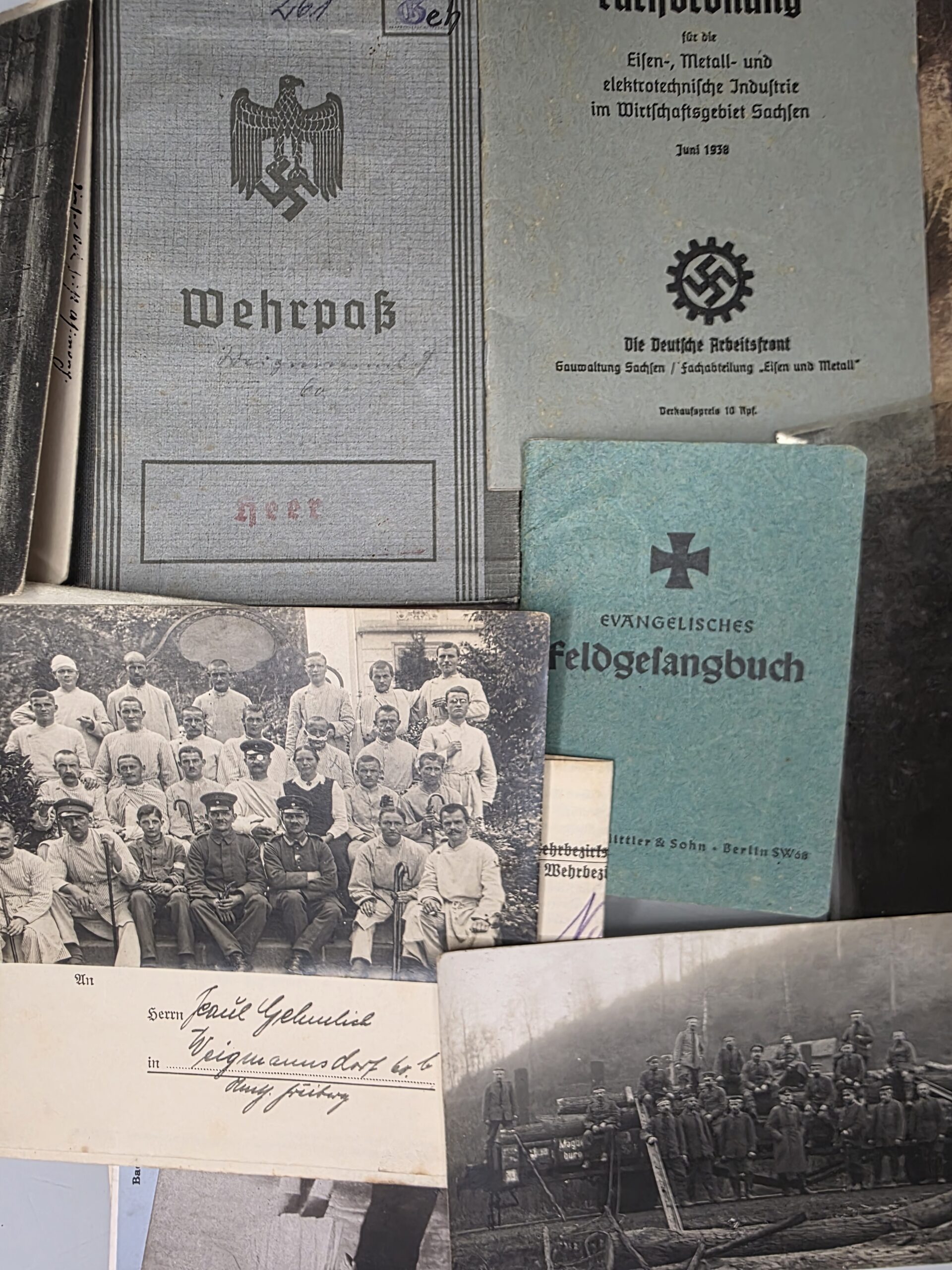
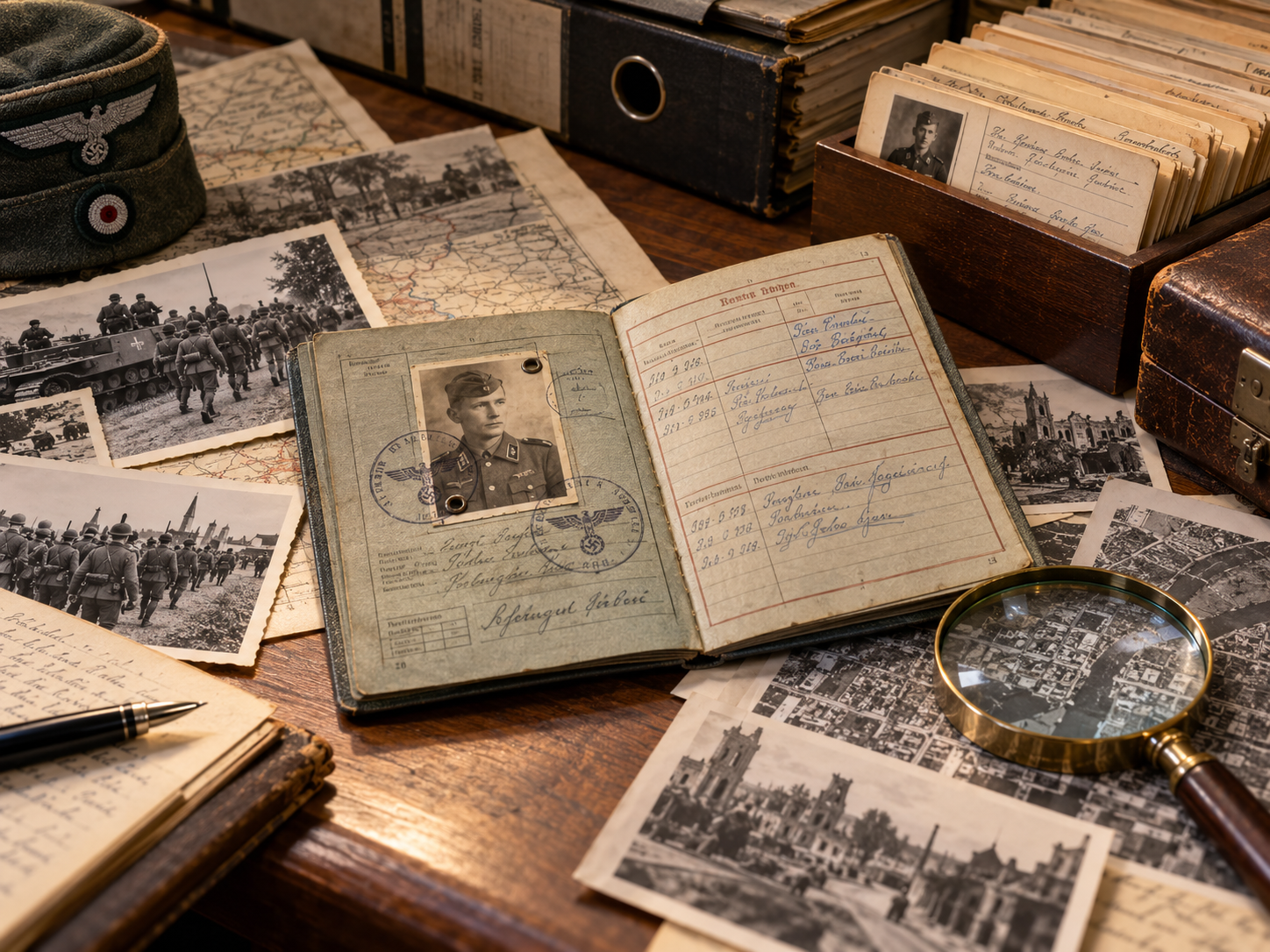
German Wehrpass Guide: How to Read and Research a WWII Military Service Record
A German Wehrpass can look deceptively simple from the outside.
A grey-green military booklet, a printed eagle on the cover, a photograph, official stamps and page after page of handwritten entries.
But once those entries are read in sequence, a Wehrpass can become one of the most informative documents available to a collector of German military history.
A single example may reveal a man’s civilian background, military registration, training, units, promotions, awards, transfers, campaigns and, in some cases, wounds, discharge or death.
The German Federal Archives today preserves Wehrpässe alongside Soldbücher, Wehrstammbücher, health records and other military personnel material. Its holdings include roughly five million such documents, illustrating the scale of the surviving documentary record. Bundesarchiv
For the collector, however, owning a Wehrpass is only the beginning.
The real value lies in learning how to read it.
What Is a German Wehrpass?
The Wehrpass was part of the German military personnel and conscription system.
It recorded information relating to a man’s military status and service history and was maintained as part of the administrative record.
This makes it fundamentally different from the Soldbuch, which served as a practical military pay and identification document used during active service.
A surviving Wehrpass can therefore provide a structured overview of a man’s military career rather than simply a snapshot of his day-to-day service.
If you want a detailed comparison between the two documents, see:
Wehrpass vs Soldbuch: 9 Key Differences Every Collector Should Know
The Bundesarchiv itself lists Wehrpässe, Soldbücher and related personnel documents among the principal surviving records of Wehrmacht personnel administration.
- German Wehrpass Guide: How to Read and Research a WWII Military Service Record
- What Is a German Wehrpass?
- What Information Can a German Wehrpass Contain?
- How to Read a German Wehrpass Step by Step
- 1. Start With the Cover — but Do Not Stop There
- 2. Identify the Holder
- 3. Examine the Photograph Carefully
- 4. Find the Wehrnummer and Registration Information
- 5. Separate Training Units From Field Units
- Common Wehrpass Unit Abbreviations
- 6. Build a Chronology Before Researching the History
- 7. Read Promotions as Historical Markers
- Awards and Decorations in a German Wehrpass
- Campaign and Service Entries: Read Them Carefully
- 8. Casualty and Death Entries Can Be Particularly Important
- How to Research a German Wehrpass
- The Bundesarchiv Should Be a Primary Research Source
- How to Check a German Wehrpass for Authenticity
- Common Collector Mistakes With Wehrpässe
- Wehrpass Groups Can Be More Valuable for Research
- Examples From the Autographs & Militaria Collection
- Is a German Wehrpass Rare?
- What Makes a German Wehrpass Interesting to Collect?
- Quick German Wehrpass Research Checklist
- FAQ — GERMAN WEHRPASS
- FINAL THOUGHTS
- HISTORICAL RESPONSIBILITY NOTICE
- Services & Expertise
- Wehrpässe and Service Documents in the Collection
- Third Reich Arbeitsbuch – Original German Worker’s Employment Book
- WWII German Wehrpass – Rudolf Klinger 1943 Zweitschrift with Photo & Typhus Card
- German Historical Document Collection 1901–1949 – Arbeitsbuch, Postsparbuch & WWII Papers
- Third Reich Tax Documents – 1937 Bavarian Ministry & Nuremberg Archive
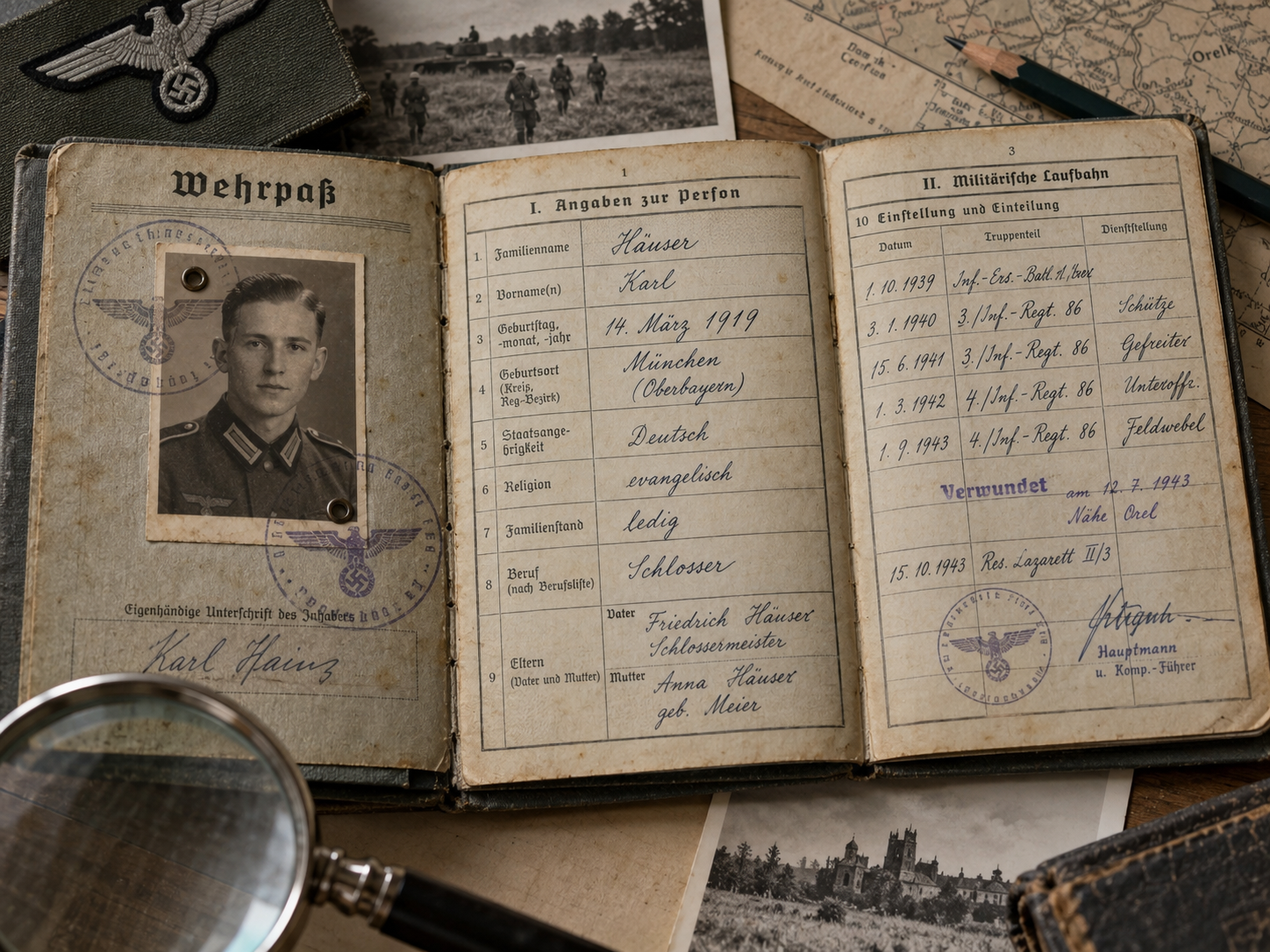
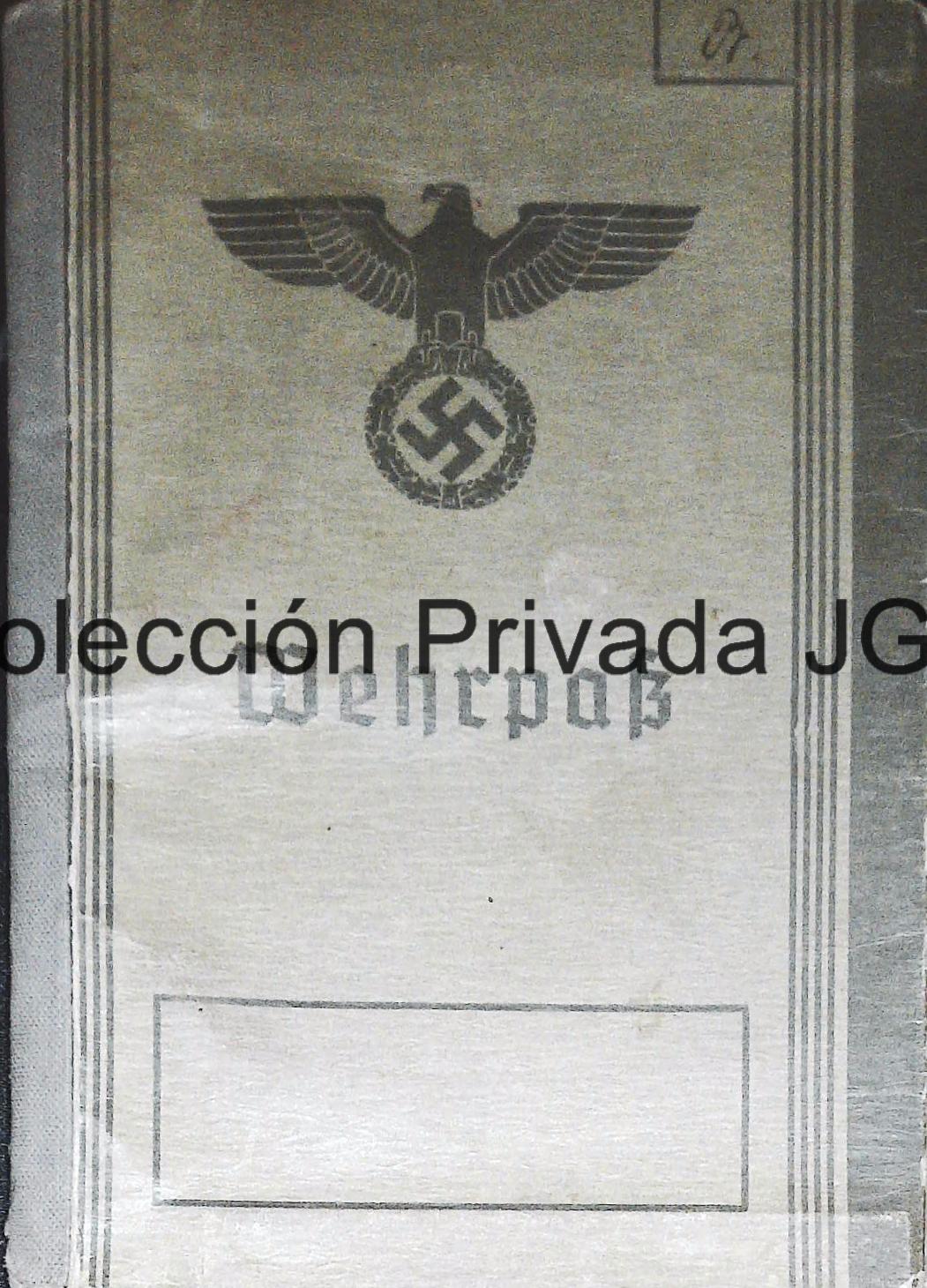
What Information Can a German Wehrpass Contain?
The exact content varies according to the individual, the period in which the document was issued and how much military service was recorded.
Typical information can include:
- full name;
- date and place of birth;
- occupation;
- family information;
- photograph;
- military registration details;
- replacement district;
- physical or administrative classification;
- training;
- military units;
- transfers;
- promotions;
- campaigns or areas of service;
- awards and decorations;
- wounds or medical information;
- discharge information;
- casualty or death entries.
Not every Wehrpass contains all of these.
Some were issued but record very little active service.
Others contain years of entries and can provide enough information to reconstruct much of a soldier’s wartime career.
That difference is one of the reasons two apparently similar Wehrpässe can have completely different research value.
How to Read a German Wehrpass Step by Step
1. Start With the Cover — but Do Not Stop There
Collectors naturally look first at the exterior.
A typical Wehrpass is a small booklet with printed military identification on the cover.
Condition varies enormously.
Examples can show:
- edge wear;
- staining;
- folds;
- rubbing;
- annotations;
- faded printing;
- later archive or collector markings.
The cover can help establish general type and period, but it tells very little about the history contained inside.
A worn Wehrpass with important service entries can be considerably more interesting than a cleaner example containing almost no military history.
2. Identify the Holder
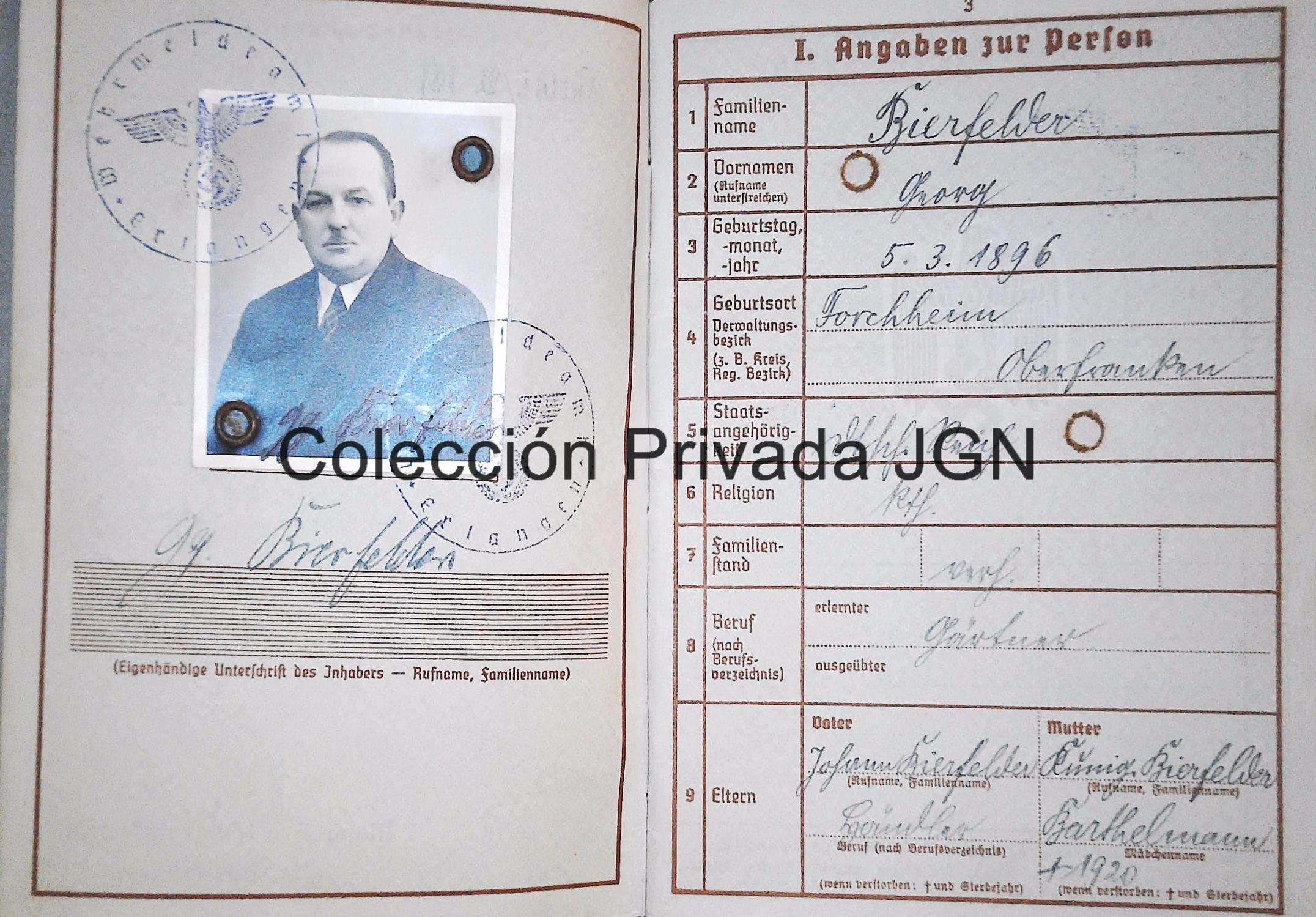
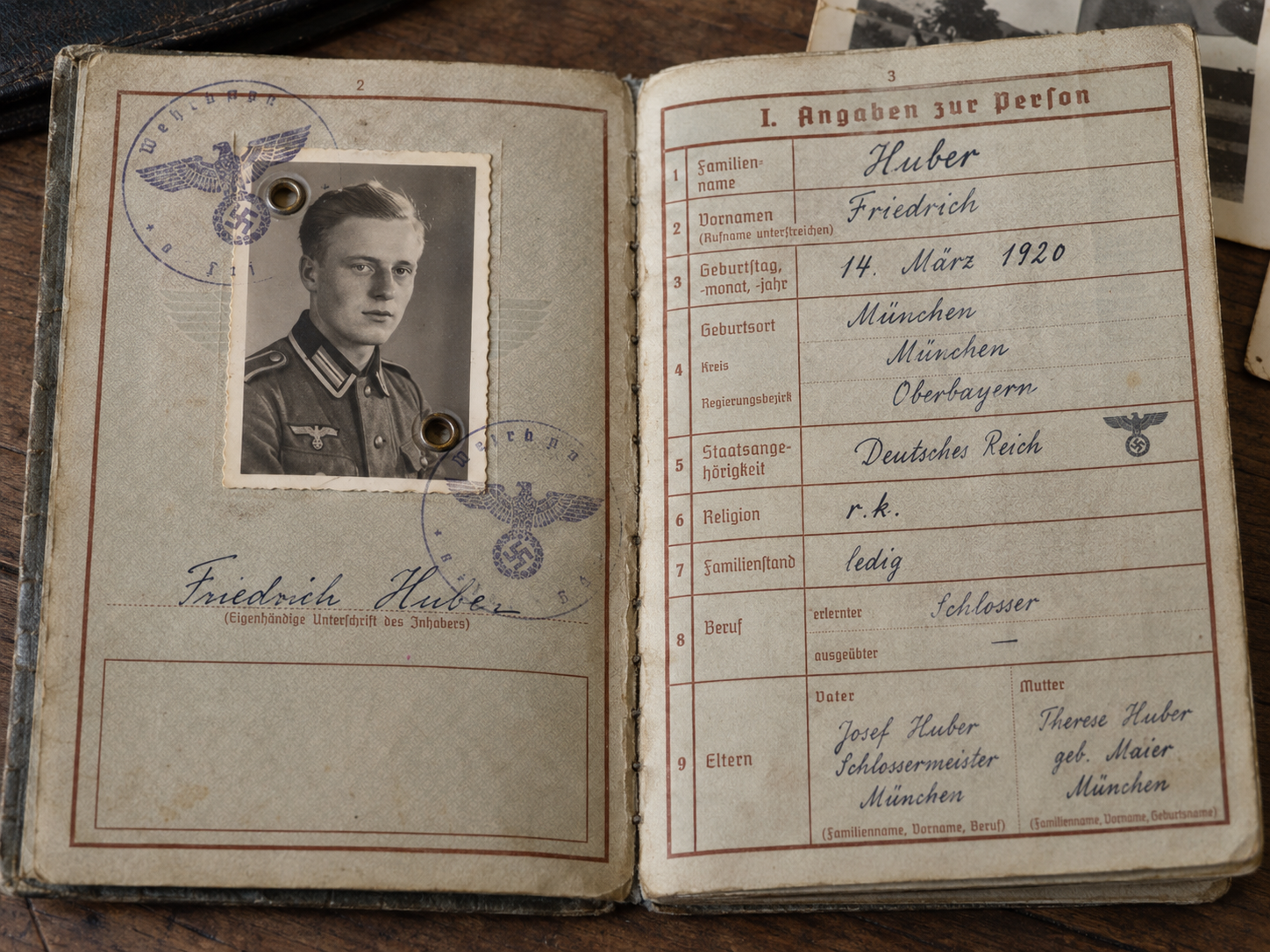
The personal information pages establish who the document belonged to.
Begin by transcribing the name exactly as written.
Record:
- surname;
- first names;
- date of birth;
- place of birth;
- occupation;
- residence where shown;
- and any family details.
Small transcription errors can make later research much more difficult.
German handwriting can be challenging, particularly when entries were written quickly or in older scripts.
Do not guess a difficult surname immediately.
Compare repeated appearances of the same letters elsewhere in the document.
This is often more reliable than trying to interpret a single handwritten word in isolation.
3. Examine the Photograph Carefully
The photograph is one of the most visually important parts of a German Wehrpass, but it should always be studied together with the rest of the document.
Photographs in Wehrpässe vary according to when and under what circumstances the document was issued or updated.
Both civilian and uniformed portraits can be encountered.
The important questions are:
- Does the photograph physically belong with the page?
- Are stamps present across the photograph and paper?
- Do those stamps align correctly?
- Does the attachment appear consistent with age?
- Does the photograph make sense within the document’s chronology?
A photograph should never be authenticated simply because the paper looks old.
Likewise, a civilian photograph does not automatically indicate a problem.
Context is more important than appearance alone.
4. Find the Wehrnummer and Registration Information
One of the most useful identifiers can be the Wehrnummer, or military registration number.
Its format can provide information relating to the holder’s registration district and year group.
Collectors should record it exactly as written.
The issuing military office or Wehrbezirkskommando may also appear.
Museum examples preserved by the Deutsches Historisches Museum show Wehrpässe issued through regional Wehrbezirkskommando offices and containing a mixture of printed, handwritten and stamped information. deutsche-digitale-bibliothek.de
These details can help distinguish individuals with common names and provide a useful starting point for archival research.
5. Separate Training Units From Field Units
This is one of the most important steps when reading a Wehrpass.
Not every unit listed in the document represents frontline service.
A soldier might first appear in:
- replacement units;
- training battalions;
- reserve formations;
- administrative units;
- specialist schools.
He may later be transferred into a field formation.
For example, abbreviations containing Ers. normally indicate an Ersatz, or replacement, formation.
That distinction matters.
A collector who simply sees several unit numbers and assumes they all represent combat units can reconstruct a completely incorrect military career.
Always record:
Unit + date + context.
Then build the sequence chronologically.
Common Wehrpass Unit Abbreviations
German military documents often compress unit names heavily.
A few abbreviations collectors regularly encounter include:
| Abbreviation | Typical meaning |
|---|---|
| Inf. | Infanterie |
| Gren. | Grenadier |
| Ers. | Ersatz |
| Btl. | Bataillon |
| Rgt. | Regiment |
| Div. | Division |
| Art. | Artillerie |
| Pi. | Pionier |
| Pz. | Panzer |
| Nachr. | Nachrichten |
| San. | Sanitäts |
| Flak | Flugabwehrkanone / anti-aircraft formation |
The precise interpretation still depends on context.
For example, the same number may appear in different organisational structures at different times.
Never research only the number.
Research the full abbreviation and date together.
6. Build a Chronology Before Researching the History
The strongest way to research a Wehrpass is to create a simple timeline.
For each significant entry record:
Date → Unit → Rank → Event
For example:
15 April 1940 → 3./Infanterie-Ersatz-Bataillon 394 → entry into service
Later:
1942 → promotion to Gefreiter
Later:
1 August 1942 → award recorded
Only after the sequence is clear should you begin researching the wider unit history.
This prevents a common error: attaching a soldier to an entire division’s history even though he may only have served with that formation for a short period.
A division may have fought in several campaigns.
That does not prove that every soldier listed in connection with it participated in every one of them.
The Wehrpass chronology must come first.
7. Read Promotions as Historical Markers
Promotions help build the service timeline.
Ranks such as:
- Schütze;
- Grenadier;
- Gefreiter;
- Obergefreiter;
- Unteroffizier;
- Feldwebel;
can appear during the course of a man’s service.
A promotion date may help confirm:
- length of service;
- unit chronology;
- changes in responsibility;
- or the sequence of later entries.
Promotions can also help identify an individual in other documents where the same man appears under a different rank.
For research purposes, record both the rank and the date it became effective.
Awards and Decorations in a German Wehrpass
Awards are among the entries collectors often notice first.
Depending on the individual, a Wehrpass may record decorations such as:
- Iron Cross;
- War Merit Cross;
- Eastern Front Medal;
- Wound Badge;
- campaign shields;
- service awards;
- or other military distinctions.
The wording may be abbreviated.
Do not interpret an abbreviation based only on what you expect to find.
Transcribe it first.
Then compare it with known award terminology.
For example, the Medaille Winterschlacht im Osten 1941/42, commonly known among collectors as the Ostmedaille, may appear in shortened form.
An award entry becomes much more useful when combined with the soldier’s unit and service chronology.
It can help establish where the soldier was serving when the decoration was earned or recorded.
For broader collecting context, see our:
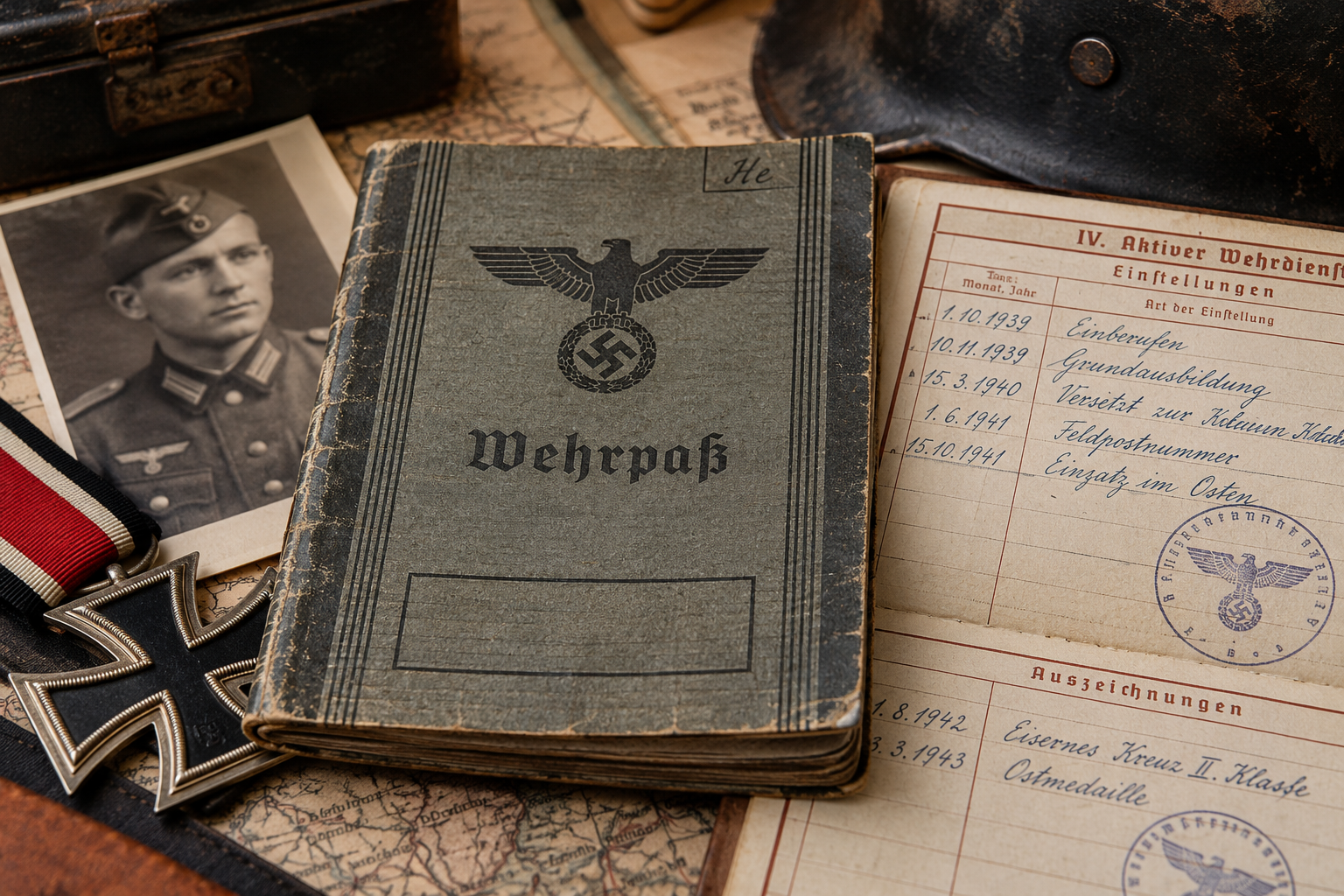
Campaign and Service Entries: Read Them Carefully
Campaign entries can be among the most historically interesting sections of a Wehrpass.
They may describe areas of service, campaigns or periods of military activity.
But collectors should distinguish between:
what the document actually states
and
what later research suggests the unit was doing.
Those are not always the same thing.
If a Wehrpass records a soldier with a particular regiment on a particular date, unit histories can provide useful context.
But the research should not expand that evidence beyond what can reasonably be supported.
A strong collector description might say:
“The Wehrpass records service with the unit during this period. The formation was operating on the Eastern Front at the time.”
A weaker description would automatically attribute every battle fought by that unit to the individual soldier without supporting evidence.
Historical documents deserve that distinction.
8. Casualty and Death Entries Can Be Particularly Important
Some Wehrpässe contain entries recording that the holder was killed, died of wounds, went missing or otherwise ceased service.
These documents can have considerable research value because the military record can sometimes be compared with independent archival or burial information.
The Deutsches Historisches Museum preserves Wehrpass examples specifically recording deaths during wartime service, including an example relating to a Wehrmacht serviceman killed in the Soviet Union in 1942. deutsche-digitale-bibliothek.de
When you encounter a casualty entry, record:
- exact date;
- location;
- unit;
- wording used;
- and any later administrative annotations.
Then compare those details against external records.
The Volksbund Deutsche Kriegsgräberfürsorge maintains a large online database of German war dead and missing personnel, although its own site warns that the database remains incomplete. Volksbund
How to Research a German Wehrpass
Once the document has been transcribed, the real research begins.
A useful workflow is:
Step 1 — Record the identity
Write down the holder’s complete name, date of birth and birthplace.
Step 2 — Transcribe the Wehrnummer
Do not modernise or simplify it.
Step 3 — Create the service timeline
List every dated unit entry in chronological order.
Step 4 — Record promotions
Add rank changes to the same timeline.
Step 5 — Record awards
Transcribe the exact wording before interpreting abbreviations.
Step 6 — Look for casualty information
Note any wounds, hospital entries, missing status or death information.
Step 7 — Research each unit separately
Only after identifying when the soldier served with it.
Step 8 — Compare external records
Search archival, casualty and museum sources.
The Bundesarchiv Should Be a Primary Research Source
The German Federal Archives is one of the most important resources for researching Wehrmacht personnel.
The Bundesarchiv holds personnel records relating to soldiers of the Wehrmacht and also preserves extensive unit-level documentation.
Its own guidance explains that personnel records and unit records should be treated as different archival sources: individual personnel documentation may provide information about a particular soldier, while military archive holdings can provide context for the formations in which he served. Bundesarchiv unit records
This distinction is extremely useful.
Personnel record = the man.
Unit archive = the formation.
Combining them carefully produces much stronger research than relying on either one alone.
The Bundesarchiv also notes that wartime personnel administration was not always carried out completely, so gaps in surviving documentation are normal. Bundesarchiv
Absence of an entry is therefore not always proof that an event never occurred.
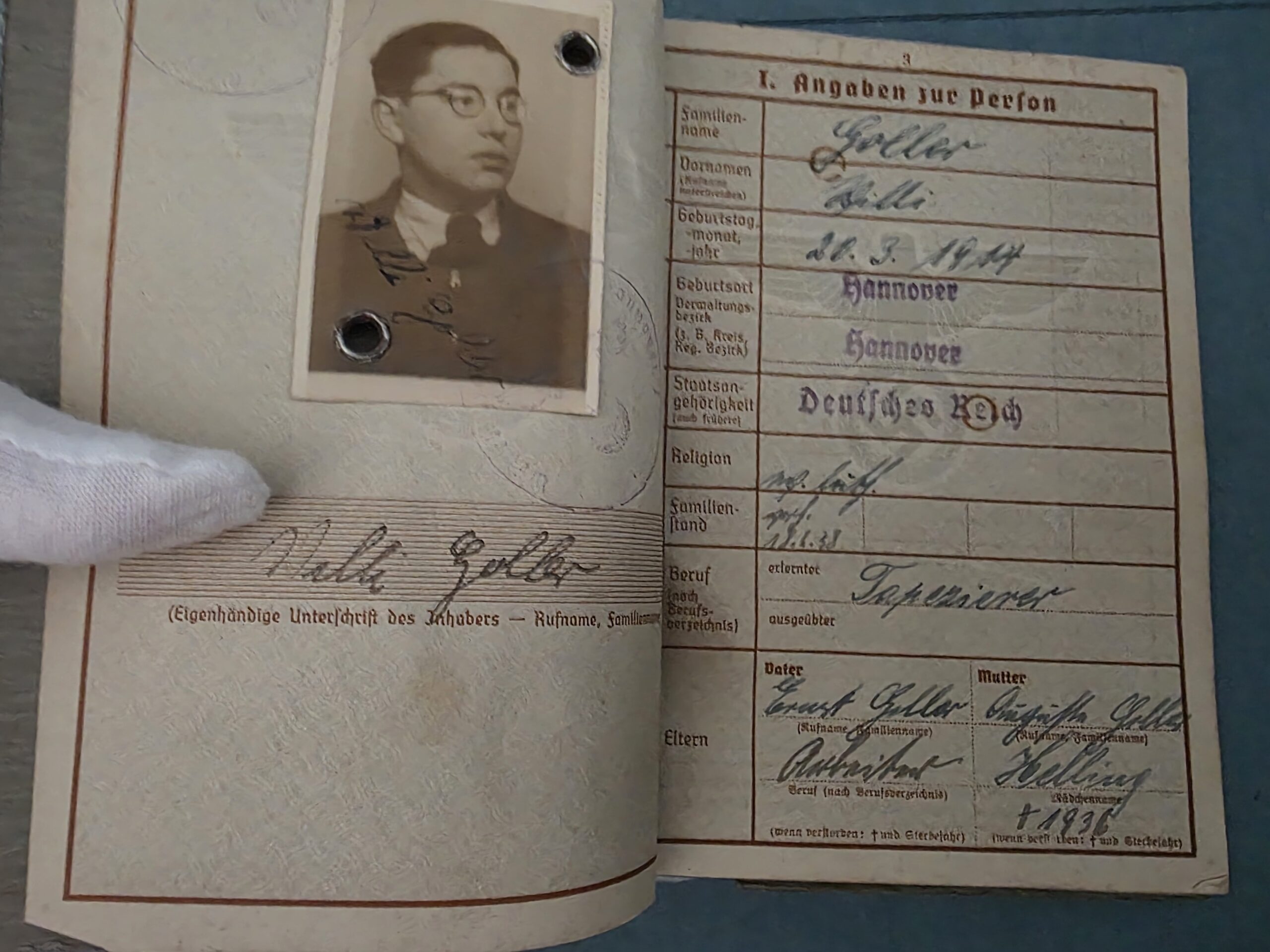
How to Check a German Wehrpass for Authenticity
No single feature proves that a Wehrpass is original.
Authentication should be based on the document as a whole.
Collectors should consider:
Paper and Printing
Does the paper, printing and construction appear consistent throughout the booklet?
Are some pages suspiciously different in texture, colour or ageing?
Handwriting
Do entries develop naturally over time, or do many supposedly separate entries appear to have been added with exactly the same hand and ink?
Repeated handwriting is not automatically wrong — military clerks made many entries — but chronology should make sense.
Stamps
Official stamps should be examined in relation to:
- the issuing office;
- unit;
- date;
- photograph;
- and entry they authenticate.
A stamp alone does not prove originality.
Ink
Different entries made over several years may naturally show variations in ink.
Perfect visual uniformity across entries supposedly made years apart may deserve closer examination.
Conversely, different inks are not proof of authenticity either.
Photograph
Check attachment, stamps, alignment and age characteristics.
Binding
Look for evidence that pages have been removed, replaced or disturbed.
Chronology
This is one of the most useful checks.
Do the units, dates, promotions and awards form a plausible sequence?
A historically impossible chronology is more important than whether a stamp “looks old.”
Common Collector Mistakes With Wehrpässe
Mistake 1 — Assuming Every Wehrpass Is a Combat Document
Some holders performed limited military service.
Others may have spent much of their time in replacement or support formations.
The document should determine the story, not the collector’s expectations.
Mistake 2 — Confusing Replacement Units With Field Units
An Ersatz-Bataillon and a frontline battalion are not interchangeable.
Mistake 3 — Researching the Division Before the Dates
Knowing that a division fought at a famous battle does not prove the holder was present.
Mistake 4 — Reading Only the Awards
Decorations are interesting, but they are only one part of the service record.
Mistake 5 — Ignoring Civilian Information
Occupation, birthplace and pre-service details can make an otherwise anonymous military record much easier to research.
Mistake 6 — Treating Every Stamp as Proof of Authenticity
Stamps must be assessed alongside paper, handwriting, dates and context.
Mistake 7 — Separating Documents From the Same Person
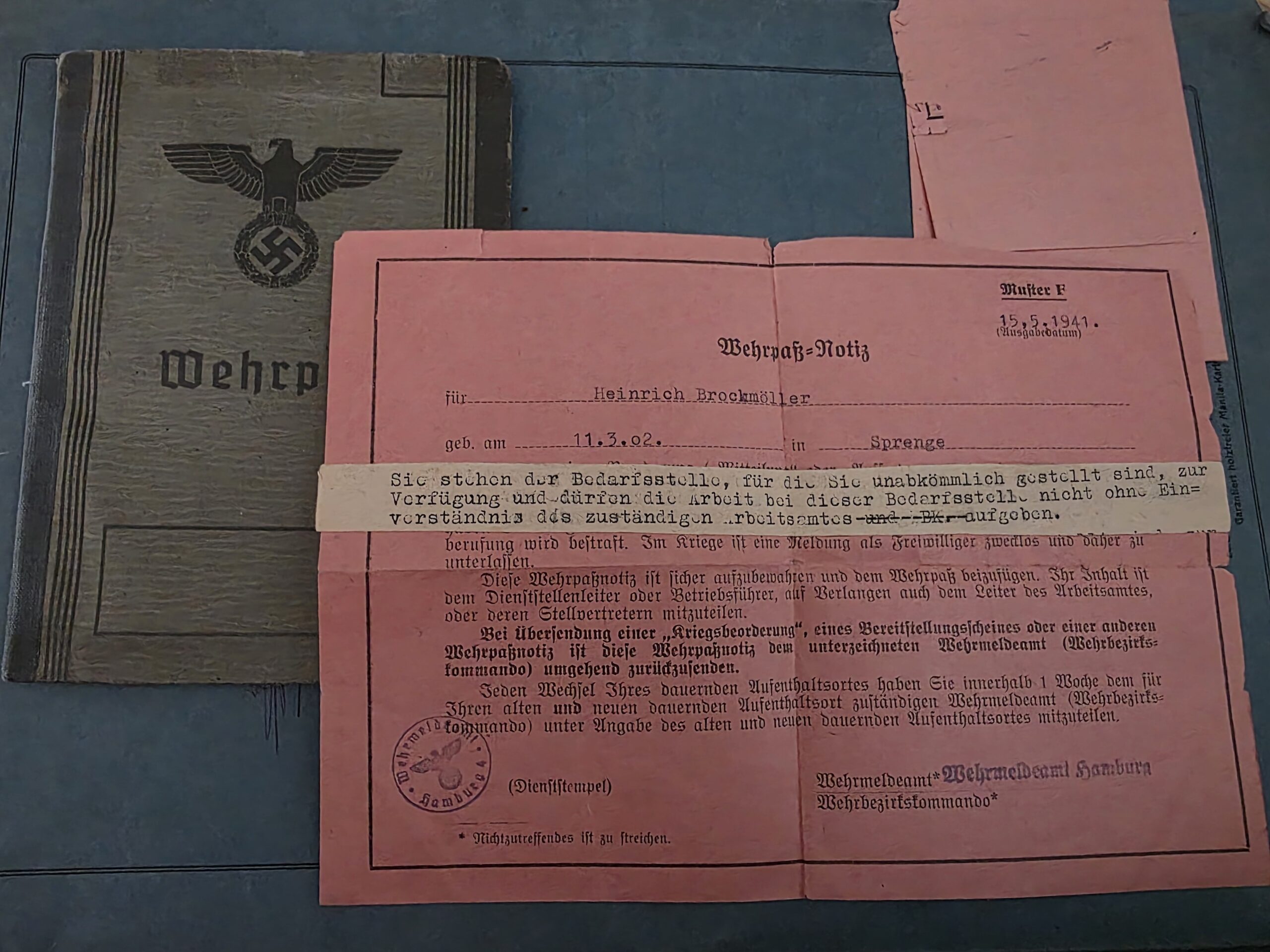
A Wehrpass accompanied by an Arbeitsbuch, Soldbuch, Feldpost correspondence, photographs or civil papers can provide far more information as a group than any single document alone.
Wehrpass Groups Can Be More Valuable for Research
From a collector’s point of view, one of the most interesting situations is when a Wehrpass survives together with other documents belonging to the same person.
A group may contain:
- Wehrpass;
- Soldbuch;
- Arbeitsbuch;
- RAD documentation;
- military correspondence;
- Feldpost;
- photographs;
- award documents;
- identity documents;
- civil records.
These documents can confirm information across several independent sources.
A military unit in the Wehrpass may appear again in a letter.
An occupation recorded before the war may correspond with an Arbeitsbuch.
A casualty date may match an external archival record.
This is where a document group begins to reconstruct an individual life rather than simply recording military administration.
Examples From the Autographs & Militaria Collection
Several Wehrpässe in the collection illustrate how different these documents can be.
WWII German Wehrpass Group — 256th Infantry Division
This type of group is particularly useful for studying how service entries, an award such as the Ostmedaille and casualty information can come together within one archive.
Rudolf Klinger Wehrpass
A useful example of a personal Wehrpass that can be approached by first identifying the holder and then reconstructing the chronology of the entries.
Jakob Meitinger Wehrpass, Arbeitsbuch and RAD Documents
This is a good illustration of why associated documents should be kept and researched together: military, employment and labour-service documentation can provide different parts of the same biography.
For a wider introduction to this category of material, see:
WW2 German Documents: Complete Collector’s Guide
Is a German Wehrpass Rare?
The answer depends on what is meant by “rare.”
Wehrpässe survive in substantial numbers.
The Bundesarchiv alone holds Wehrpässe within a combined collection of millions of Wehrmacht personnel documents. Bundesarchiv
So the document type itself should not automatically be described as rare.
What can be scarce is the history recorded inside a particular example.
Collector interest can change considerably according to:
- unit;
- campaign;
- length of service;
- awards;
- casualty status;
- completeness;
- associated documents;
- identifiable historical events;
- and overall research potential.
The strongest Wehrpässe are often not simply the cleanest.
They are the ones that tell the clearest and most complete story.
What Makes a German Wehrpass Interesting to Collect?
A German Wehrpass is fundamentally a personal historical record.
Unlike a medal whose history may have become separated from its recipient, a named Wehrpass often retains the identity of the person to whom it belonged.
That makes research possible.
A collector may be able to follow an individual from:
civilian occupation → registration → training → military unit → promotion → campaign → award → final service
and sometimes beyond.
That ability to reconstruct a life is what gives these documents much of their appeal.
For me, that is also what separates serious document collecting from simply accumulating old paper.
The document becomes more interesting as the person behind it becomes visible.
Quick German Wehrpass Research Checklist
Before considering your research complete, ask:
- Have I transcribed the full name correctly?
- Do I have the exact date and place of birth?
- Have I recorded the Wehrnummer?
- Have I separated training and replacement units from field units?
- Have I created a dated service chronology?
- Have I identified every promotion?
- Have I translated award abbreviations correctly?
- Have I checked casualty information?
- Have I researched each unit only for the dates shown?
- Have I compared external archival sources?
- Have I photographed every written page?
- Have I kept related documents together?
- Does the chronology make historical sense?
If several of those answers are still “no,” there is probably more information waiting to be discovered.
FAQ — GERMAN WEHRPASS
What is a German Wehrpass?
A German Wehrpass was a military personnel and service record used within Germany’s military registration system. It can contain personal details, photographs, military units, training, promotions, awards and other service information.
Is a Wehrpass the same as a Soldbuch?
No. A Wehrpass primarily recorded the individual’s military service history, while a Soldbuch functioned as a practical pay and identification book associated with the serviceman during active duty. See our detailed Wehrpass vs Soldbuch guide for the full comparison.
How do I research a WWII German Wehrpass?
Start by recording the holder’s name, birth details and Wehrnummer. Then create a chronological list of units, promotions, awards and casualty entries before comparing the information with Bundesarchiv records, unit histories and casualty databases.
Can a German Wehrpass show where a soldier fought?
Sometimes. Campaign, unit and service entries can help reconstruct where a soldier served. However, unit history should always be matched against the exact dates recorded in the Wehrpass rather than assuming the soldier participated in every operation of a formation.
Are Wehrpass photographs always military portraits?
No. Surviving photographs vary according to the circumstances and date of issue or update. Both civilian and uniformed portraits can be encountered and should be assessed together with stamps, attachment method and document chronology.
Are awards recorded in a Wehrpass?
They can be. Depending on the individual, decorations and awards may appear among the service entries. Abbreviations should be carefully transcribed and researched before identification.
How can I tell if a Wehrpass is original?
There is no single test. Collectors should assess paper, printing, handwriting, ink, stamps, photograph attachment, binding and, above all, whether the entries form a historically plausible chronology.
Are German Wehrpässe rare?
The document type survives in significant numbers, but particular examples may be scarce because of their unit, campaign, awards, casualty history, associated documents or research value.
Is a Wehrpass with a death entry more collectible?
It can attract greater research interest because a casualty entry may allow the document to be compared with archival, military and war-grave records. Collector interest still depends on the document as a whole.
Should a Wehrpass and its related documents be kept together?
Yes whenever possible. A group containing a Wehrpass, Soldbuch, Arbeitsbuch, Feldpost, photographs or other personal documents can preserve historical connections that would be lost if the pieces were separated.
FINAL THOUGHTS
A German Wehrpass should not be read as a collection of isolated stamps and abbreviations.
It should be read as a chronology.
Start with the person.
Follow the dates.
Separate replacement units from field units.
Record promotions and awards.
Check casualty information.
Only then place those entries into their wider historical context.
The more carefully that process is followed, the less likely a collector is to exaggerate what the document proves — and the more history the document itself can reveal.
References and Further Research
The following institutional and archival resources are useful for researching German Wehrmacht personnel records, Wehrpässe, military units and wartime casualties:
- Bundesarchiv — Personal Documents of Military Provenance
German Federal Archives guidance on researching personnel-related military records, including Wehrmacht service documentation.
https://www.bundesarchiv.de/en/research-our-records/research-archive-material/research-on-persons-and-ancestors/personal-documents-of-military-provenance/ - Bundesarchiv — Wehrgesetz und Wehrdienst 1935–1945: Das Personalwesen in der Wehrmacht
Bundesarchiv publication covering the Wehrmacht personnel and military-service administration system.
https://www.bundesarchiv.de/publikationen/publikation/wehrgesetz-und-wehrdienst-1935-1945-das-personalwesen-in-der-wehrmacht/ - Deutsche Digitale Bibliothek / Deutsches Historisches Museum — Wehrpass, 1942
Digitised museum example of an original wartime Wehrpass, useful for comparison of format, entries, photographs and official stamps.
https://www.deutsche-digitale-bibliothek.de/item/7J2N76PRQARGFPMUMYCIBHYBZGEV6HIB - Deutsche Digitale Bibliothek / Deutsches Historisches Museum — Wehrpass of a Fallen Wehrmacht Serviceman
Museum-held Wehrpass illustrating how casualty and death information may appear within wartime military documentation.
https://www.deutsche-digitale-bibliothek.de/item/AHAJPSSIUI6JPV5MRGE73GRD4ZFPGBIG - Volksbund Deutsche Kriegsgräberfürsorge — Gravesearch Online
Database for researching German military dead and missing personnel. The database is extensive but not complete.
https://www.volksbund.de/erinnern-gedenken/graebersuche-online - Bundesarchiv — Records on Army Unit Deployments during the Second World War
Useful for placing a soldier’s recorded unit into its wider operational context after the individual Wehrpass chronology has been established.
https://www.bundesarchiv.de/en/research-our-records/research-archive-material/research-by-topic/records-on-the-deployment-of-army-units-in-the-second-world-war/
HISTORICAL RESPONSIBILITY NOTICE
Autographs & Militaria presents German military documents and other material from the 1933–1945 period strictly for historical, documentary, educational and collecting purposes. Their inclusion does not imply endorsement of National Socialism, the Third Reich, its organisations or its ideology.
Services & Expertise
Positive Reviews
Authenticity Focused

Document Authentication & Certification
Certificates issued for collector and archival purposes

Graphology & Signature Analysis
Independent professional service
About the Author: Juan García Nicolás

Authentication & certification
Have a signature or document you want examined? Independent analysis by a qualified graphologist and forensic handwriting examiner.
Research tools
What is my autograph worth?
Signed or facsimile?
Which German document do I have?
All Journal articles
From the collection
Adam Opel Arbeitsbuch – Rüsselsheim Welder & Factory Worker, 1930s WWII
30,00 €
German Document Archive 1911–1967 – DAF, University and Business Papers
Original price was: 249,00 €.199,00 €Current price is: 199,00 €.
Collector’s OfferWWII German Wehrpass Group – 256th Infantry Division, Ostmedaille & Death Letter
590,00 €