
Autograph Value Guide: 9 Factors That Determine What a Signature Is Worth
Two autographs from the same person can sell for dramatically different amounts.
A signature clipped from an album page, a signed photograph, a routine typed letter and an important handwritten letter may all carry the same name, yet from a collector’s point of view they are very different objects.
Understanding autograph value therefore requires more than identifying the person who signed the piece.
Authenticity comes first, but collectors also consider the format, historical content, date, condition, provenance, scarcity and current demand for that particular type of material.
There is rarely a universal price for a historical autograph.
There is only a market for the specific piece in front of you.
Quick Answer: What Determines Autograph Value?
The most important factors are:
- authenticity;
- the person who signed it;
- collector demand;
- the type of signed material;
- the content and historical importance;
- date and historical association;
- rarity and availability;
- condition and provenance;
- comparable genuine sales.
A famous name can establish a broad price range, but those additional factors determine where a particular autograph falls within that range.
Collectors trying to assess their own item can also use our free What Is My Autograph Worth? research tools:
https://www.autographsandmilitaria.com/what-is-my-autograph-worth/
1. Authenticity Comes Before Autograph Value
Before discussing price, the first question must always be:
Is the signature genuinely handwritten by the person whose name it represents?
This sounds obvious, but the autograph market contains many different types of signatures.
A document may contain:
- an original handwritten signature;
- a printed facsimile;
- a stamped signature;
- an autopen signature;
- a secretarial signature;
- a pre-printed signature;
- or a later reproduction.
These distinctions matter enormously.
A period document bearing a facsimile signature may still be a genuine and historically interesting document. It simply should not be valued as a personally hand-signed autograph.
Likewise, an autopen can place real ink onto paper while still being mechanically produced.
This is why ink alone does not prove that an autograph is genuine.
A proper assessment looks at the handwriting, execution, document, paper, ink, provenance and comparison material together.
For collectors researching this distinction in more detail, see:
Facsimile Signature: Meaning, Value and How to Identify One
From a valuation perspective, authenticity is not simply another percentage added to the final price.
It is the foundation on which every other factor depends.
2. Who Signed It — and Is There Collector Demand?
The identity of the signer establishes the broad market in which an autograph sits.
Political leaders, military figures, writers, scientists, artists, musicians, explorers, royalty and major cultural figures can all have established collecting markets.
But fame alone does not determine autograph value.
The more useful question is:
How many collectors actively want material connected with this person?
A historically important individual whose autograph rarely appears may attract strong competition.
Another individual may be equally famous but have signed thousands of photographs, books or letters during a long public career.
Supply matters.
Demand matters.
The relationship between the two matters most.
This is why statements such as “the person was famous, therefore the autograph must be valuable” can be misleading.
Collectors pay for objects, not simply names.
3. The Format Can Change the Value Completely
One of the biggest mistakes when researching an autograph is comparing objects that are not genuinely comparable.
Consider these formats:
Cut signature — A signature removed from a larger document or album.
Signed card — Often collected primarily for the autograph itself.
Signed photograph — Combines the person’s image with the autograph and can have strong display appeal.
Typed Letter Signed (TLS) — A typed letter carrying an original handwritten signature.
Autograph Letter Signed (ALS) — A letter written and signed in the person’s own handwriting.
Document Signed (DS) — An official, legal, administrative or other document signed by the individual.
Inscribed photograph or document — May contain a dedication, message or association with another person.
These formats should not automatically be valued equally.
An autograph letter written entirely by an important historical personality can offer considerably more research value than an isolated signature.
A signed photograph can be more visually attractive than a plain card.
An official document may connect the signer directly to an important appointment, decision or event.
A clipped signature, meanwhile, has lost much of its original context.
There are exceptions, of course.
A cut signature may still be desirable when the signer is exceptionally scarce.
The key is to compare like with like.
4. What Does the Document Actually Say?
Content is one of the most underestimated factors in historical autograph collecting.
Two letters by the same person can occupy completely different levels of collector interest.
A routine note thanking someone for a birthday message is not equivalent to a letter discussing:
- an important political decision;
- a military campaign;
- a scientific discovery;
- a major literary work;
- a diplomatic crisis;
- a significant personal relationship;
- or a documented historical event.
The autograph itself may be identical.
The historical content is not.
For serious collectors, this can be decisive.
A signed document becomes more than an example of handwriting when it provides direct evidence of a person’s actions, thoughts or relationships.
That additional historical context can materially affect autograph value.
When assessing a letter, do not look only at the signature.
Read it.
Identify the recipient.
Establish the date.
Understand why it was written.
Research the names, places and events mentioned.
Sometimes the most important information appears several paragraphs above the autograph.
5. Date and Historical Association Matter
Timing can transform an otherwise ordinary piece.
Collectors frequently prefer material dating from the period for which an individual is best remembered.
A political leader’s document signed while in office may have greater historical relevance than a routine signature obtained decades later.
A military commander’s wartime correspondence can be more significant than post-war social correspondence.
A writer’s letter discussing a major work during the period in which it was being written may be particularly interesting.
Association also matters.
A seemingly routine document can become important when connected to:
- another notable individual;
- a particular military unit;
- an institution;
- a famous location;
- a historical event;
- or a documented collection.
This is why the date should never be treated merely as cataloguing information.
It helps place the autograph inside history.
6. Rarity Is More Complicated Than It Looks
Collectors often ask:
“Is this autograph rare?”
That question needs to be divided into several smaller ones.
How often did the person sign?
How long did they live?
How much material survives?
How often does it reach the market?
Is this particular format scarce?
Is material from this particular period scarce?
Is the person’s autograph genuinely difficult to acquire, or does it simply appear expensive?
An individual may have signed thousands of routine letters but only a handful connected with a particular event.
In that case, the signer is not necessarily rare.
The specific type of material may be.
The reverse can also happen.
A signature may be genuinely scarce but have limited commercial value because relatively few collectors pursue that person.
Scarcity without demand does not automatically produce a high price.
Strong autograph value normally comes from some combination of scarcity, historical significance and collector demand.

7. Condition Can Affect Price — but Context Matters
Historical paper was made to be used.
Letters were folded.
Documents were filed.
Photographs were handled.
Ink faded.
Paper toned.
Collectors therefore should not expect a nineteenth- or early twentieth-century letter to look newly printed.
Normal signs of age can include:
- folds;
- minor edge wear;
- toning;
- filing holes;
- small tears;
- old mounting traces;
- handling marks;
- and light staining.
More serious issues may include substantial paper loss, heavy fading, detached sections, severe staining or damage affecting the autograph itself.
The significance of condition depends partly on rarity.
For a common autograph available in many examples, collectors can afford to be selective.
For an extremely scarce signer, an imperfect example may still be highly desirable.
The signature itself deserves particular attention.
A strong, clearly visible autograph normally presents better than one heavily faded, obscured or cut through by damage.
Condition should therefore be assessed honestly, but always in the context of the object’s availability.
8. Provenance Can Add Confidence and Context
Provenance is the documented history of an object.
In autograph collecting, that might include:
- previous collection records;
- auction catalogues;
- dealer invoices;
- family correspondence;
- archival references;
- old collection labels;
- certificates;
- or documentation showing how the item changed hands.
Good provenance can help support confidence in an autograph and sometimes adds historical interest of its own.
But provenance should not replace examination of the object.
A certificate is also not infallible simply because the word “authenticity” appears at the top.
Collectors should consider who issued it, their expertise, the material examined and the basis for their conclusion.
An autograph accompanied by convincing provenance, a coherent historical context and characteristics consistent with verified examples provides a stronger overall case than one supported only by an undocumented story.
Our approach to authenticity and provenance is explained here:
https://www.autographsandmilitaria.com/authenticity-provenance/
9. Comparable Sales Are the Best Starting Point for Market Value
After researching the autograph itself, the next stage is market research.
This is where many valuation attempts go wrong.
An online asking price is not the same thing as a sale.
A dealer may list an autograph for €5,000.
That does not prove that buyers are paying €5,000.
For a more realistic indication of autograph value, collectors should look for genuine completed sales of comparable material.
The closer the comparison, the better.
Ideally, compare:
- the same signer;
- the same document type;
- a similar period;
- similar historical content;
- similar condition;
- comparable provenance;
- and similar signature quality.
Even then, auction prices can vary.
Different bidders may be active.
One sale may receive unusually strong competition.
Another may take place when collector demand is temporarily quiet.
Currency, location, auction reputation and buyer’s premiums can also affect the apparent result.
For that reason, one auction result should rarely be treated as a definitive valuation.
Several good comparisons are much more useful.
Why Two Autographs by the Same Person Can Have Very Different Values
Imagine two genuine signatures from the same historical figure.
The first is a cut signature with no date or context.
The second appears at the end of a complete handwritten letter discussing an important event, addressed to another recognised historical figure and retaining documented provenance.
The name at the bottom is the same.
Almost everything else is different.
That example explains why a simple online price list can never fully answer the question:
“How much is my autograph worth?”
The market does not price a name in isolation.
It prices the complete historical object.

What Can Reduce Autograph Value?
Several factors can limit collector interest even when an autograph appears attractive.
A signature may be genuine but heavily faded.
The document may have been extensively trimmed.
A signed photograph may carry an unwanted dedication.
A letter may be incomplete.
A signature may be common for that particular person.
The document may have no useful provenance.
Alternatively, a piece may simply have been misidentified.
Printed and mechanically reproduced signatures are particularly important here because they can appear convincing in photographs.
Always establish what the signature actually is before researching what it is worth.
Do Facsimile, Autopen or Secretarial Signatures Have Value?
Sometimes — but usually for reasons other than the autograph itself.
An original historical document carrying a printed facsimile signature can still be collectible because of:
- its age;
- issuer;
- recipient;
- historical purpose;
- design;
- rarity;
- or association.
What it does not normally have is the same autograph premium as a personally handwritten signature.
Autopen and secretarial signatures present similar distinctions.
The physical object may be historically interesting even when the famous person’s handwriting is not genuinely present.
Clear description is essential.
Collectors should never pay a hand-signed premium for a mechanically reproduced signature simply because it looks convincing.
How to Research the Value of Your Autograph
A practical valuation begins with the object itself.
First identify exactly what you have.
Is it a photograph, letter, card, official document, book, album page or cut signature?
Then establish whether the autograph appears handwritten and whether the document itself is original.
Record the dimensions.
Photograph the front and reverse.
Take a detailed image of the signature.
Identify dates, recipients, inscriptions, stamps and annotations.
Research the historical context.
Then search for completed sales involving genuinely comparable examples.
Only after those stages does a realistic market range begin to emerge.
For a first screening, our free collector tool brings several of these questions together:
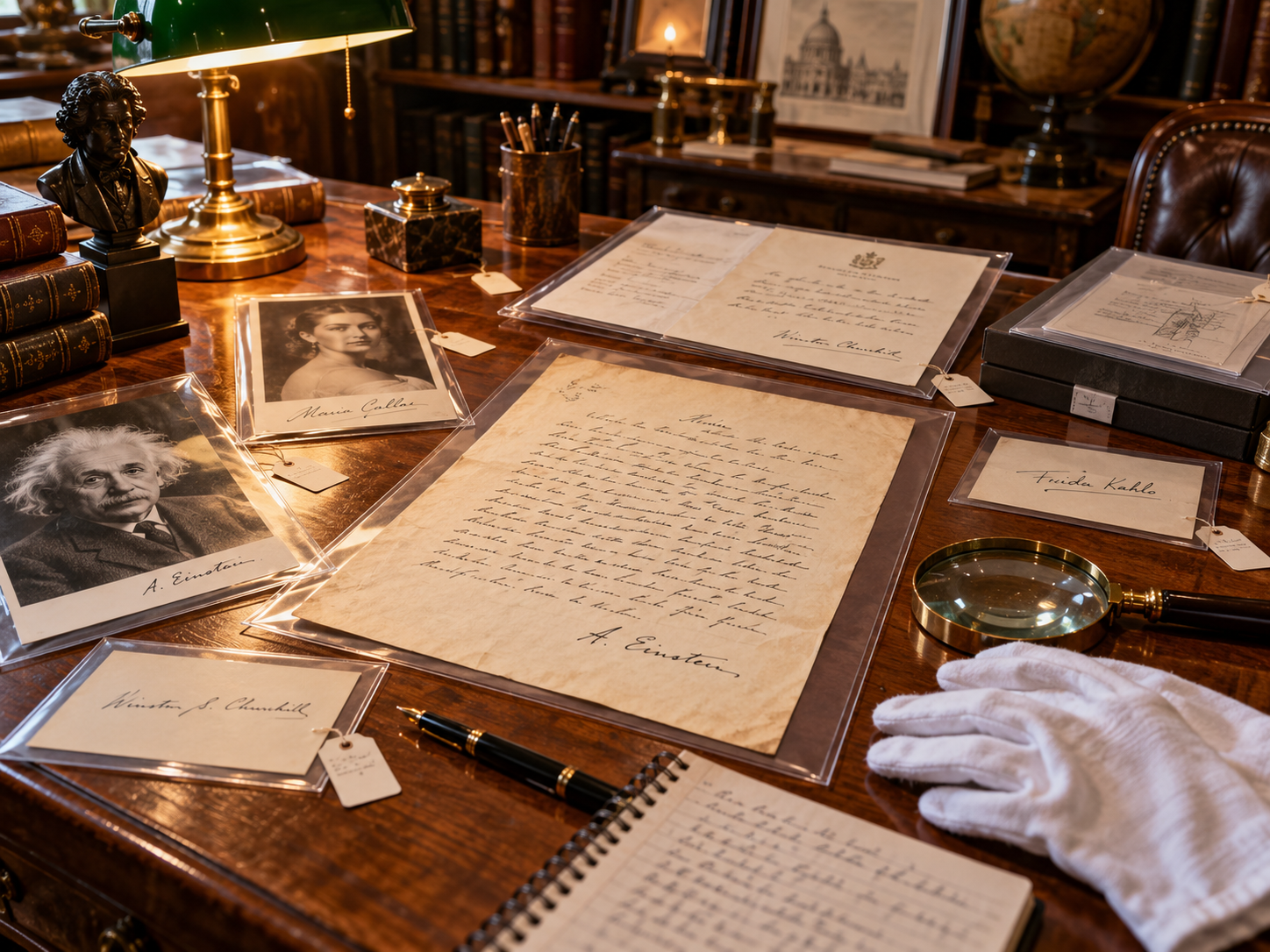
What Is My Autograph Worth? — The Collector’s Desk
g
The tool does not authenticate an autograph or provide a guaranteed selling price. It is designed to help collectors understand the factors that should be examined before a professional opinion or valuation is attempted.
When Is a Professional Opinion Worthwhile?
Not every autograph requires specialist examination.
For a low-value modern signature obtained personally, extensive research may make little economic sense.
A professional assessment becomes more useful when:
- the supposed signer is historically important;
- the potential value is substantial;
- authenticity is uncertain;
- the object has little provenance;
- the signature differs from typical examples;
- the item may be a facsimile, secretarial or autopen;
- or the owner intends to sell, insure or document the piece.
In these cases, photographs can provide a useful first impression, but examination of the original object may reveal information that a digital image cannot show.
Paper texture, ink interaction, indentation, erased marks and certain printing characteristics can be difficult to judge accurately from a screen.
Autograph Value Is More Than a Price
Collectors naturally want to know what an autograph is worth.
But monetary value is only one part of the answer.
A historically modest signature may have an important association.
A common signer may have written an extraordinary letter.
A document with little visual appeal may contain information unavailable elsewhere.
And a very expensive autograph may have little significance beyond the name at the bottom.
The best collections are rarely built by following price alone.
They are built by understanding the objects.
For that reason, the most useful question is not simply:
“How much is this signature worth?”
It is:
“What exactly is this object, why does it matter, and how does it compare with other genuine examples?”
Once those questions have been answered, the market value usually becomes much easier to understand.
FAQ — AUTOGRAPH VALUE
How much is my autograph worth?
There is no fixed price for an autograph based solely on the signer. Value depends on authenticity, the person, format, historical content, date, condition, provenance, scarcity and recent sales of genuinely comparable material.
What makes an autograph valuable?
The strongest values usually occur when collector demand combines with authenticity, scarcity, desirable format, significant content, good condition and credible provenance. A famous name alone does not guarantee a high value.
Is a signed letter worth more than a cut signature?
Often it can be because a complete letter retains historical content and context that a detached signature has lost. However, the signer, subject matter, date, condition and scarcity must also be considered.
Does a certificate of authenticity increase autograph value?
A respected opinion can give buyers additional confidence, but a certificate should be assessed according to the expertise and reputation of its issuer. A certificate does not replace proper examination of the autograph itself.
Are old autographs automatically valuable?
No. Age alone does not create value. Some centuries-old signatures are relatively accessible, while certain much more recent autographs are extremely scarce and actively collected.
Is an autograph worth more if it is personalised?
It depends. A dedication can sometimes reduce broad market appeal, particularly on photographs, but an inscription to an important recipient or with meaningful historical content can make an item considerably more interesting.
Are facsimile signatures valuable?
A facsimile normally does not carry the same autograph value as a handwritten signature. The underlying document may still have significant historical or collector value.
Where can I check what affects the value of my autograph?
You can use the free What Is My Autograph Worth? tools on Autographs & Militaria to screen a signature, review valuation factors and understand common auction terminology before requesting a professional opinion.
Historical Responsibility Notice
Autographs & Militaria presents German military documents and other material from the 1933–1945 period strictly for historical, documentary, educational and collecting purposes. Their inclusion does not imply endorsement of National Socialism, the Third Reich, its organisations or its ideology.
Services & Expertise
Positive Reviews
Authenticity Focused

Document Authentication & Certification
Certificates issued for collector and archival purposes

Graphology & Signature Analysis
Independent professional service
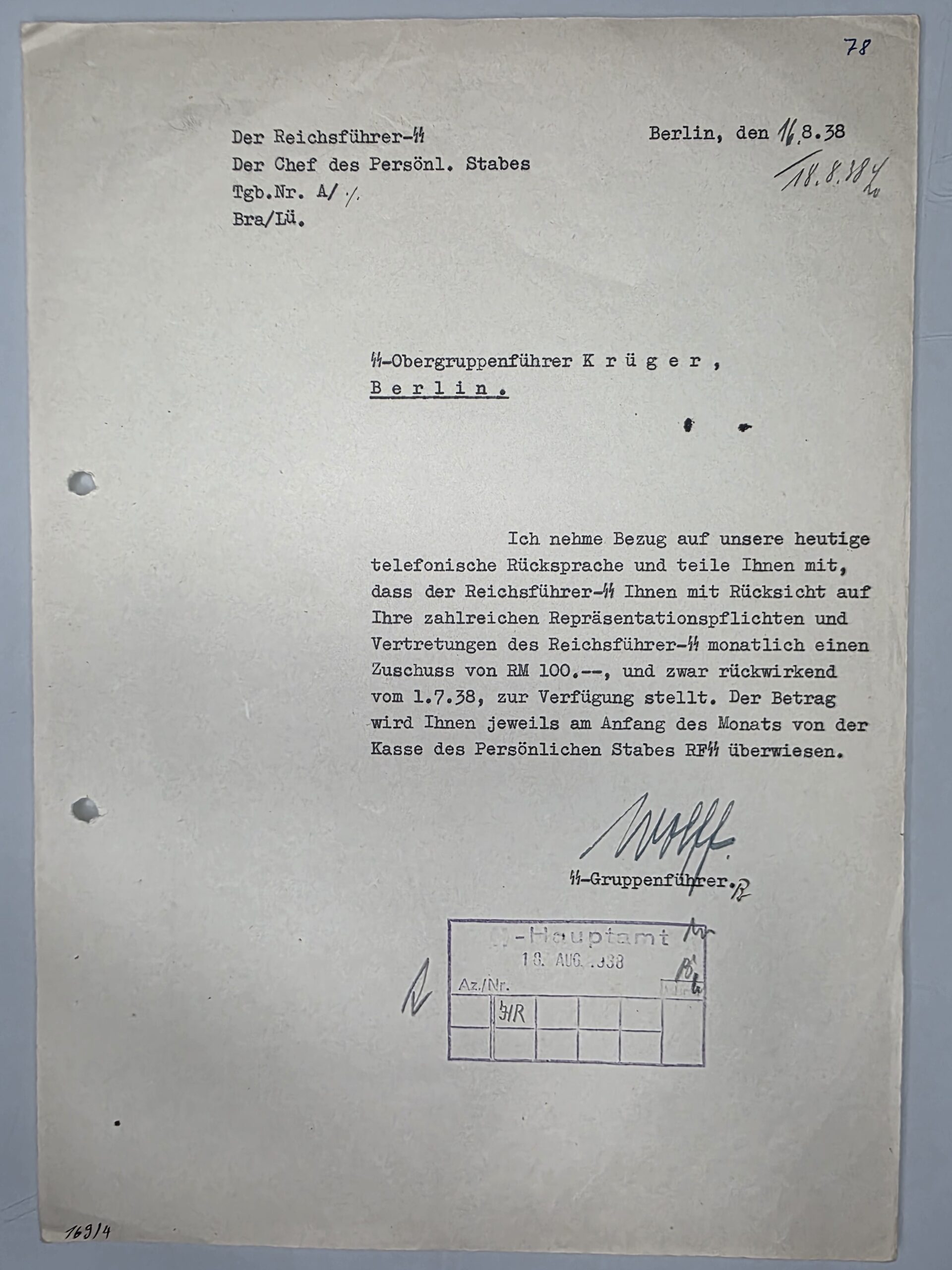
Karl Wolff Signed Letter to Friedrich-Wilhelm Krüger – SS Document, 1938
595,00 €
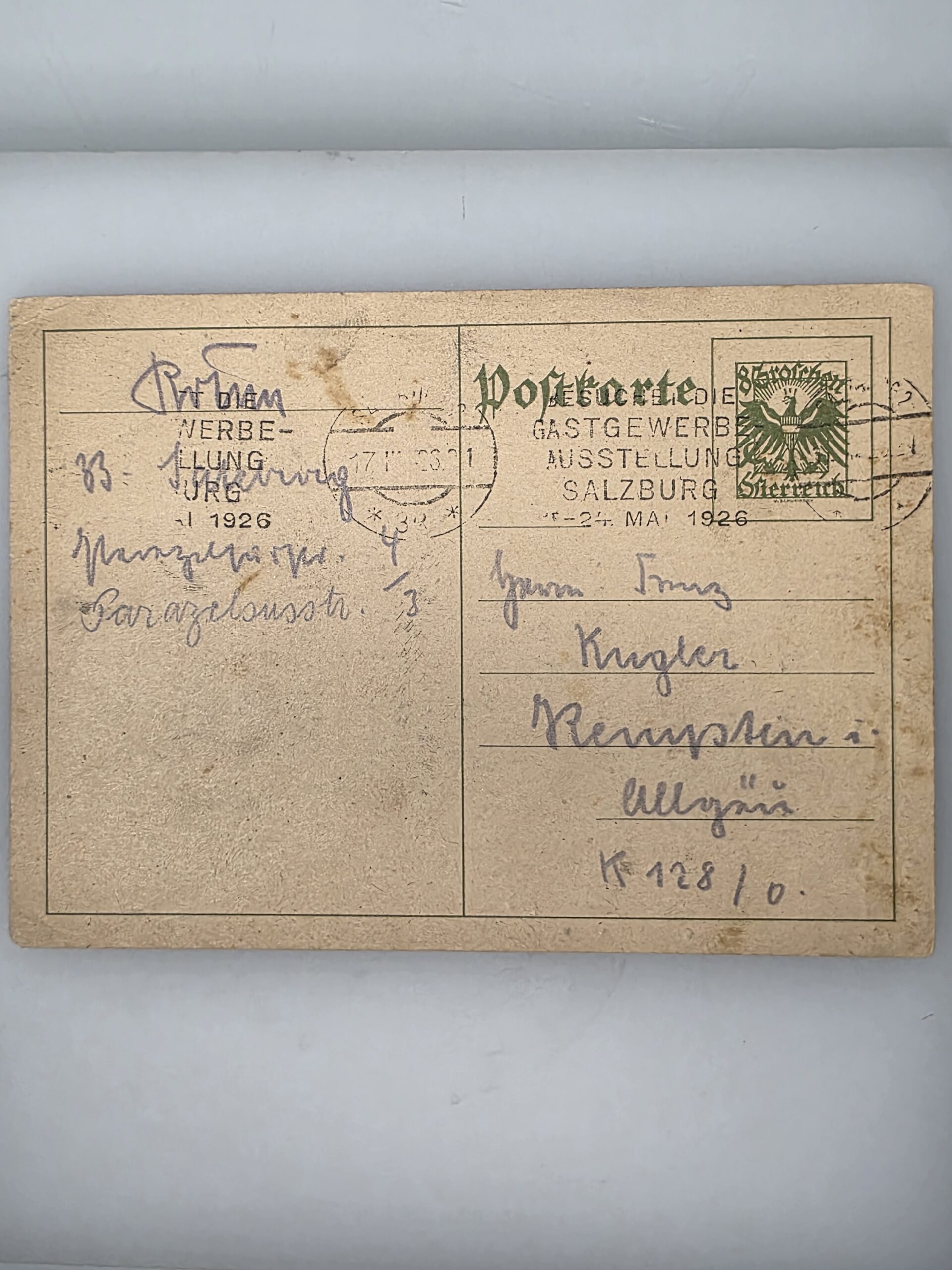
Ernst Röhm Autograph – Signed Postcard to Franz Kugler, 1926
Original price was: 2.600,00 €.2.490,00 €Current price is: 2.490,00 €.
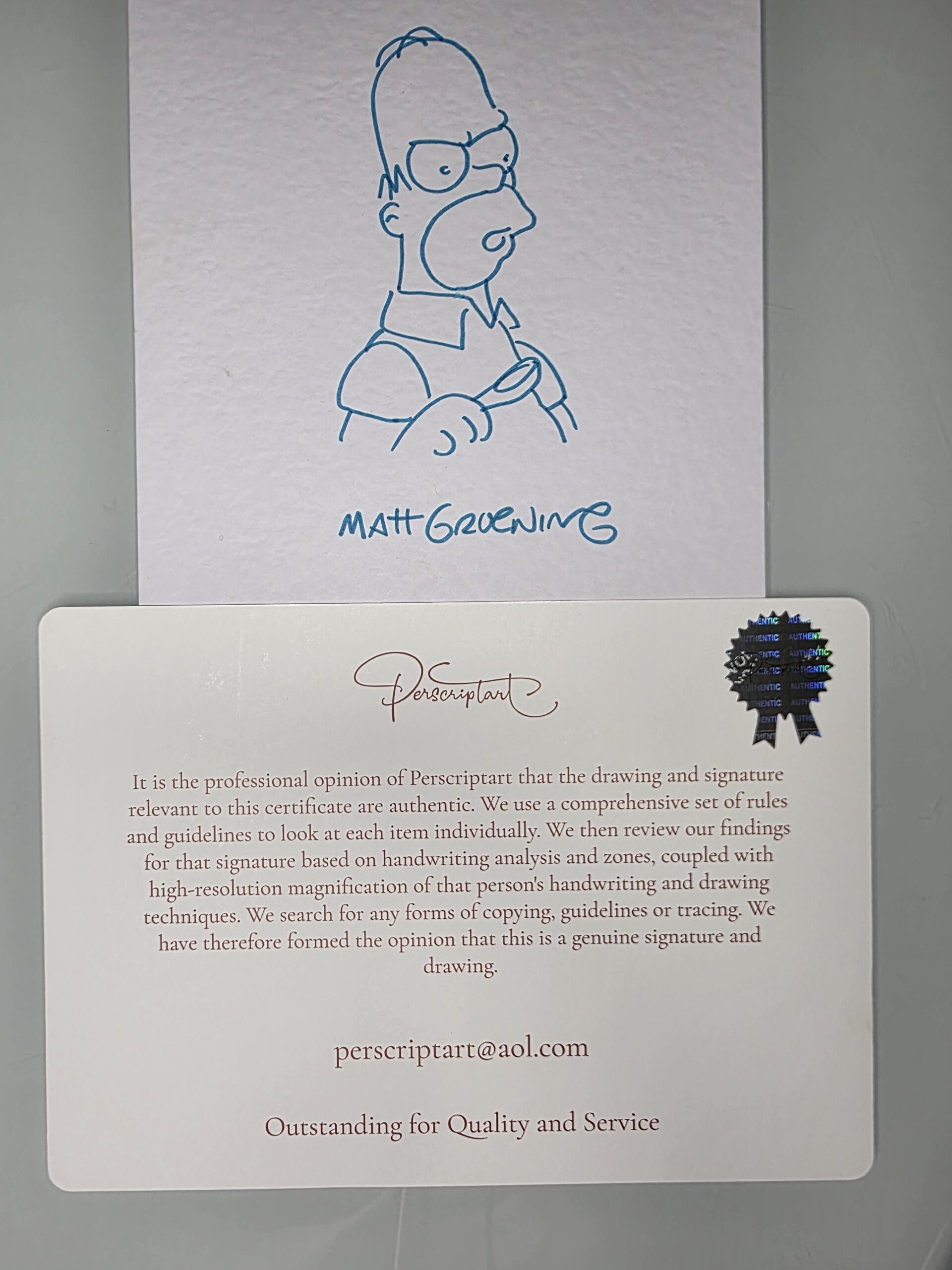
Collector’s OfferMatt Groening Homer Simpson Drawing – Original Signed Sketch with COA
Original price was: 500,00 €.440,00 €Current price is: 440,00 €.
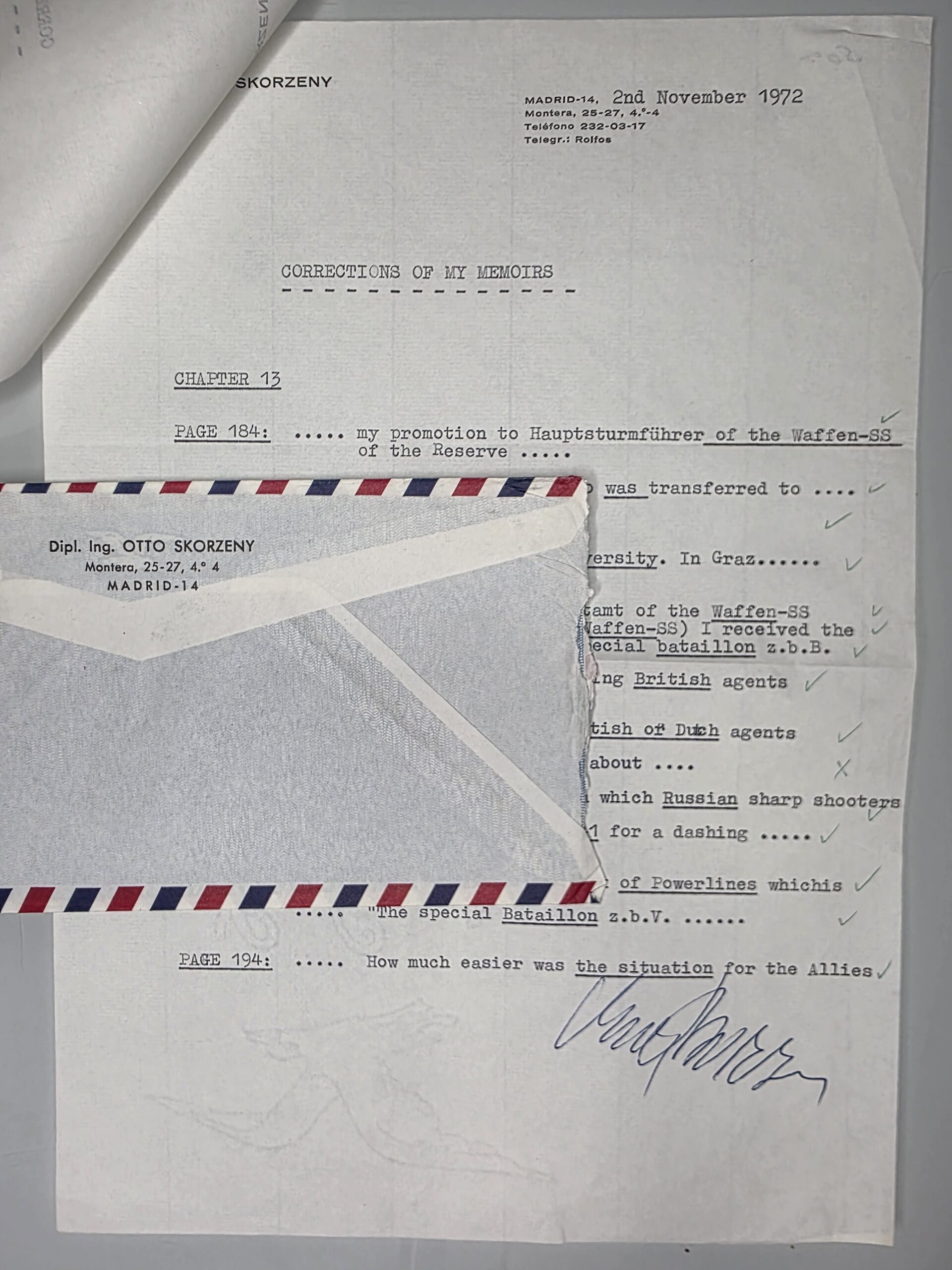
Collector’s OfferOtto Skorzeny Signed WWII Document – Rare 3-Page Memoir Corrections
Original price was: 1.350,00 €.1.190,00 €Current price is: 1.190,00 €.
Collector’s Offer
About the Author: Juan García Nicolás

Authentication & certification
Have a signature or document you want examined? Independent analysis by a qualified graphologist and forensic handwriting examiner.
Research tools
What is my autograph worth?
Signed or facsimile?
Which German document do I have?
All Journal articles
From the collection
Third Reich Arbeitsbuch – Original German Worker’s Employment Book
30,00 €
WWII German Wehrpass – Rudolf Klinger 1943 Zweitschrift with Photo & Typhus Card
Original price was: 110,00 €.99,00 €Current price is: 99,00 €.
Collector’s OfferGerman Historical Document Collection 1901–1949 – Arbeitsbuch, Postsparbuch & WWII Papers
Original price was: 299,00 €.245,00 €Current price is: 245,00 €.
Collector’s Offer