Why Original Documents Matter: Tangible Evidence in an Age of Digital History
We live surrounded by images of the past. Photographs, scans and transcriptions of historical documents are available on any screen in seconds. So why do original documents still matter? Why should anyone care whether a signature is written in ink or reproduced in print, or whether a wartime record is the paper issued at the time or a copy made later? As a collector and a trained handwriting examiner, I think the answer has never been more important. This essay explains why.
What Makes an Original Document Different From a Copy?
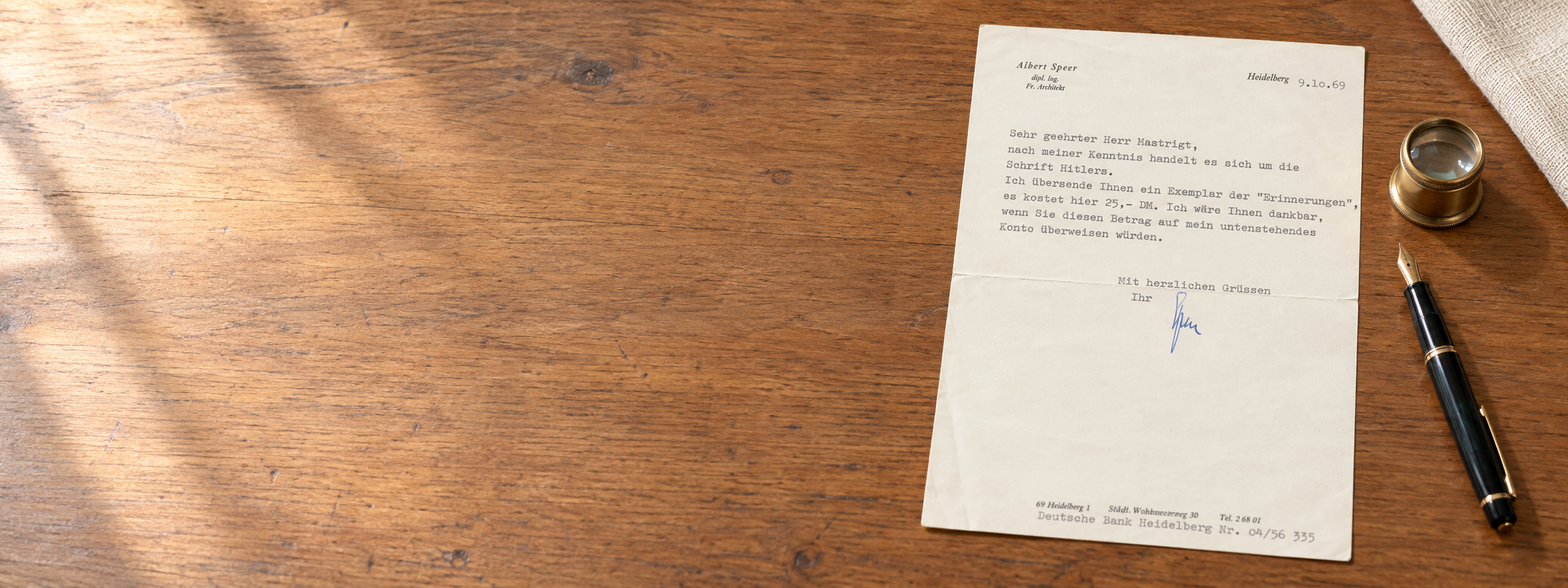
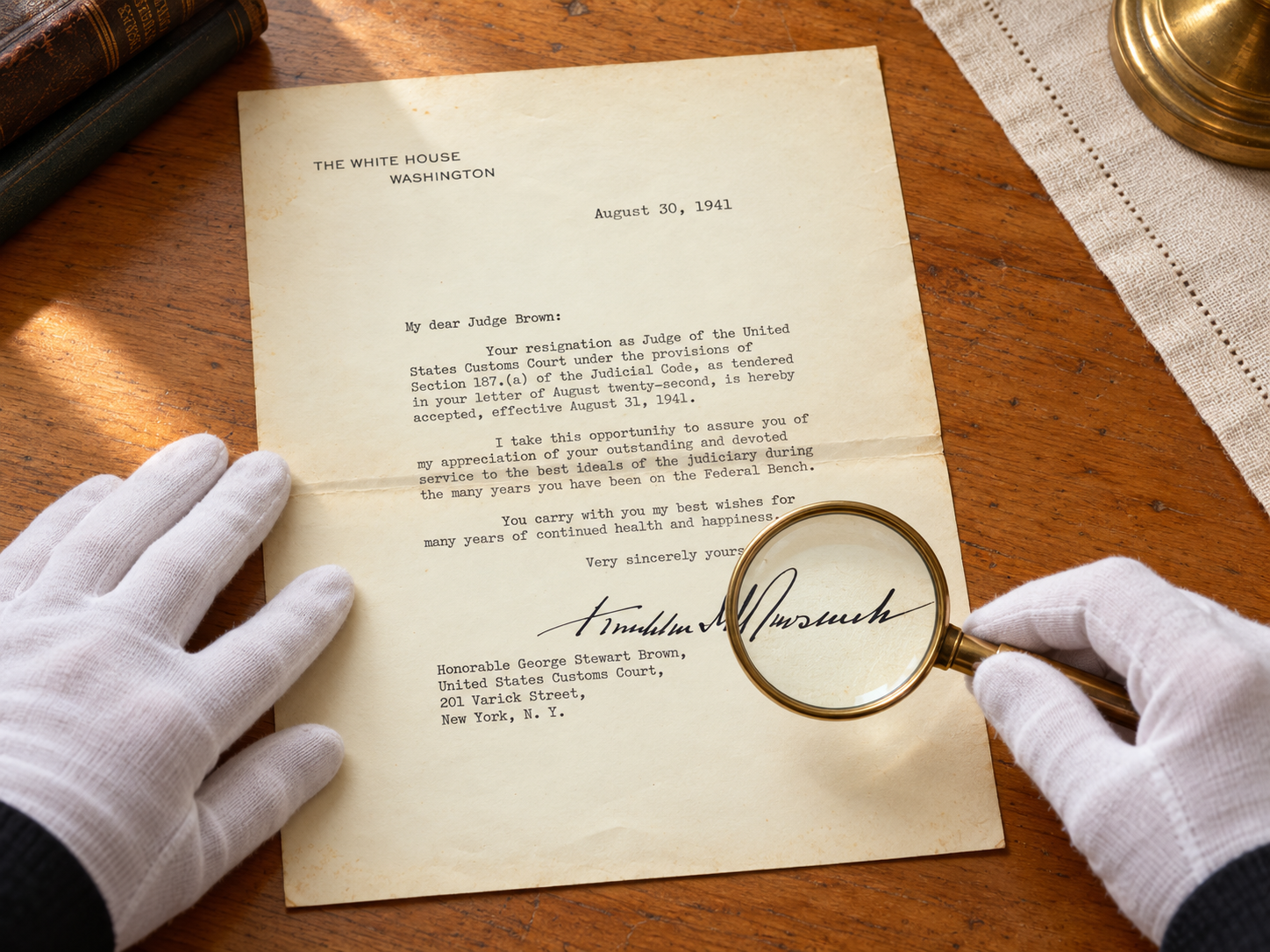
A copy preserves the words. Original documents preserve the evidence. The National Archives in the United Kingdom defines a primary source simply as something that “comes from the time period you are studying”, and suggests that anyone using one should ask who created it, when, why, and how reliable it is. Many of those questions can only be fully answered by examining the physical document.
| What can be examined | On the original | On a copy or scan |
|---|---|---|
| Handwriting | Pressure, pen lifts, ink flow, hesitation and sequence of strokes | Shape only, often at reduced resolution |
| Paper | Type, weight, watermarks, fibres, ageing and later additives | Not reliably assessable |
| Ink and printing | Type of ink, printing method, rubber stamps and embossing | Colours may be altered; relief is lost |
| Physical history | Folds, filing holes, repairs, alterations, erasures | Partly visible at best |
How Have Original Documents Exposed Forgeries?
The most famous modern example is the so-called Hitler Diaries. In 1983 the German magazine Stern announced the discovery of dozens of volumes said to have been written by Hitler. The handwriting imitated known samples well enough to convince some who saw it. But when the volumes were examined physically, the case collapsed. At a press conference on 6 May 1983, the German Federal Archives announced that the documents could not be considered authentic. According to the Bundesarchiv’s own account, the bindings, binding threads, papers and inks could mostly not have dated from the Second World War, and the content contained historical and chronological errors, including mistakes copied from a published source edition.
The lesson for collectors is clear. A convincing appearance is not proof. It was the physical evidence of the originals, examined alongside the handwriting and the content, that settled the question.
Collector’s Note
Whenever I examine a signed document, I treat handwriting, materials and historical content as three independent lines of evidence. When all three agree, confidence is justified. When one of them does not fit, the piece needs further study, however good the signature looks.
Why Does This Matter More in a Digital Age?
Digital images are easy to alter, to strip of their context and to circulate without any indication of where they came from. A scan of a document can be cropped, retouched or combined with another. Original documents, by contrast, carry their history in their materials. It can be re-examined by someone else, with new techniques, decades later.
That is one reason archives and museums keep original documents even after they have been digitised, and why private collections of original material have value beyond the market. Every authentic document in careful hands is a piece of evidence that remains available for future study.
What Can Ordinary Documents Teach Us?
Not every important document was signed by a famous person. A soldier’s service record, an identity card, a ration document or a letter home can record what official histories leave out: where an individual was, what he was entitled to, how an administration actually worked on the ground. My guides to WW2 German documents and to the Wehrpass show how much can be read from such papers when they are studied carefully.
What Is the Collector’s Responsibility?
To preserve the original as it survives, to describe it honestly, to distinguish clearly between what is known and what is assumed, and to treat documents connected with war, persecution or dictatorship as evidence to be understood, not objects to be admired. I discuss this further in Collecting WWII and Third Reich Material Responsibly.
It also means being clear about what a piece is. A printed facsimile signature has its own historical interest, but it is not a handwritten autograph, and it should never be sold as one. My guide to facsimile signatures explains how to tell the difference.
Frequently Asked Questions
What is a primary source?
A primary source is a record created at the time being studied, such as a letter, an official document, a photograph or a report. Its value lies in what it shows directly about that time.
Can a document be authenticated from a photograph?
A photograph can reveal obvious problems, such as a printed facsimile or a clear mismatch in handwriting. But a full opinion normally requires the original, because paper, ink, pressure and printing methods cannot be reliably assessed from an image.
How were the Hitler Diaries shown to be forgeries?
The German Federal Archives announced on 6 May 1983 that they could not be considered authentic. Examination showed that the bindings, threads, papers and inks could mostly not date from the Second World War, and the content contained historical errors.
Why keep original documents once they have been digitised?
Because the original remains the evidence. It can be re-examined with new methods, and it carries physical information that no image fully captures.
Final Thoughts
Original documents matter because they are not interpretations. They are the material traces of decisions, lives and events. In an age when images of the past are everywhere and easily changed, the paper itself, examined carefully and described honestly, remains one of the most reliable witnesses history has.
Historical Responsibility Notice: where this site discusses material from the Second World War and the National Socialist period, it is documented as historical artefacts for collecting, preservation, education and research. It does not endorse or glorify any ideology.
References & Further Reading
- Bundesarchiv, Pressekonferenz des Bundesarchivs zu „Hitler-Tagebüchern“ (on the press conference of 6 May 1983).
- The Times of Israel (2023) Fake Hitler diaries from 1980s scam to be displayed at German national archives, 25 April 2023.
- The National Archives (UK), Working with sources.
German Arbeitsbuch 1935 – Heinz Ramsbrock, Bielefeld Commercial Apprentice WWII
30,00 €
Adam Opel Arbeitsbuch – Rüsselsheim Welder & Factory Worker, 1930s WWII
30,00 €
- Limited-Time Offer
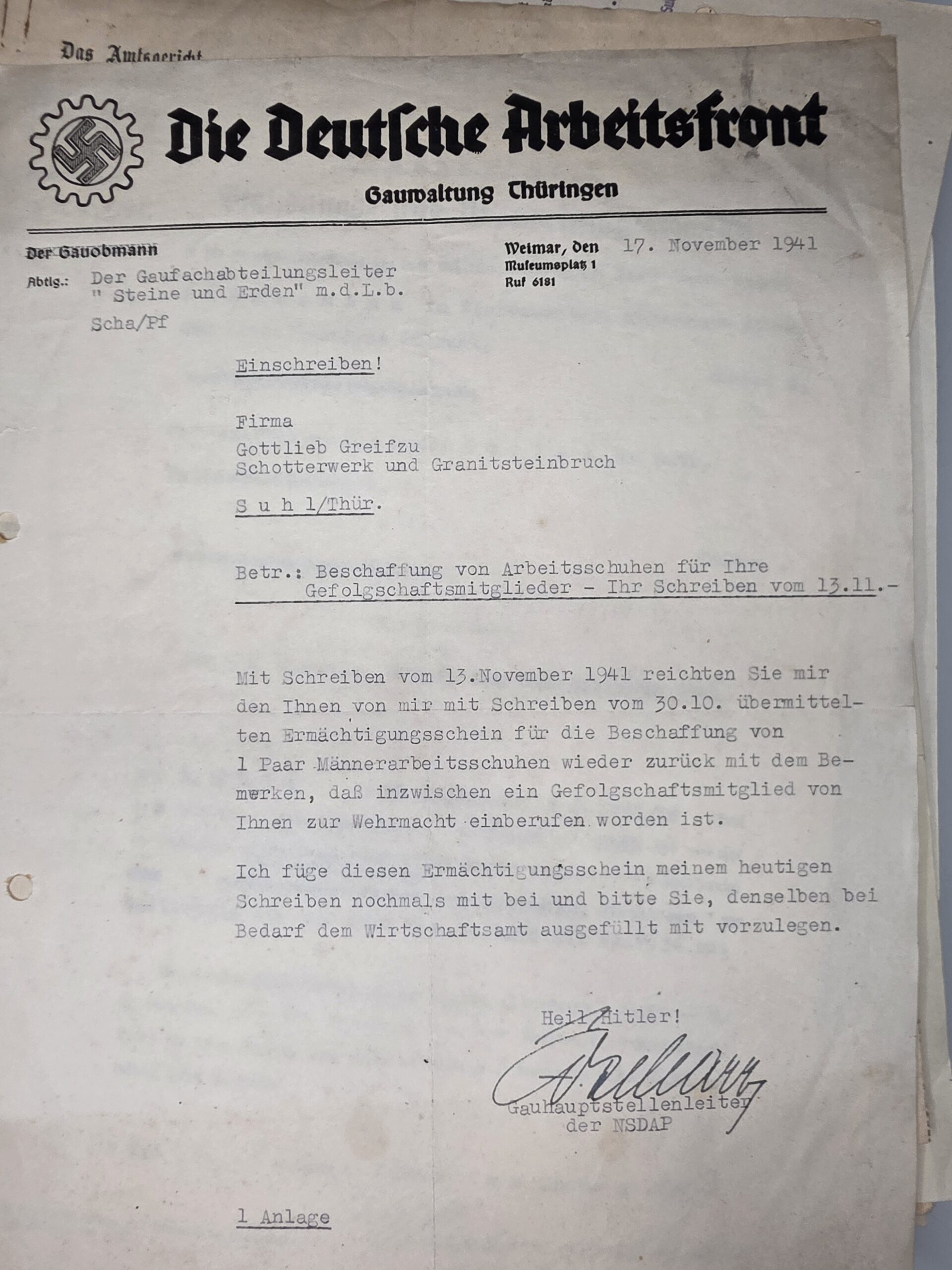
German Document Archive 1911–1967 – DAF, University and Business Papers
Original price was: 249,00 €.199,00 €Current price is: 199,00 €.
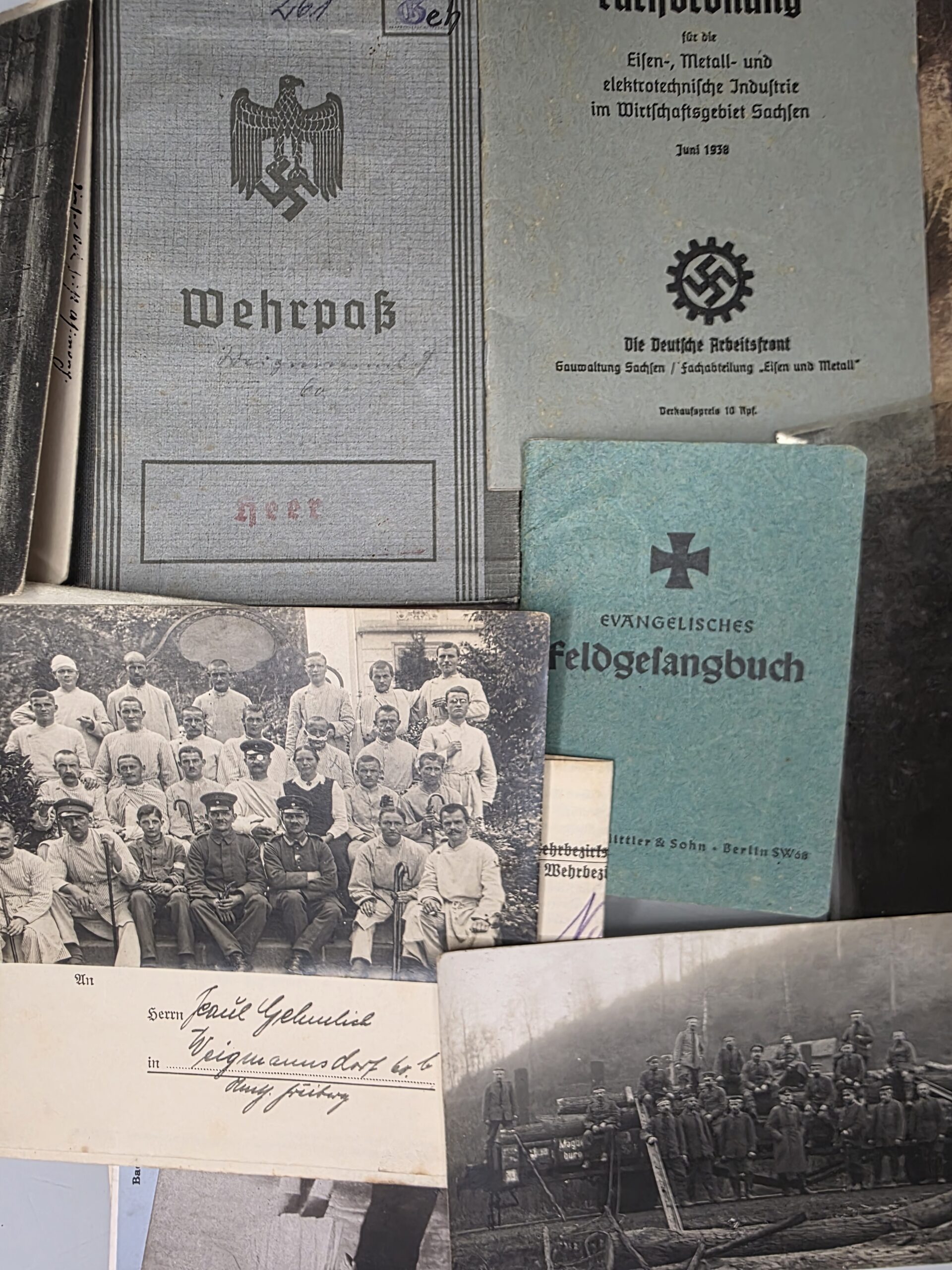
Limited-Time Offer WWII German Wehrpass Group – 256th Infantry Division, Ostmedaille & Death Letter
590,00 €


About the Author: Juan García Nicolás

Authentication & certification
Have a signature or document you want examined? Independent analysis by a qualified graphologist and forensic handwriting examiner.
Research tools
What is my autograph worth?
Signed or facsimile?
Which German document do I have?
All Journal articles
From the collection
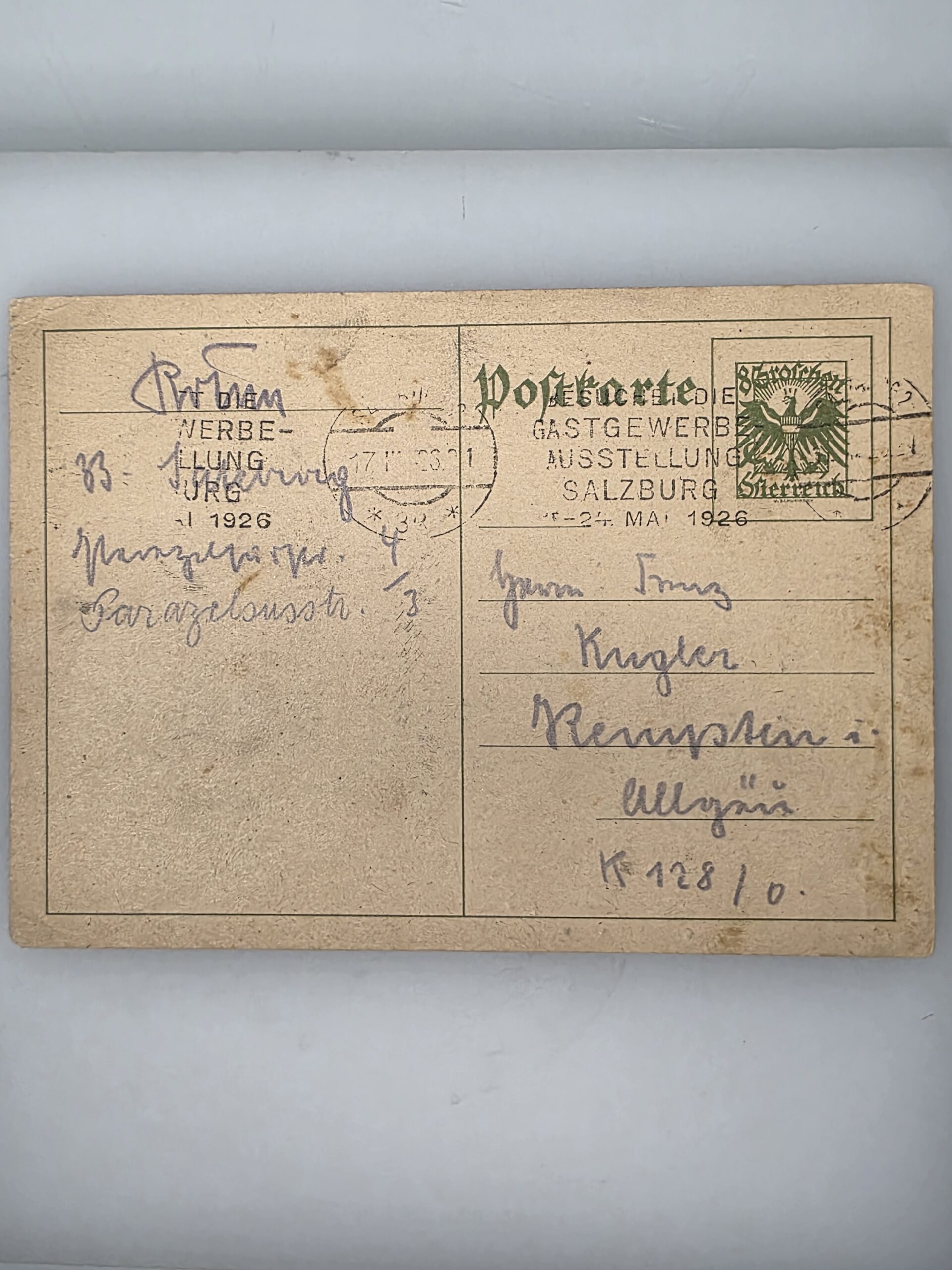
Ernst Röhm Autograph – Signed Postcard to Franz Kugler, 1926
Original price was: 2.600,00 €.2.490,00 €Current price is: 2.490,00 €.
Limited-Time OfferThird Reich Arbeitsbuch – Rosa Höltermann, Emsdetten 1940
30,00 €
German Arbeitsbuch 1935 – Heinz Ramsbrock, Bielefeld Commercial Apprentice WWII
30,00 €