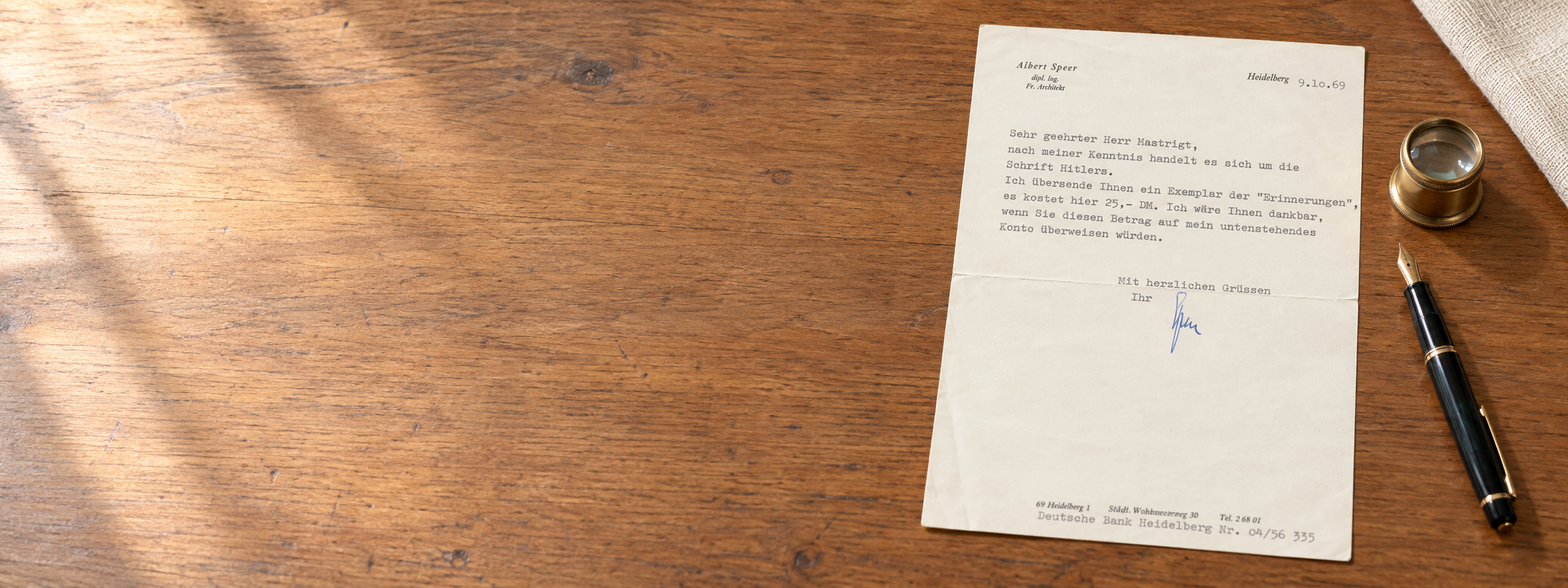
Why Collect Historical Autographs and Militaria? A Collector’s Reasons, Responsibilities and Rewards
Every serious collector is eventually asked the same question, usually by a puzzled relative: why do you collect this? For me the answer has never been about owning things. It is about holding a piece of evidence that was there when history happened: a signature written by a person who made decisions, a document stamped in an office that no longer exists, a decoration awarded to a soldier whose name survives because the paper did. This essay sets out why I collect historical autographs, documents and militaria, what the people who study collecting have said about it, and the responsibilities that come with the pleasure.
Why Do People Collect at All?
Collecting is old, widespread and surprisingly well studied. Writers on the subject tend to agree that it meets several needs at once: the wish to preserve, the pleasure of knowledge and order, and the way objects help shape a sense of who we are.
The psychoanalyst Werner Muensterberger, in Collecting: An Unruly Passion, argued that collecting answers deep emotional needs, which is why no acquisition ever quite completes a collection: each new piece brings satisfaction, and then the search begins again. The museum scholar Susan Pearce, in On Collecting, approached the subject from the other side, asking what collections reveal about individuals and the societies they live in, and how objects help people construct an identity. Both books are worth reading for anyone who has ever wondered why one more piece always seems necessary.
I recognise something of both in my own collecting. There is the emotional pull of an object that survived. And there is the intellectual work of understanding it, placing it in context and deciding what it really is.
What Makes Historical Autographs and Militaria Different?
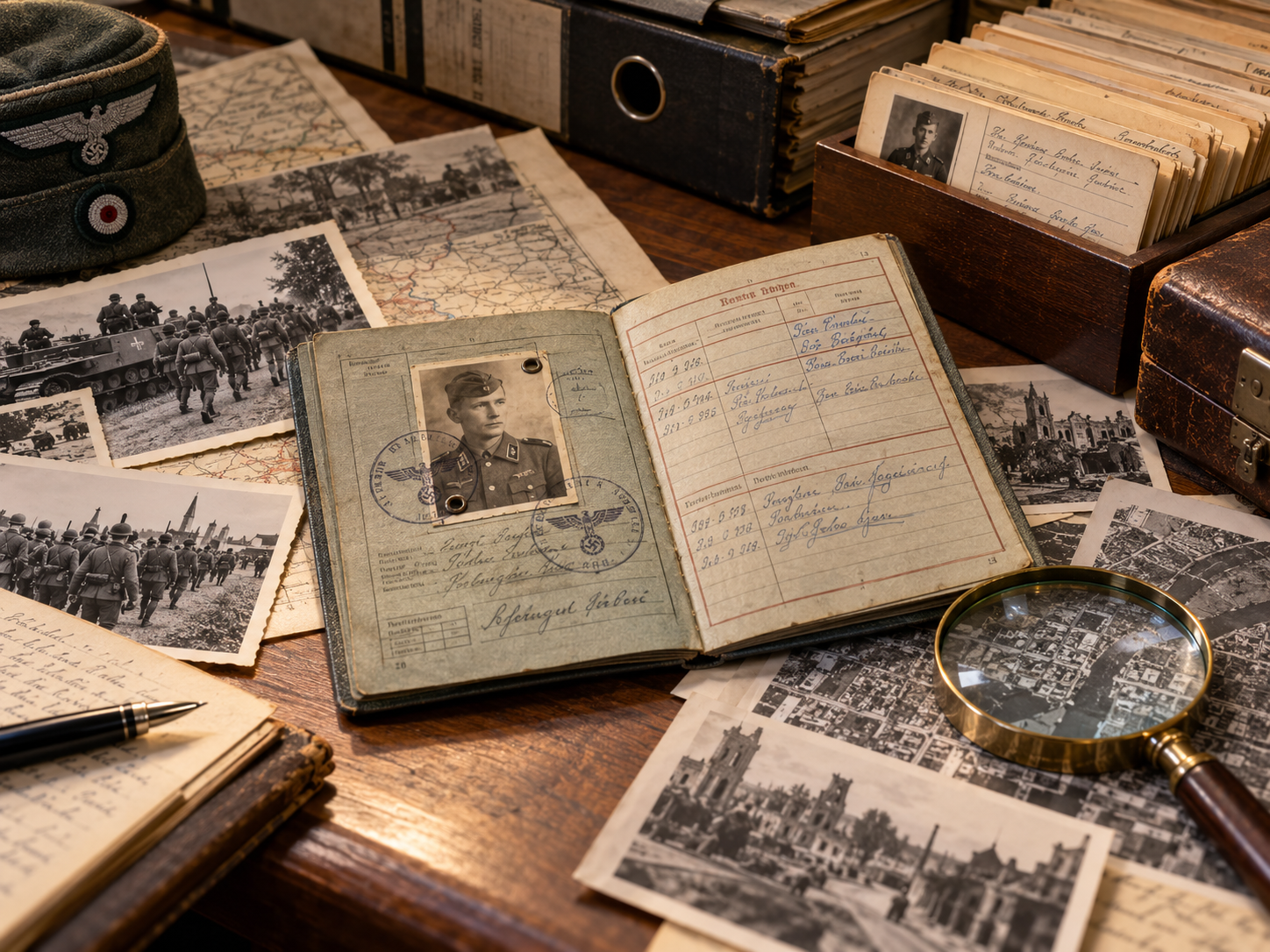
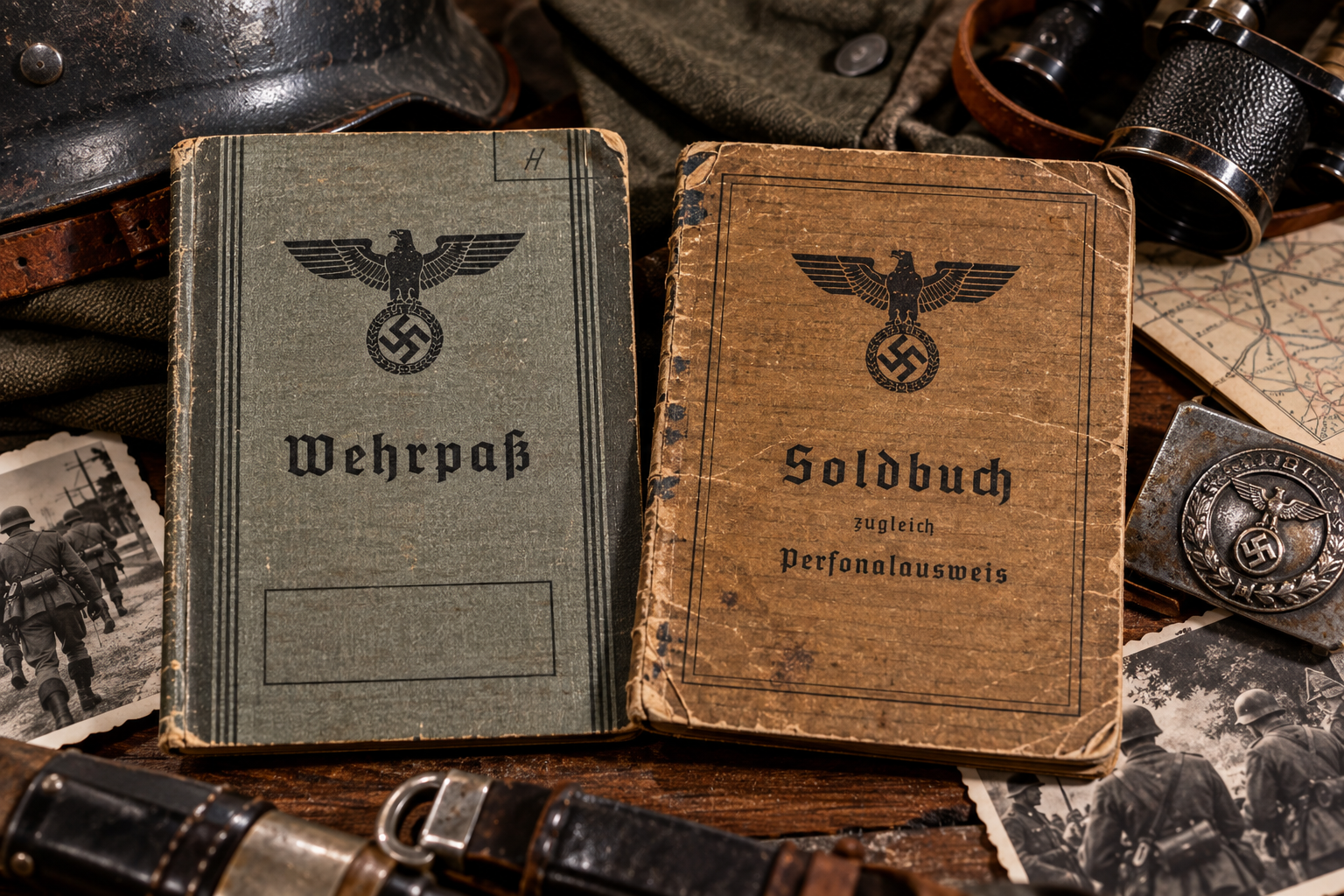
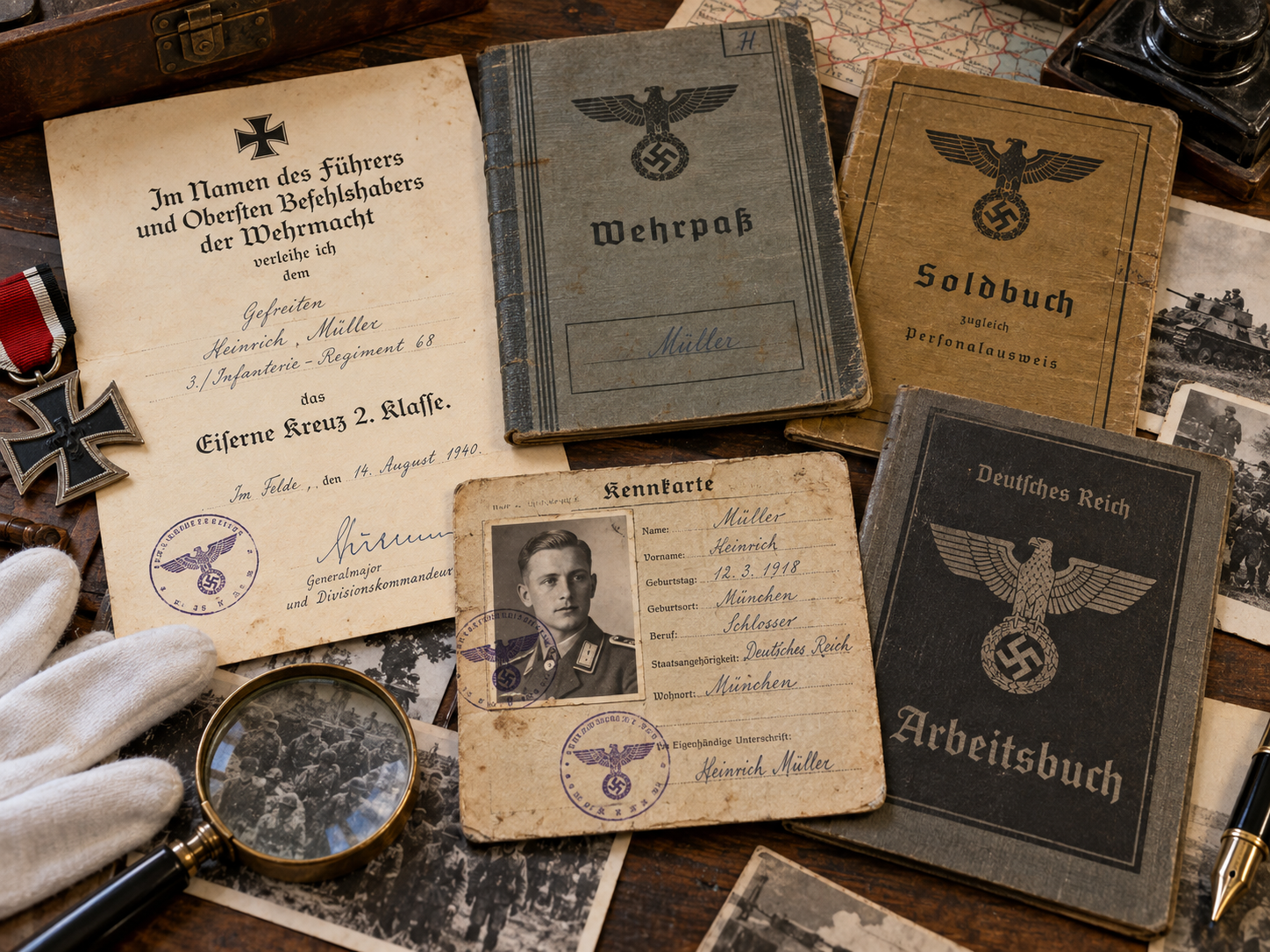
Many collectibles are valued for beauty, rarity or design. Historical autographs and documents are valued above all for what they record. A signed letter, a military pass or an award document is a primary source: it was created at the time, by the people involved, for a practical purpose. That makes it closer to an archive record than to an ornament.
| Type of piece | What it records | What the collector studies |
|---|---|---|
| Autograph or signed document | A personal act by a known individual | Handwriting, date, context, whether the signature is handwritten or a facsimile |
| Official document | A decision, status or event, recorded by an institution | Issuing office, stamps, signatures, format and period language |
| Medal or decoration | Recognition of service or a specific action | Type, maker, construction, award documents and any named recipient |
| Letter or personal paper | Private experience, often of ordinary people | Writer, recipient, circumstances and what the text adds to the record |
This is why the questions a historical collector asks are the questions an archivist asks: who made this, when, why, and can it be trusted?
Why Does Authentication Become Part of the Passion?
Because without it, collecting historical autographs means very little. A forged signature does not just disappoint a buyer; it puts a false statement into the historical record. A printed facsimile sold as a handwritten autograph misleads everyone who later relies on it.
In my case the passion for collecting led directly to formal training. I studied graphology and forensic handwriting examination for three years, and that training has changed the way I look at every piece. I no longer ask whether a signature looks right. I ask whether all the evidence is consistent: the writing itself, the paper, the ink, the printing, the stamps, the date and the story the document tells. A single feature rarely settles anything; a coherent set of features does.
For a practical introduction to historical autographs, see my guides to facsimile signatures and to what determines the value of an autograph. When a piece needs an independent opinion, I also offer document authentication and certification and graphology and signature analysis.
Collector’s Note
With historical autographs, keep everything that came with a piece: the envelope, the dealer’s invoice, an old auction label, a family letter explaining where it was found. Material that seems trivial today is often what establishes provenance tomorrow.
What Responsibilities Come With Collecting History?
Holding original historical material is a privilege, and it carries obligations that collectors of purely decorative objects do not face:
- Preservation. Store paper away from light, damp and acid; handle medals without polishing away their history. A collector is a temporary custodian.
- Honest description. Say what a piece is and what it is not, including faults, repairs and uncertainty.
- Context. Record what is known about the people and institutions involved, and say clearly what is not known.
- Respect. Material from war and dictatorship records real suffering. It should be studied and explained, never glorified.
- Legality. Some material is restricted in some countries. I explain how I approach this in Collecting WWII and Third Reich Material Responsibly.
What Are the Real Rewards?
The financial side of collecting historical autographs exists, but it is not why most serious collectors keep going, and it is never guaranteed. The lasting rewards are different. There is the knowledge that accumulates with every piece researched. There is the satisfaction of identifying something correctly when others had not. There is the contact with other collectors, archivists and historians who share the same curiosity. And there is the simple, enduring pleasure of holding a document and knowing that it was there, on that day, in that place.
Collecting also has a social value. Much of what survives from the twentieth century in private hands survives because collectors kept it when others threw it away. A well-researched private collection can become a resource for historians, families and future institutions.
Frequently Asked Questions
How should a beginner start collecting historical autographs or militaria?
Start with a field you genuinely want to learn about, read before you buy, and buy from sellers who describe pieces honestly and accept returns. Begin with modest pieces and learn from each one.
Do I need to be an expert in handwriting to collect autographs?
No, but you need to know the basics: how to tell a handwritten signature from a printed facsimile, and when to ask for an independent opinion. Knowledge grows with every piece you study.
Is collecting militaria the same as admiring war?
No. Responsible collectors preserve and study material as historical evidence, often precisely so that the events it records are remembered and understood.
Should I collect for investment?
Collect first for knowledge and interest. Values can rise and fall, costs are significant, and no return is guaranteed. I discuss this in more detail in my article on what drives long-term value in historical collectibles.
Final Thoughts
I collect historical autographs, documents and militaria because these objects connect me to the past in a way no book or screen can. But the connection only means something if the object is genuine, properly understood and honestly described. That is the discipline behind the passion, and in my experience it is also what makes collecting most rewarding.
Historical Responsibility Notice: where this site discusses material from the Second World War and the National Socialist period, it is documented as historical artefacts for collecting, preservation, education and research. It does not endorse or glorify any ideology.
References & Further Reading
- Muensterberger, W. Collecting: An Unruly Passion – Psychological Perspectives. Princeton: Princeton University Press (reissued in the Princeton Legacy Library, 2014).
- Pearce, S. M. (1995) On Collecting: An Investigation into Collecting in the European Tradition. London: Routledge.
- The National Archives (UK), Working with sources.
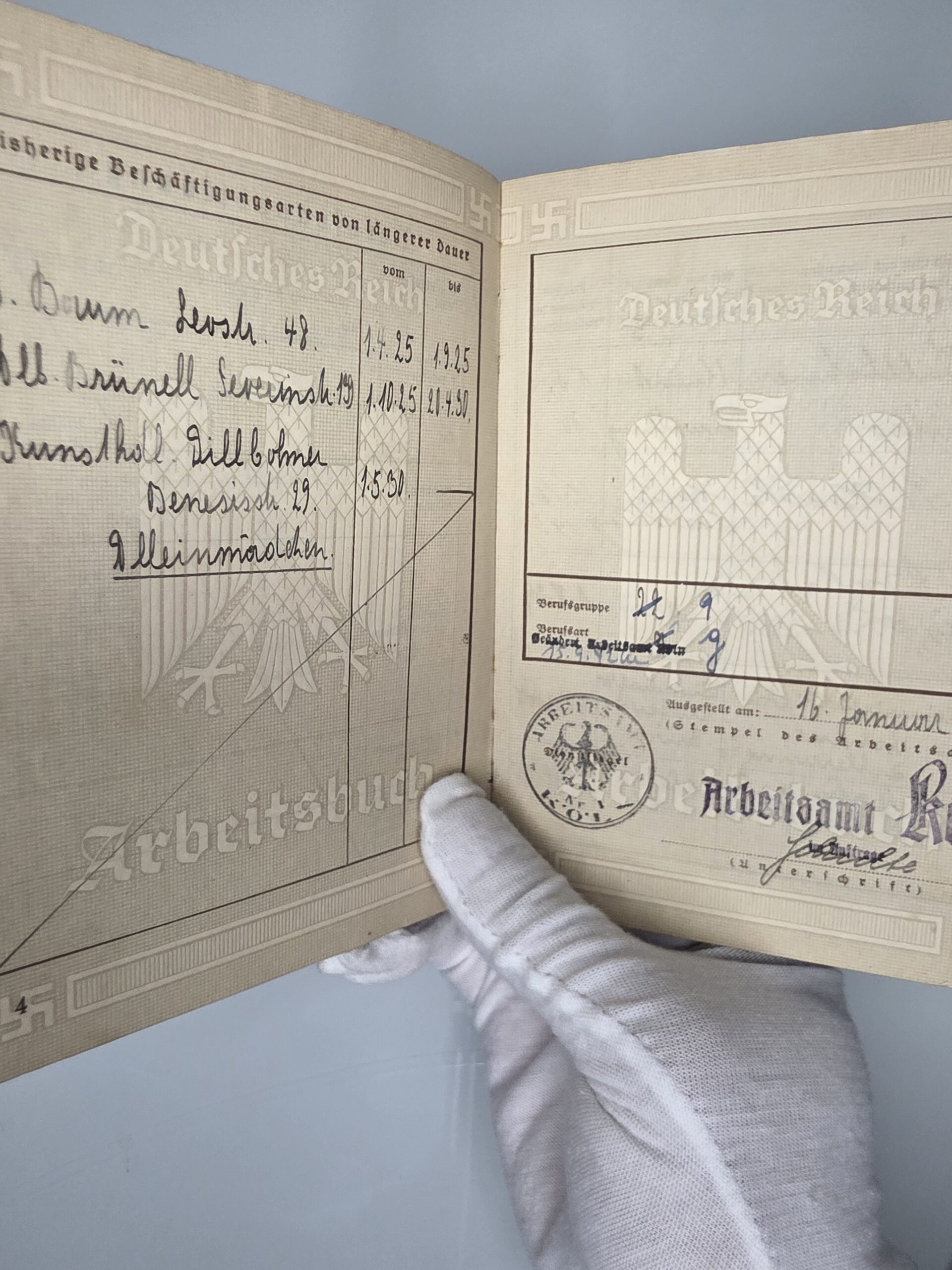
Third Reich Arbeitsbuch – Original German Worker’s Employment Book
30,00 €
WWII German Wehrpass – Rudolf Klinger 1943 Zweitschrift with Photo & Typhus Card
Original price was: 110,00 €.99,00 €Current price is: 99,00 €.
Limited-Time OfferGerman Historical Document Collection 1901–1949 – Arbeitsbuch, Postsparbuch & WWII Papers
Original price was: 299,00 €.245,00 €Current price is: 245,00 €.
Limited-Time OfferThird Reich Tax Documents – 1937 Bavarian Ministry & Nuremberg Archive
Original price was: 150,00 €.99,00 €Current price is: 99,00 €.
Limited-Time Offer


About the Author: Juan García Nicolás

Authentication & certification
Have a signature or document you want examined? Independent analysis by a qualified graphologist and forensic handwriting examiner.
Research tools
What is my autograph worth?
Signed or facsimile?
Which German document do I have?
All Journal articles
From the collection
Third Reich Arbeitsbuch – Original German Worker’s Employment Book
30,00 €
WWII German Wehrpass – Rudolf Klinger 1943 Zweitschrift with Photo & Typhus Card
Original price was: 110,00 €.99,00 €Current price is: 99,00 €.
Limited-Time OfferGerman Historical Document Collection 1901–1949 – Arbeitsbuch, Postsparbuch & WWII Papers
Original price was: 299,00 €.245,00 €Current price is: 245,00 €.
Limited-Time Offer