Are Historical Collectibles a Good Investment? What Really Drives Long-Term Value
Collectors are often asked whether historical autographs, documents and medals are a good investment. It is a fair question, and it deserves an honest answer rather than a sales pitch. In this article I set out what the best available research says about collectibles as an asset, what actually drives the long-term value of historical collectibles, and the costs and risks that are rarely mentioned. Nothing here is financial advice; it is the view of a collector who has spent a long time watching how values behave.
Do Collectibles Actually Hold Their Value?
Some do, over long periods, but the evidence is more mixed than many dealers suggest.
The most careful long-term study I know of was carried out by Elroy Dimson and Christophe Spaenjers, who used catalogue prices to track British collectible stamps from 1900 to 2008. They found an annualised return of 7.0% in nominal terms and 2.9% in real terms: better than government bonds, but below equities, with volatility close to that of the stock market.
In a later review of stamps, art and musical instruments, the same authors concluded that the long-run returns of these “emotional assets” had exceeded those of bonds, bills and gold, but warned that these figures are before transaction costs, that real volatility is higher than indices suggest, and that collectors are exposed to changes in taste and to fraud.
Their conclusion is one I agree with: collectibles should not be bought lightly as investments, but they can be rational purchases for people who enjoy owning them.
Shorter-term figures show how uneven markets can be. According to Knight Frank’s Wealth Report 2025, the values of a basket of ten luxury collectible assets fell by an average of 3.3% in 2024, and art was down 18.3%.
What Drives the Value of Historical Collectibles?
With historical collectibles, the same factors come up again and again. In my experience they are, roughly in order of importance:
| Factor | Why it matters | What reduces value |
|---|---|---|
| Authenticity | A piece that cannot be trusted has little or no collector value. | Doubtful signatures, facsimiles sold as originals, inconsistent materials. |
| Historical significance | Who signed, what the document records, and why it matters. | Routine content, or a connection to the person that is only assumed. |
| Provenance | A documented history of ownership supports both authenticity and interest. | Unexplained gaps, or stories that cannot be checked. |
| Condition | Legibility and completeness, especially of the signature. | Heavy staining, losses, tape repairs, trimming, fading. |
| Rarity | How often comparable pieces appear on the market. | Common types, mass-produced items, frequent auction appearances. |
| Demand | How many collectors want this person, period or type. | Shifts in taste, or legal restrictions in some markets. |
I explain these factors in more detail, with examples, in my Autograph Value Guide.
Why Is Scarcity Not Enough on Its Own?
It is true that no more original wartime documents will ever be created. But scarcity only creates value when it meets demand. A rare document that interests very few collectors may be hard to sell at any price, while a relatively common signature of a famous figure may sell easily. Collectors who buy simply because something is rare often discover that the market does not share their enthusiasm.
What Are the Hidden Costs and Risks?
These are the points I wish every new collector heard before buying historical collectibles with investment in mind:
- Transaction costs. Auction houses charge buyer’s premiums and seller’s commissions, and taxes may apply on top. The difference between what you pay and what you would receive when selling can be substantial.
- Illiquidity. A historical document is not a share. Finding the right buyer can take months, and a forced sale usually means a lower price.
- Price opacity. Asking prices are not sale prices. Reliable evidence comes from realised auction results for genuinely comparable pieces.
- Changing taste. Interest in particular periods and figures rises and falls with generations, films, anniversaries and politics.
- Legal restrictions. Some categories, including material bearing certain symbols, may not be sold or shipped to some countries, which narrows the potential market.
- Forgery. Fakes are most common where values are highest. A piece later shown to be doubtful can lose most of its value.
- Care and insurance. Proper storage, conservation and insurance all cost money over time.
Collector’s Note
Before buying an expensive piece, ask yourself whether you would still be glad to own it if its market value did not rise for twenty years. If the answer is yes, you are collecting. If the answer is no, you are speculating, and historical collectibles are a poor vehicle for speculation.
How Can a Collector Protect the Long-Term Value of Historical Collectibles?
- Buy the best example you can afford, rather than several weaker ones.
- Insist on honest descriptions, clear return terms and, for important pieces, an independent opinion.
- Keep every document that supports provenance: invoices, letters, labels and earlier catalogue descriptions.
- Store and handle pieces correctly, and never attempt amateur restoration.
- Research comparable realised prices before buying, not after.
- Specialise. Knowledge of a field is the best protection against paying too much or buying the wrong thing.
Frequently Asked Questions
Are historical collectibles a good investment?
They can hold their value over the long term, but no return is guaranteed. Long-term research suggests returns above bonds but below equities, before costs, with significant risk. They are best bought by people who value the pieces themselves.
What makes an autograph or document increase in value?
Authenticity, historical significance, documented provenance, good condition, rarity and continuing collector demand. A piece that combines several of these is far more likely to keep its value.
Does a certificate of authenticity guarantee value?
No. A certificate is only as reliable as the person or organisation that issued it and the examination behind it. It supports a piece; it does not replace evidence.
Should I sell at auction or privately?
It depends on the piece, the timing and the costs involved. Auctions offer reach and transparency, but charge fees on both sides; private sales can be quicker but require finding the right buyer. Compare net outcomes, not headline prices.
Final Thoughts
Historical collectibles can be a sound way to hold part of one’s wealth in tangible form, but only when they are bought with knowledge, patience and realistic expectations. The collectors I have seen do best over time were never chasing returns. They were chasing understanding, and the value followed the quality of their choices.
This article is for general information only and does not constitute financial or investment advice. Past performance of any asset class is not a guide to future returns.
References & Further Reading
- Dimson, E. and Spaenjers, C. (2011) ‘Ex post: The investment performance of collectible stamps’, Journal of Financial Economics, 100(2), pp. 443–458.
- Dimson, E. and Spaenjers, C. (2014) ‘Investing in emotional assets’, Financial Analysts Journal, 70(2), pp. 20–25.
- Bailey, L. (2025) The Knight Frank Wealth Report 2025: key insights and opportunities. Knight Frank.
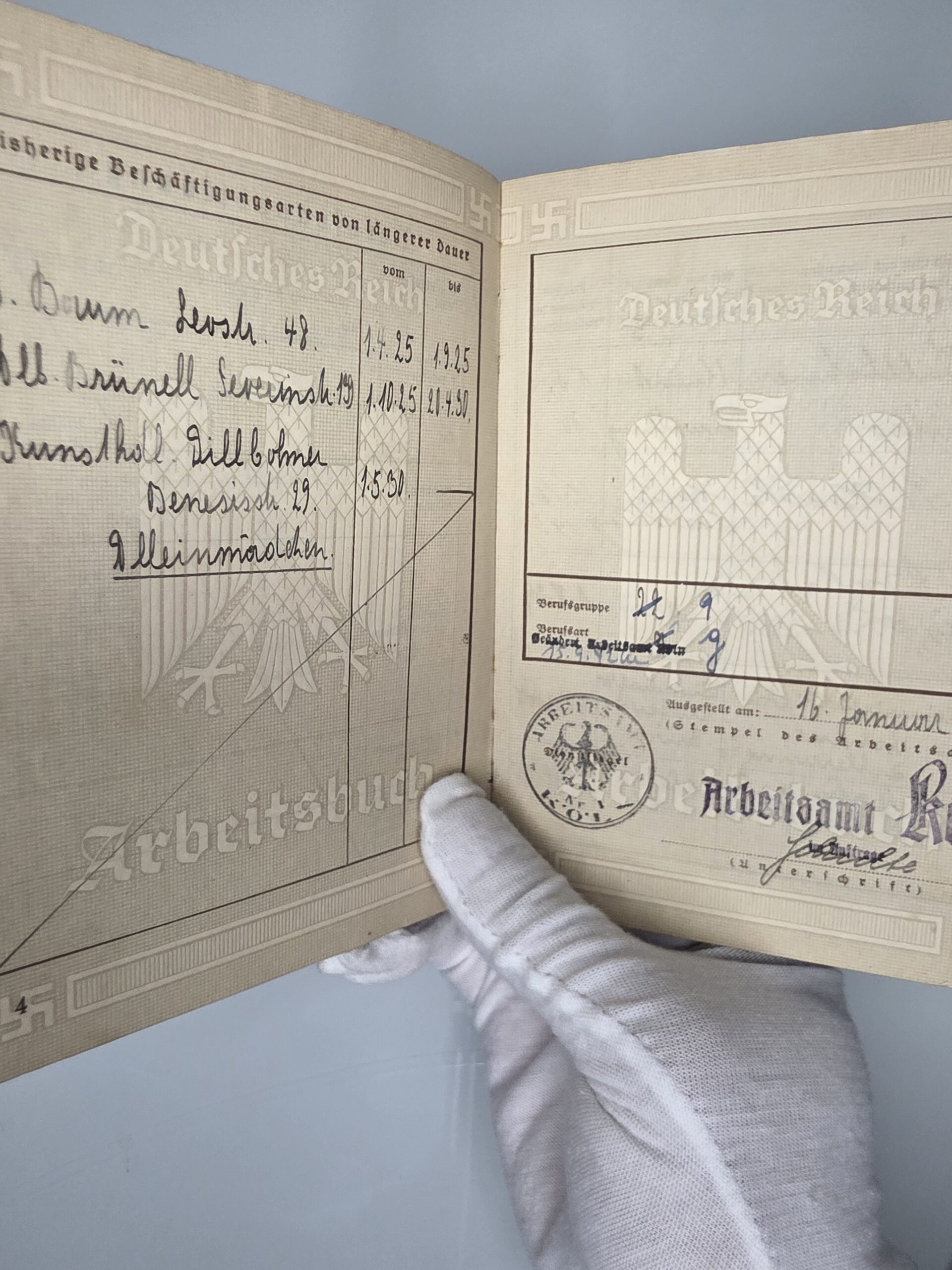
Third Reich Arbeitsbuch – Original German Worker’s Employment Book
30,00 €
WWII German Wehrpass – Rudolf Klinger 1943 Zweitschrift with Photo & Typhus Card
Original price was: 110,00 €.99,00 €Current price is: 99,00 €.
Limited-Time OfferGerman Historical Document Collection 1901–1949 – Arbeitsbuch, Postsparbuch & WWII Papers
Original price was: 299,00 €.245,00 €Current price is: 245,00 €.
Limited-Time OfferThird Reich Tax Documents – 1937 Bavarian Ministry & Nuremberg Archive
Original price was: 150,00 €.99,00 €Current price is: 99,00 €.
Limited-Time Offer


About the Author: Juan García Nicolás

Authentication & certification
Have a signature or document you want examined? Independent analysis by a qualified graphologist and forensic handwriting examiner.
Research tools
What is my autograph worth?
Signed or facsimile?
Which German document do I have?
All Journal articles
From the collection
Third Reich Arbeitsbuch – Original German Worker’s Employment Book
30,00 €
WWII German Wehrpass – Rudolf Klinger 1943 Zweitschrift with Photo & Typhus Card
Original price was: 110,00 €.99,00 €Current price is: 99,00 €.
Limited-Time OfferGerman Historical Document Collection 1901–1949 – Arbeitsbuch, Postsparbuch & WWII Papers
Original price was: 299,00 €.245,00 €Current price is: 245,00 €.
Limited-Time Offer