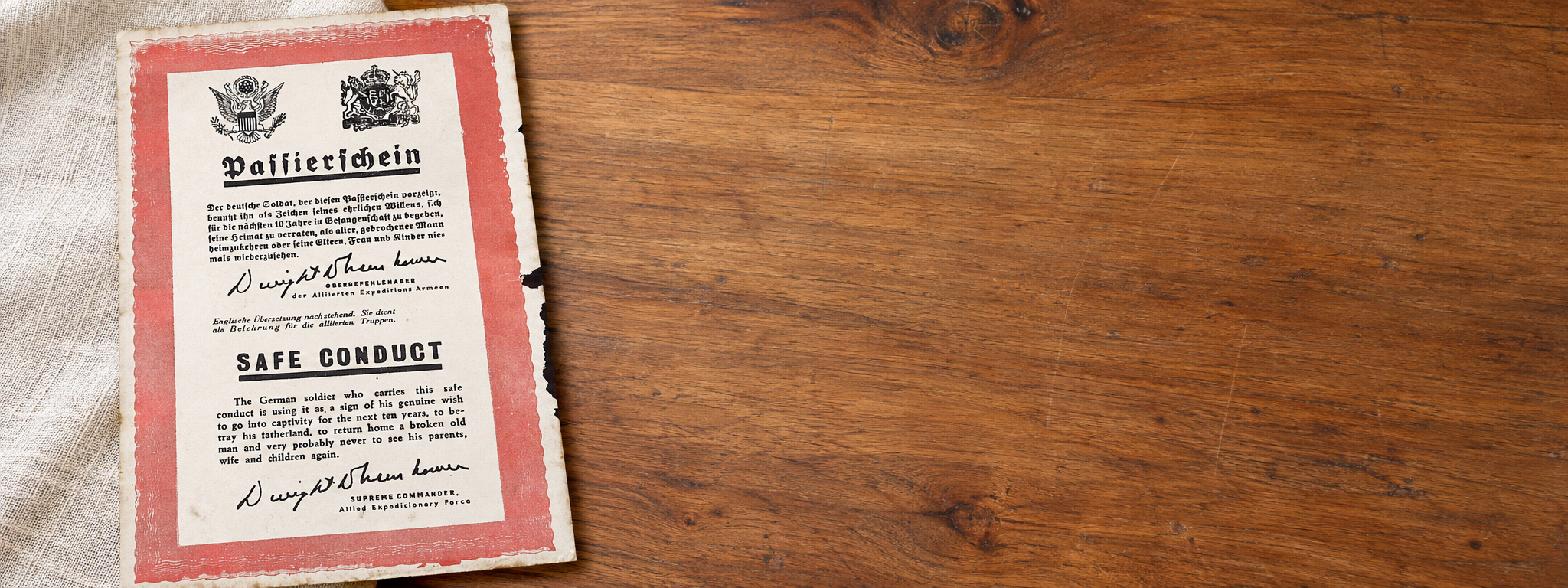
Collecting WWII and Third Reich Material Responsibly: Context, Ethics and the Law
Collecting Third Reich material, and Second World War material more generally, raises a question that collectors of coins or stamps rarely face: what does it say about the person who keeps it? After many years of collecting and examining documents, signatures and decorations from this period, my answer is simple. A collector preserves objects; he does not inherit the beliefs of the people who made them. But that independence has to be earned through the way the material is described, presented and handled. This guide sets out how I approach Third Reich material, and what the law says in the countries where collectors most often run into trouble.
Does Collecting Third Reich Material Mean Supporting Its Ideology?
No. A document signed by a senior official of the regime is not an endorsement of that regime; it is evidence of how it worked. An award certificate, a police circular or a wartime newspaper records decisions, structures and language that historians still study today. Museums, archives and universities hold exactly this kind of material for exactly that reason.
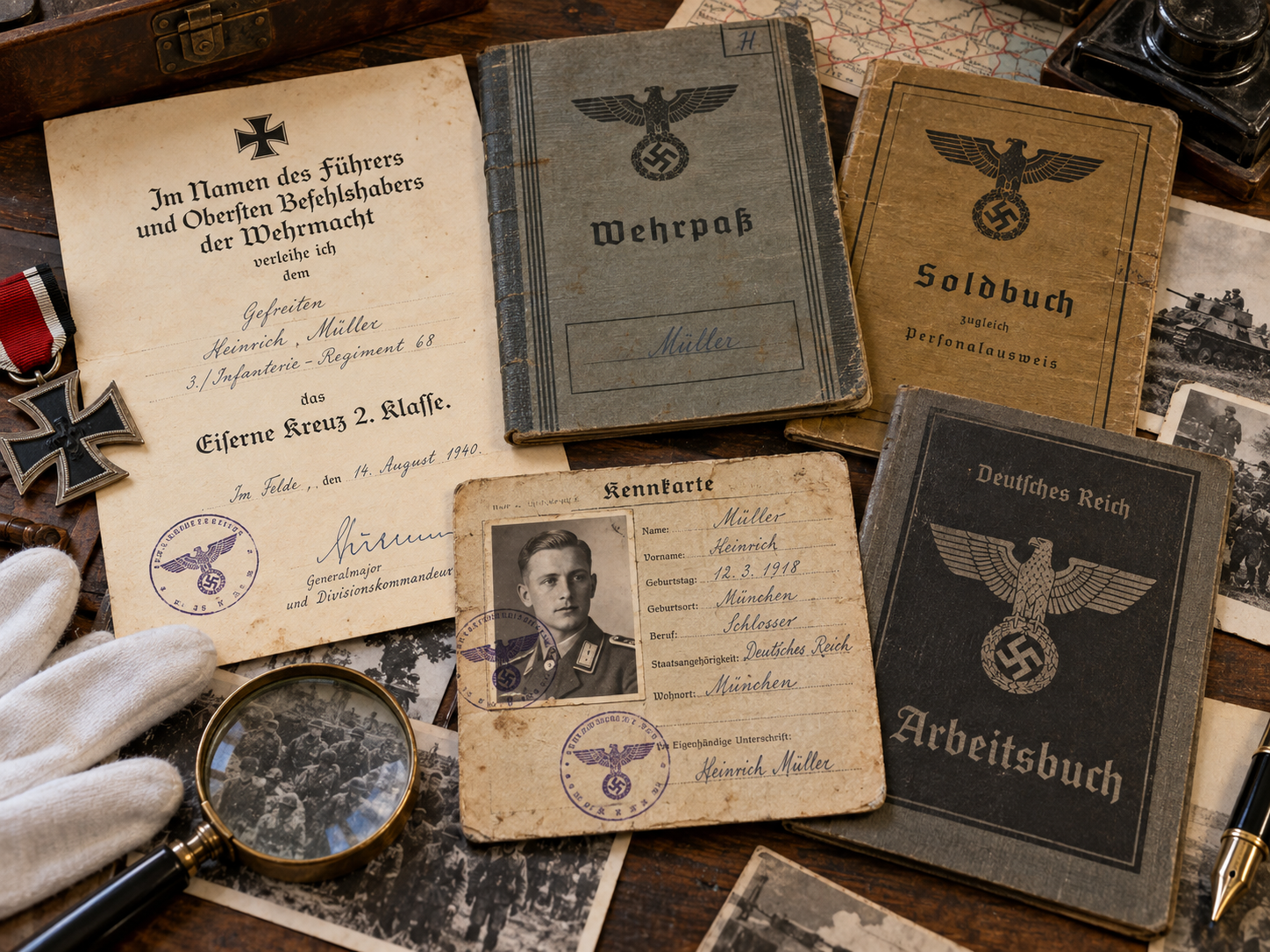
What separates a collector from an admirer is not the object but the purpose. Preservation, research and education are legitimate purposes. Glorification is not. The same Iron Cross can sit in a museum case beside an explanation of the war that produced it, or in a display designed to celebrate that war. The object has not changed; the context has.
What Does “Ideological Independence” Mean in Practice?
For me it comes down to four commitments, applied to every piece in the collection:
- Preserve the artefact as it survives, without restoring away its history.
- Provide context: dates, institutions, the people named and what happened to them.
- Avoid glorification in titles, descriptions, photographs and display.
- Keep an academic tone, describing rather than celebrating, and saying clearly what is not known.
This is why every description of material from this period in the collection carries a historical responsibility notice. It is not a formality. It states the terms on which the object is offered: as a historical artefact for collecting, preservation, education and research.
How Should Sensitive Material Be Described?
Accurate language is part of ethical collecting. A printed facsimile signature should be called a facsimile, not presented as a handwritten autograph. A propaganda leaflet should be identified as propaganda, with its claims treated as claims rather than facts. A document connected with persecution, such as a concentration camp telegram or a ghetto parcel card, should be described as evidence of persecution, with the victim named where the document names them.
Equally important is what a description leaves out. Superlatives about the regime, nostalgic language about its armies, or political slogans repeated without comment have no place in a responsible catalogue. The test I apply is whether the description would sit comfortably in a museum label.
Collector’s Note
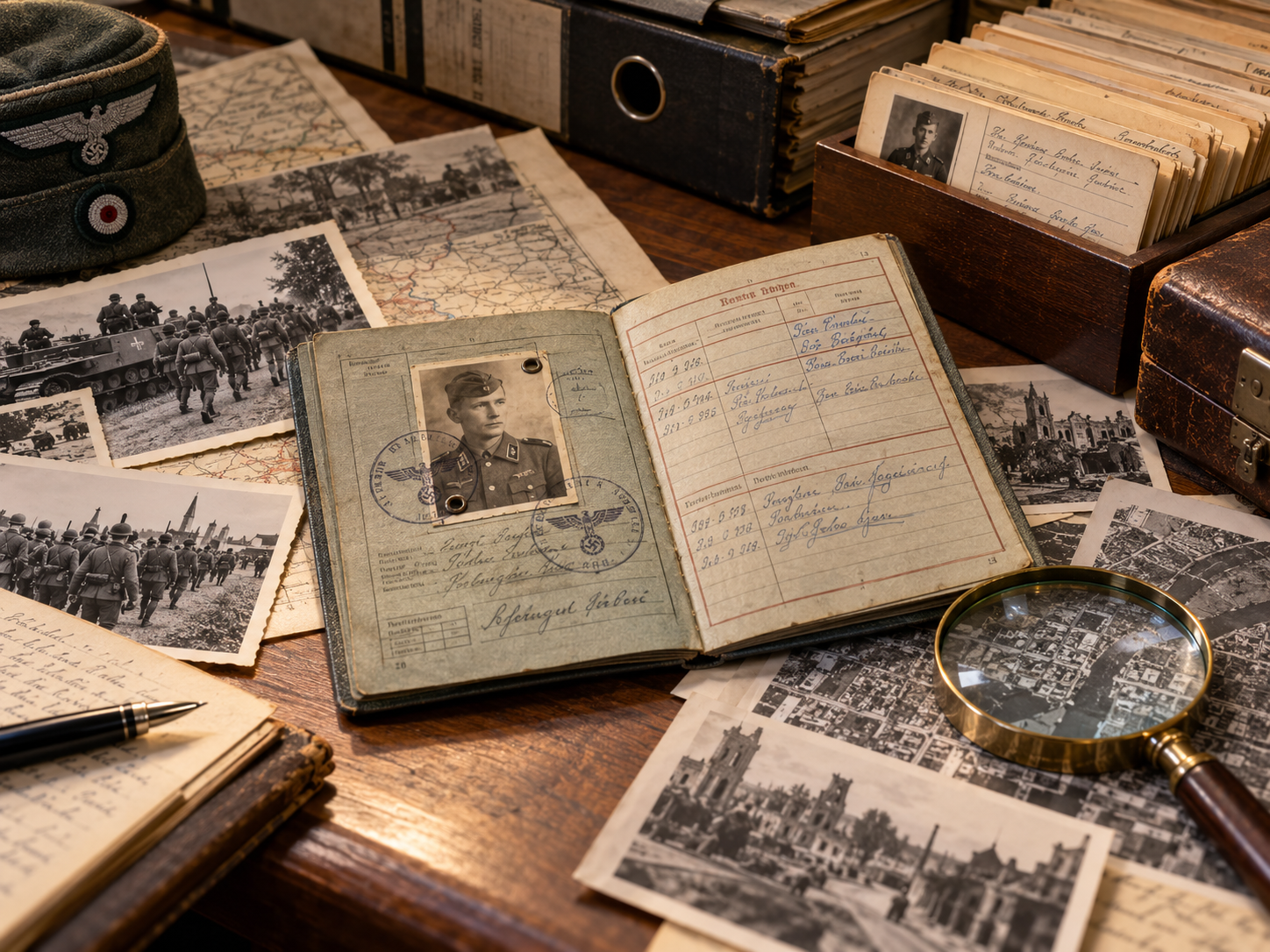
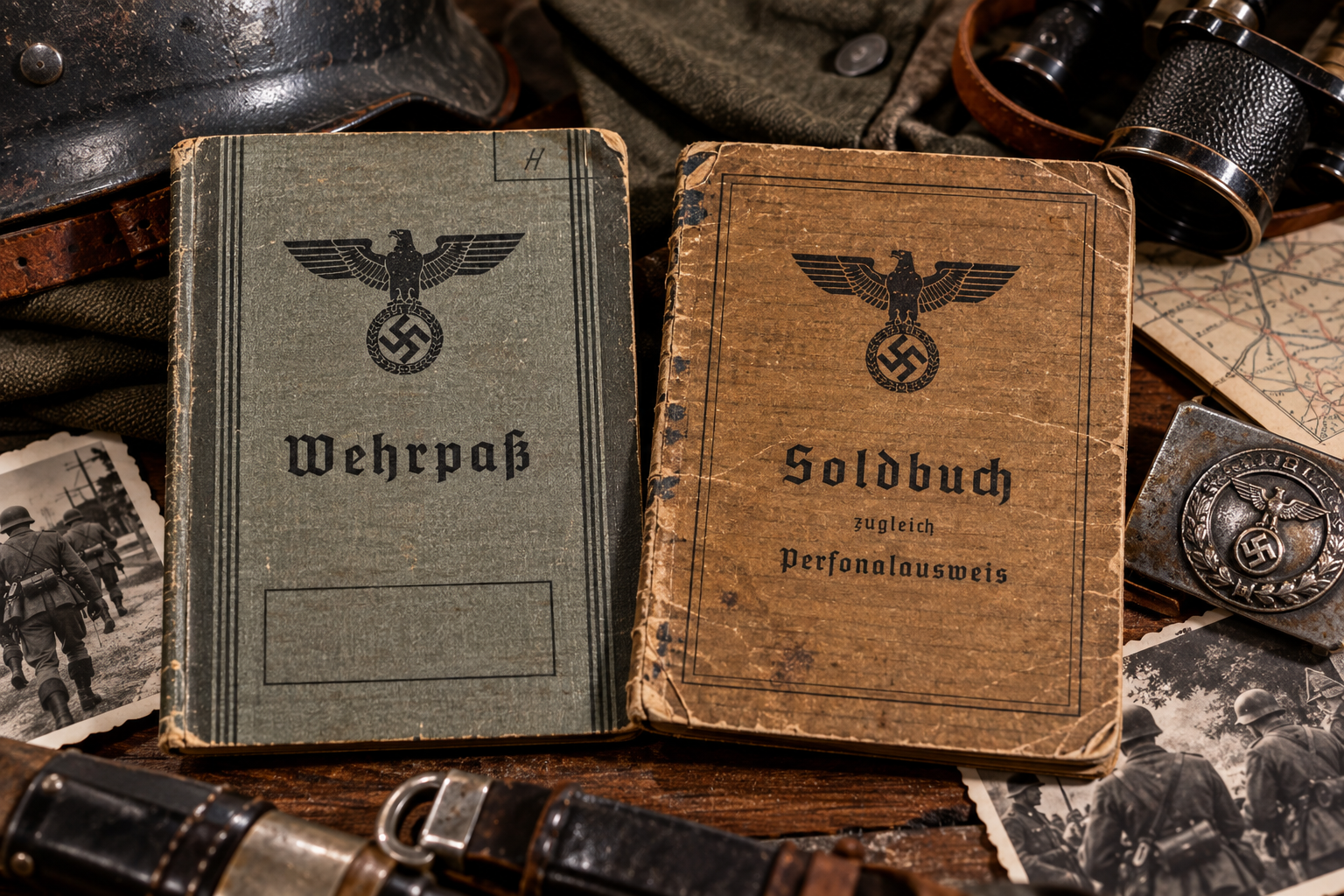
Photographs matter as much as words. I photograph insignia as objects, on a neutral background, showing construction, markings and condition. I do not stage them with flags, uniforms or other material in a way that turns a historical record into a display of the ideology it represents.
What Does the Law Say About Third Reich Material? Germany, France and Austria Compared
Collectors and buyers should know that the rules differ significantly from country to country. The following summary is for general information only and is not legal advice; anyone in doubt should consult a lawyer in their own jurisdiction.
| Country | Main provision | What it restricts | Relevant exception |
|---|---|---|---|
| Germany | § 86a Strafgesetzbuch (StGB) | Distributing or publicly using the symbols of unconstitutional organisations, including flags, badges, uniform items, slogans and salutes, and producing, stocking, importing or exporting material that displays them for such use. | § 86 (4) StGB, applied through § 86a (3): the prohibition does not apply where the act serves civic education, resistance to unconstitutional efforts, art or science, research or teaching, reporting on current or historical events, or similar purposes. |
| France | Article R645-1 Code pénal | Wearing or exhibiting in public uniforms, insignia or emblems recalling those of criminal organisations or of persons convicted of crimes against humanity; a fifth-class contravention. | Use for a film, a show or an exhibition with a historical dimension. In a judgment of 5 September 2023 (no. 22-85.540), the Cour de cassation held that offering such objects for sale online with photographs and descriptions did not in itself amount to exhibiting them in public. |
| Austria | Abzeichengesetz 1960 | Insignia of prohibited organisations may not be publicly worn, displayed, depicted or distributed. According to guidance from the Vienna Chamber of Commerce for the antiques trade, this includes selling them, even with the symbol covered. | Printed works, images, stage and film works, and certain exhibitions; no general exception for collectors or dealers. |
Two practical consequences follow. First, simply owning Third Reich material is generally not the issue; public use, display and distribution are. Second, the destination of a parcel matters as much as its origin. Pieces in this collection change hands privately, between collectors, and before buying every collector is responsible for checking that a piece may lawfully be imported and kept where they live.
Why Does Neutrality Strengthen a Collection?
Because credibility is what gives a collection its value, both historical and financial. A collector known for careful, neutral, documented descriptions is trusted by other collectors, by researchers and by institutions. A collection presented with sensationalism is not, however genuine its contents.
Neutrality also protects Third Reich material itself. Objects from difficult periods survive in private hands largely because collectors have kept them. If that preservation becomes associated with admiration for the regime, the pressure to destroy or bury such material grows, and history loses primary sources that cannot be replaced.
What About Freedom to Study Difficult History?
The freedom to study and preserve the past includes its darkest chapters. Historians, teachers and collectors need to be able to handle original evidence of dictatorship, war and persecution without being assumed to share the views of those responsible. That freedom carries an obligation: to act transparently, to respect the law, and to remember the victims of the history the objects record.
For the practical side of this, see my guides to WW2 German documents and to facsimile signatures.
Frequently Asked Questions
Is it legal to collect Third Reich material?
In many countries private ownership is lawful, but public display, sale or import may be restricted. Germany, France and Austria all have specific rules, summarised above. The position depends on where you live, so check your local law before buying.
Who is responsible for checking the law in my country?
The buyer. Some countries restrict the sale, import or display of objects bearing certain symbols; Austria, for example, prohibits their distribution even with the symbol covered. Each collector is responsible for knowing and respecting the rules where they live.
Why do your descriptions include a historical responsibility notice?
Because it states the purpose on which a piece is offered: as a historical artefact for collecting, preservation, education and research, without any endorsement or glorification of the ideology it represents.
How should I display sensitive items in my own collection?
As historical objects: with labels giving context, dates and sources, without political staging, and with respect for the victims of the period. Museum practice is a good model.
Final Thoughts
With Third Reich material, ideological independence is not a statement a collector makes once; it is a practice. It shows in every description, every photograph and every decision about what to buy, how to present it and where to send it. Done properly, it allows difficult objects to be what they should be: evidence, kept so that the history they record can be studied rather than forgotten.
Historical Responsibility Notice: material from the National Socialist period discussed on this site is documented as historical artefacts for collecting, preservation, education and research. It does not endorse or glorify any ideology.
References & Further Reading
- German Federal Ministry of Justice, § 86a Strafgesetzbuch – Verwenden von Kennzeichen verfassungswidriger und terroristischer Organisationen.
- German Federal Ministry of Justice, § 86 Strafgesetzbuch (exception in paragraph 4).
- Letellier, H. (2023) ‘Interprétation stricte de l’article R. 645-1 du Code pénal ou l’assimilation impossible entre l’exposition de l’objet incriminé et la diffusion de son image’, Actu-Juridique, 3 November 2023, on Cour de cassation, criminal chamber, 5 September 2023, no. 22-85.540.
- Wirtschaftskammer Wien (2025) NS-Devotionalien im Altwarenhandel, 24 September 2025.
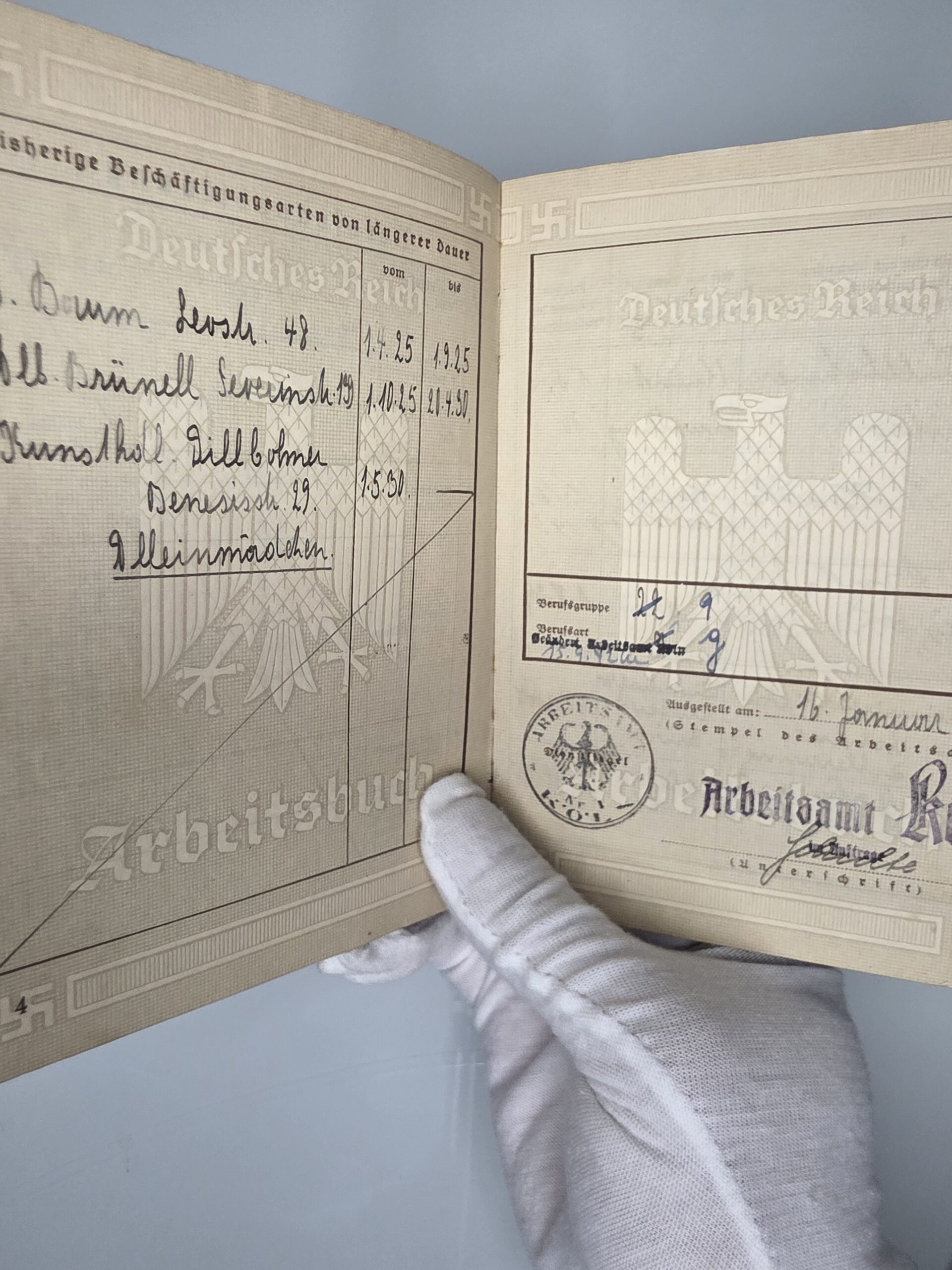
Third Reich Arbeitsbuch – Original German Worker’s Employment Book
30,00 €
WWII German Wehrpass – Rudolf Klinger 1943 Zweitschrift with Photo & Typhus Card
Original price was: 110,00 €.99,00 €Current price is: 99,00 €.
Limited-Time OfferGerman Historical Document Collection 1901–1949 – Arbeitsbuch, Postsparbuch & WWII Papers
Original price was: 299,00 €.245,00 €Current price is: 245,00 €.
Limited-Time OfferThird Reich Tax Documents – 1937 Bavarian Ministry & Nuremberg Archive
Original price was: 150,00 €.99,00 €Current price is: 99,00 €.
Limited-Time Offer


About the Author: Juan García Nicolás

Authentication & certification
Have a signature or document you want examined? Independent analysis by a qualified graphologist and forensic handwriting examiner.
Research tools
What is my autograph worth?
Signed or facsimile?
Which German document do I have?
All Journal articles
From the collection
Third Reich Arbeitsbuch – Original German Worker’s Employment Book
30,00 €
WWII German Wehrpass – Rudolf Klinger 1943 Zweitschrift with Photo & Typhus Card
Original price was: 110,00 €.99,00 €Current price is: 99,00 €.
Limited-Time OfferGerman Historical Document Collection 1901–1949 – Arbeitsbuch, Postsparbuch & WWII Papers
Original price was: 299,00 €.245,00 €Current price is: 245,00 €.
Limited-Time Offer