How to Catalogue a Historical Collection: Autographs, Documents & Militaria
Buying a historical object takes a few minutes. Properly recording it can preserve information for decades.
That distinction becomes increasingly important as a collection grows. A single signed letter is easy to remember. Twenty documents are manageable. After several hundred autographs, medals, photographs, military booklets, certificates and pieces of ephemera, memory is no longer a reliable catalogue.
The solution does not need to be a museum database. A useful record for a private historical collection can begin with something much simpler: one unique reference number, good photographs, a factual description and a record of where the object came from.
For collectors wondering how to catalogue a historical collection, the objective is not to create bureaucracy around every object. It is to preserve information that may become impossible to recover later.
At Autographs & Militaria this principle matters because many pieces are not isolated objects. Documents, photographs, medals and letters can belong to the same person or archive, and separating their records can remove much of their historical meaning.
Quick Answer: What Should a Historical Collection Record Contain?
At minimum, I would record:
- Unique collection reference
- Object type
- Short identification
- Date or approximate period
- Person or organisation associated with it
- Physical description
- Measurements
- Condition
- Provenance or acquisition source
- Photographs
- Current location
- Related objects or documents
Additional fields can record authenticity research, certificates, purchase information, bibliography, historical notes and eventual sale status.
The exact software matters much less than maintaining the system consistently.
1. Why Should Every Object Have a Unique Reference Number?
The most useful habit in a growing historical collection is also one of the simplest: never rely solely on the object’s title.
Titles change. Research changes. Attributions can change. A unique reference should not.
A collector may initially describe an item as German WWII military document and, months later, identify the precise unit, recipient and purpose. If the object’s permanent reference is DOC172, every photograph, research note, certificate and piece of correspondence remains connected to DOC172, even if the descriptive title is improved several times.
At Autographs & Militaria, references use category-based identifiers such as:
- DOC — documents and autograph material
- INS — medals, insignia and related militaria
- Periódico — historical newspapers and press material
The exact prefixes are less important than consistency. A collector could equally use AUT-001, DOC-001, MED-001 and PHO-001, or simply 2026-001, 2026-002 and 2026-003.
The best numbering system is one that can continue indefinitely without forcing old objects to be renumbered.
2. How Much Information Should Go Inside the Number?
A catalogue number should identify the object. It does not need to describe it.
A complicated code such as GER-WWII-INF-DOC-1942-0256-001 may look organised at first, but problems appear when research changes. What happens if the document turns out to date from 1943? What happens if the supposed infantry association is incorrect?
A simple permanent reference such as DOC172 remains valid regardless of what later research discovers. Descriptions belong in the record’s fields; the reference number should remain stable.
Professional collections management follows the same principle. In the Spectrum collections-management standard published by Collections Trust, a unique object number is the first element of a catalogue record, with descriptive, acquisition, location and other information recorded around it.
3. How Do You Separate What an Object Is from What You Think It Means?
This is one of the most useful disciplines in historical collecting. A catalogue record should distinguish between observation and interpretation.
Observation: typed German document dated 14 September 1942, with a handwritten signature at lower right and a circular purple ink stamp.
Interpretation: the stamp appears to relate to a particular military administrative office.
Those statements are not equivalent. The first describes what is physically present; the second is a research conclusion. Keeping them separate allows the record to evolve without rewriting history.
A useful catalogue can therefore contain two fields: Physical description and Research notes. The physical description should change very little. The research notes can develop over years.
4. When Should Provenance Be Recorded?
Provenance is much easier to preserve than to reconstruct. When a piece arrives, record whatever information is available immediately:
- seller or previous owner;
- auction house or dealer;
- date acquired;
- lot number;
- original listing;
- invoice;
- old collection labels;
- previous catalogue references;
- letters accompanying the object;
- any story supplied with it.
Not all provenance is equally strong. A seller saying that a group “came from a veteran’s family” is not equivalent to documentation establishing that connection. The record should preserve exactly what is known without upgrading a claim into a fact. For example:
Seller stated that the group came directly from the recipient’s family. No independent documentation confirming this has been located.
That is much more useful than writing simply From the recipient’s family.
Supporting documentation should also be retained even when it seems unimportant at the time. Institutional practice points the same way: the US National Park Service’s Museum Handbook, Part II: Museum Records keeps the documents behind each acquisition together in a dedicated accession file. Private collectors can apply the same principle on a smaller scale.
5. Which Photographs Does a Catalogue Record Need?
Every catalogued object should have a photographic record. For documents and autographs, I normally want:
- front;
- reverse;
- signature detail;
- stamps or seals;
- important inscriptions;
- damage or unusual condition features;
- and, where appropriate, the complete group photographed together.
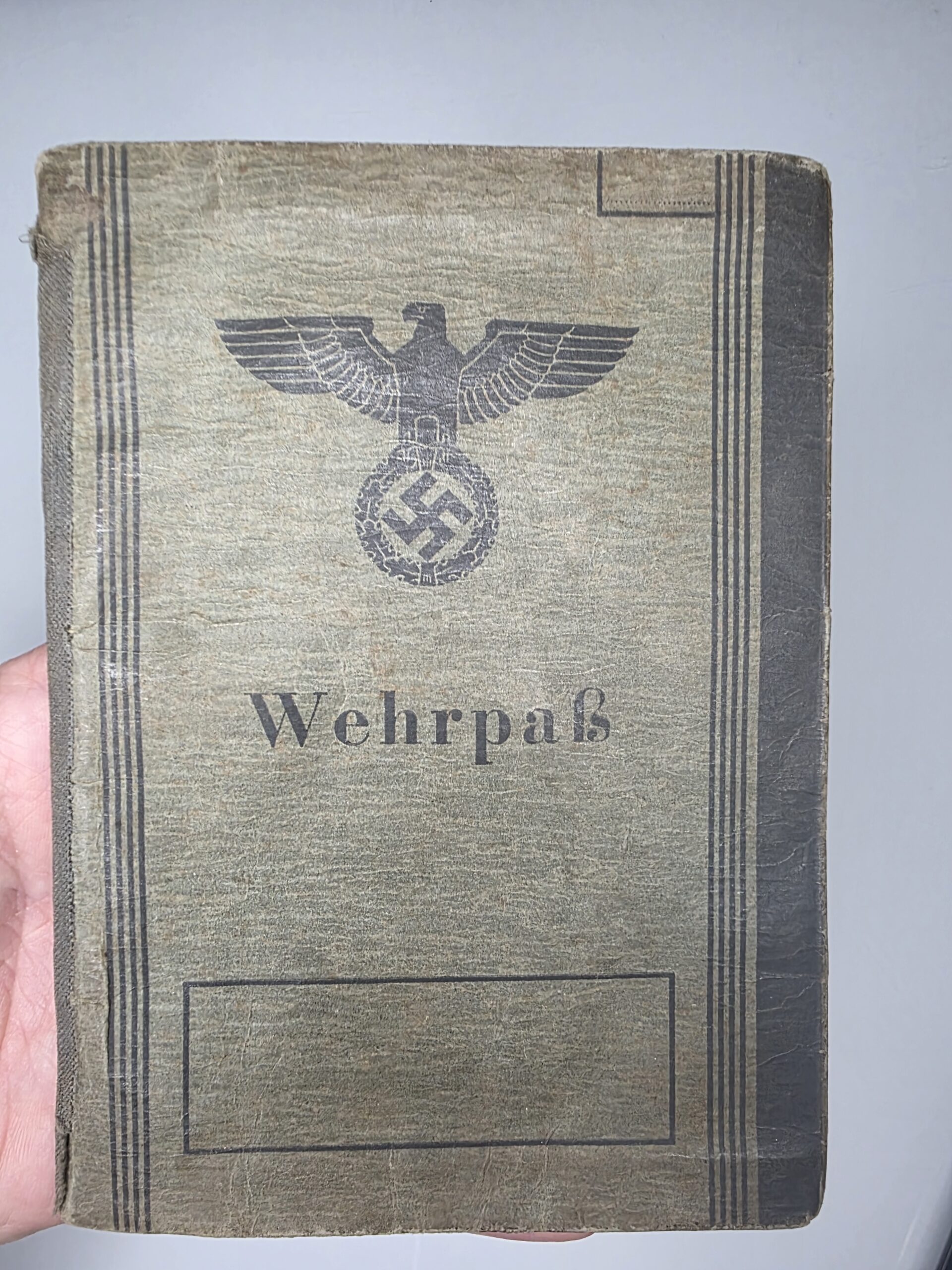
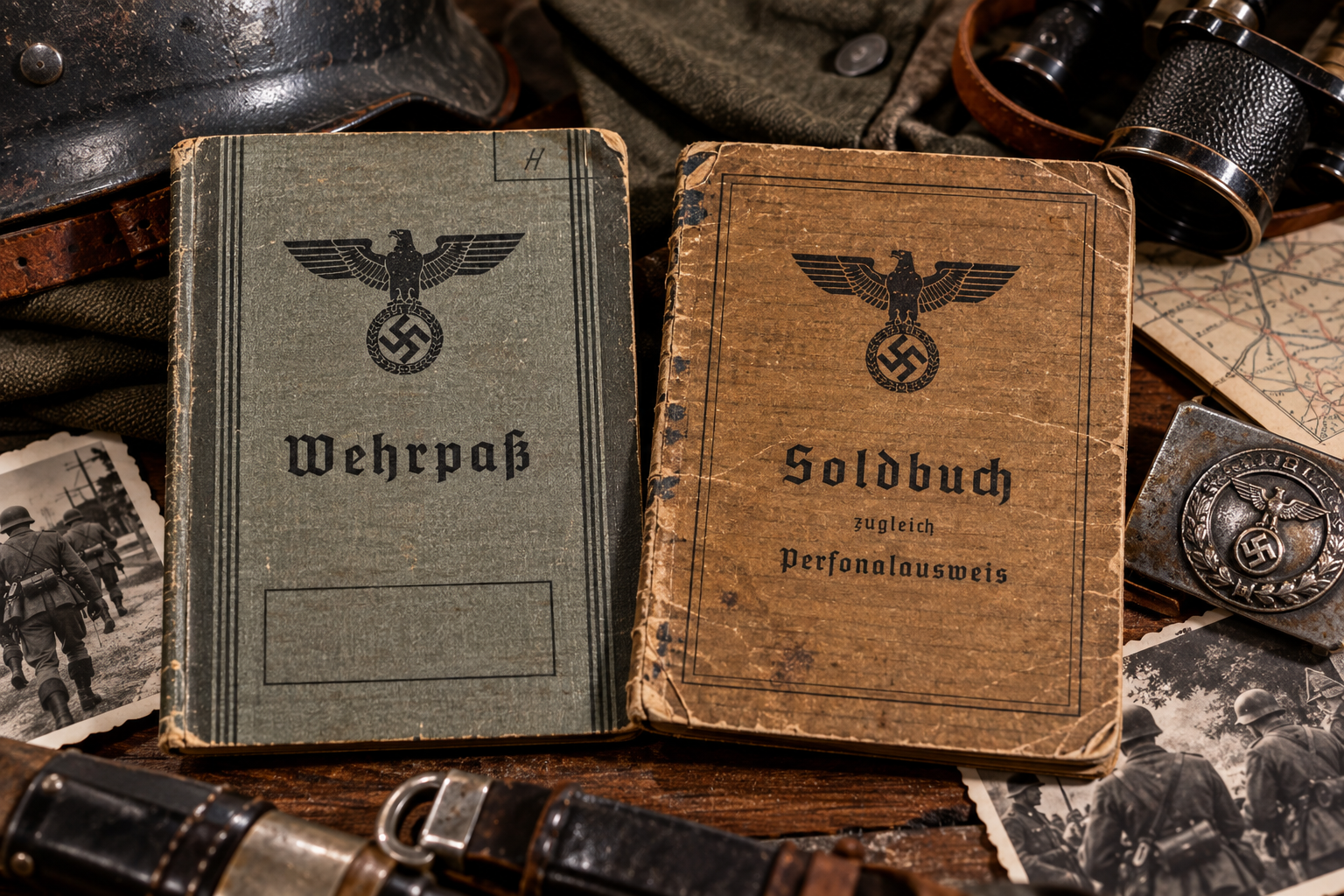
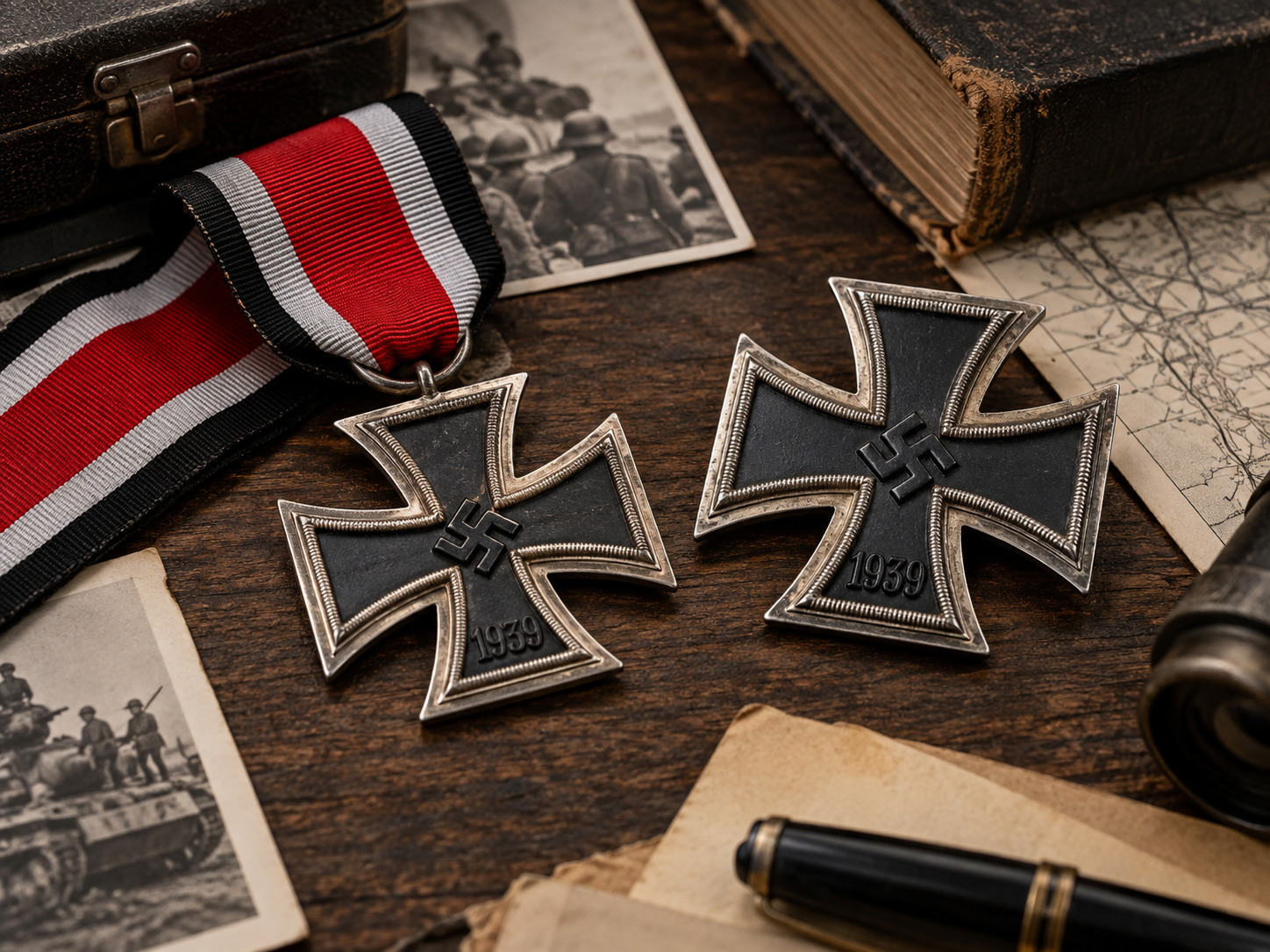
A medal may require front, reverse, suspension, ribbon and maker-mark details. A military booklet may require its cover plus the relevant internal pages.
The purpose of these photographs is not only presentation. They create a visual record of the object at a particular moment. If a stain develops, a ribbon deteriorates, paper tears or an object is accidentally separated from its group, earlier photographs may become important evidence.
The National Park Service’s handbook makes the same point: photographs are especially useful for recording an object’s condition, and objects should be photographed as part of the cataloguing process.
6. How Should Image Files Be Named?
A photograph called IMG_8473.jpg has almost no archival value by itself. Six months later, nobody remembers what IMG_8473 was.
A better structure is DOC172-01.jpg, DOC172-02.jpg, DOC172-03.jpg. For details: DOC172-signature.jpg, DOC172-stamp.jpg, DOC172-reverse.jpg.
This makes every image traceable to the catalogue record even when files are copied into another folder or sent independently. The same logic applies to certificates (DOC172-COA.pdf), research (DOC172-research-notes.pdf) and acquisition material (DOC172-purchase-record.pdf).
The reference number becomes the thread connecting the entire digital archive.
7. Should Condition Be Graded or Described?
Collectors often reduce condition to words such as excellent, very good, good or fair. Those terms can be subjective. For historical material, a descriptive condition note is usually more useful.
For paper: toning, foxing, folds, edge tears, paper loss, staining, fading, repairs, mounting traces, pinholes and adhesive residue.
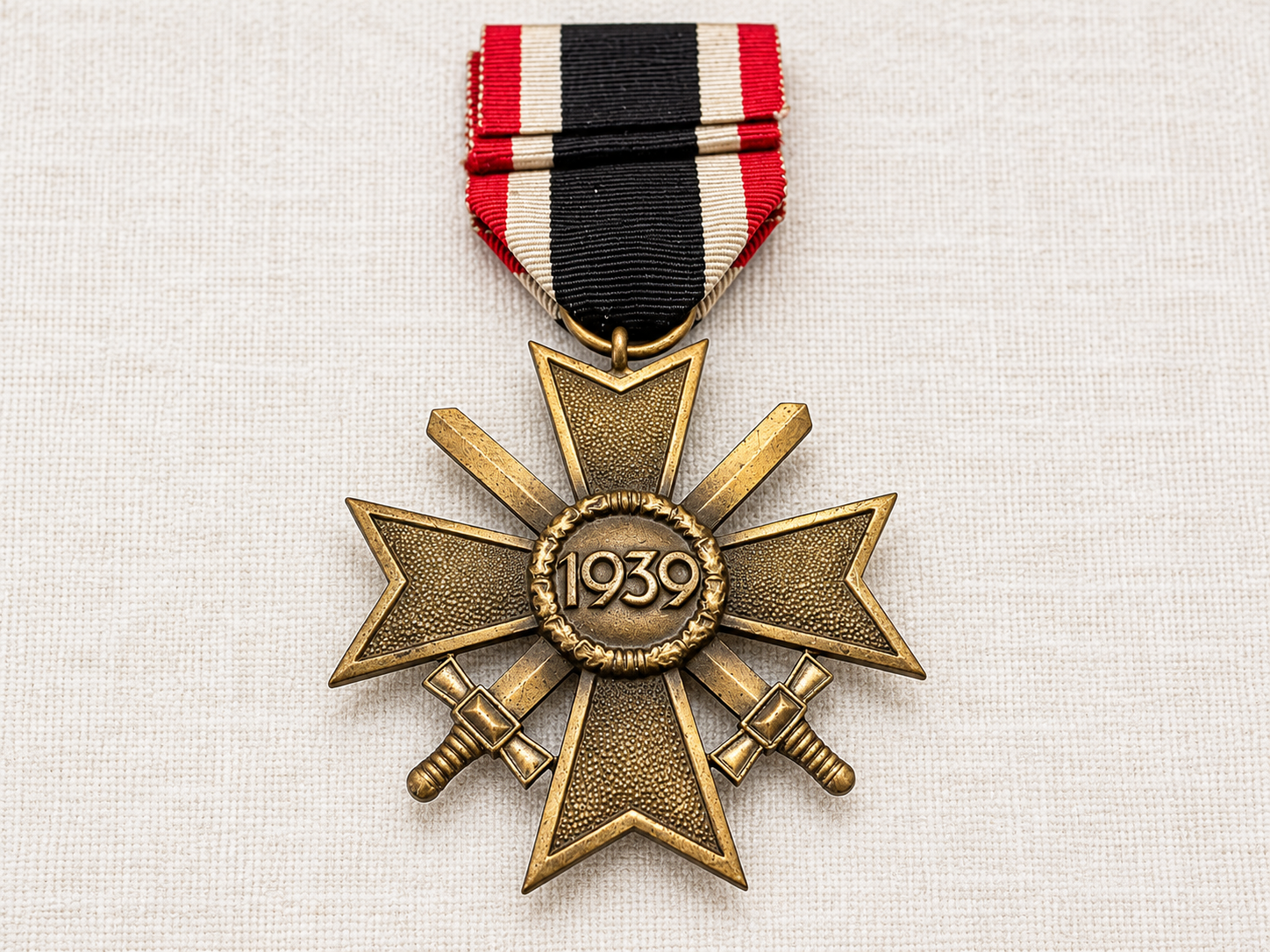
For metal: patina, oxidation, plating loss, scratches, dents, ribbon wear and replaced components.
The objective is not to make the object sound better or worse. It is to create a record. Photographs should support the written condition description, so that if the object later changes, the earlier state can be compared with the current one.
8. How Do You Keep Related Pieces Connected?
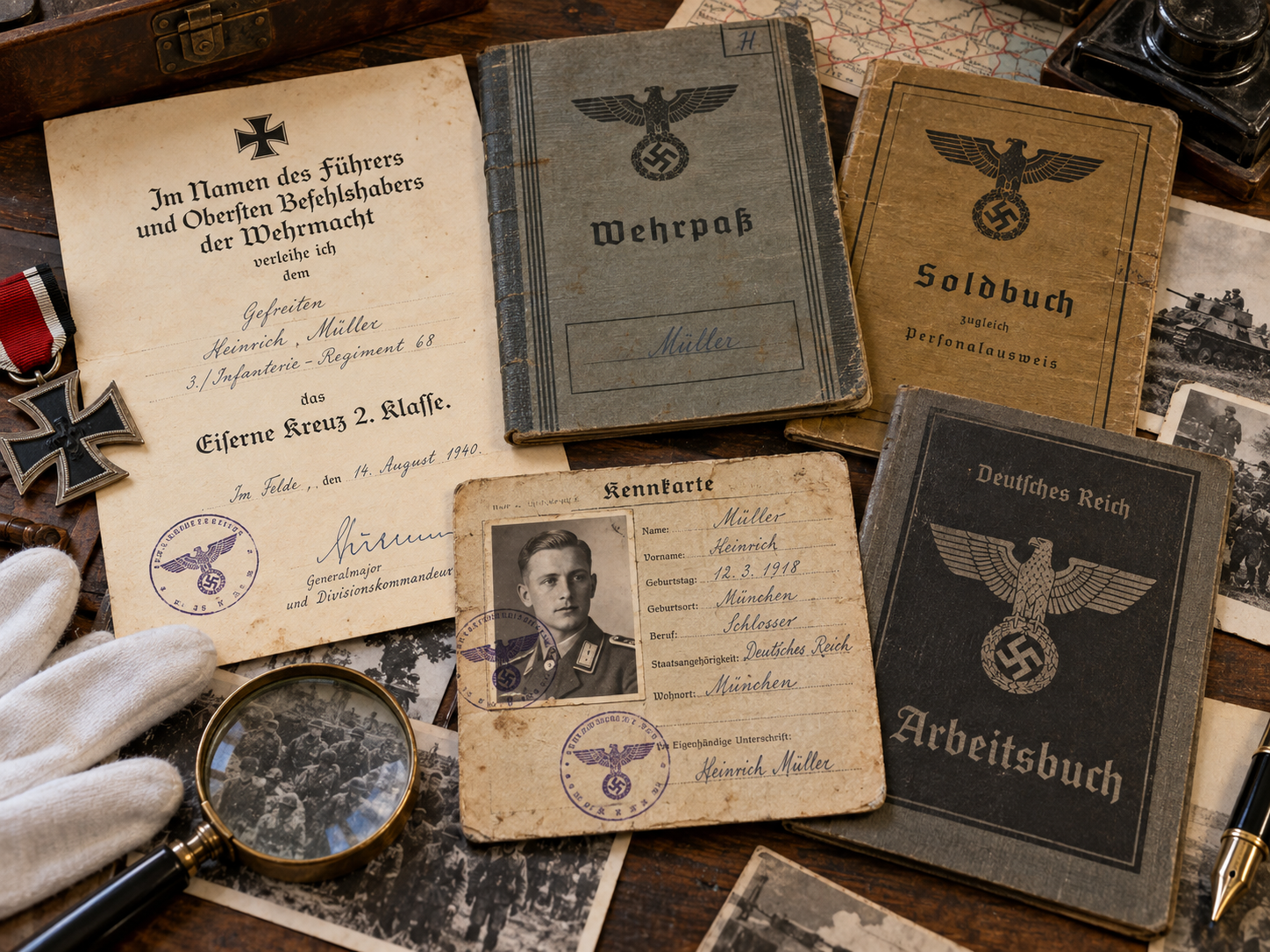
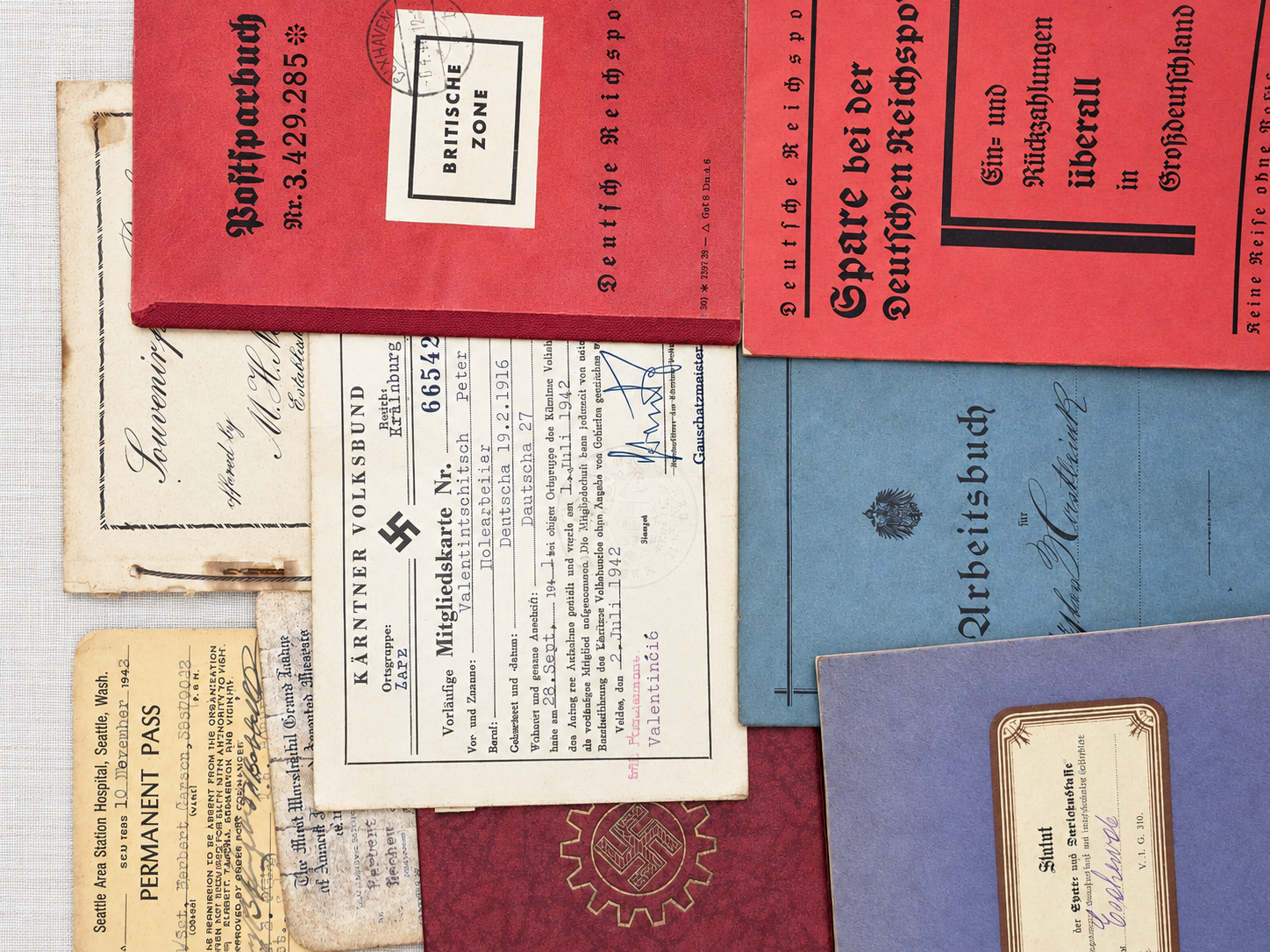
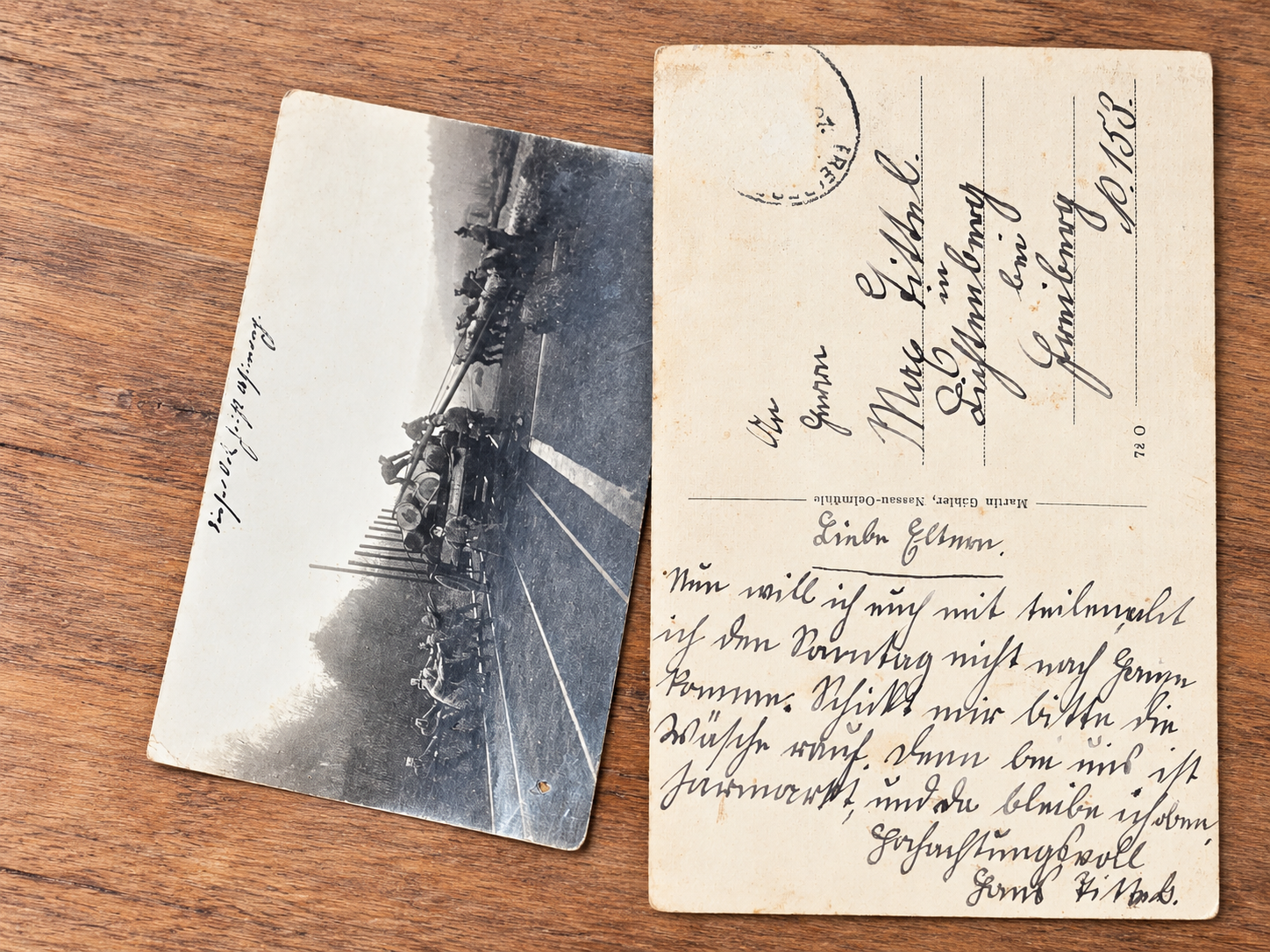
This is especially important with militaria and personal archives. Imagine a group containing a Wehrpass, a medal, an award entry, three photographs, a death notification and family correspondence.
Individually, these are six types of collectible. Historically, they may represent one archive. If they are catalogued independently without cross-references, future research may lose that relationship.
One approach is a parent reference with sub-references, for example:
- DOC-100 — main archive
- DOC-100-A — Wehrpass
- DOC-100-B — medal
- DOC-100-C — photographs
- DOC-100-D — correspondence
Alternatively, if every object keeps an independent reference, each record can carry a field such as Related items: DOC-100, MED-014, PHO-036.
The method is flexible. What matters is preserving the connection.
9. DOC172: Why Does Keeping a Group Together Matter?
A good example from the Autographs & Militaria collection is DOC172, a WWII German Wehrpass group connected with the 256th Infantry Division. The archive keeps the Wehrpass together with an Ostmedaille entry, an original Ostmedaille, a wound entry, death correspondence, photographs and further family material.
From a cataloguing perspective, the interesting feature is not only the individual objects. It is their relationship. The medal can be compared with the award entry. The photographs remain attached to the man’s documentary history. Military entries can be read alongside the later death correspondence.
Material that might appear generic in isolation becomes identifiable when it is preserved within the archive. Our German Wehrpass Guide shows how much of that research depends on reading the entries in sequence.
This is one of the strongest arguments for documenting a group before separating anything physically or commercially. Once the relationship between objects has been lost, recreating it may be impossible.
10. Why Record Where Each Object Is Kept?
A perfect catalogue is useless if the object cannot be found. As a historical collection expands, location control becomes surprisingly important.
A basic private system might use Cabinet A / Drawer 2, Archive Box 4 / Folder DOC or Safe / Shelf 1. The terminology is irrelevant as long as every storage location has its own unique designation. If an object moves, update the record.
Spectrum treats location and movement control as one of its primary procedures, asking museums to give each storage and display location a unique name or number and to update an object’s location every time it moves. A private system can be far simpler than a museum’s, but the principle is the same: every object should have a known location.
11. Why Keep Authentication Records Separate from the Description?
An object’s catalogue entry and its authentication record do different jobs. Suppose an autograph has a certificate of authenticity, comparison material, handwriting-examination notes, provenance documentation and previous expert opinions. All of these should be attached to the catalogue record, but the factual description of the object should still stand on its own. For example:
Object: handwritten letter, two pages, blue ink, dated 3 July 1952.
Authentication: signature examined; certificate number recorded in the authentication field.
This distinction is useful because evidence can evolve. New comparison material may become available. An attribution may be strengthened or questioned. A certificate may be added years after acquisition. The object’s identity remains unchanged.
Our Authenticity & Provenance page explains how authenticity and supporting documentation are treated at Autographs & Militaria, and certificates issued for pieces from the collection can be checked on the Certificate Verification page.
12. Should Old Labels and Previous Numbers Be Kept?
Collectors sometimes remove old stickers, dealer numbers or collection labels because they look unattractive. That can be a mistake. An old label may later help to reconstruct previous ownership, an auction appearance, a collection name, an old inventory system or an earlier attribution.
Even if a label cannot safely remain attached to the object, photograph it before removal and keep it with the record.
Previous catalogue numbers should also be recorded. One object can accumulate several identities during its life: manufacturer number, military serial number, museum accession number, auction lot number, dealer stock number and private collection reference. They should not be confused with one another.
13. Why Record the Source of Your Research?
Another habit that becomes increasingly useful is documenting where an identification came from.
Instead of writing Unit identified as X, record Unit identified as X — Bundesarchiv reference / Tessin volume / archival record consulted 14 October 2026. Our guide to WWII German military abbreviations explains how those unit identifications are built up from the entries themselves.
Instead of Signature authentic, record Compared with five known examples from 1942–1944; examination notes stored under DOCxxx-authentication.
Research without sources is difficult to verify later, and it is easy to forget why a conclusion was reached. A catalogue should preserve the reasoning trail, not just the final answer.
14. How Should a Catalogue Record Uncertainty?
Historical collecting involves uncertainty, and it should not be hidden. Useful expressions include possibly, probably, attributed to, appears to be, unconfirmed, identification pending and seller attribution only.
A catalogue is not weakened by admitting uncertainty; it becomes more reliable. There is an important difference between “Signed by X” and “Signature attributed to X; authentication pending.” A future researcher should immediately understand the status of the information.
15. What Happens to the Record When an Item Is Sold?
A sold object should not disappear from the catalogue. Its status should change, for example: Status: Sold — 18 October 2026.
The record can still retain the reference number, description, photographs, provenance, research, certificate number and sale date.
Why keep it? Because questions often appear after an object has left the collection. A buyer may request information. A photograph may need to be identified. A certificate may need verification. A related item may surface years later. Deleting the original record breaks the chain.
Museums work in the same way: Spectrum’s object-exit procedure asks an institution to be able to account for every object that has left its care. A private collector does not need to reproduce an institutional system, but keeping the core record is a sensible habit.
16. Spreadsheet, Database or Paper Catalogue?
There is no single correct answer. A collection of fifty objects can be managed perfectly well in a spreadsheet. Useful columns might include:
| Field | Example |
|---|---|
| Reference | DOC172 |
| Category | Document group |
| Title | WWII German Wehrpass Group |
| Person | [Name] |
| Date | [Date range of the entries] |
| Country | Germany |
| Description | Wehrpass and associated archive |
| Condition | See condition notes |
| Provenance | Recorded acquisition source |
| Acquisition date | DD/MM/YYYY |
| Location | Archive Box 4 |
| Status | Available / Collection / Sold |
| Related items | Medal, photographs, correspondence |
| COA | If applicable |
| Images | DOC172-01 to DOC172-14 |
| Research | Linked research file |
As the collection grows, a relational database or specialist collections-management system becomes more useful, because one person, unit, event or provenance source can be linked to several objects.
But software cannot compensate for inconsistent data. A clean spreadsheet is better than an elaborate database nobody updates.
17. What Is the Difference Between Inventory and Cataloguing?
The two words are often used interchangeably, but they describe different levels of information.
An inventory answers: What do I have, and where is it?
A catalogue goes further: What is it? Who is associated with it? When was it created? Where did it come from? What is its condition? What other objects relate to it? What research supports its identification?
The distinction is built into professional practice. The international museum collections-management standard Spectrum treats inventory, cataloguing, location and movement control, acquisition and object condition checking as related but separate procedures.
For a serious private collection, both levels are useful.
18. What Does a Practical 15-Field Collector Record Look Like?
If I were beginning a historical collection today, this is the minimum record I would create for every significant object:
- Collection reference — permanent unique number.
- Object name — letter, medal, Wehrpass, photograph, certificate, etc.
- Short title — a human-readable identification.
- Associated person — only when known or reliably attributed.
- Date / period
- Country / place
- Physical description
- Measurements
- Condition
- Provenance / acquisition source
- Acquisition date
- Current location
- Related objects
- Research / authentication references
- Photographic record
From there, additional fields can be added when they become useful.
19. Which Mistakes Damage Collection Records?
Renumbering the collection repeatedly
Choose a simple system and keep it.
Trusting memory
What seems unforgettable today will become one of hundreds of objects later.
Losing the original seller’s information
Save the listing, invoice and correspondence when the object arrives.
Separating related material without recording the relationship
Photograph and catalogue the complete group first.
Writing conclusions without recording sources
Future research should be able to reconstruct why an identification was made.
How Do We Apply This at Autographs & Militaria?
Autographs & Militaria operates as a private collector’s catalogue rather than a conventional online shop. Each object or group is assigned a collection reference and documented through photographs, descriptive information and historical research.
Where appropriate, the record also connects provenance, signature examination, certificates, related objects, historical sources and previous research.
The objective is not merely to create a sales listing. It is to preserve a useful record of the object. That matters most with unique documents and named archives, because there may be no identical example from which lost information could later be recovered. You can explore the collection by category to see how individual pieces are recorded.
Frequently Asked Questions
What is the best way to catalogue a private historical collection?
Start with a unique permanent reference for every object or group. Record what the item is, its date, the associated person, condition, provenance, photographs and physical location. Add research fields as the collection develops.
Do I need museum software to catalogue militaria or autographs?
No. A well-designed spreadsheet is sufficient for many private collections. Consistent references, complete records and regular updates matter more than expensive software.
Should every object have its own number?
Usually, yes, although intact archives or groups can also have a parent reference with individual sub-references. The important point is that every object remains identifiable and its relationship with the group is preserved.
Should I record how much I paid?
For a private collection, keeping the purchase price, acquisition date and associated costs can be useful for insurance, financial records and understanding the collection. This information does not need to appear in any public catalogue, and valuation is best kept as a separate exercise from cataloguing (see our Autograph Value Guide).
How should I name photographs of collectibles?
Use the object’s reference number. For example, photographs of DOC172 can be named DOC172-01.jpg, DOC172-02.jpg and so on. Descriptive suffixes such as DOC172-signature.jpg are useful for important details.
Should sold objects be deleted from the catalogue?
I would not delete them. Change their status to sold while retaining the reference, photographs and historical documentation. This preserves continuity and makes future enquiries easier to answer.
What is the difference between provenance and acquisition information?
Acquisition information records how the current collector obtained the object. Provenance is broader and describes the documented history of ownership or custody before that acquisition.
Should certificates of authenticity be part of the catalogue?
Yes, but they should be recorded as supporting documentation rather than replacing the object description itself. The certificate number, issuer, date and relevant examination records can all be connected to the main catalogue entry.
Final Thoughts
Cataloguing is not the most glamorous part of collecting, but it is the part that protects everything else. A permanent reference, honest observations, recorded provenance, good photographs and a known location will outlast any single owner’s memory.
The objects in a historical collection have already survived decades. A careful record gives the information attached to them the same chance.
Historical Responsibility Notice
Autographs & Militaria preserves and documents original historical objects for collecting, educational and research purposes.
Material connected with political regimes, military organisations or conflicts is catalogued using historically accurate terminology where necessary for identification and research. Its inclusion does not imply endorsement or glorification of any ideology, regime or organisation represented.
References & Further Reading
- Collections Trust, Spectrum 5.1: The UK Collection Management Standard (2022), procedures including Cataloguing, Inventory, Location and movement control and Object exit. collectionstrust.org.uk
- US National Park Service, Museum Handbook, Part II: Museum Records (2000), including Chapter 2 (Accessioning) and Appendix K (Photography). nps.gov
- Autographs & Militaria, WW2 German Documents: Complete Collector’s Guide.
- Autographs & Militaria, German Wehrpass Guide.
About the Author: Juan García Nicolás
Juan García Nicolás is a historical collectibles researcher and private collector specialising in original autographs, historical documents and militaria. He is a qualified graphologist and handwriting examiner, and his research focuses on provenance, identification, signature analysis and the historical context of collectible material.
He is the editor of Autographs & Militaria, where objects from the collection are documented alongside research and practical collector guides.
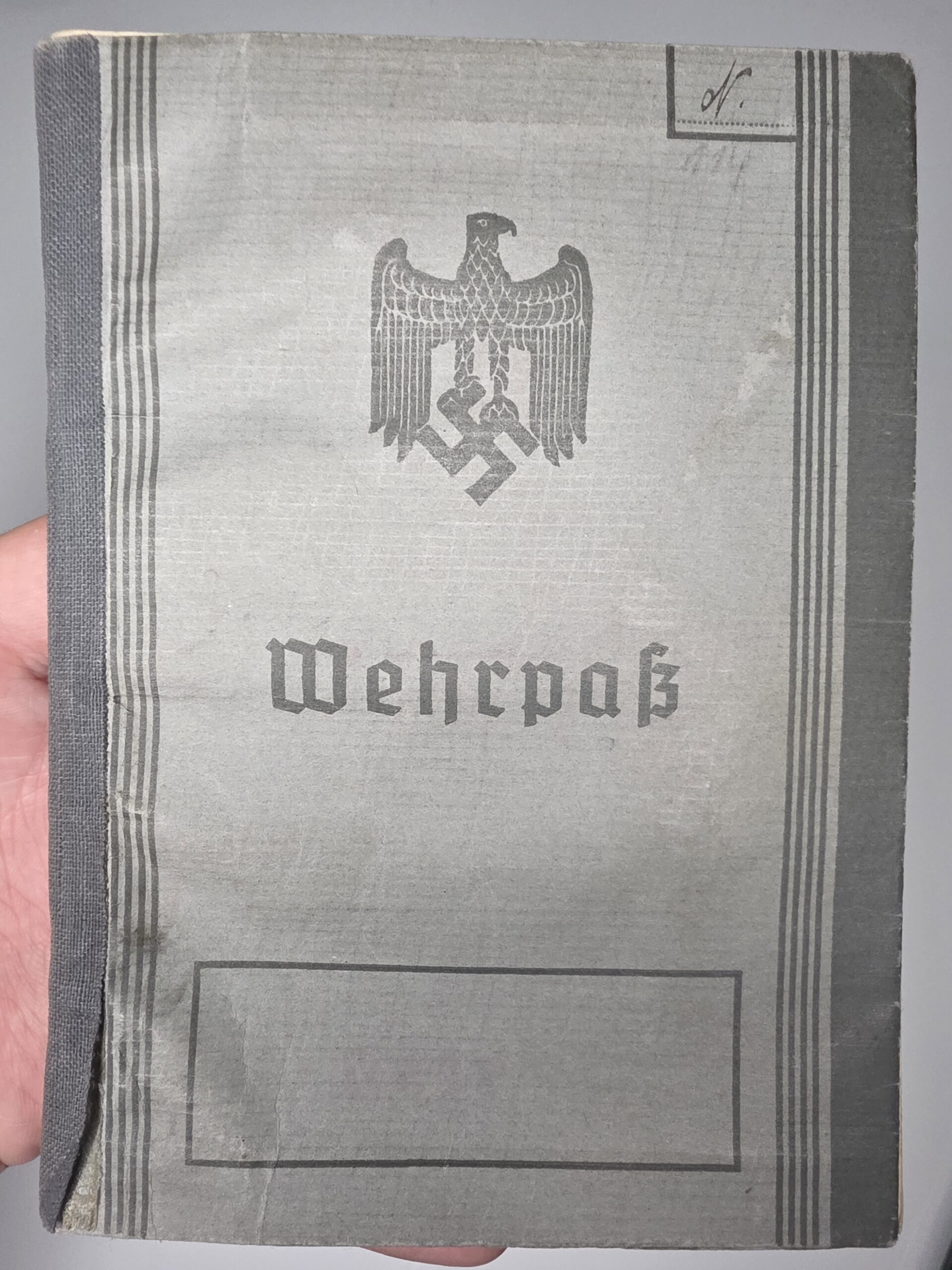
Berlin Wehrpass 1940 – Wilhelm Groß, Wehrüberwachung 1939 & Landwehr, Berlin-Reinickendorf
99,00 €
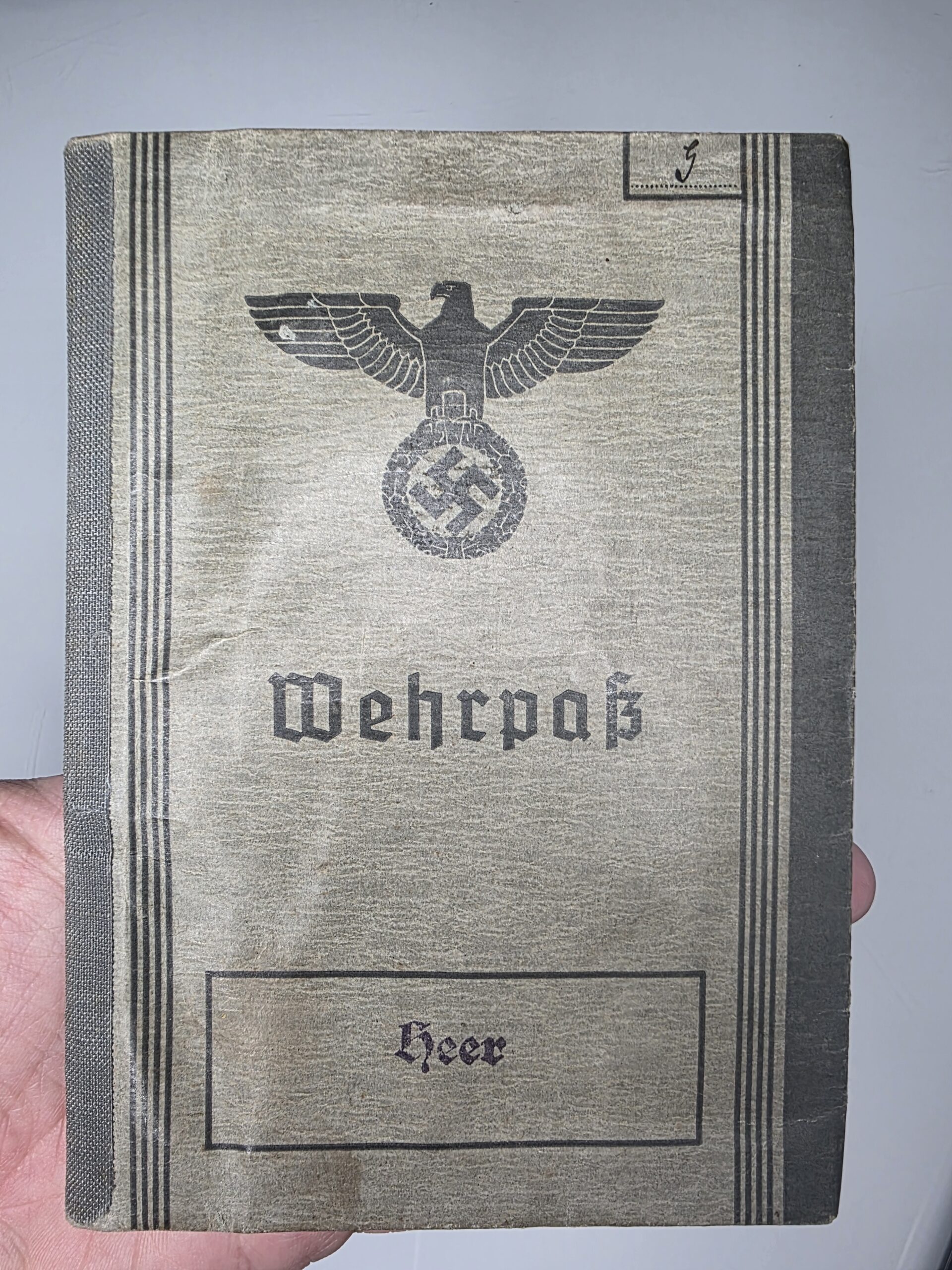
WWI Veteran Wehrpass 1938 – Kanonier, Garde-Feldartillerie 1916–1919, Kiel / Eckernförde
99,00 €
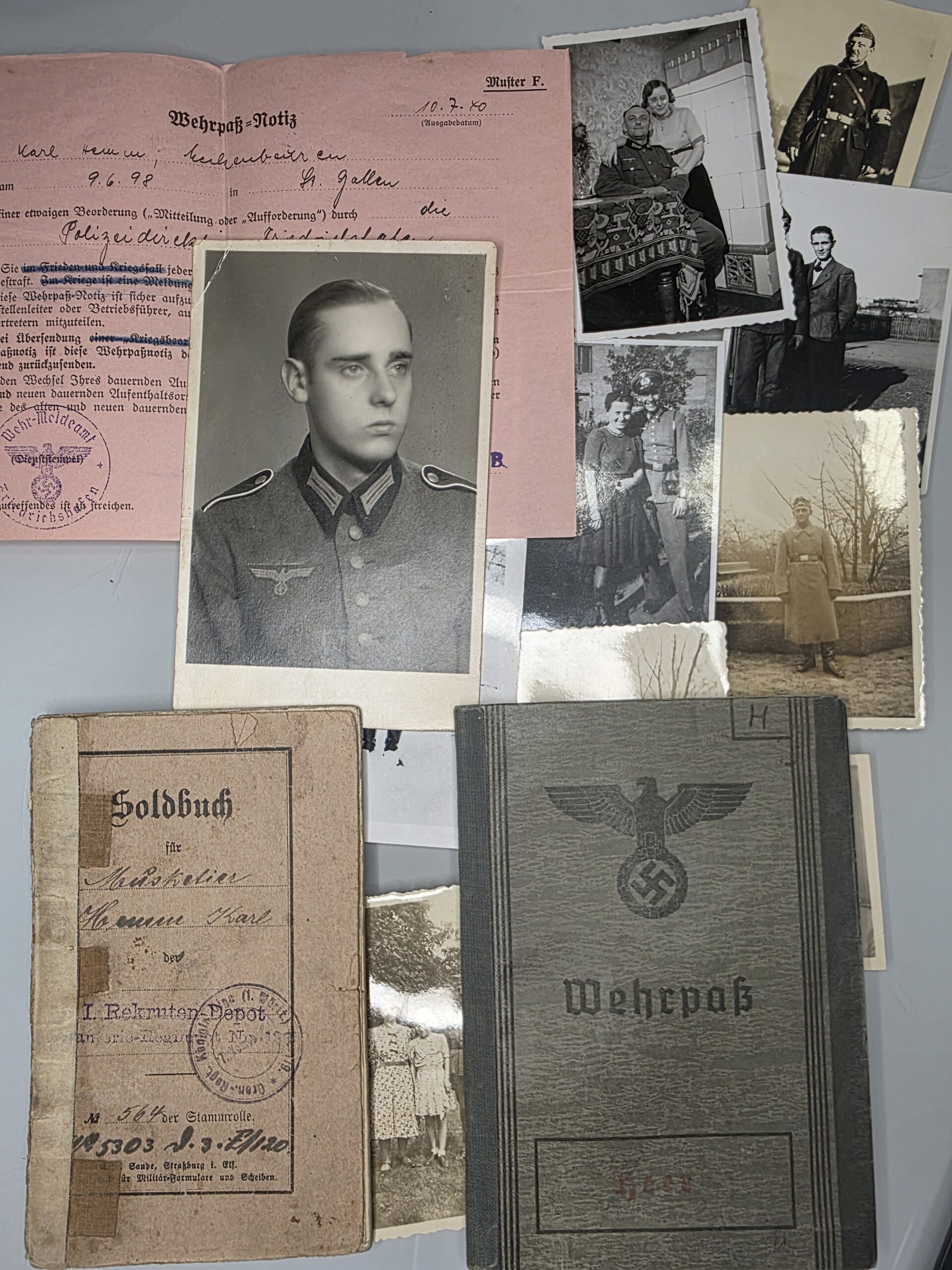
WWI German Soldbuch & Wehrpass – Karl Hemm Archive, Iron Cross 2nd Class 1918, Infanterie-Regiment 120
490,00 €
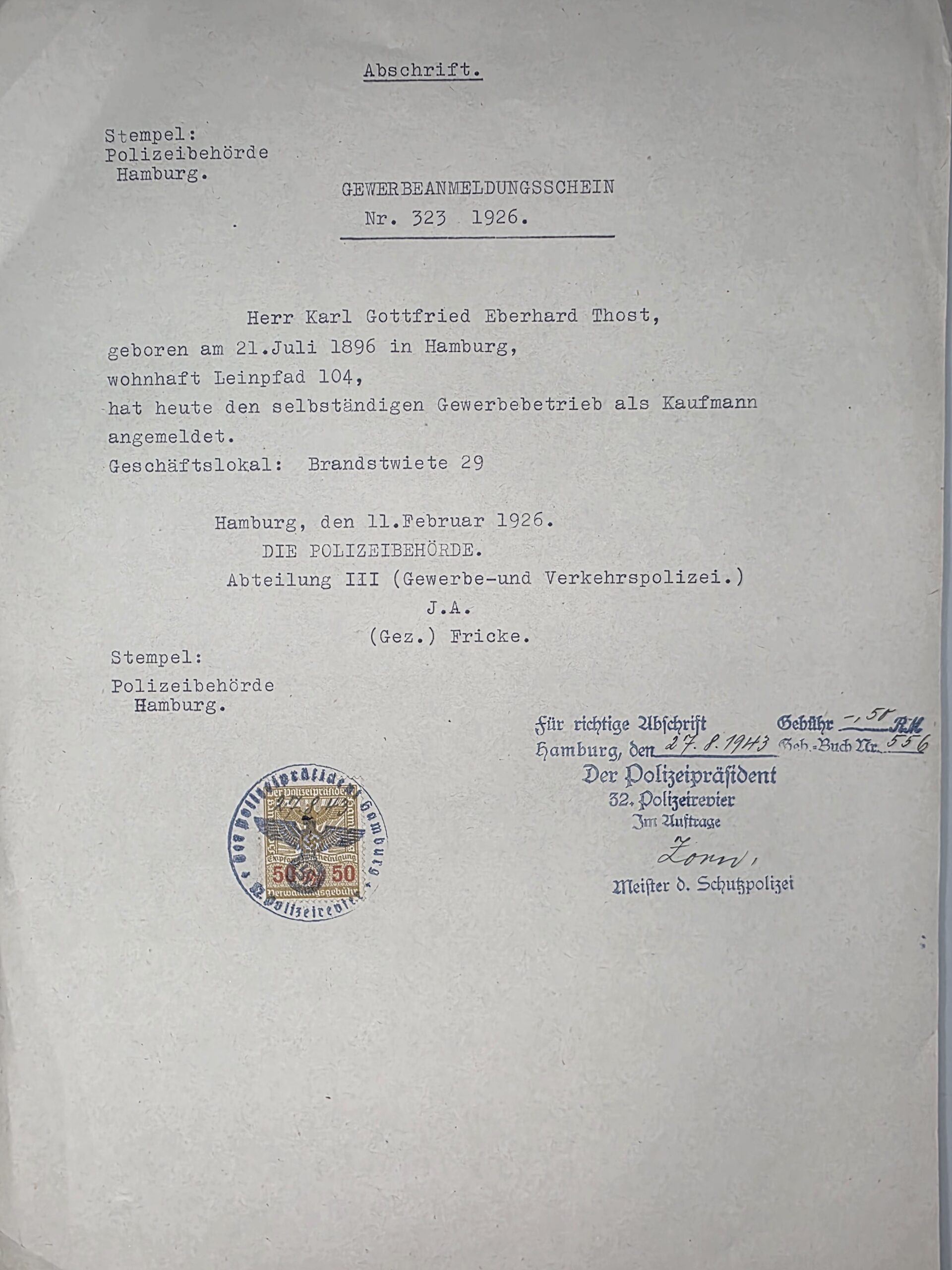
Eberhard Thost 1926 Hamburg Business Registration – Police-Certified Copy 1943
99,00 €
About the Author: Juan García Nicolás

Authentication & certification
Have a signature or document you want examined? Independent analysis by a qualified graphologist and forensic handwriting examiner.
Research tools
What is my autograph worth?
Signed or facsimile?
Which German document do I have?
All Journal articles
From the collection
Landsturm Wehrpass 1943 – Andreas Möhr, Marburg/Lahn, g.v. Heimat & Landsturm II A
99,00 €
Berlin Wehrpass 1940 – Wilhelm Groß, Wehrüberwachung 1939 & Landwehr, Berlin-Reinickendorf
99,00 €
WWI Veteran Wehrpass 1938 – Kanonier, Garde-Feldartillerie 1916–1919, Kiel / Eckernförde
99,00 €