
WWI German Soldbuch & Wehrpass – Karl Hemm Archive, Iron Cross 2nd Class 1918, Infanterie-Regiment 120
490,00 €
Listed from a private collection · availability confirmed personally · price as shown
Authentication & Certification
Signatures and documents in this collection are examined by Juan García Nicolás, a qualified graphologist and forensic handwriting examiner, on a coherent set of features rather than a single sign.
Document Authentication & Certification →
Graphology & Signature Analysis →
Authenticity & Provenance policy →
Description
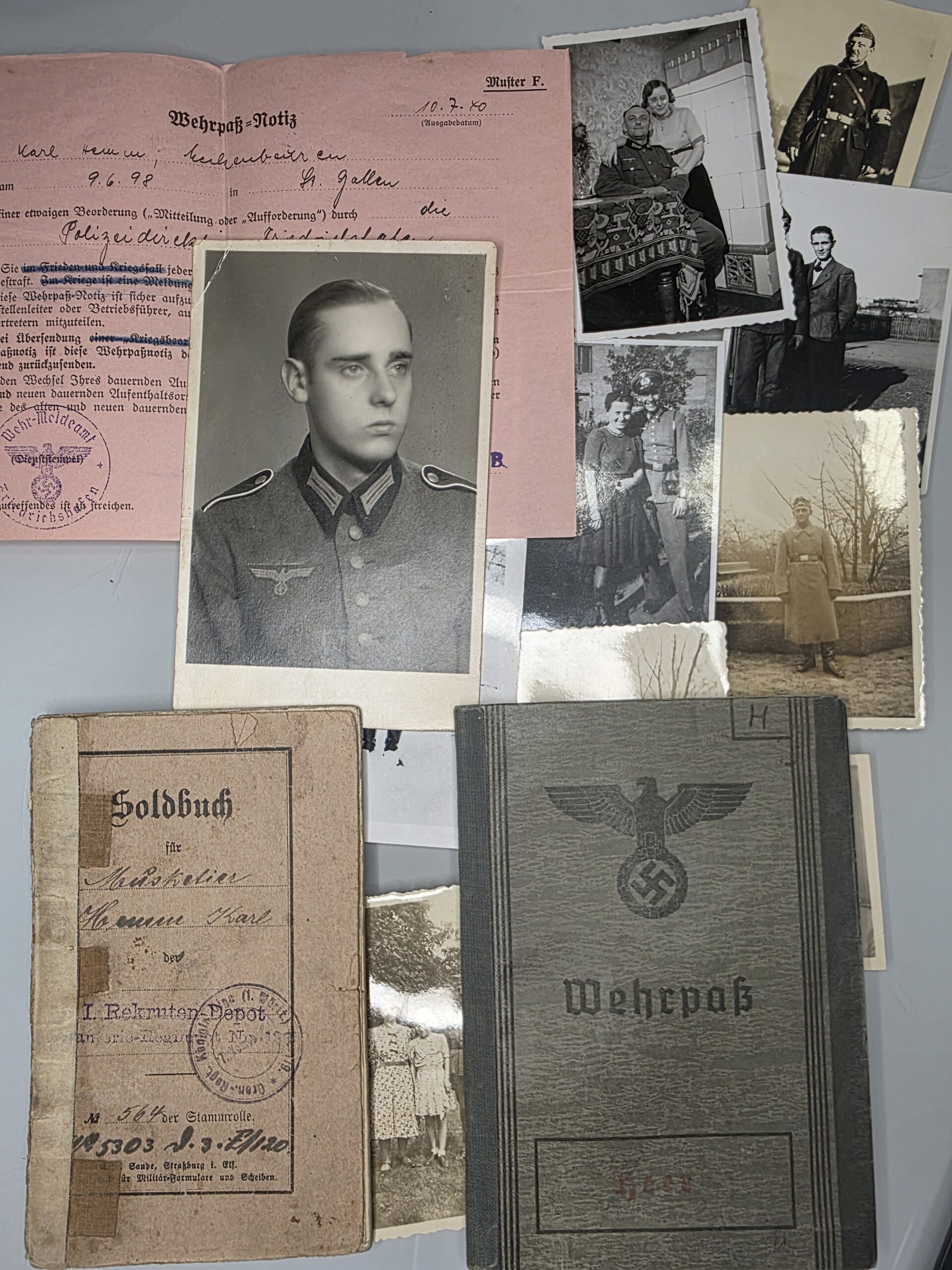
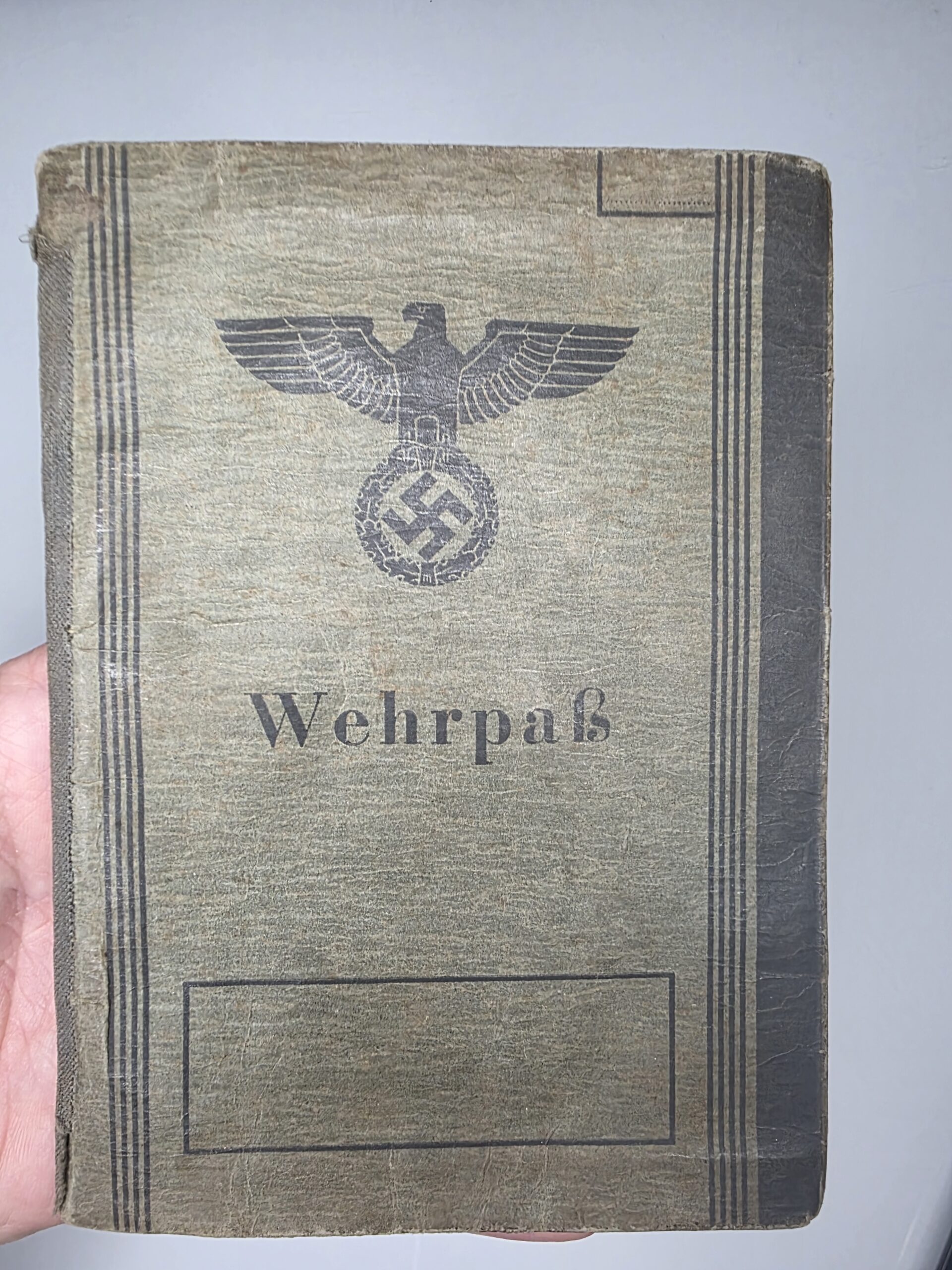
This original WWI German Soldbuch is the starting point of a coherent military and family archive belonging to Karl Johann Georg Hemm, born on 9 June 1898 in St. Gallen, Switzerland, and later living near Friedrichshafen on Lake Constance. His 1917 Soldbuch, issued to him as a Musketier (infantry private) of a Württemberg recruit depot, survives together with his later Wehrpass, a 1940 Wehrpass-Notiz and a group of period photographs. The same man can therefore be followed from his entry into the army in March 1917 to his place in the reserve system of the Second World War.
Who was Karl Hemm?
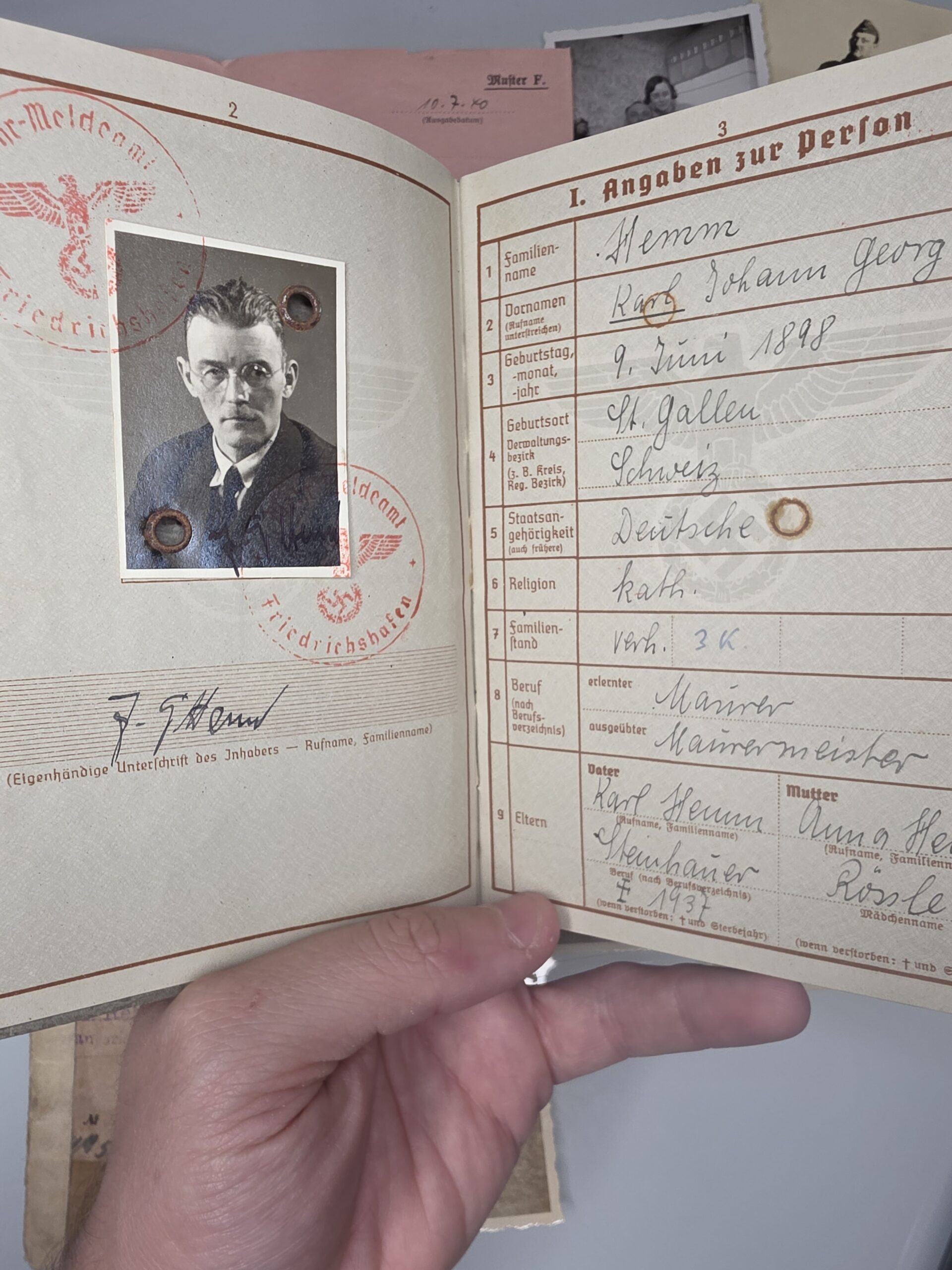
The personal-data pages of the Wehrpass record:
- Name: Hemm, Karl Johann Georg
- Born: 9 June 1898, St. Gallen, Switzerland
- Nationality: German; religion: Catholic
- Family status: married, with three children (verh. 3 K.)
- Trade: trained as a mason (Maurer), working as a master mason (Maurermeister)
- Parents: Karl Hemm, stonemason (Steinhauer), recorded as died 1937, and Anna Hemm, née Rössle
The booklet keeps his original identification photograph, his signature and the stamps of the Wehrmeldeamt Friedrichshafen.
What does the 1917 Soldbuch record?
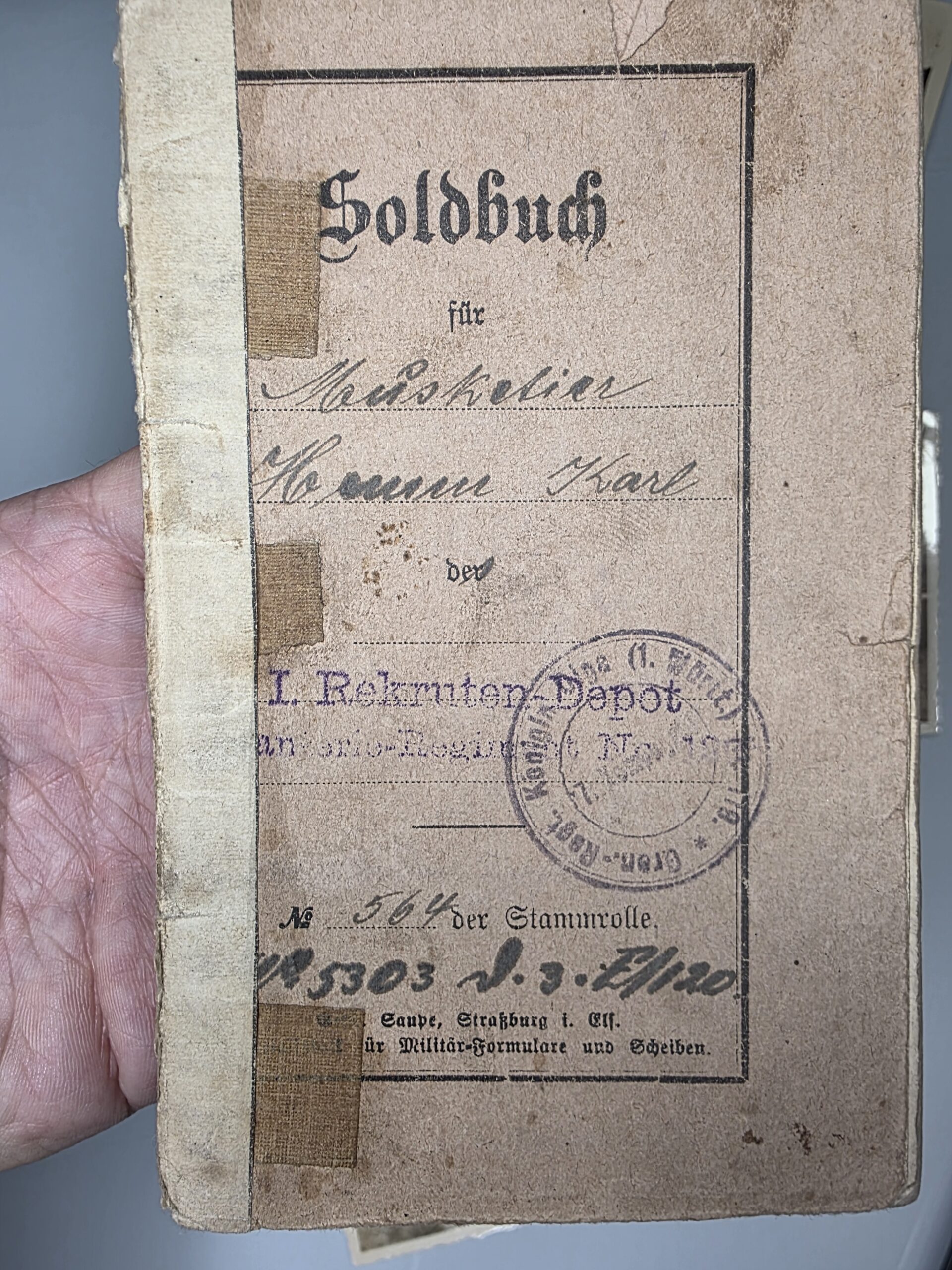
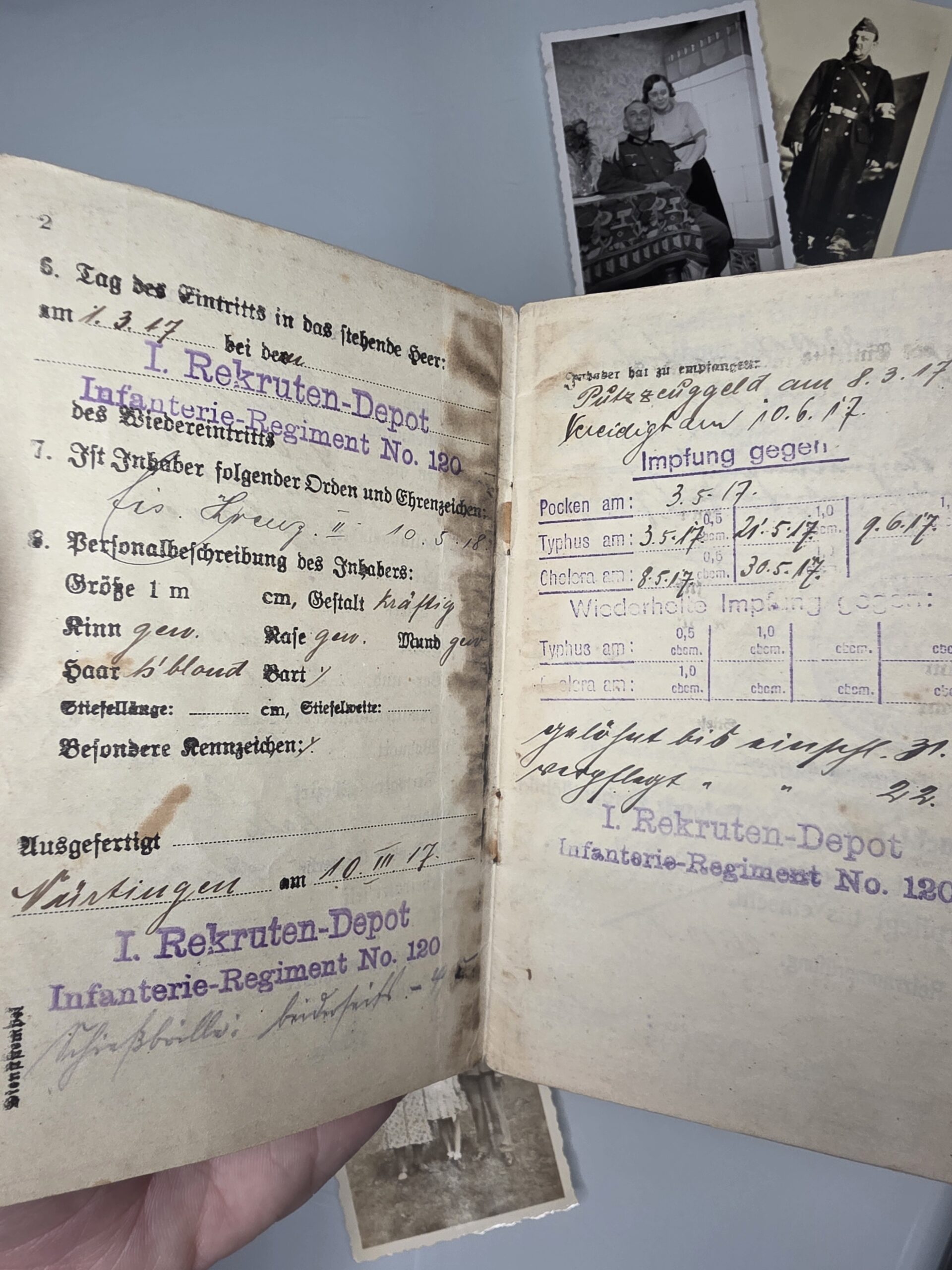
The cover reads Soldbuch für Musketier Hemm Karl of the I. Rekruten-Depot, Infanterie-Regiment No. 120, with Stammrolle number 564. The regiment was the Württemberg Infanterie-Regiment “Kaiser Wilhelm, König von Preußen” (2. Württembergisches) Nr. 120, garrisoned in Ulm before the war.
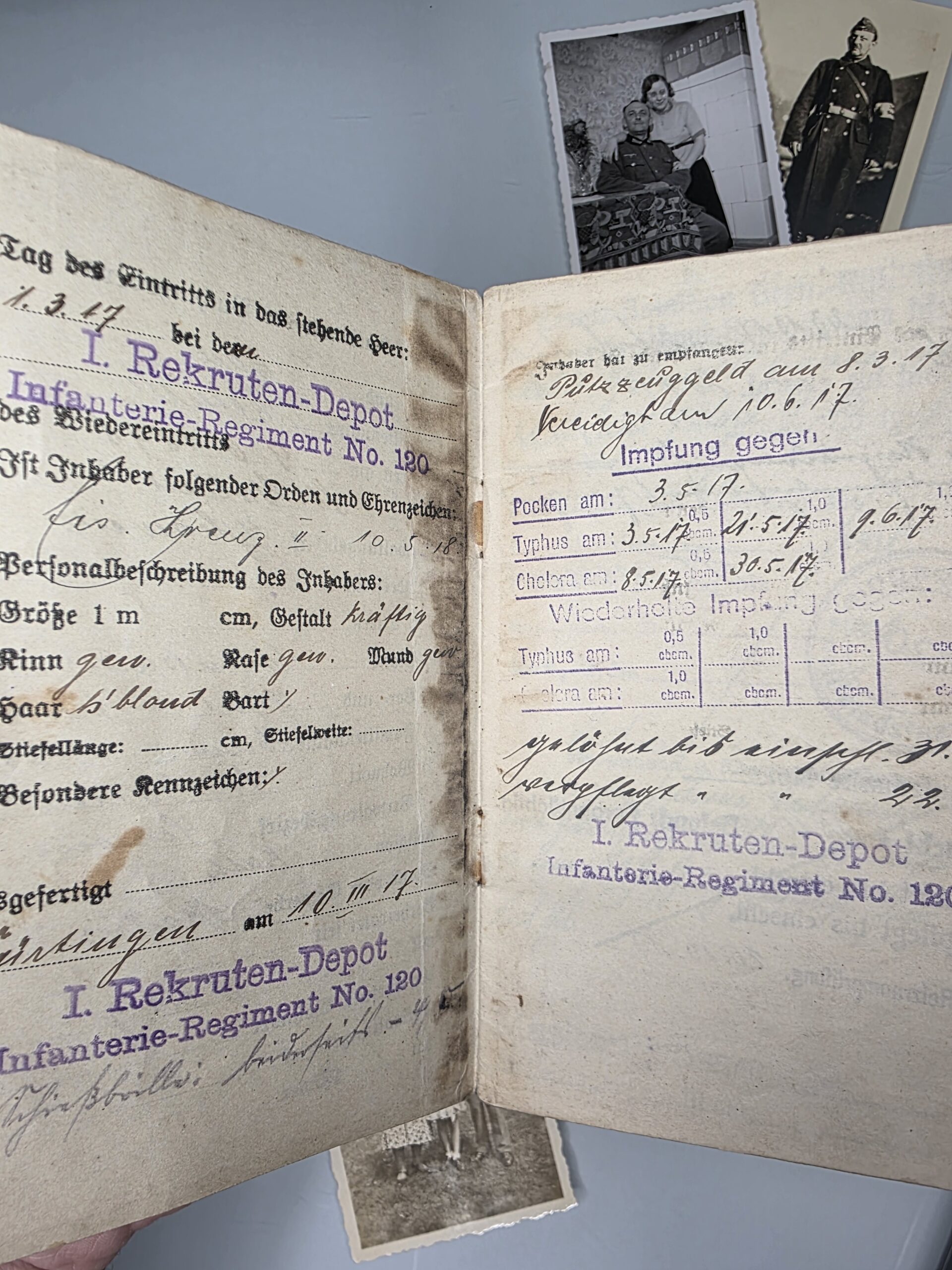
Inside, the entries record:
- 1 March 1917: entry into the army with the I. Rekruten-Depot of Infanterie-Regiment No. 120.
- 10 March 1917: issue of the Soldbuch, at a place that reads as Nürtingen.
- May 1917: vaccinations against smallpox, typhoid and cholera.
- 10 June 1917: sworn in (vereidigt).
- 10 May 1918: the Iron Cross 2nd Class, entered as Eis. Kreuz II under orders and decorations.
The cover also carries a partly legible stamp of the Grenadier-Regiment “Königin Olga” (1. Württ.). I describe the Soldbuch by what it records: a recruit depot entry, not a field posting, so I do not attribute to Karl the battles of the field regiment.
How does the Wehrpass continue the story?
The Wehrpass, opened through the Wehrmeldeamt Friedrichshafen, links the same man to his First World War service and to the reserve system of the late 1930s and the war years:
- Earlier service: 1 March 1917 to 16 June 1920, recorded as “1. Württ. Schützen-Batl. Stuttgart”.
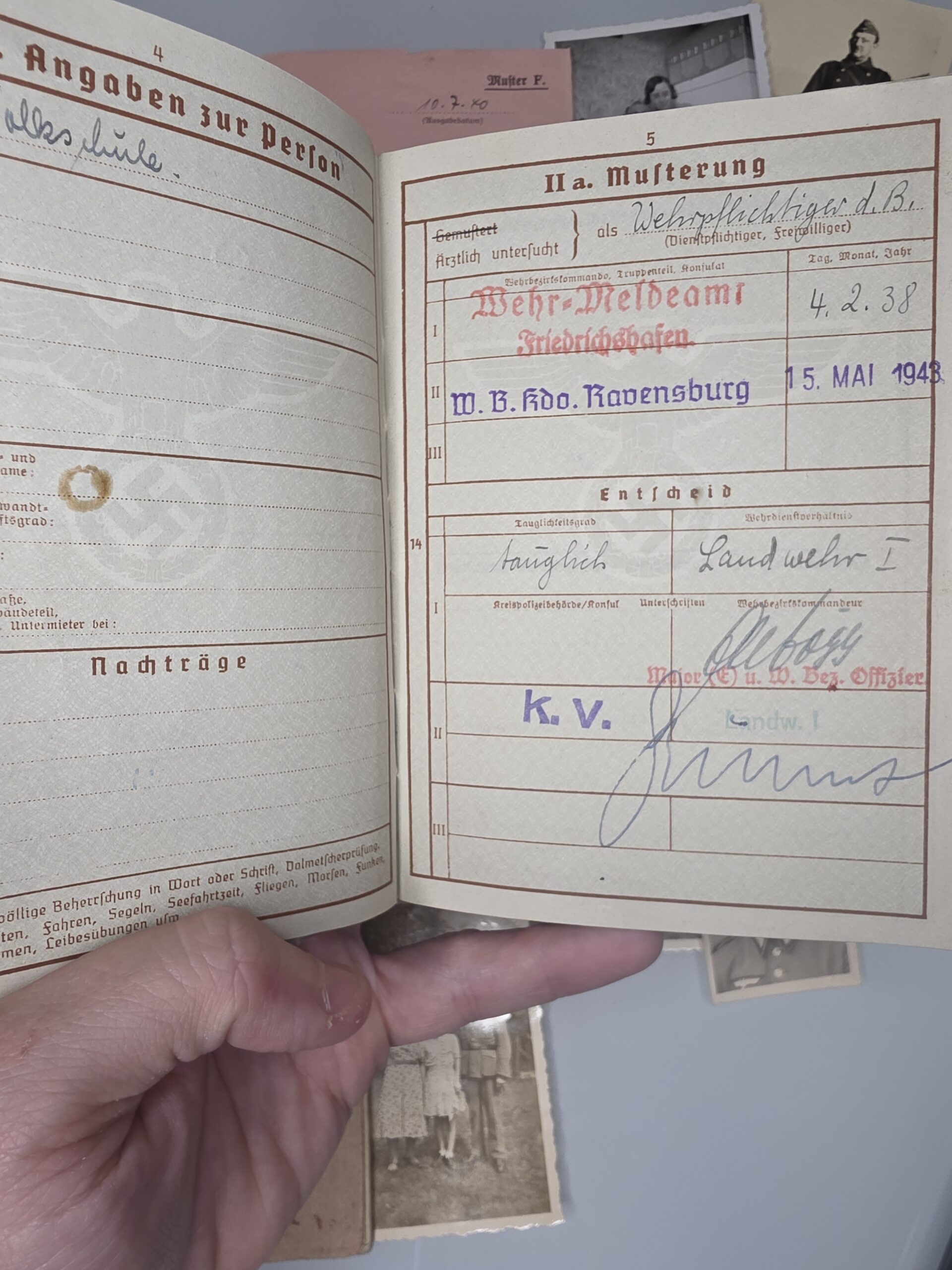
- 4 February 1938: examined by the Wehrmeldeamt Friedrichshafen, found fit (tauglich) and classified Landwehr I.
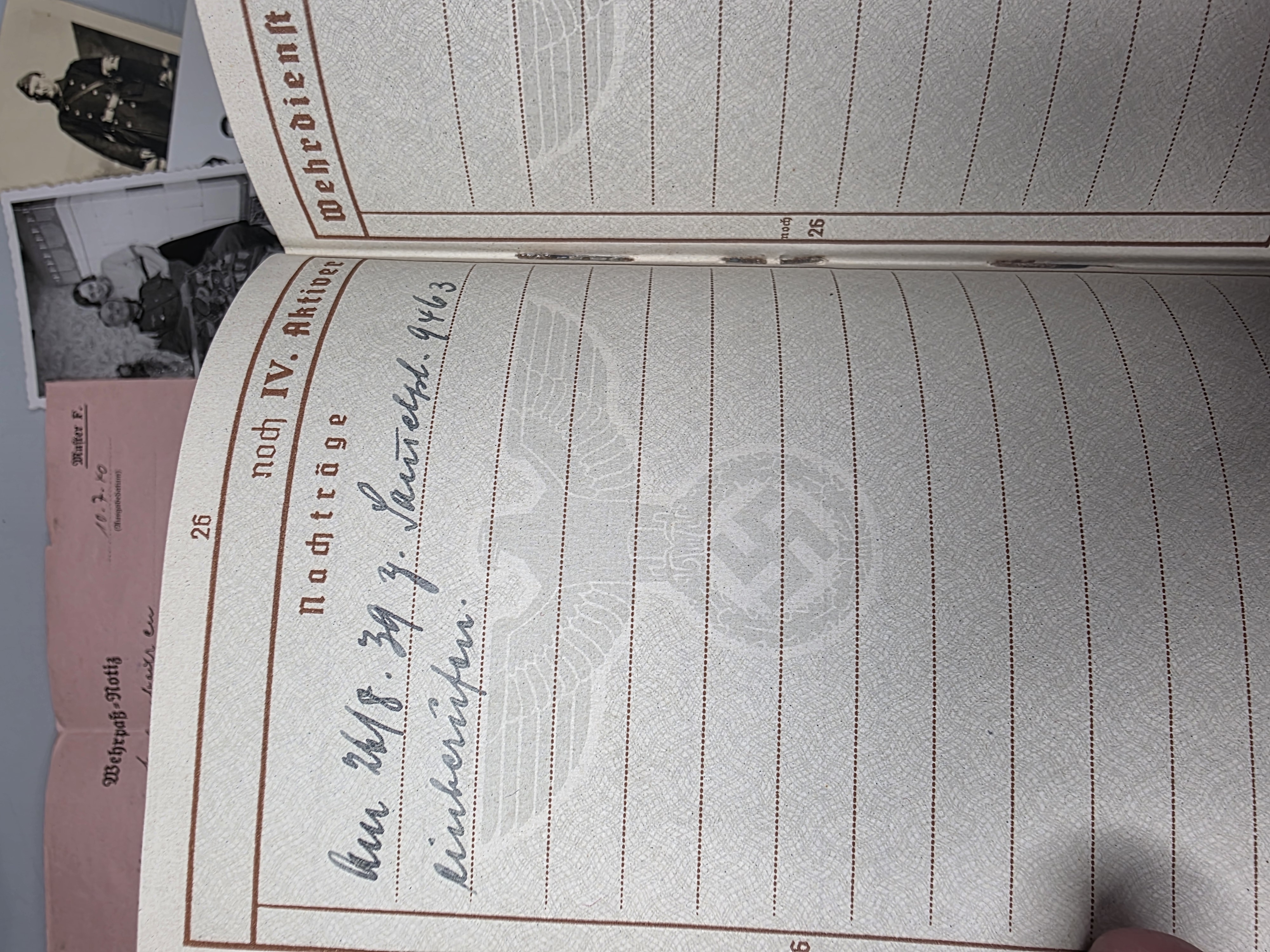
- 26 August 1939: a supplementary entry records his call-up, with a numbered destination written in abbreviated form.
- 15 May 1943: re-examined by the Wehrbezirkskommando Ravensburg, recorded as k.v. (fit for war service), Landwehr I.
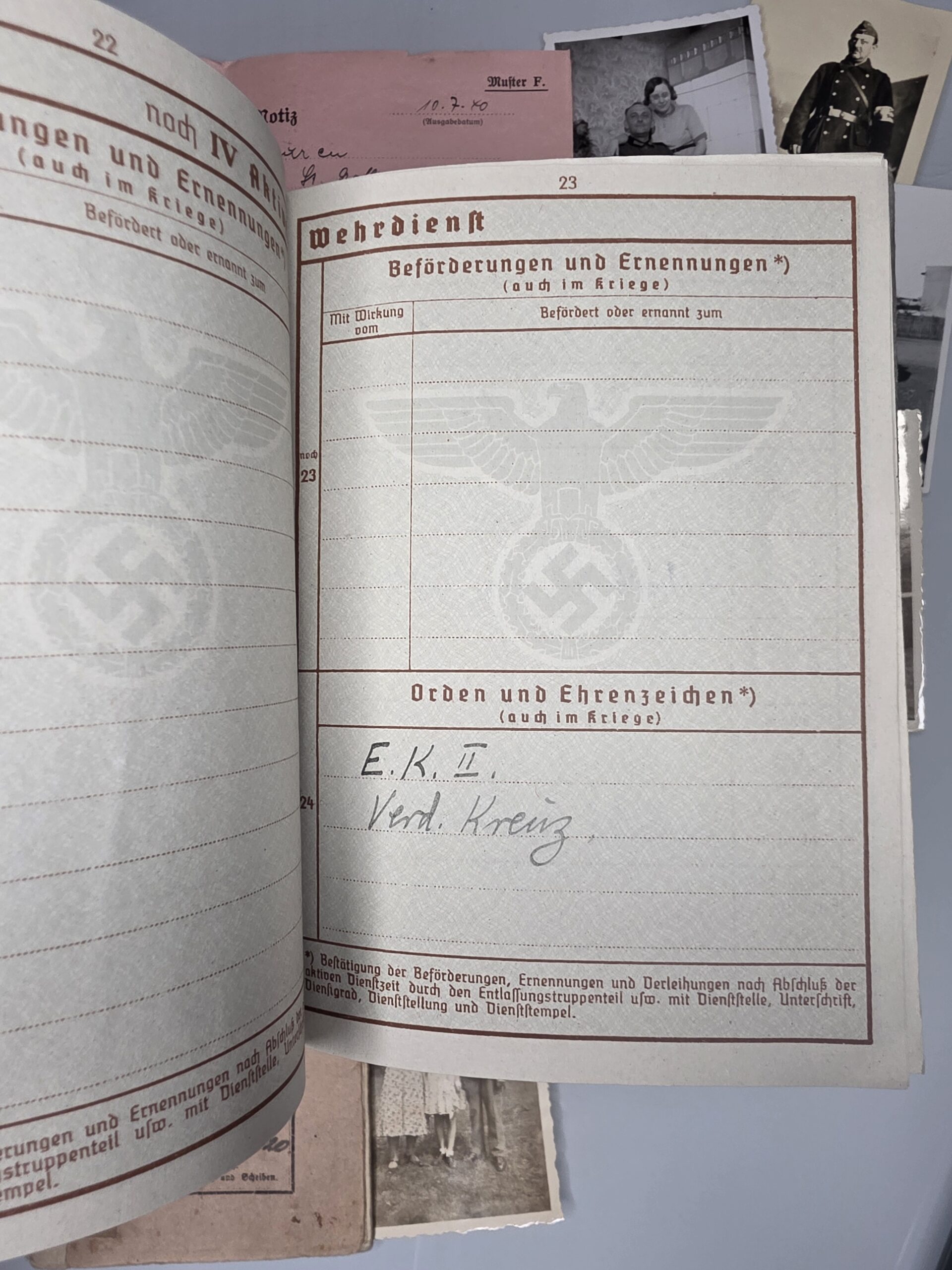
- Decorations: E.K. II, and a second entry written as Verd. Kreuz, which I leave exactly as written rather than expand into a specific award.
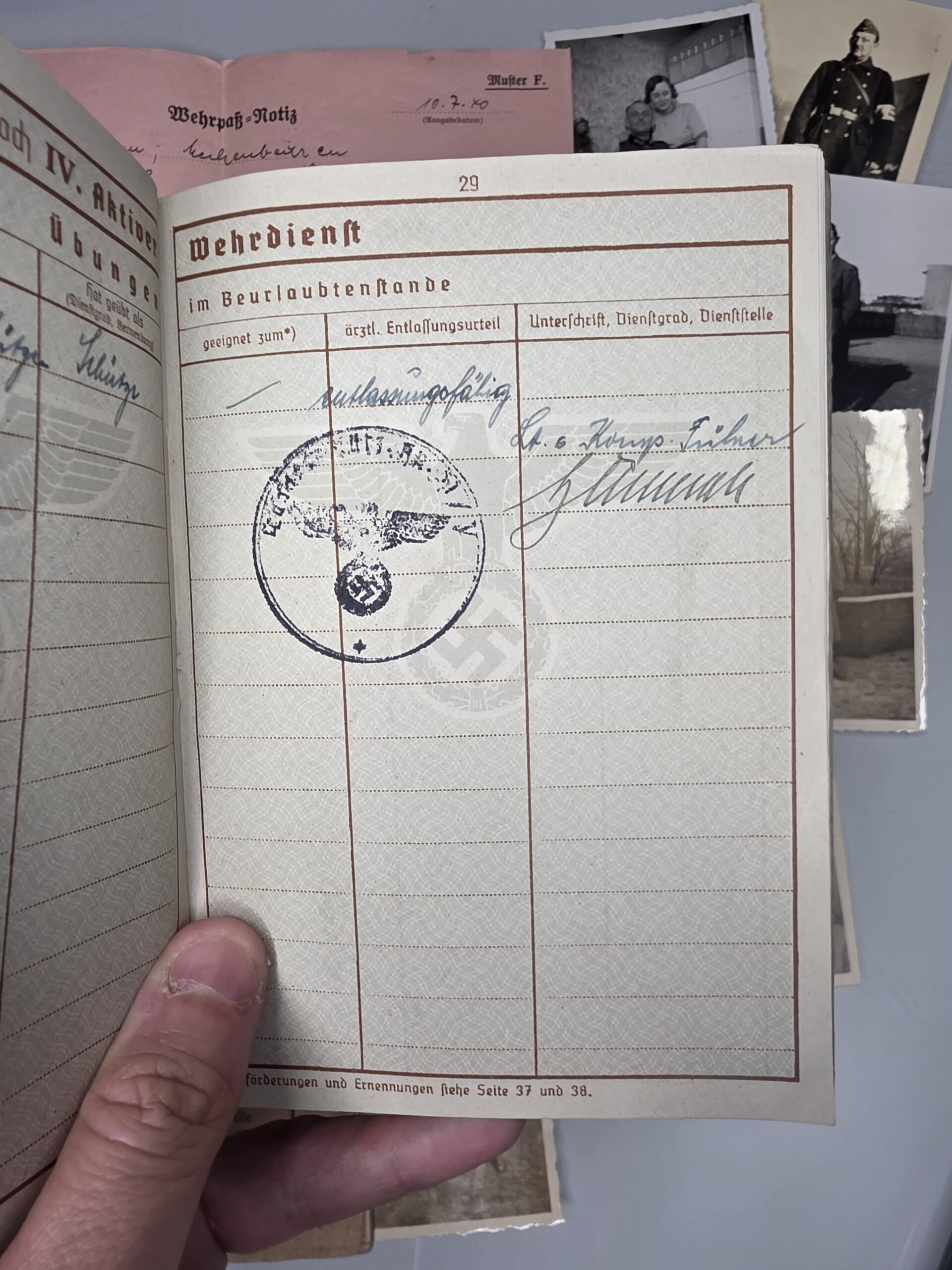
Another page, signed by a Leutnant and company commander with an official stamp, records a medical verdict of entlassungsfähig (fit for discharge).
The Iron Cross 2nd Class therefore appears in both documents, twenty years apart: in the Soldbuch with its 1918 date, and again in the Wehrpass among his decorations. That internal agreement is one of the strongest features of the group.
What is the Wehrpass-Notiz?
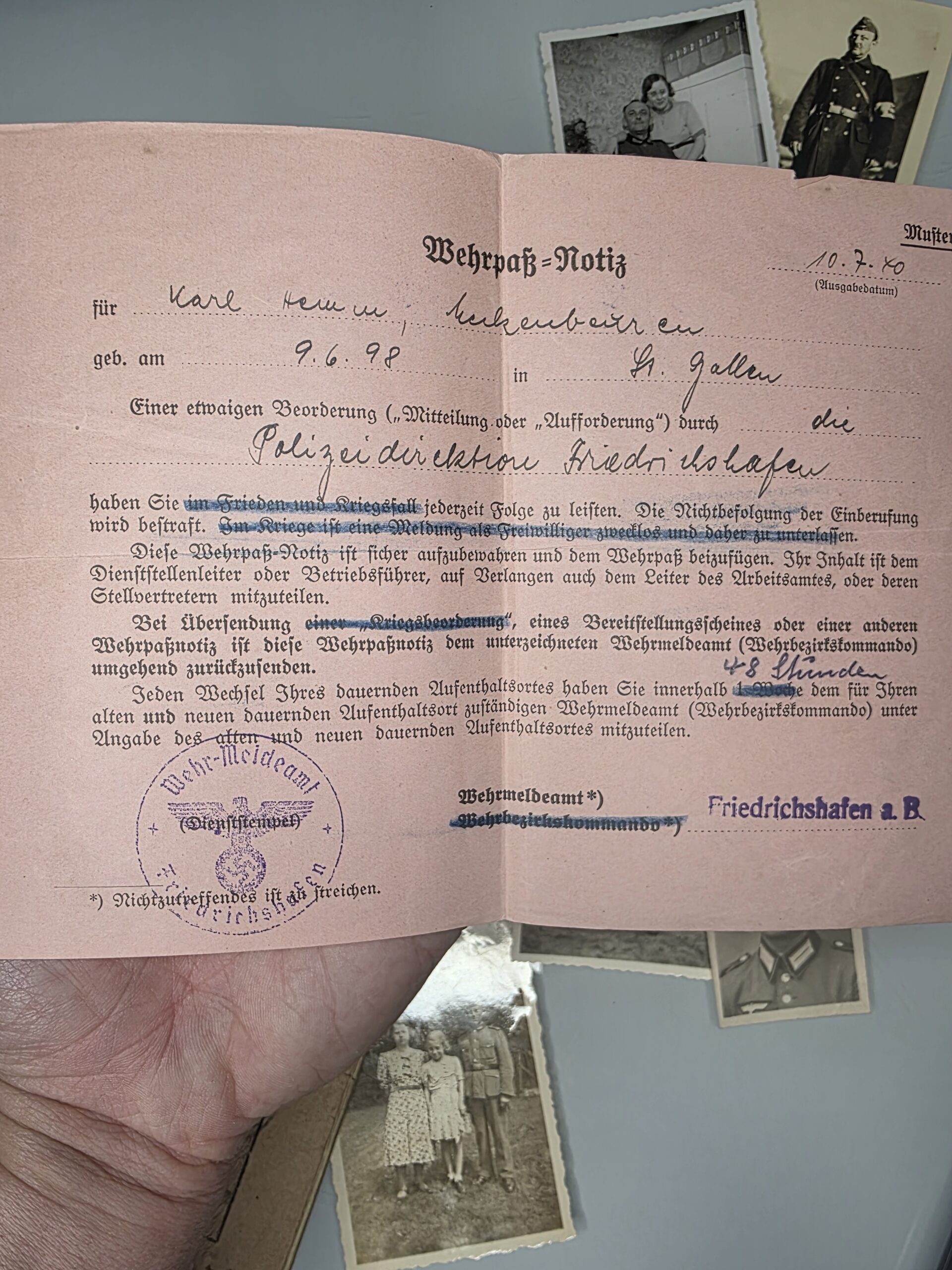
The pink Wehrpass-Notiz, dated 10 July 1940 and stamped by the Wehrmeldeamt Friedrichshafen a. B., names Karl Hemm of Meckenbeuren, born 9 June 1898 in St. Gallen. It informs him that he may be called on by the Polizeidirektion Friedrichshafen and must report any change of residence within 48 hours.
It is a small but revealing paper. It shows that in 1940 this First World War veteran was earmarked for duty through the police authority, not only through the army. Supplementary papers of this kind are usually the first to be lost when an archive is broken up.
Who appears in the photographs?
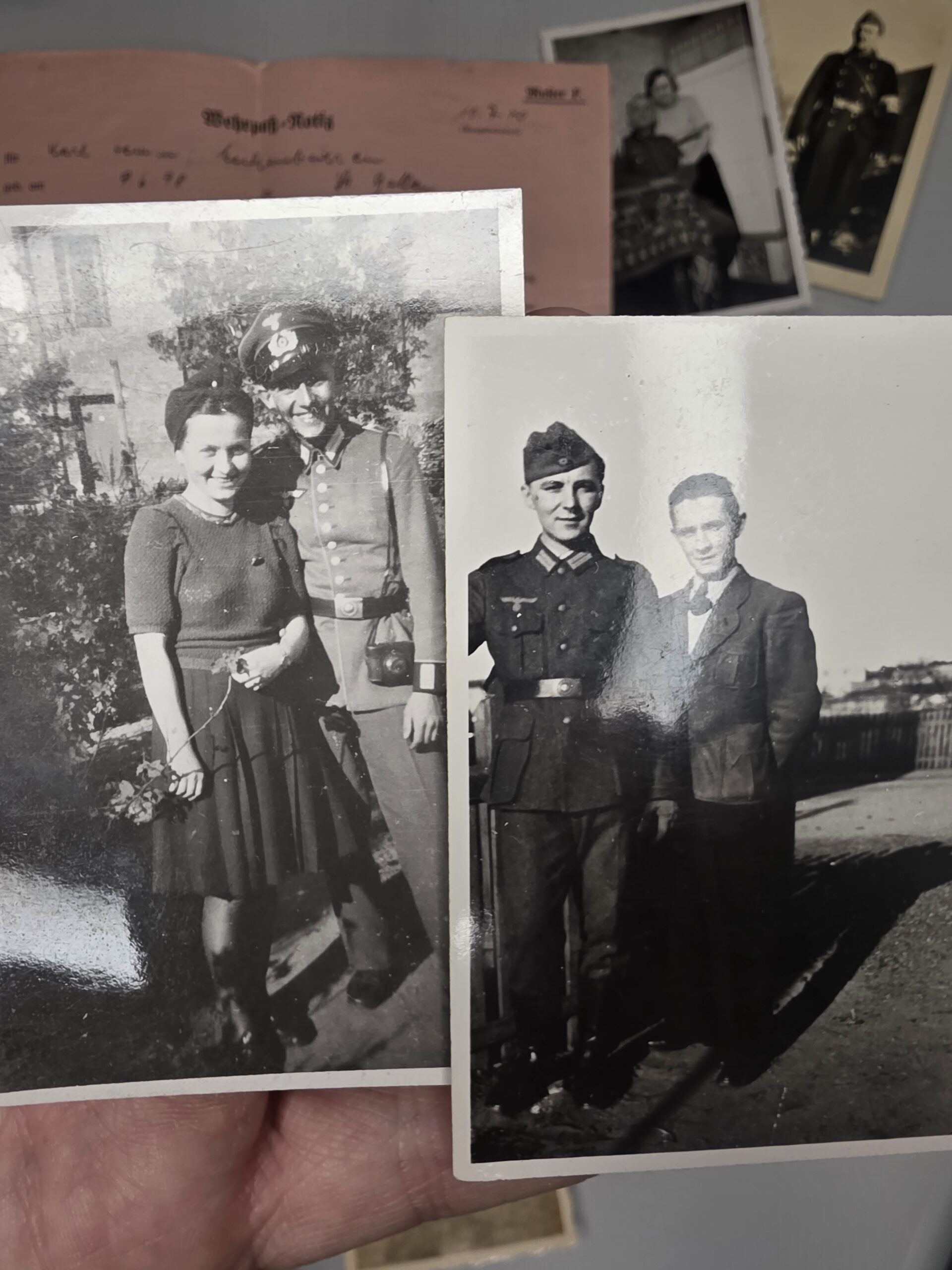
The group includes original period photographs:
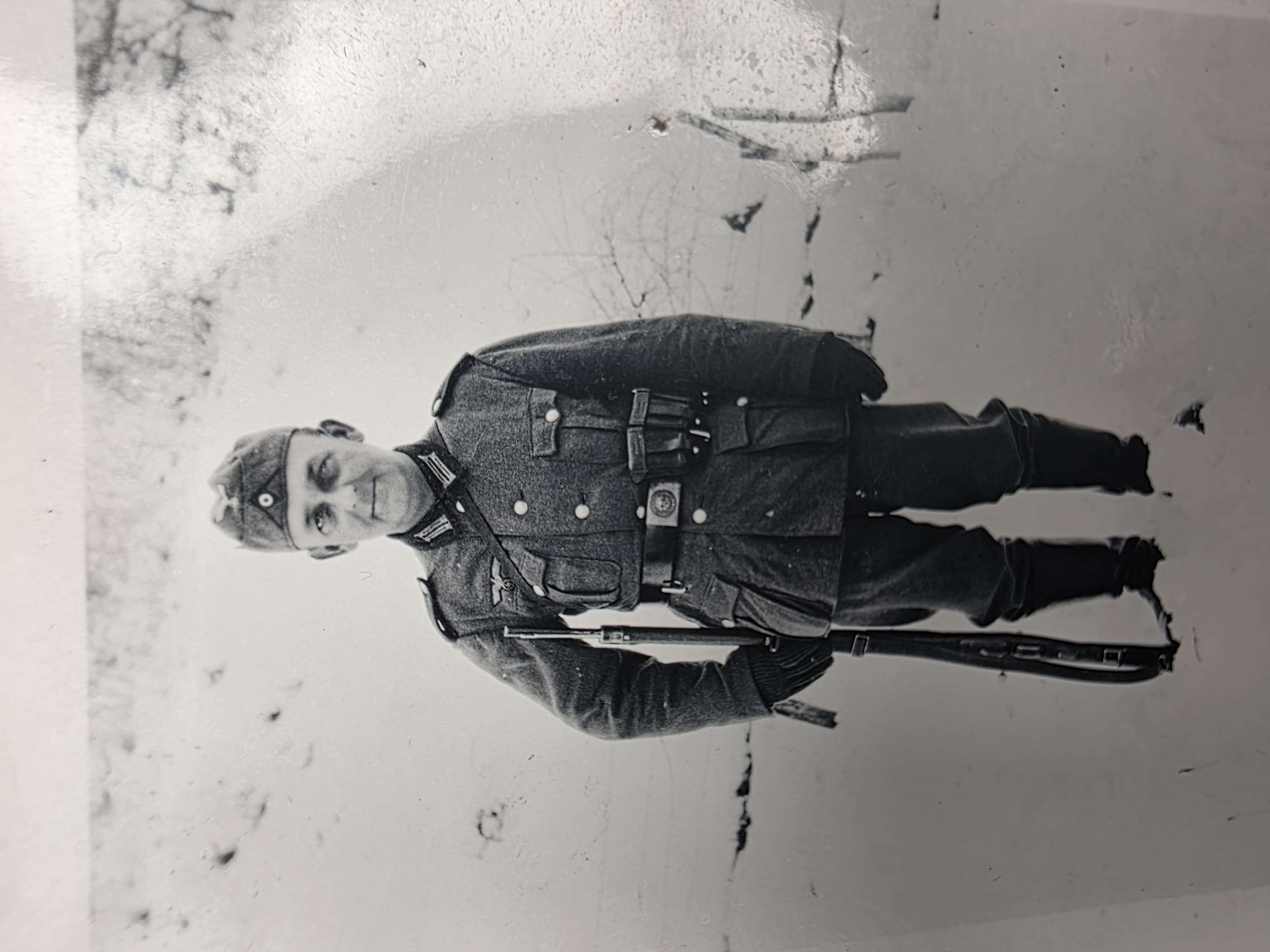
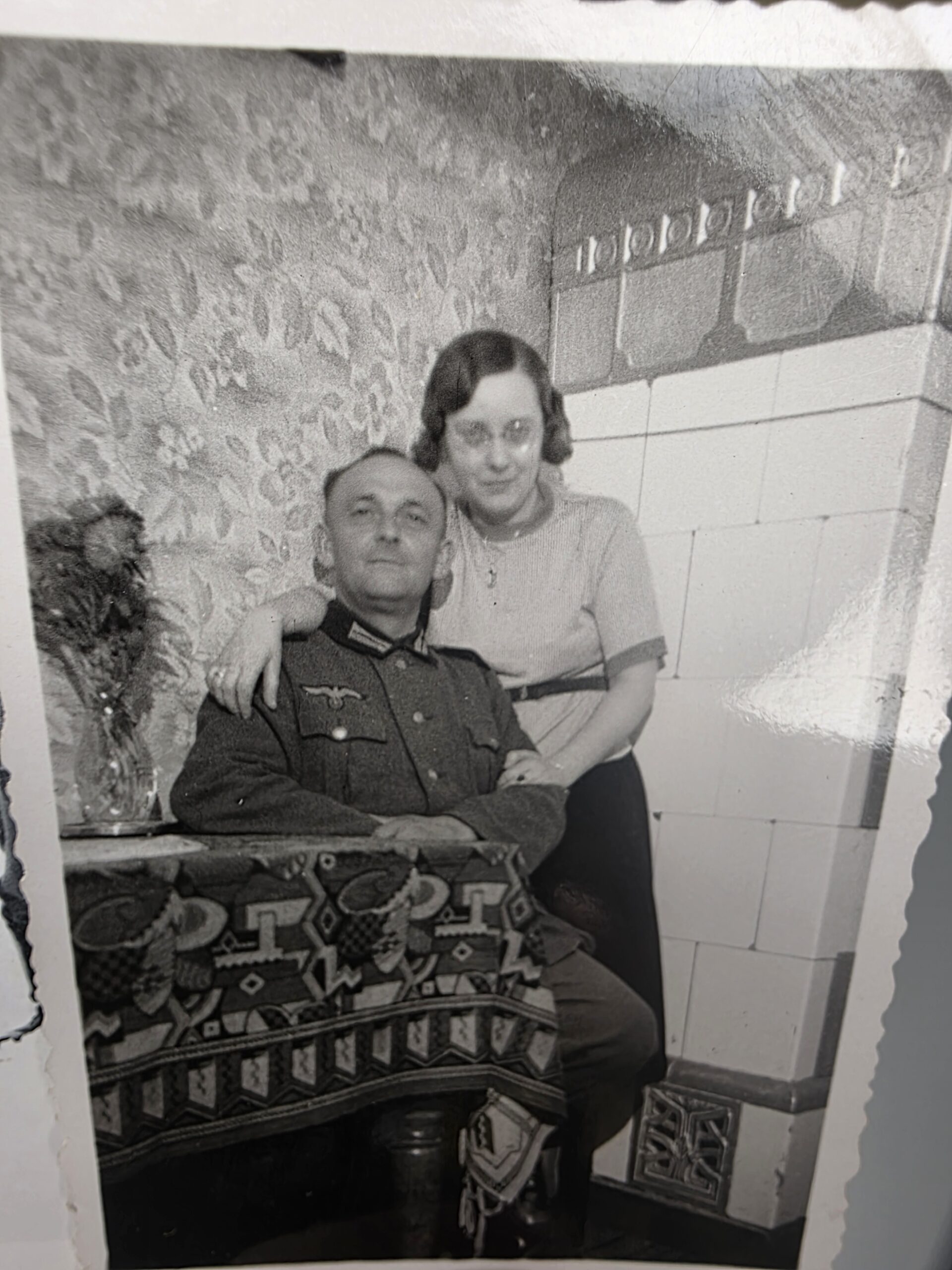
- An older serviceman in Wehrmacht uniform: one photograph shows him with a rifle in a snowy landscape, another seated beside a woman indoors. He bears a clear resemblance to Karl Hemm’s Wehrpass photograph and would fit his 1939 call-up, but no inscription identifies him, so I present this as an observation, not a confirmed identification.
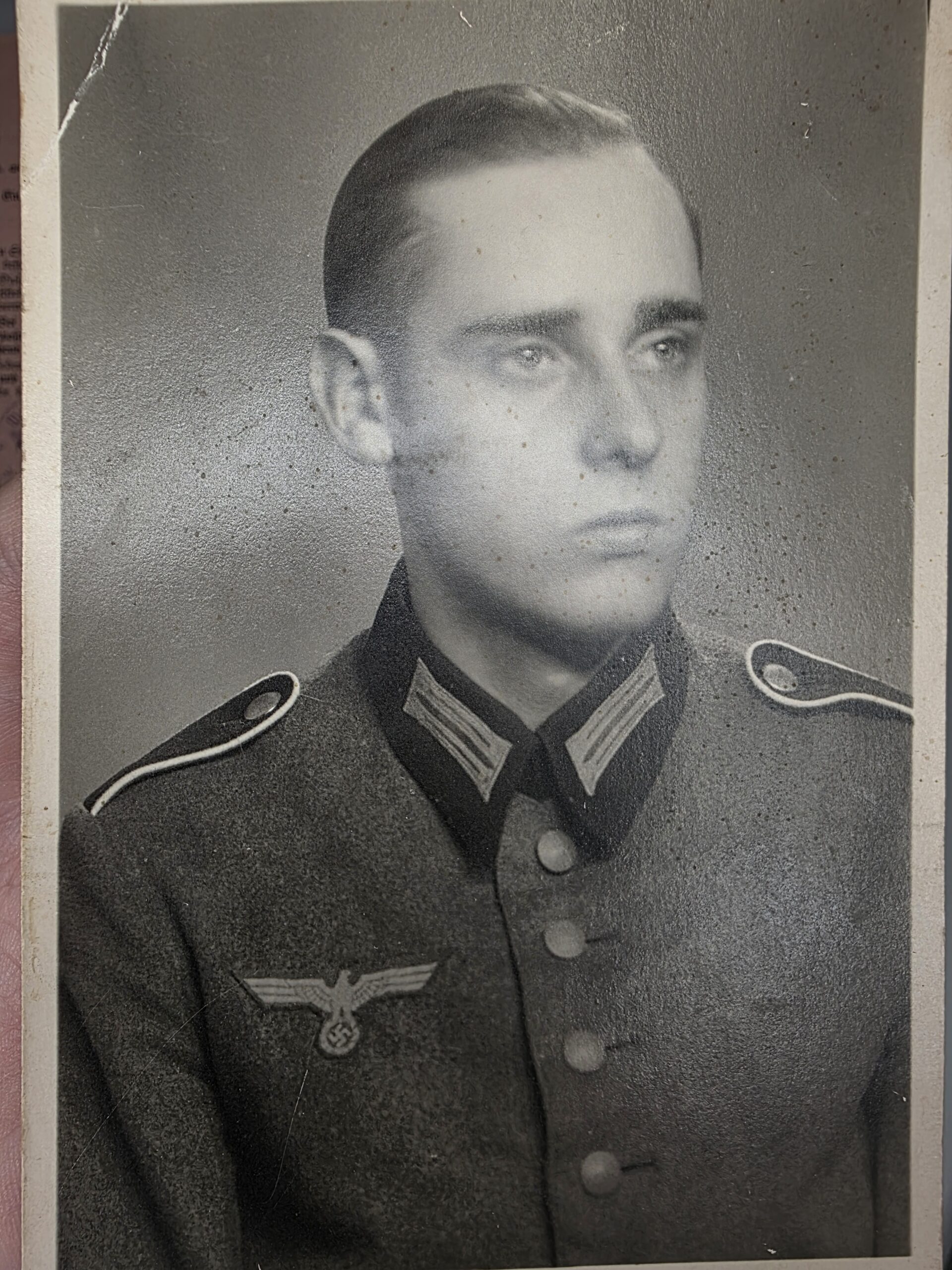
- A younger soldier in Wehrmacht uniform: a studio portrait, and two private photographs of him with a young woman and with a civilian.
- A man in a dark uniform with an armband, and further family photographs.
The younger soldier may be one of Karl’s three children recorded in the Wehrpass, which would make this a two-generation archive. The photographs survived with Karl’s papers, but none of those shown carries a name. He is therefore described as a probable younger family member, not as a proven son.
Why keep the group together?
Individual Soldbücher and Wehrpässe survive in reasonable numbers. What gives DOC191 its interest is that the pieces confirm one another: the name, the 1917 entry date, the Iron Cross 2nd Class, the Friedrichshafen stamps and the birth details all agree across separate documents. Split up, the Soldbuch, Wehrpass, Notiz and photographs would each lose most of that context, so I offer them as one archive.
For background on these documents, see our guides Wehrpass vs Soldbuch, how to read a German Wehrpass and German military abbreviations.
Collector’s Note
What I value in this Soldbuch and Wehrpass is not a dramatic combat record, but the continuity of one named life across more than twenty-five years of military administration. The Soldbuch records the young recruit of 1917 and his Iron Cross. The Wehrpass records the master mason and father of three called up again in 1939. The Notiz and the photographs fill in the rest. It is an honest, well-documented archive for anyone interested in Württemberg, the First World War or the people behind German military paperwork.
Condition
- Soldbuch: heavy period use, toning, staining and soiling, cover wear and old cloth-tape reinforcement of the spine. Stamps and handwritten entries remain legible.
- Wehrpass: good overall, with the original photograph, signature, stamps and entries. The photograph’s fixing eyelets have left small rust marks on facing pages.
- Wehrpass-Notiz: folds, handling and age toning.
- Photographs: varied condition, with edge wear, small creases, surface marks and some corner losses.
All photographs show the actual items offered and form part of this condition description.
Frequently asked questions
Was Karl Hemm a military musician?
No. The Soldbuch is issued to Musketier Hemm Karl: a Musketier was an infantry private in the Imperial German Army.
Which unit did he join in 1917?
The I. Rekruten-Depot of Württemberg Infanterie-Regiment No. 120, on 1 March 1917.
When did he receive the Iron Cross 2nd Class?
The Soldbuch records it on 10 May 1918, and the Wehrpass again lists E.K. II among his decorations.
Are the Soldbuch and Wehrpass from the same man?
Yes. Name, 1917 entry date and Iron Cross entry agree across both, and the Wehrpass and Notiz share the same birth date and birthplace.
Did he serve in the Second World War?
The Wehrpass records his call-up on 26 August 1939 and later reserve examinations, but no front-line unit entries.
Is the younger soldier his son?
Possibly. Karl had three children, but no photograph names the sitter, so the relationship is not proven.
Historical Responsibility Notice
This archive is offered exclusively for historical collecting, preservation, genealogical research and education. Political and military symbols are described only because they form part of the original objects. Autographs & Militaria does not endorse or glorify National Socialism or any ideology, regime or organisation represented by the material.
References & Further Reading
- Württembergische Landesbibliothek, Schwäbische Heimat article on Württemberg’s pre-1914 regiments: Infanterie-Regiment “Kaiser Wilhelm, König von Preußen” (2. Württembergisches) Nr. 120 in Ulm, and Grenadier-Regiment “Königin Olga” (1. Württembergisches) Nr. 119 in Stuttgart.
- D. Simon, Das Infanterie-Regiment “Kaiser Wilhelm, König von Preussen” (2. Württemb.) Nr. 120 im Weltkrieg 1914–1918 (Stuttgart: Chr. Belser, 1922).
- Landesarchiv Baden-Württemberg, Hauptstaatsarchiv Stuttgart: Württemberg First World War Kriegsstammrollen for further research into individual service.
- Bundesarchiv, Personal documents of military provenance, for Second World War personnel records.
Additional information
| Availability | Available |
|---|
How to acquire a piece
- Note the reference (SKU) shown on this page.
- Send an enquiry by the form below, email or WhatsApp. I reply personally to confirm availability.
- Once availability is confirmed, I send payment details. The asking price is the one shown.
- The piece is packed with care and dispatched with tracking.
Further reading

Ask about this piece
I reply personally to every enquiry. Ask about availability, shipping to your country, further photographs or any detail of the piece. Please include the reference (SKU).
Other related pieces
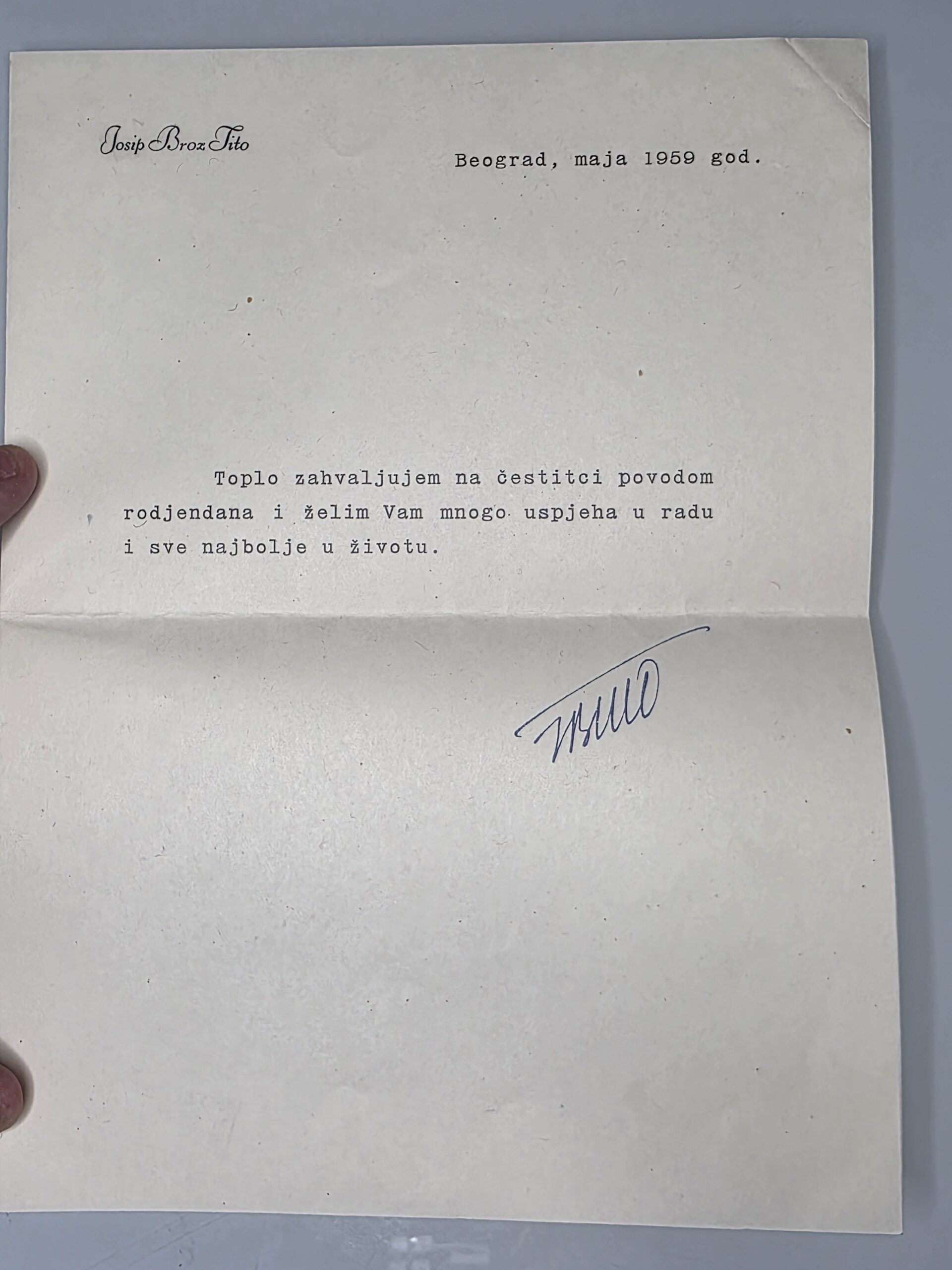
Josip Broz Tito Signed Letter 1959 – Birthday Reply with Registered Presidential Envelope, Belgrade
690,00 €
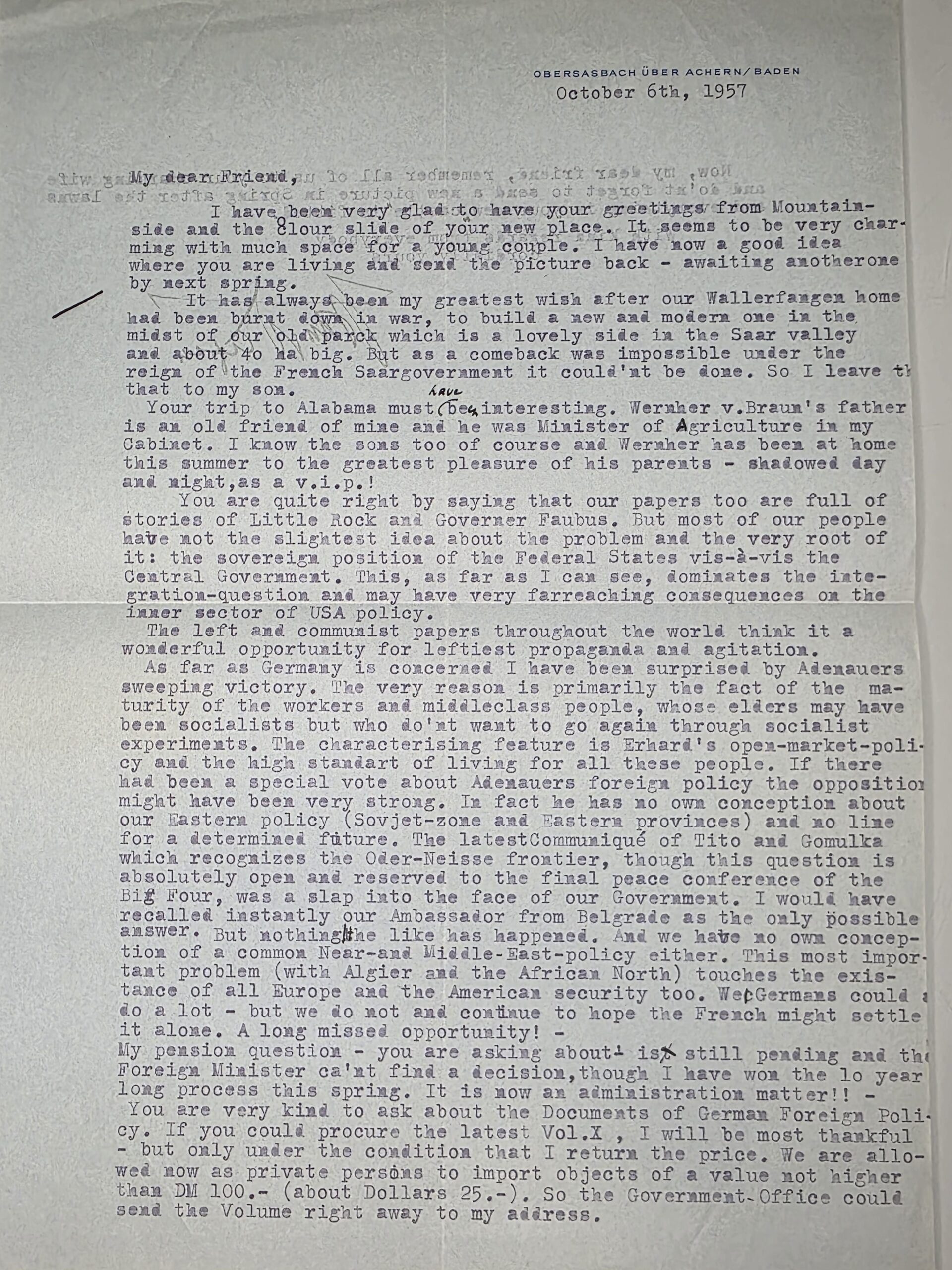
Franz von Papen Signed Letter 1957 – Adenauer, Tito & Gomułka, Wernher von Braun, Little Rock
450,00 €
Hemforth Family Wehrpass 1943 & Father’s Ehrenkreuz für Frontkämpfer Certificate 1935, Gelsenkirchen
99,00 €
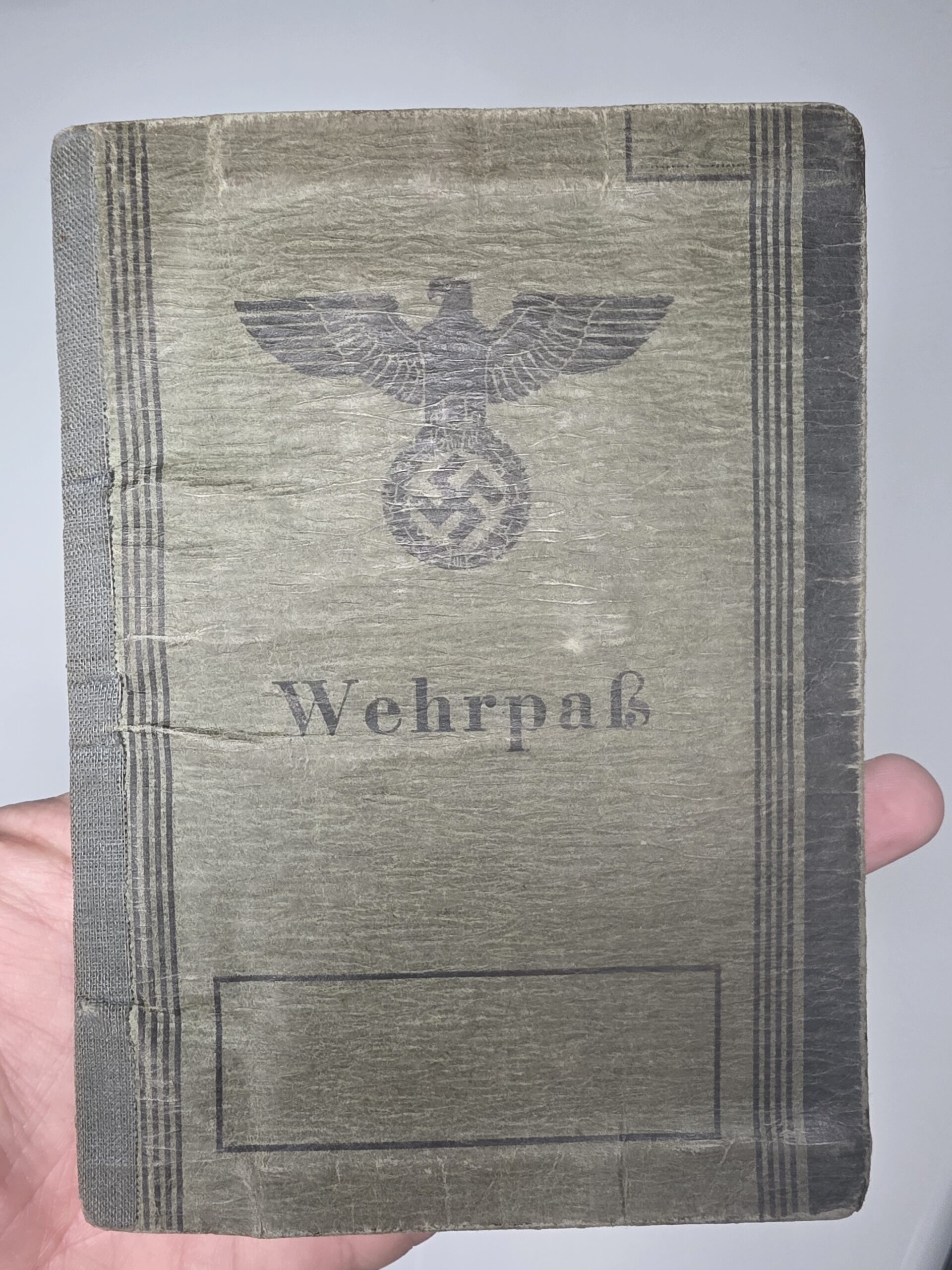
Landsturm Wehrpass 1943 – Andreas Möhr, Marburg/Lahn, g.v. Heimat & Landsturm II A
99,00 €
Collector Updates
Discover new historical pieces, collector guides and research from Autographs & Militaria. One concise weekly update, only when there is something new.
New collection arrivals · Collector’s Journal · Historical research
Private collection. This piece is listed from the catalogue of a private collection, not an online shop. Please read the description, photographs and condition notes carefully, and contact me to confirm availability or ask any question before purchase. Kindly quote the reference (SKU) in your message.
Historical Responsibility Notice. Material from sensitive historical periods is documented as a historical artefact for collecting, conservation, education and research. Its description does not endorse or glorify any ideology. Buyers are responsible for complying with the laws of their own country on the import, ownership and display of such items.