The Collector’s Encyclopaedia · Signatories · SS & Police
Reinhard Heydrich (1904–1942): Signatures, Documents and Historical Profile
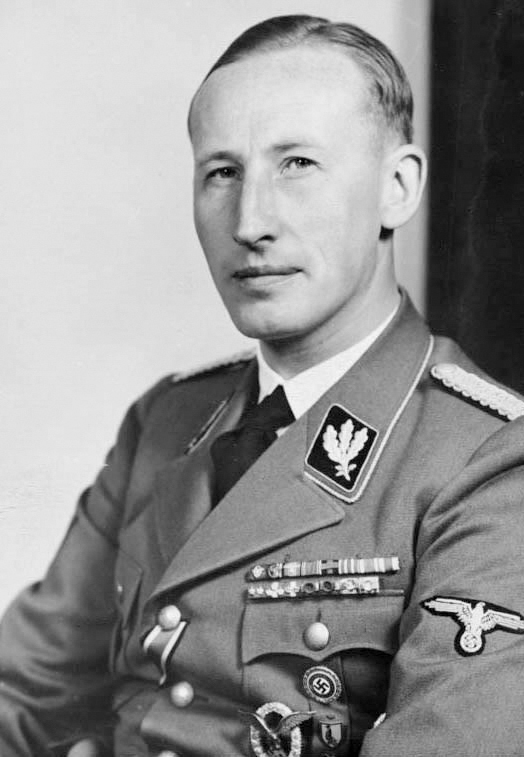
| Born | 7 March 1904, Halle an der Saale |
|---|---|
| Died | 4 June 1942, Prague, of wounds from the attack of 27 May 1942 |
| Key offices | Head of the SD; head of the Gestapo office in Berlin (Gestapa); Chief of the Security Police and SD; head of the Reich Security Main Office (RSHA); Deputy Reich Protector of Bohemia and Moravia |
| Documents bearing his name | SD, Gestapa, Security Police and RSHA correspondence, orders and circulars, and Protectorate documents of 1941–42 |
| In the collection | 1 piece currently available (see below) |
Few signatures from the Third Reich carry as much historical weight as Reinhard Heydrich’s. As head of the SS security apparatus, he signed the orders, circulars and correspondence through which the regime’s police terror was organised, and he played a central role in planning the murder of Europe’s Jews. For a collector, a document bearing his name is primary evidence of how that machinery worked. It must be read, described and authenticated with great care.
Who Was Reinhard Heydrich?
Heydrich was born in Halle an der Saale in 1904, the son of a composer and conservatory director. He joined the navy in 1922 and was dismissed in 1931 for conduct judged to have dishonoured the officer corps. In the same year he joined the Nazi Party and the SS, where Heinrich Himmler entrusted him with building the party’s intelligence service, the Sicherheitsdienst (SD).
From that base he rose to control the political police of the Reich. In 1939 he became the first head of the Reich Security Main Office (RSHA), which brought the Security Police and the SD under one command. In September 1941 Hitler sent him to Prague as Deputy Reich Protector of Bohemia and Moravia. He was attacked there by Czechoslovak parachutists on 27 May 1942 and died of his wounds on 4 June.
What Offices Did He Hold, and When?
The office named in a document’s heading, signature block or stamp has to match its date. This table is therefore one of the most useful checks a collector can make.
| Period | Office | Typical wording on documents |
|---|---|---|
| 1931/32 onwards | Head of the SS intelligence service | Sicherheitsdienst (SD) des Reichsführers-SS |
| 1933 | Head of the Bavarian Political Police | Bayerische Politische Polizei |
| From April 1934 | Head of the Gestapo office in Berlin | Geheimes Staatspolizeiamt (Gestapa) |
| From 1936 | Chief of the Security Police and SD | Der Chef der Sicherheitspolizei und des SD |
| From September 1939 | Head of the Reich Security Main Office | Reichssicherheitshauptamt (RSHA) |
| September 1941 – June 1942 | Deputy Reich Protector, Prague | Der stellvertretende Reichsprotektor in Böhmen und Mähren |
Sources give slightly different dates for some of these appointments, for example for the formal start of his SD leadership. The dates above follow the Neue Deutsche Biographie and the United States Holocaust Memorial Museum.
What Documents Bear Heydrich’s Signature?
Most surviving material comes from his police offices: letters, decrees, circulars and orders on SD, Gestapa, Security Police or RSHA letterhead. Personal items, such as signed photographs, private letters and dedications, appear far less often and are among the most frequently forged.
A document can carry his name as an original ink signature, as a typed “gez. Heydrich” on a certified copy, as a stamped or printed facsimile, or signed “i.A.” or “i.V.” by a subordinate on his behalf. Only the first is an autograph. See original signature or facsimile.
What Should Collectors Watch For?
- Office and date must agree. A letter dated 1935 cannot be headed “Reichssicherheitshauptamt”, which did not exist until 1939.
- Check the writing instrument. Under magnification, ink shows the pressure, flow and pen lifts of a moving pen; a printed or stamped facsimile does not.
- Read the whole document. Reference numbers, file marks, stamps and the names of officials should fit the issuing office and period.
- Be cautious with personal items. Signed photographs and dedications need strong, documented provenance.
Heydrich’s Role in Persecution and Genocide
According to the United States Holocaust Memorial Museum, Einsatzgruppen of the Security Police and SD under his orders followed the German army into the Soviet Union in 1941 and began the systematic murder of Jews. On 31 July 1941 Hermann Göring authorised him to coordinate a “solution of the Jewish question” across Europe, and on 20 January 1942 he convened the Wannsee Conference. After his death the regime took brutal reprisals against the Czech population, destroying the villages of Lidice and Ležáky.
Collector’s Note
When I examine a document attributed to Heydrich, I never start with the signature. I start with the paper, the letterhead, the reference numbers and the date, and only then do I look at the handwriting. If the office, the period and the materials do not agree, a convincing signature means nothing.
Related Entries and Pieces
Pieces in the Collection
Browse the full Collector’s Encyclopaedia →
Frequently Asked Questions
Are documents signed by Reinhard Heydrich rare?
Original ink signatures are scarce. Many more documents carry his name only as a typed “gez. Heydrich” or as a facsimile.
What does “gez. Heydrich” mean on a document?
“Gez.” stands for gezeichnet, “signed”. It shows that the original was signed by Heydrich and that the document in hand is a copy without his handwriting.
Can a Heydrich signature be authenticated from a photograph?
A photograph can reveal obvious problems, but a reliable opinion requires examination of the original paper, ink and printing.
Historical Responsibility Notice: this entry documents historical figures and artefacts of the National Socialist period for collecting, preservation, education and research. It does not endorse or glorify any ideology, and it is written in memory of the victims of the regime.
References & Further Reading
- United States Holocaust Memorial Museum, Holocaust Encyclopedia, Reinhard Heydrich: Key Dates.
- Scheffler, W. (1972) ‘Heydrich, Reinhard’, Neue Deutsche Biographie, 9, pp. 73–74.
- Haus der Wannsee-Konferenz (2006) Reinhard Heydrich (1904–1942), biographical information sheet.
- Gerwarth, R. (2011) Hitler’s Hangman: The Life of Heydrich. New Haven: Yale University Press.