
The Collector’s Encyclopaedia · Signatories · SS & Police
Heinrich Himmler (1900–1945): Signature, Documents and Historical Profile
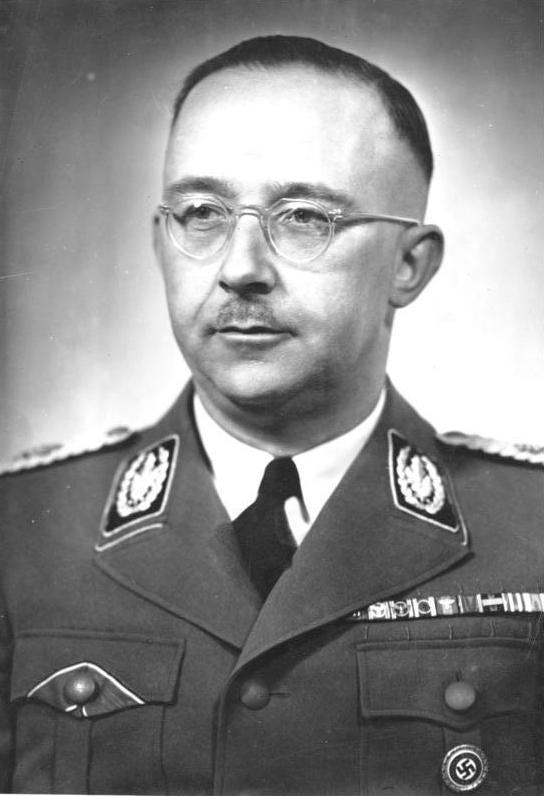
| Born | 7 October 1900, Munich |
|---|---|
| Died | 23 May 1945, Lüneburg (suicide in British custody) |
| Key offices | Reichsführer-SS (1929); Chief of the German Police (1936); Reich Commissioner for the Strengthening of Germandom (1939); Reich Minister of the Interior (1943) |
| Documents bearing his name | SS and police correspondence, orders, appointments, certificates; many printed facsimiles |
| In the collection | 1 piece currently available (see below) |
Heinrich Himmler built the SS from a small guard unit into the instrument of terror and genocide of the Nazi state. Documents carrying his name range from personal letters and SS appointment papers to orders of the police apparatus. Each of them records a part of the system that ran the concentration camps and the murder of Europe’s Jews, and each demands careful authentication.
Who Was Heinrich Himmler?
Himmler was born in Munich in 1900. He became Reichsführer-SS on 6 January 1929, when the SS had a few hundred members. After 1933 he took control of the political police across Germany and built the SS into a state within the state, responsible for the concentration camps, the security police and, from 1939, vast programmes of resettlement and murder in occupied Europe.
Which Offices Appear on His Documents?
| Date | Office |
|---|---|
| 6 January 1929 | Reichsführer-SS |
| March 1933 | Police President of Munich |
| 20 April 1934 | Inspector of the Gestapo |
| 17 June 1936 | Reichsführer-SS and Chief of the German Police |
| 7 October 1939 | Reich Commissioner for the Strengthening of Germandom |
| 25 August 1943 | Reich Minister of the Interior |
| 21 July 1944 | Commander of the Replacement Army |
What Documents Bear Himmler’s Signature?
His ink signature appears on SS and police correspondence, orders, appointment papers and on personal letters and dedications. Many SS certificates and printed documents carry his name only as a facsimile, and typed copies marked “gez. Himmler” are common. Any signature should be compared only against authenticated exemplars of the same period and document type. See original signature or facsimile.
What Should Collectors Watch For?
- Office and date must agree: “Chef der Deutschen Polizei” belongs to June 1936 onwards.
- Printed and stamped signatures are common on SS certificates.
- Personal items and dedications are frequently forged and need documented provenance.
- Examine letterhead, file numbers and stamps against the issuing office.
Responsibility and Fate
Himmler was the chief organiser of the Holocaust and of the SS concentration camp system. In May 1945 he tried to escape under a false name, was captured by British forces near Lüneburg and took poison on 23 May 1945 before he could be brought to trial.
Collector’s Note
With Himmler material I start with the institution behind the paper: the SS office, its file references and its stamps. A genuine document fits the bureaucracy that produced it; a forgery usually gets some part of that bureaucracy wrong.
Related Entries and Pieces
Pieces in the Collection
Browse the full Collector’s Encyclopaedia →
Frequently Asked Questions
When did Himmler become Chief of the German Police?
On 17 June 1936, when he combined the title with that of Reichsführer-SS.
Are Himmler signatures on SS certificates original?
Many SS certificates carry a printed or stamped facsimile. Each document must be examined individually.
How did Himmler die?
He took poison in British custody at Lüneburg on 23 May 1945.
Historical Responsibility Notice: this entry documents historical figures and artefacts of the National Socialist period for collecting, preservation, education and research. It does not endorse or glorify any ideology, and it is written in memory of the victims of the regime.
References & Further Reading
- Deutsches Historisches Museum, LeMO – Lebendiges Museum Online, Heinrich Himmler 1900–1945 (M. Wichmann; last updated 2014).
- ‘Himmler, Heinrich’, Deutsche Biographie.