
The Collector’s Encyclopaedia · Signatories · SS & Police
Heinrich Müller (1900–1945?): Signature, Documents and Historical Profile
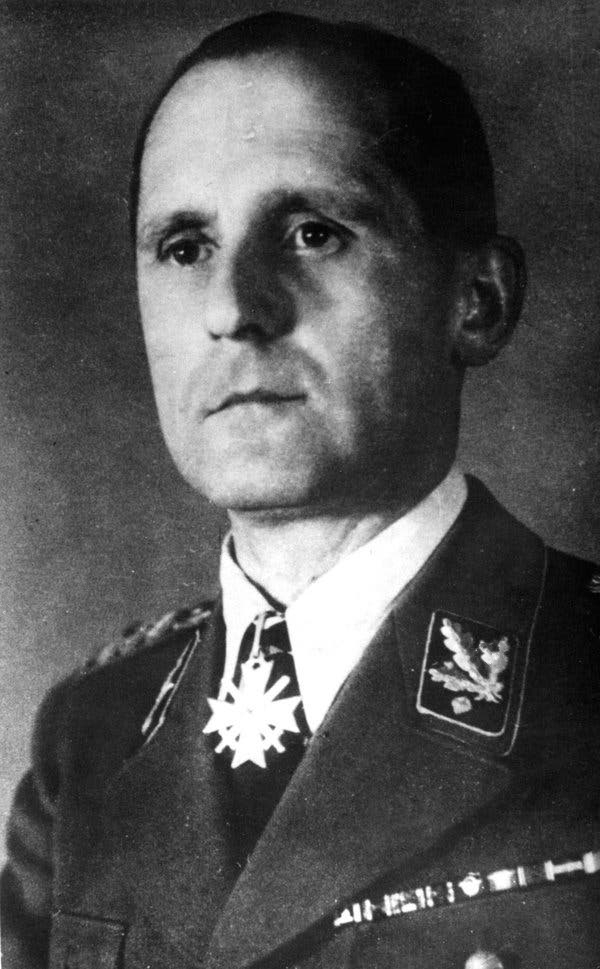
| Born | 28 April 1900, Munich |
|---|---|
| Died | presumed 1 May 1945, Berlin |
| Key office | Head of the Gestapo |
| Documents bearing his name | Gestapo and RSHA correspondence and orders |
| In the collection | No pieces currently available |
Heinrich Müller ran the Gestapo for most of the Nazi period. His name appears on countless Gestapo orders and letters, including those that set deportations in motion. He vanished in Berlin in May 1945, and his fate has been debated ever since.
Who Was Heinrich Müller?
Müller was born in Munich in 1900 and served as an aircraft pilot in the First World War. A professional police officer in Bavaria, he joined the SS in April 1934 and rose to become head of the Gestapo, attending the Wannsee Conference in January 1942.
What Documents Bear Müller’s Signature?
His name and signature appear on Gestapo and RSHA correspondence and orders. Many documents survive as copies. See original signature or facsimile.
What Should Collectors Watch For?
- Gestapo documents must fit the period and office.
- Distinguish ink signatures from copies.
- Be wary of items linked to legends about his post-war survival.
Disappearance
Müller was last seen in Berlin at the end of April 1945. His death on or about 1 May 1945 is presumed but has never been conclusively established, which has encouraged speculation and unreliable claims.
Collector’s Note
Müller is a magnet for conspiracy stories. In my descriptions I stick to the documented record and avoid any claim that cannot be supported.
Related Entries and Pieces
Browse the full Collector’s Encyclopaedia →
Frequently Asked Questions
What was Heinrich Müller’s role?
He was head of the Gestapo.
What happened to Heinrich Müller?
He disappeared in Berlin in 1945; his death is presumed but not conclusively proven.
Did Müller attend the Wannsee Conference?
Yes, in January 1942.
Historical Responsibility Notice: this entry documents historical figures and artefacts of the National Socialist period for collecting, preservation, education and research. It does not endorse or glorify any ideology, and it is written in memory of the victims of the regime.
References & Further Reading
- Harvard Law School, Nuremberg Trials Project, Heinrich Mueller.