The Collector’s Encyclopaedia · Signatories · Government & Party
Joachim von Ribbentrop (1893–1946): Signature, Documents and Historical Profile
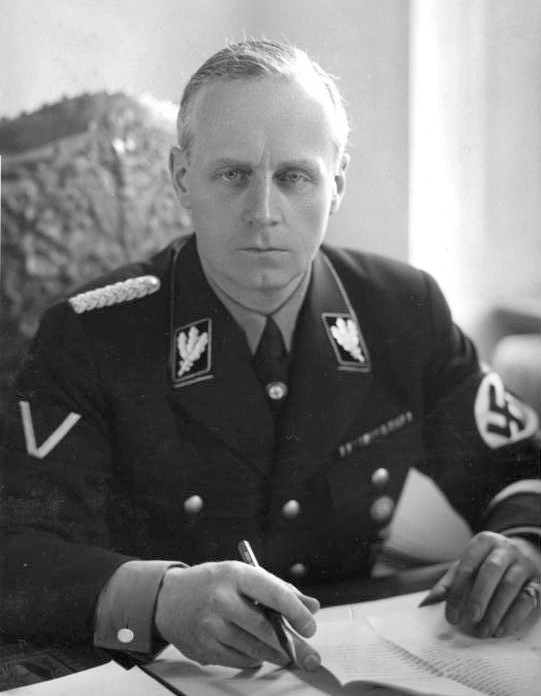
| Born | 30 April 1893, Wesel |
|---|---|
| Died | 1946, Nuremberg (executed) |
| Key offices | Special envoy (1935); Ambassador to London (1936–1938); Reich Foreign Minister (4 February 1938) |
| Documents bearing his name | Foreign Office correspondence and appointments, diplomatic papers |
| In the collection | 1 piece currently available (see below) |
Joachim von Ribbentrop signed some of the most consequential documents of the 1930s, from the Anglo-German Naval Agreement of 1935 to the pact with the Soviet Union in August 1939. For collectors, his signature appears mainly on Foreign Office papers, and his changing positions make dating straightforward.
Who Was Joachim von Ribbentrop?
Ribbentrop was born in Wesel in 1893. He joined the Nazi Party in May 1932 and became Hitler’s foreign-policy adviser, with his own office, the “Dienststelle Ribbentrop”. As special envoy he signed the Anglo-German Naval Agreement in London in June 1935. He was ambassador in London from 1936 to 1938 and replaced Konstantin von Neurath as Foreign Minister on 4 February 1938. On 23 August 1939 he signed the non-aggression pact with Vyacheslav Molotov in Moscow.
What Documents Bear Ribbentrop’s Signature?
Original signatures appear on Foreign Office correspondence, appointment papers for diplomats and officials, and diplomatic documents. Check the office against the date: ambassador papers belong to 1936–1938, ministerial papers to February 1938 onwards. See original signature or facsimile.
What Should Collectors Watch For?
- Office and date must agree.
- Typed “gez.” copies of diplomatic notes are common and are not autographs.
- Check letterhead and seals of the Foreign Office against the period.
Responsibility and Fate
As Foreign Minister, Ribbentrop helped prepare the wars of aggression and his ministry took part in the deportation of Jews from occupied and allied countries. On 1 October 1946 the International Military Tribunal found him guilty on all counts and sentenced him to death. He was the first of the condemned to be hanged at Nuremberg, in the night of 15–16 October 1946.
Collector’s Note
Diplomatic documents often survive as typed copies. A genuine Ribbentrop signature is far rarer than a document carrying his name, so the first question is always whether I am looking at an original or a copy.
Related Entries and Pieces
Pieces in the Collection
Browse the full Collector’s Encyclopaedia →
Frequently Asked Questions
When did Ribbentrop become foreign minister?
On 4 February 1938.
What did Ribbentrop sign with Molotov?
The German–Soviet non-aggression pact of 23 August 1939.
What happened to Ribbentrop?
He was sentenced to death at Nuremberg and hanged in October 1946.
Historical Responsibility Notice: this entry documents historical figures and artefacts of the National Socialist period for collecting, preservation, education and research. It does not endorse or glorify any ideology, and it is written in memory of the victims of the regime.
References & Further Reading
- Deutsches Historisches Museum, LeMO – Lebendiges Museum Online, Joachim von Ribbentrop 1893–1946 (M. Wichmann; last updated 2014).
- ‘Ribbentrop, Joachim von’, Deutsche Biographie.