The Collector’s Encyclopaedia · Signatories · Government & Party
Hermann Göring (1893–1946): Signature, Documents and Historical Profile
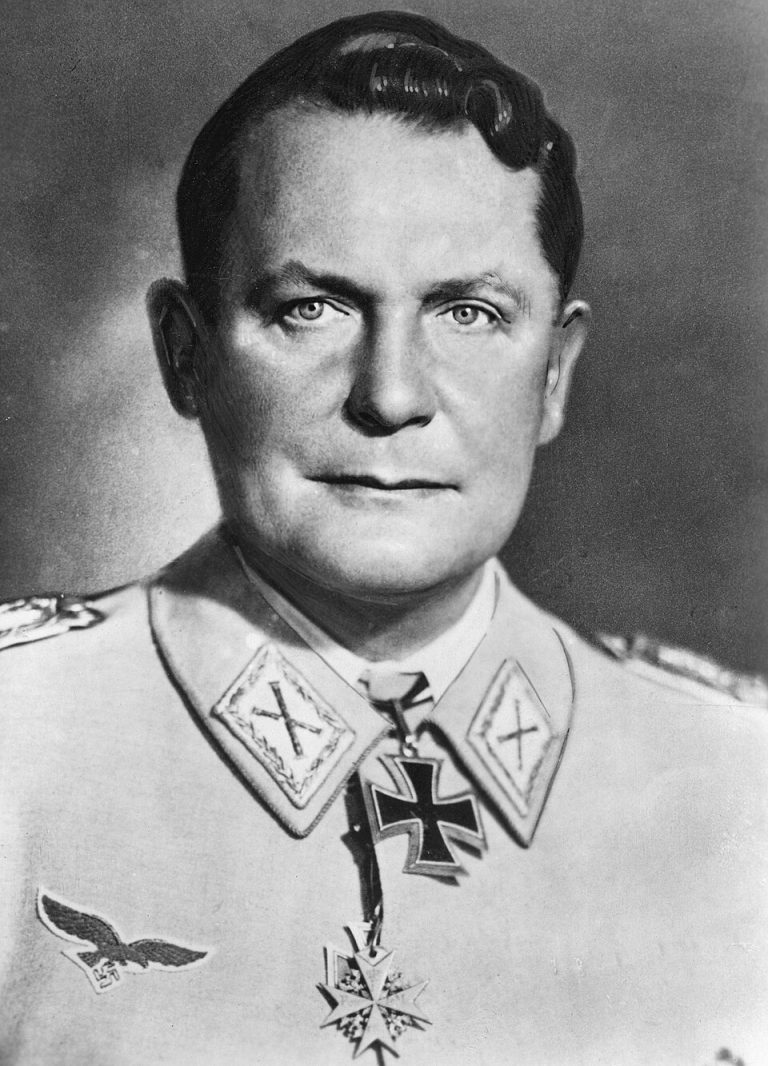
| Born | 12 January 1893, Rosenheim |
|---|---|
| Died | 15 October 1946, Nuremberg (suicide before execution) |
| Key offices | Reichstag President; Prussian Minister-President; Reich Aviation Minister; Commander-in-Chief of the Luftwaffe; Four-Year Plan; Reichsmarschall |
| Documents bearing his name | Prussian state papers, Luftwaffe appointments and orders, Four-Year Plan decrees, correspondence |
| In the collection | 1 piece currently available (see below) |
Hermann Göring held more offices than almost any other leader of the Third Reich, and each of them produced paperwork. That makes his signature one of the most varied a collector can meet, and his titles one of the most useful tools for dating a document. A First World War fighter ace turned Nazi leader, he was convicted at Nuremberg and took his own life before he could be hanged.
Who Was Hermann Göring?
Göring was born in Rosenheim in 1893. In the First World War he became a fighter pilot, received the Pour le Mérite in May 1918 and took command of the Richthofen squadron in July 1918. He joined the Nazi Party in 1922 and was put in charge of the SA as it was being built. He became President of the Reichstag in August 1932 and, after the seizure of power, accumulated offices in Prussia and the Reich.
Which Offices Appear on His Documents?
| Date | Office |
|---|---|
| 30 August 1932 | President of the Reichstag |
| 10 April 1933 | Prussian Minister-President |
| May 1933 | Reich Minister of Aviation |
| March 1935 | Commander-in-Chief of the Luftwaffe |
| 18 October 1936 | Commissioner for the Four-Year Plan |
| 8 February 1938 | Generalfeldmarschall |
| 1 September 1939 | Named Hitler’s successor |
| 19 July 1940 | Reichsmarschall |
His rank and title in a signature block or letterhead must match the date: “Reichsmarschall” cannot appear before July 1940.
What Documents Bear Göring’s Signature?
Original signatures appear on Prussian state documents, Luftwaffe appointment and promotion papers, orders and correspondence, and on decrees issued under the Four-Year Plan. As with other senior leaders, many documents carry his name only as a typed “gez.” copy or as a printed or stamped facsimile. Signed photographs are popular with collectors and frequently forged. See original signature or facsimile.
What Should Collectors Watch For?
- Check that the rank and office agree with the date.
- Distinguish ink from printed or stamped signatures under magnification.
- Be wary of signed photographs and dedications without documented provenance.
- Check that any co-signatory held his office on the same date.
Responsibility and Fate
Göring was one of the principal architects of the Nazi state, built the early Gestapo in Prussia and, through his authority over the Four-Year Plan, was deeply involved in the plundering of occupied Europe and in the persecution of the Jews. On 1 October 1946 the International Military Tribunal found him guilty on all counts and sentenced him to death. He took cyanide in his cell on 15 October 1946, hours before the execution.
Collector’s Note
Göring’s many titles are a gift to the careful collector. Before I look at his handwriting, I check whether the title, the letterhead and the date tell the same story. A mismatch there tells me more than any single letterform.
Related Entries and Pieces
Pieces in the Collection
Browse the full Collector’s Encyclopaedia →
Frequently Asked Questions
When did Göring become Reichsmarschall?
On 19 July 1940. Documents dated earlier cannot bear that title.
Are Göring signed photographs common?
They appear regularly on the market, but they are also among the most frequently forged items. Provenance and expert examination are essential.
What does “gez. Göring” mean?
It marks a copy of a document he signed. The copy is a genuine period document but does not carry his handwriting.
Historical Responsibility Notice: this entry documents historical figures and artefacts of the National Socialist period for collecting, preservation, education and research. It does not endorse or glorify any ideology, and it is written in memory of the victims of the regime.
References & Further Reading
- Deutsches Historisches Museum, LeMO – Lebendiges Museum Online, Hermann Göring 1893–1946 (S. Eckelmann; last updated 2026).
- ‘Göring, Hermann’, Deutsche Biographie.