The Collector’s Encyclopaedia · Signatories · Government & Party
Paul von Hindenburg (1847–1934): Signature, Documents and Historical Profile
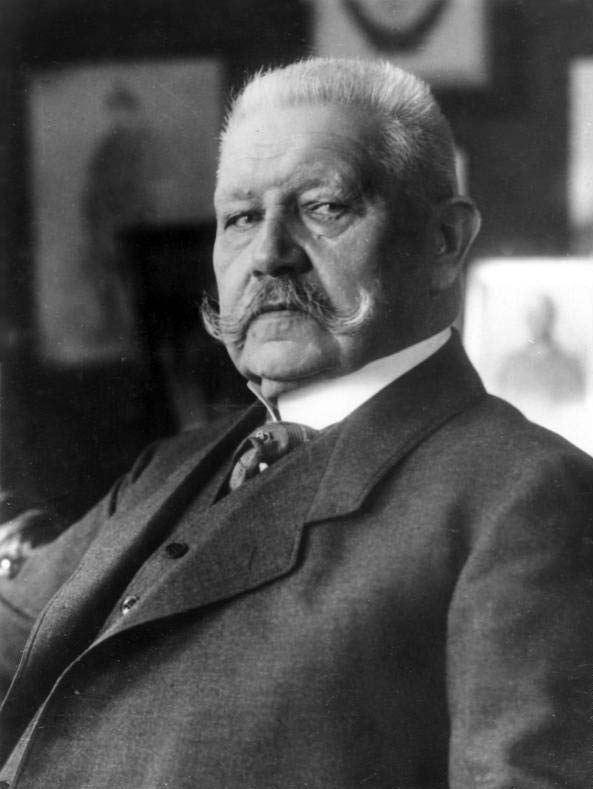
| Born | 2 October 1847, Posen |
|---|---|
| Died | 2 August 1934, Neudeck |
| Key offices | Chief of the General Staff (1916); Reich President (1925–1934) |
| Documents bearing his name | Appointment certificates, laws and decrees as Reich President, military papers, correspondence; many facsimiles |
| In the collection | No pieces currently available |
As Reich President from 1925 until his death in 1934, Paul von Hindenburg signed the appointment certificates of officials and officers across Germany, and on 30 January 1933 he appointed Hitler Chancellor. His signature is therefore one of the most common original signatures of the period, found on documents that many families kept.
Who Was Paul von Hindenburg?
Hindenburg was born in Posen in 1847. Recalled in August 1914 to command the 8th Army, he became a national hero after the victory at Tannenberg. On 29 August 1916 he became Chief of the General Staff with Erich Ludendorff. He was elected Reich President in April 1925 and re-elected in spring 1932. On 30 January 1933 he appointed Hitler Reich Chancellor. He died at Neudeck on 2 August 1934.
What Documents Bear Hindenburg’s Signature?
As head of state he signed appointment and promotion certificates for civil servants, judges and officers, typically with the countersignature of the responsible minister, as well as laws and decrees. Original ink signatures on such certificates are relatively common for a head of state. Printed facsimiles appear on commemorative and mass-produced documents. See appointment certificates and original signature or facsimile.
What Should Collectors Watch For?
- Reich President documents fall between 1925 and 2 August 1934.
- The countersigning minister must have held office on that date.
- Distinguish ink signatures from printed facsimiles on commemorative items.
Hindenburg and the Nazi Seizure of Power
Hindenburg’s appointment of Hitler, and the emergency decrees he signed in 1933, gave the new regime the legal cover it used to dismantle democracy. After his death Hitler merged the offices of President and Chancellor.
Collector’s Note
A Hindenburg appointment certificate is often the first presidential signature a collector owns. I check the countersignature and the date with as much care as the main signature, because together they make the document coherent.
Related Entries and Pieces
Browse the full Collector’s Encyclopaedia →
Frequently Asked Questions
When was Hindenburg Reich President?
From 1925 until his death on 2 August 1934.
Are Hindenburg signatures on appointment certificates original?
Many are original ink signatures, but each document must be examined; facsimiles also exist.
What is the Hindenburg Cross?
The Honour Cross of the World War, instituted in 1934 for veterans of the First World War. See its entry in this encyclopaedia.
Historical Responsibility Notice: this entry documents historical figures and artefacts of the National Socialist period for collecting, preservation, education and research. It does not endorse or glorify any ideology, and it is written in memory of the victims of the regime.
References & Further Reading
- Conze, W. (1972) ‘Hindenburg, Paul von’, Neue Deutsche Biographie, 9, pp. 178–182.