WWII German Military Abbreviations: How to Read Unit Stamps
A German military document can be perfectly legible and still be difficult to understand. The problem is often not the handwriting. It is the abbreviations.
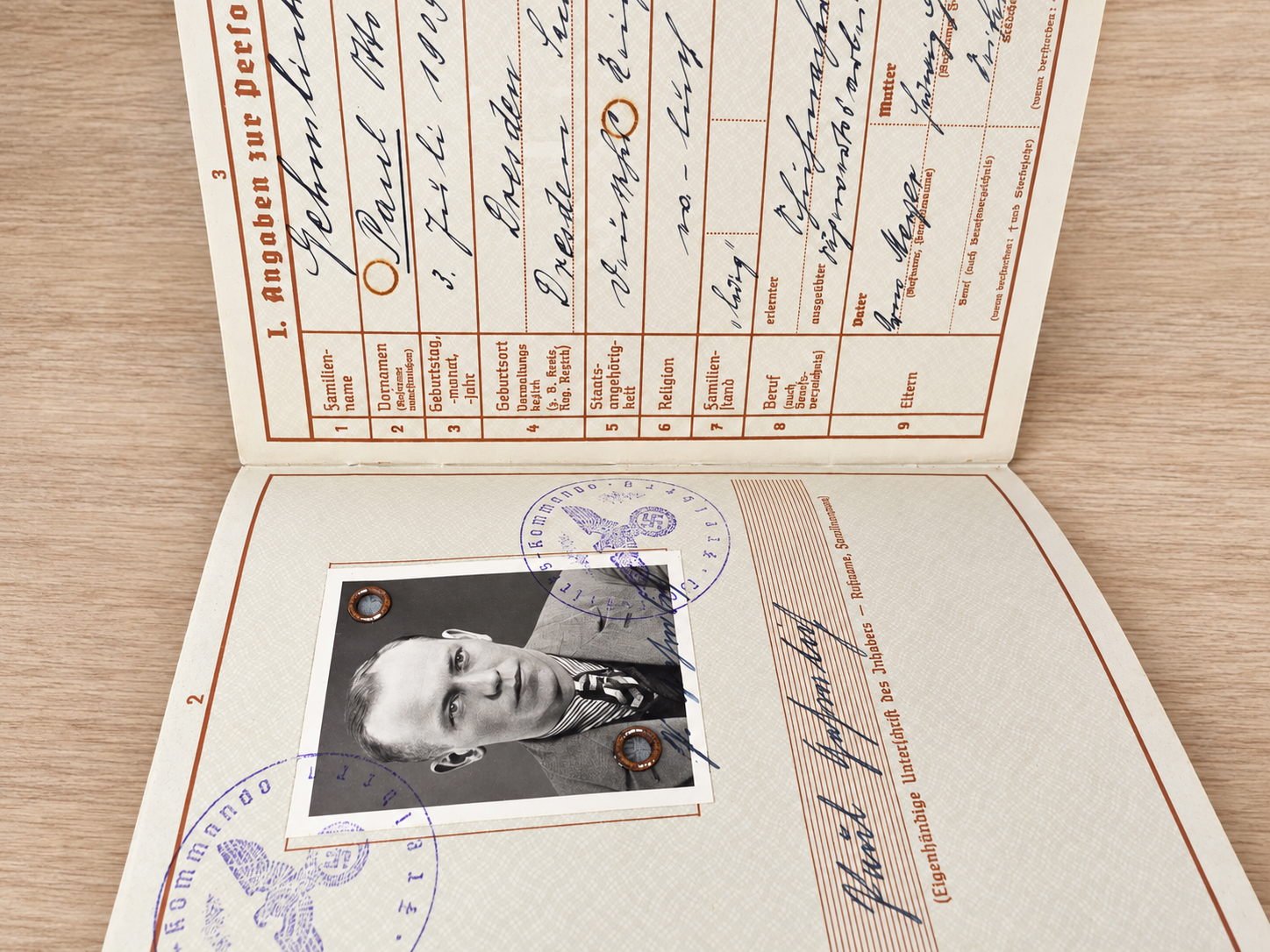
A Wehrpass, Soldbuch, casualty document or wartime military form may compress an entire unit designation into a few letters and numbers. A stamp from an infantry replacement battalion, a company office or a regimental headquarters can look almost meaningless until its structure is understood.
For collectors, learning WWII German military abbreviations is one of the most useful steps between simply owning a document and actually researching it.
This guide is not another explanation of what a Wehrpass or Soldbuch is. Those subjects are covered in our German Wehrpass Guide and our Wehrpass vs Soldbuch comparison. Here the objective is different: to understand what German unit abbreviations and military stamps are actually telling you.
Material associated with Germany between 1933 and 1945 is discussed here strictly for documentation, collecting and historical research.
Why Is a Unit Stamp More Than a Name?
Collectors sometimes treat a military stamp as though it were a simple label. It rarely is. A stamp can identify a company, battalion, regiment, replacement unit, administrative office, hospital, training formation or other military authority.
The first question should therefore not be “What division is this?” but “What level of the military structure am I looking at?”
That distinction matters. A company is not a battalion. A battalion is not a regiment. A replacement battalion is not automatically the front-line regiment with the same or a related number. And an administrative stamp does not necessarily prove that the holder served with that organisation in combat.
This is where careful reading begins.
How Is a German Unit Designation Structured?
German military designations were hierarchical: a small unit formed part of a larger unit, which itself belonged to a larger formation. In simplified form, a collector may encounter something like:
3./Inf.Ers.Btl. 394
This should not be read as one long, mysterious word. Break it into its components:
3./– the company number;Inf.– Infanterie, infantry;Ers.– Ersatz, replacement;Btl.– Bataillon, battalion;394– the unit number.
The result is 3rd Company, Infantry Replacement Battalion 394, which tells us considerably more than “unit 394”. It also raises an immediate research question: was the holder still with a replacement or training formation at that date, or does the entry record an administrative stage before a move to a field unit?
The abbreviation provides the starting point. The date and the surrounding entries provide the context.
Which WWII German Military Abbreviations Appear Most Often?
The following WWII German military abbreviations appear again and again in German Army records. Wartime usage was not perfectly uniform, so punctuation and shortened forms vary.
| Abbreviation | German | Meaning |
|---|---|---|
| Kp. / Komp. | Kompanie | Company |
| Btl. | Bataillon | Battalion |
| Rgt. | Regiment | Regiment |
| Div. | Division | Division |
| Stab | Stab | Headquarters / staff |
| Inf. | Infanterie | Infantry |
| Gren. | Grenadier | Grenadier |
| Pi. | Pionier | Engineer / pioneer |
| Art. | Artillerie | Artillery |
| Ers. | Ersatz | Replacement |
| Ausb. | Ausbildung | Training |
| San. | Sanitäts- | Medical |
| mot. | motorisiert | Motorised |
| Res. | Reserve | Reserve |
These abbreviations become useful only when read together. Pi.Btl. is not simply “pioneer”; it is a pioneer battalion. Stab/Inf.Rgt. refers to the headquarters element of an infantry regiment. Ers.Btl. indicates a replacement battalion rather than an ordinary field battalion, and that last distinction is particularly important.
Why Is “Ersatz” So Important?
One of the easiest mistakes when researching a Wehrpass is to find a unit number and immediately connect the holder with the combat history of a similarly numbered front-line formation. The word Ersatz should make the collector stop.
Replacement formations received, organised and trained personnel and supplied them to other units. An Infanterie-Ersatz-Bataillon was therefore fundamentally different from an infantry battalion serving within a field regiment.
The same soldier may appear first in a replacement formation and later in a field unit. That sequence can be meaningful: it may show mobilisation, training and eventual transfer. But the replacement-unit entry alone does not establish participation in the battles of the formation to which personnel may later have been sent.
This is precisely why dates matter.
Why Read the Date Before Researching the Unit?
A unit designation without a date is incomplete evidence. German formations were created, reorganised, renamed, transferred, placed under different commands and sometimes dissolved, so the same designation can mean different things at different moments. This matters particularly in late-war documents.
Before reconstructing where the holder may have been, establish three things together: unit + date + type of entry.
The German Federal Archives (Bundesarchiv) offers Georg Tessin’s Verbände und Truppen der deutschen Wehrmacht und Waffen-SS 1939–1945 as its key reference for German formations. All 17 volumes can be downloaded from its website, and the archive describes the work as very comprehensive, though not exhaustive.
Finding a unit name is therefore not the end of the research. It is the beginning.
Does a Stamp Prove Combat Service?
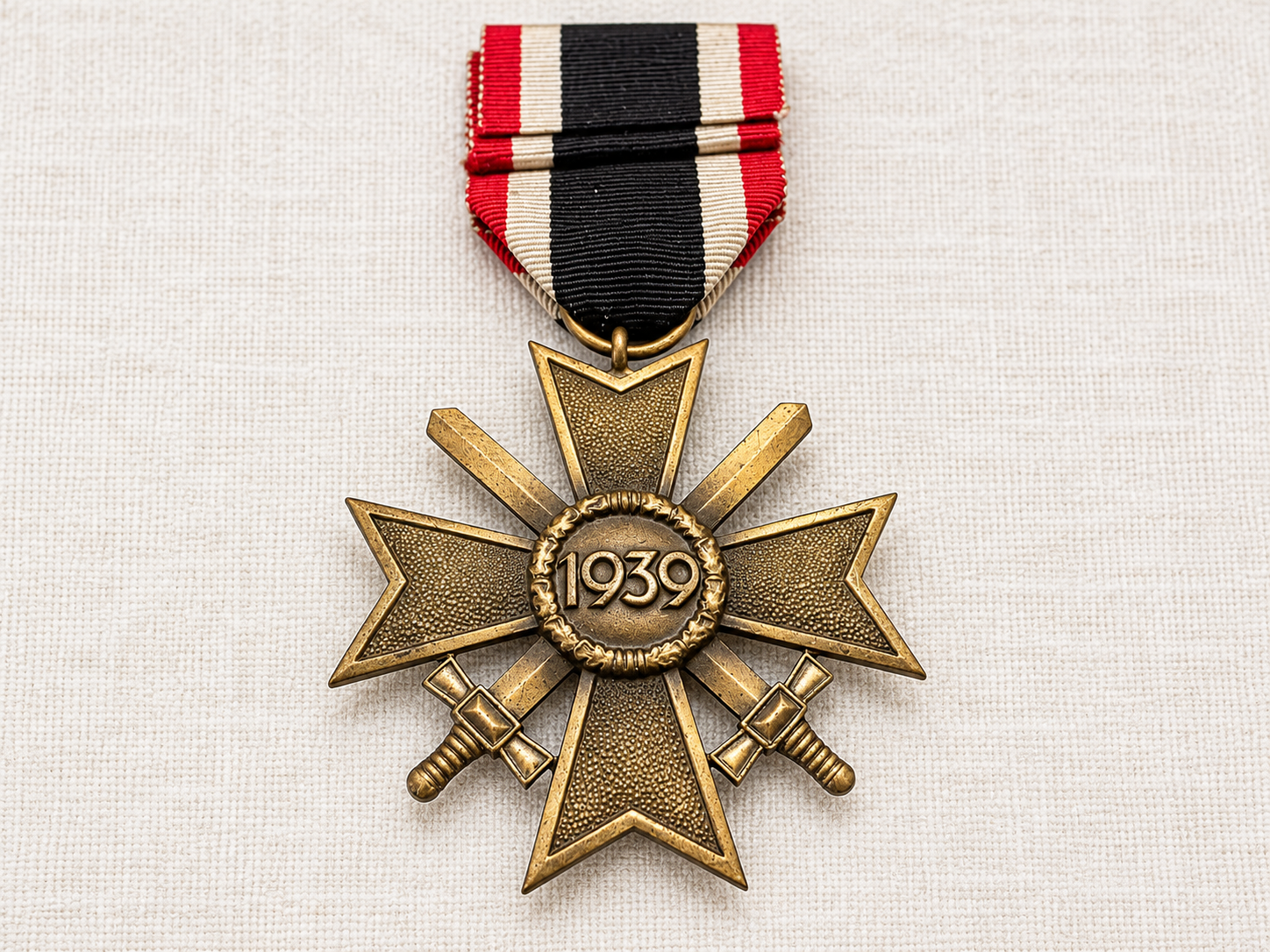
Not automatically. An impressive military stamp can easily dominate the way a document is read, but stamps were administrative tools. They show that a military office, unit or authority made or validated an entry. They do not prove that the holder took part in every operation associated with that formation.
A replacement-battalion stamp in a Soldbuch may record an administrative transaction. A hospital stamp may document treatment. A pay-office stamp may reflect another administrative event. A regimental stamp beside an award or promotion entry may mean something different again.
The safest method is to ask: what is this stamp validating? A date, a transfer, an award, a medical event, an identity photograph, a payment or a promotion? Its position inside the document is often as important as the wording inside the stamp.
Why Do Unit Changes Reveal More Than One Famous Unit?
Collectors naturally notice famous divisions and regiments, but the sequence of units is often more useful than any single name. A pattern might run:
replacement unit → training unit → field unit → hospital → replacement unit → new field formation.
That sequence can explain much of a soldier’s career without any spectacular entry. The Bundesarchiv notes that the identity-tag registers kept by units in principle make it possible to identify everyone who belonged to a unit during its existence, although wartime losses have left gaps in the documentation.
For a collector, the principle is simple: transfers are evidence. They should not be treated as administrative clutter.
How Can Field Post Numbers Help?
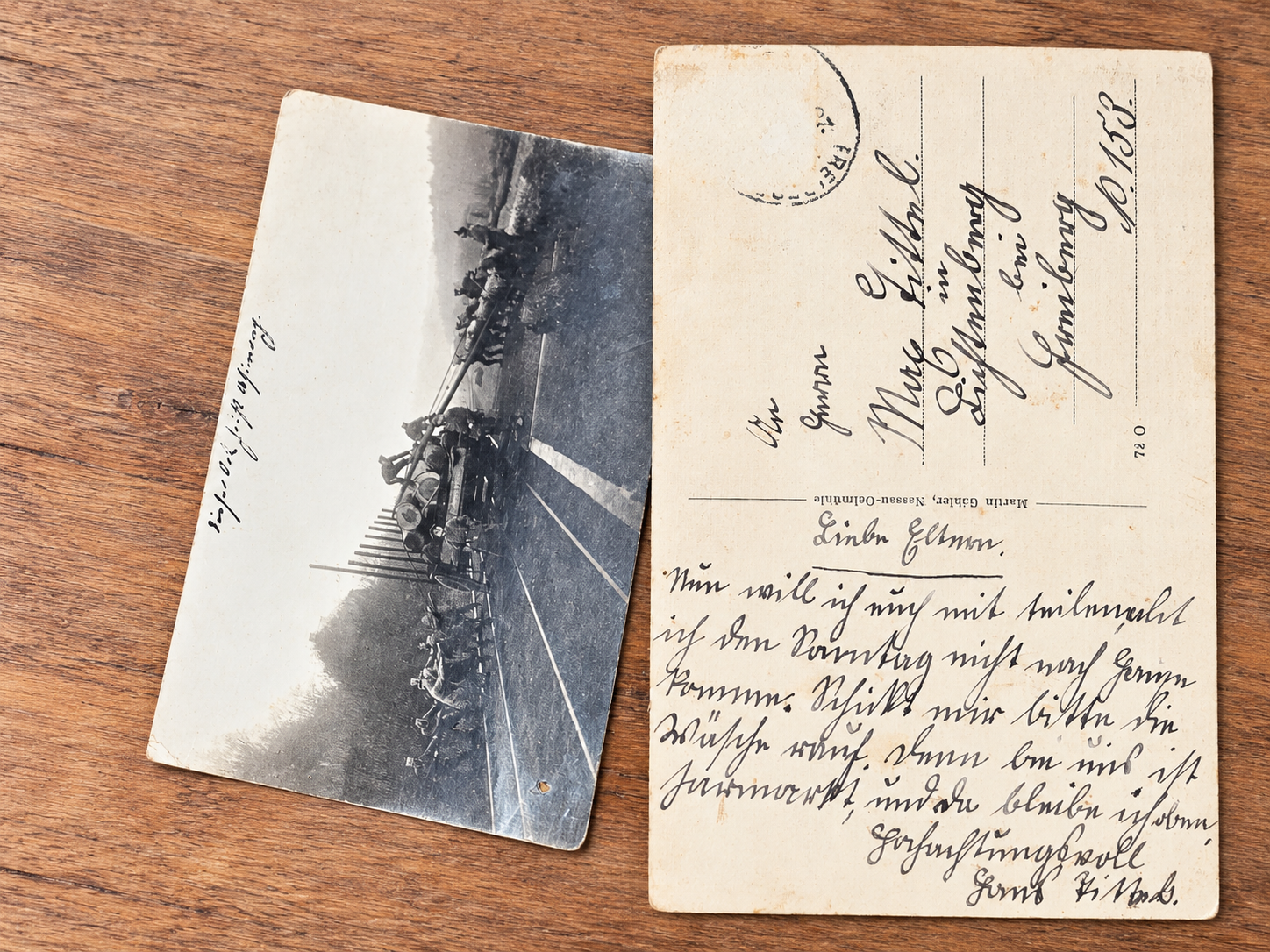
A Feldpostnummer, or field post number, provides another route into unit research. These numbers allowed wartime mail to reach military units without the unit’s full name or location appearing openly in the address.
When a field post number survives on correspondence, envelopes or documents, it may help identify the unit associated with the sender at a particular time. Again, the date is essential: assignments could change, so a number should be researched for the period in which the letter was written rather than treated as a permanent identifier.
The Bundesarchiv holds field post among the private papers in its military records. For collectors, envelopes and letters are worth preserving alongside military documents: an ordinary field post cover can help interpret a unit entry elsewhere in the same archive.
Why Are Small Units Harder to Research?
Finding a division is often easier than finding a company, and there is a historical reason. The Bundesarchiv notes that the records of army troops below division level, as well as those of the Luftwaffe and the Waffen-SS, were largely lost, whereas most war diaries of the army command authorities and division staffs up to 1943 survived.
This changes the method. If the company cannot be found directly, identify its battalion; then the regiment; then the division and the higher command, whose records are more likely to survive. The military hierarchy becomes a research map.
From the Collection: Why Context Matters
The Autographs & Militaria collection includes a named WWII German Wehrpass group connected with the 256th Infantry Division, with an Infanterie-Ersatz-Bataillon entry, a later infantry regiment, an Ostmedaille record, wound information, photographs and death-related correspondence.
What makes a group like this useful for research is not any single stamp. It is the relationship between several pieces of evidence. The unit chronology can be compared with dates; award entries can be placed within that chronology; photographs and family documents add personal context; and death-related material establishes the final stage of the record.
This is why related document groups should be kept together whenever possible. The strongest interpretation usually comes from several independent entries pointing in the same direction, not from one dramatic stamp.
Why Should You Not Expand an Abbreviation Too Quickly?
German military abbreviations can be deceptively simple. The same letters may mean different things depending on the branch, period or document, and poor handwriting adds another problem. A Pi. can be misread if its first letter is unclear; a faded Ers. can almost vanish inside a circular stamp. Numbers are not immune either: a damaged 1 can become a 7, and a 3 can resemble an 8.
Transcription should therefore stay conservative. If a letter is uncertain, mark it as uncertain. Do not silently turn an unclear abbreviation into the unit you hope to find, especially when a more exciting reading would connect the document to a famous formation.
Research should follow the document. The document should never be forced to follow the story.
What Is a Better Research Workflow?
A disciplined sequence avoids many errors:
| Stage | What to do |
|---|---|
| 1. Transcribe | Copy the stamp or unit entry exactly as written |
| 2. Separate | Divide company, battalion, regiment and descriptive abbreviations |
| 3. Date | Record the exact date connected with the entry |
| 4. Classify | Decide whether it is a field, replacement, training, medical or administrative formation |
| 5. Verify | Compare the designation with institutional or specialist unit references |
| 6. Build the hierarchy | Identify the parent regiment, division or higher command where possible |
| 7. Cross-check | Compare the result with other pages, field post, awards, medical entries and associated documents |
The order matters. Searching first and transcribing second invites confirmation bias. Transcribing first keeps the object as the primary evidence.
Collector’s Note: when I catalogue a Wehrpass, I write out every unit entry letter by letter before I look anything up. It is slower, but it is the only way to be sure that what I research is what the document actually says.
How Should You Use the Bundesarchiv for Unit Research?
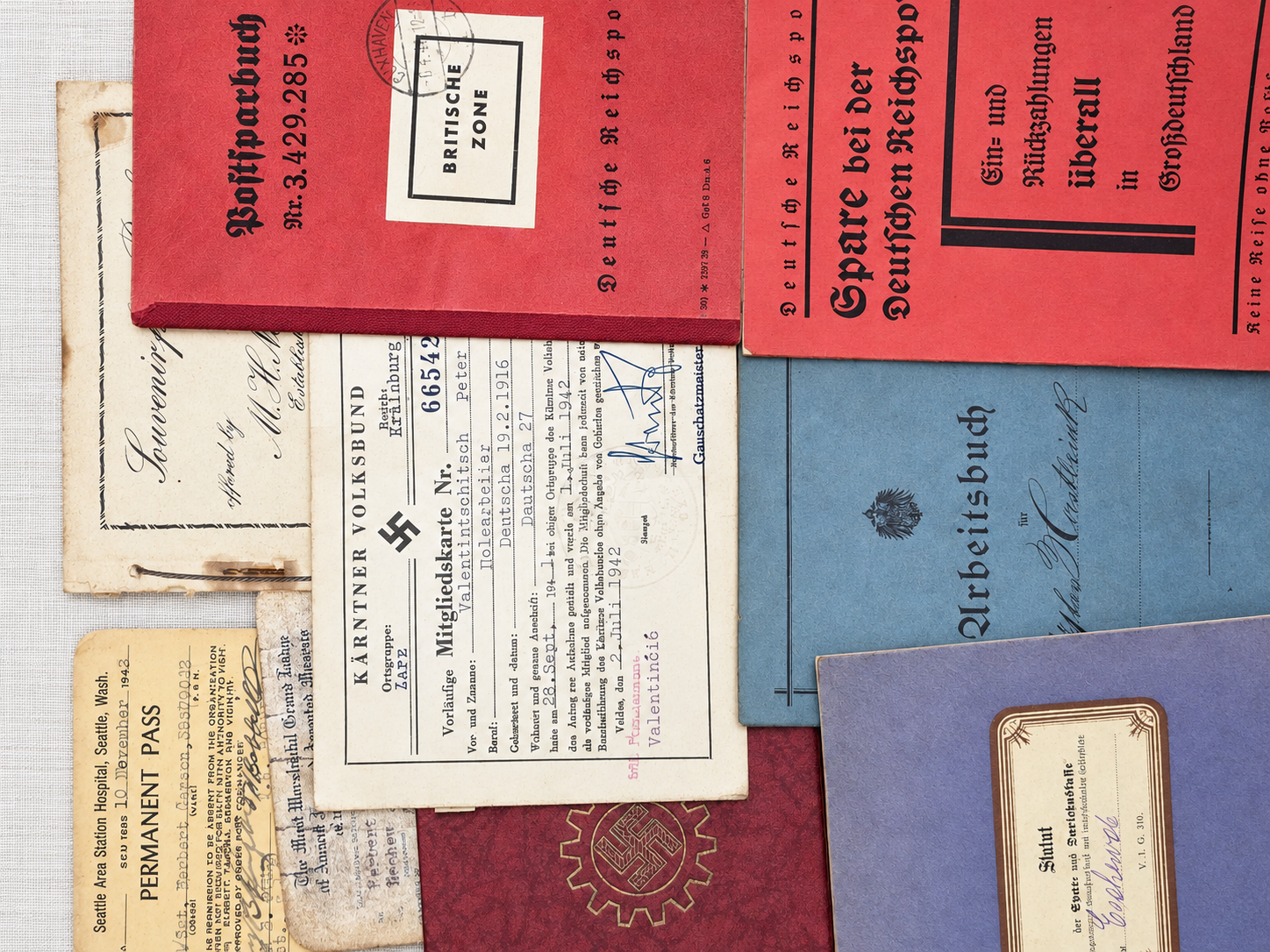
The German Federal Archives should be a main reference point for serious research into German military documents. Its online resources include digital access to Tessin’s volumes, guidance on military personnel records and explanations of the identity-tag registers.
The archive is also clear that wartime record survival is uneven, and that limitation is worth remembering. A missing archival record does not prove that a document is wrong; sometimes the archive is incomplete. Equally, the existence of a real unit does not prove that every document carrying its name is genuine. Historical research and document examination answer different questions, and both matter. For a broader view of the documents themselves, see our collector’s guide to WW2 German documents.
Frequently Asked Questions
What does “Ers.” mean in a WWII German military document?
Ers. usually abbreviates Ersatz, meaning replacement, as in Ersatz-Bataillon. Such formations should not automatically be treated as front-line combat units.
What does “3./” mean before a German unit?
In many Army designations, a number followed by a slash identifies a company or equivalent sub-unit. 3./ generally indicates the 3rd Company of the unit that follows.
Does a Wehrpass unit stamp prove a soldier fought with that unit?
Not necessarily. A stamp must be read according to its position, date and administrative purpose. Some relate to replacement formations, hospitals, pay offices or other authorities rather than combat service.
How can I identify a German WWII military unit?
Transcribe the complete designation, establish the date, determine the unit level and compare it with reliable references such as the digital Tessin volumes provided by the Bundesarchiv.
Can a field post number identify a German unit?
Often it can help, particularly when the number is matched to the correct period. Because assignments changed, the date of the correspondence is essential.
Final Thoughts
WWII German military abbreviations are not difficult because there are thousands of letters to memorise. They are difficult because every abbreviation sits inside a hierarchy.
Once that hierarchy becomes familiar, stamps change character. Kp. becomes a company. Btl. becomes a battalion. Rgt. becomes a regiment. Ers. warns that a replacement formation is involved. A field post number becomes another route into the same question.
The document stops looking like a collection of mysterious stamps and starts reading like a structured record. That is the point where a Wehrpass, Soldbuch or military paper becomes genuinely interesting to research.
Do not begin with the most famous unit name you can find. Begin with the exact entry. Read the abbreviation, read the number, read the date, then build outward.
Original objects, real stories.
HISTORICAL RESPONSIBILITY NOTICE
Autographs & Militaria presents German military documents and other material from the 1933–1945 period strictly for historical, documentary, educational and collecting purposes. Symbols and terminology of the period appear only as part of the original historical record. Their inclusion does not imply endorsement of National Socialism, the Third Reich, its organisations or its ideology. Images marked as illustrative are reconstructions for reference, not original documents.
References & Further Reading
- Bundesarchiv — Military Formations and Units up to 1945. Digital access to Georg Tessin’s Verbände und Truppen der deutschen Wehrmacht und Waffen-SS 1939–1945 (17 volumes).
bundesarchiv.de – Military Formations and Units up to 1945 - Bundesarchiv — Explanatory Notes on Identity Tag Registers. How unit identity-tag registers can identify members of a unit, and the gaps caused by wartime losses.
bundesarchiv.de – Identity Tag Registers - Bundesarchiv — Special Areas of Military Documents. Survival of Second World War unit records and the archive’s field post holdings.
bundesarchiv.de – Special Areas of Military Documents
Services & Expertise
Positive Reviews
Authenticity Focused

Document Authentication & Certification
Certificates issued for collector and archival purposes

Graphology & Signature Analysis
Independent professional service
About the Author: Juan García Nicolás

Authentication & certification
Have a signature or document you want examined? Independent analysis by a qualified graphologist and forensic handwriting examiner.
Research tools
What is my autograph worth?
Signed or facsimile?
Which German document do I have?
All Journal articles
From the collection
Kriegsverdienstkreuz ohne Schwerter – Original German War Merit Cross 2nd Class 1939, Probable Zinc
49,00 €
Kriegsverdienstkreuz mit Schwertern – Original German War Merit Cross 2nd Class 1939
59,00 €
Kriegsverdienstmedaille 1939 – Original German War Merit Medal with Ribbon
45,00 €