
Products on sale
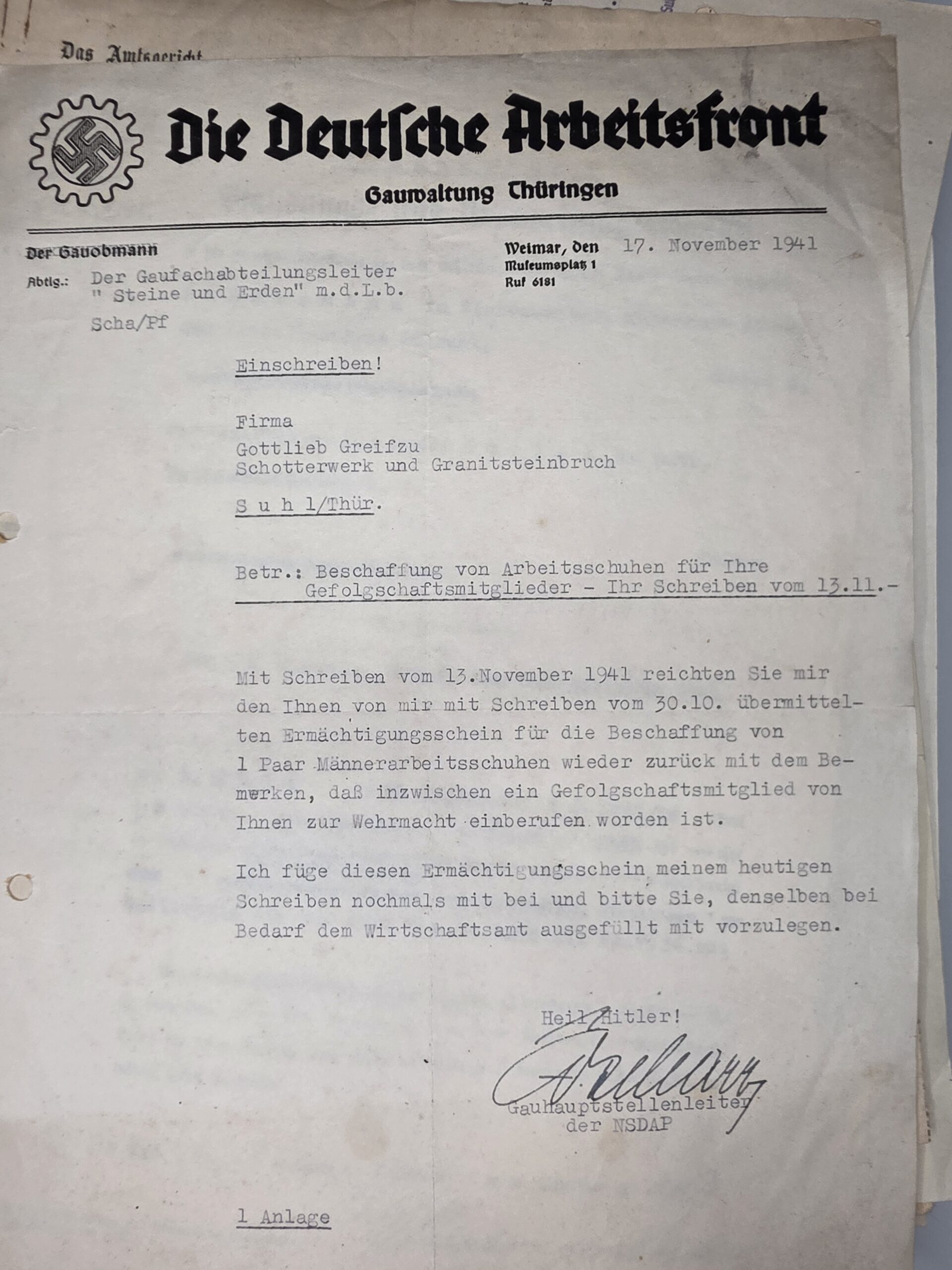
German Document Archive 1911–1967 – DAF, University and Business Papers
Original price was: 249,00 €.199,00 €Current price is: 199,00 €.
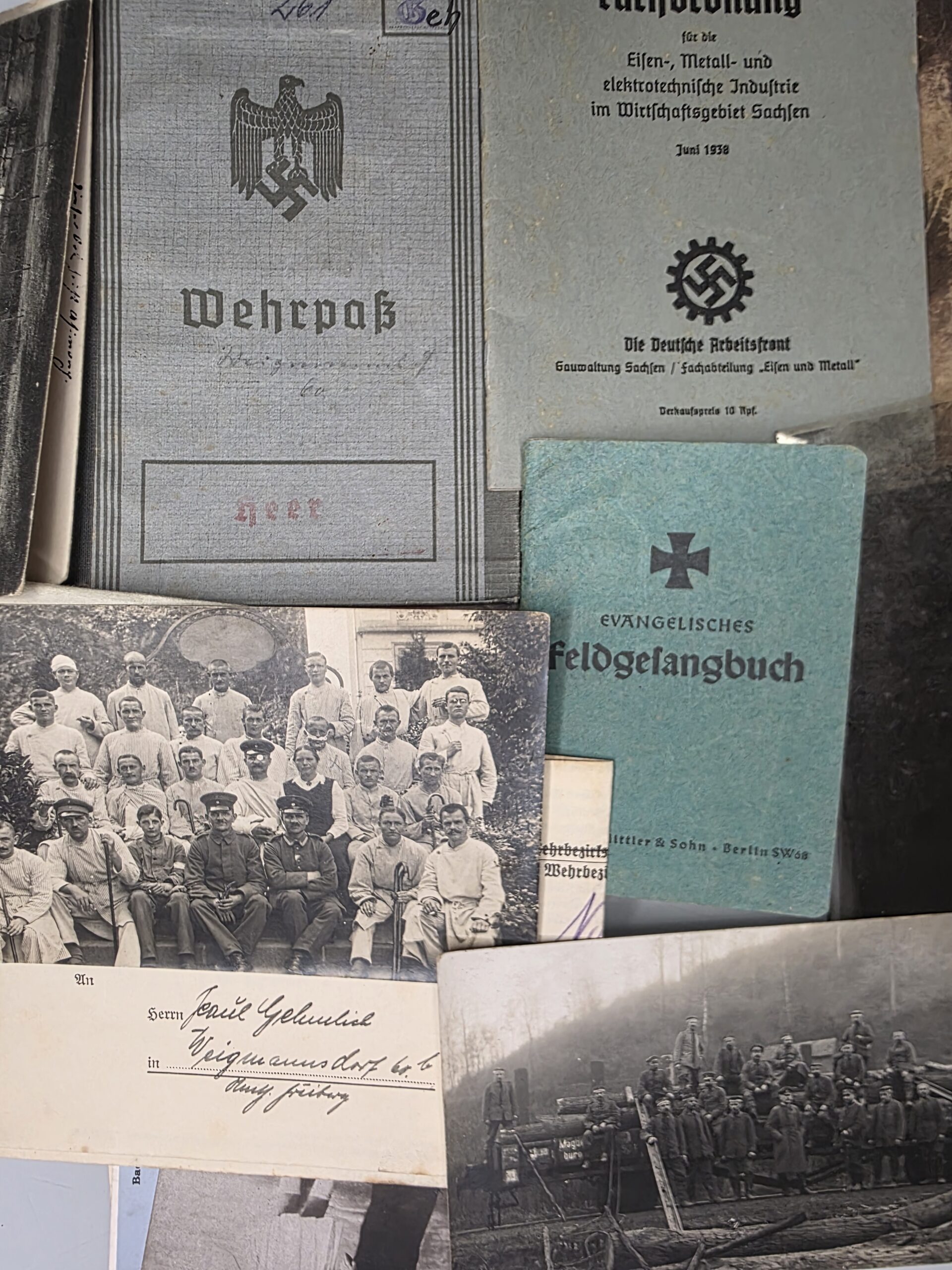
WWII German Wehrpass Group – 256th Infantry Division, Ostmedaille & Death Letter
590,00 €

WWII German Document Collection – U-Boat Training, DAF & Arbeitsbuch Archive
Original price was: 490,00 €.440,00 €Current price is: 440,00 €.
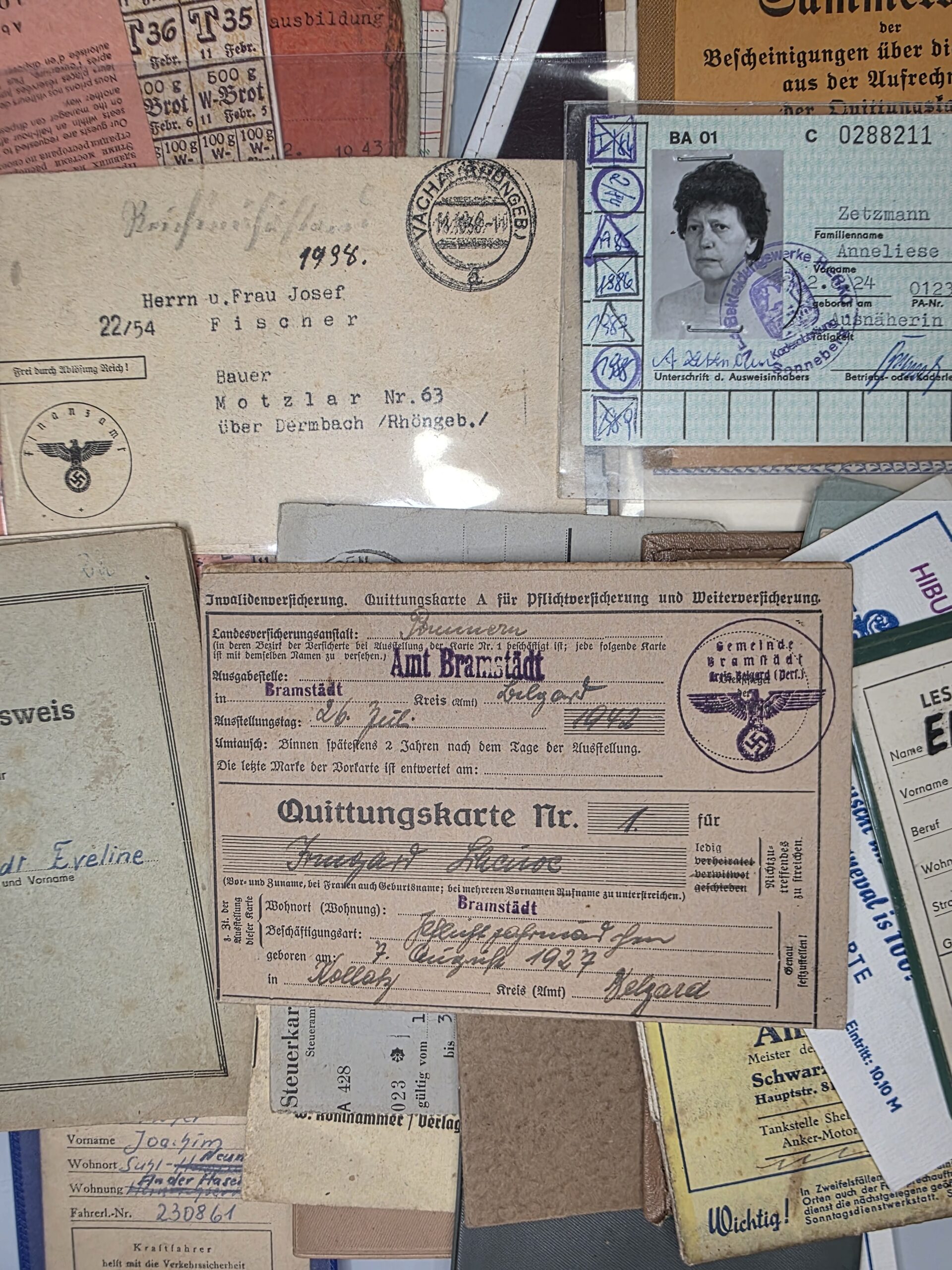
WWII German Document Archive 1938–1945 – Wehrmacht, IDs & Ration Papers
Original price was: 275,00 €.240,00 €Current price is: 240,00 €.
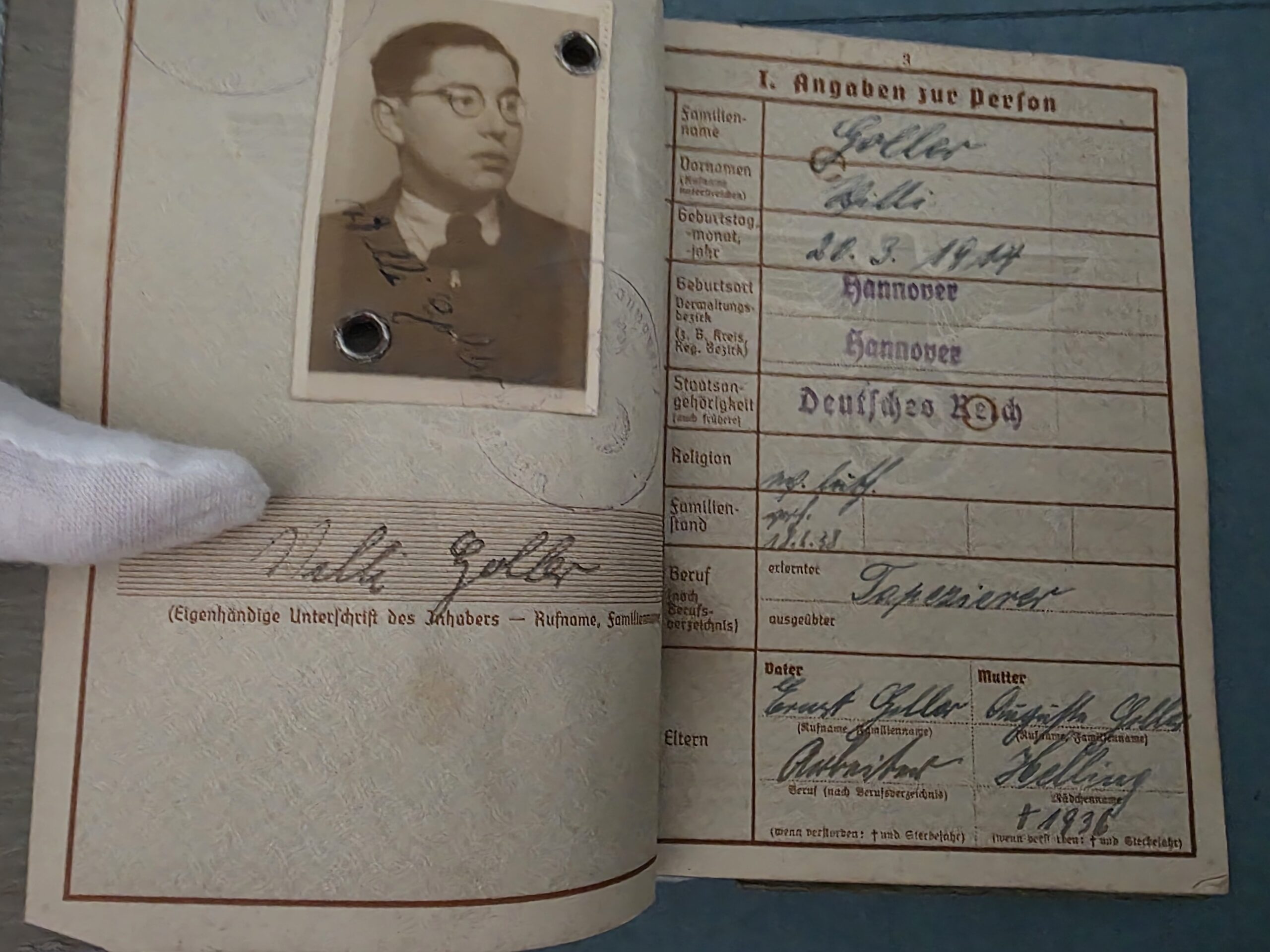
WWII German Wehrpass – Willi Geller, Hannover 1938–44
99,00 €
Interested in this item? Please contact us directly by email, WhatsApp or through the enquiry form below for availability or other information. Kindly include the item SKU/reference number in your message so we can identify the piece.
Description
Original WWII German Wehrpass of Willi Geller – Hannover 1938–1944
This original WWII German Wehrpass was issued to Willi Geller, a Hannover resident born in 1914, and preserves an interesting sequence of German military-administrative entries extending from the pre-war period into 1944.
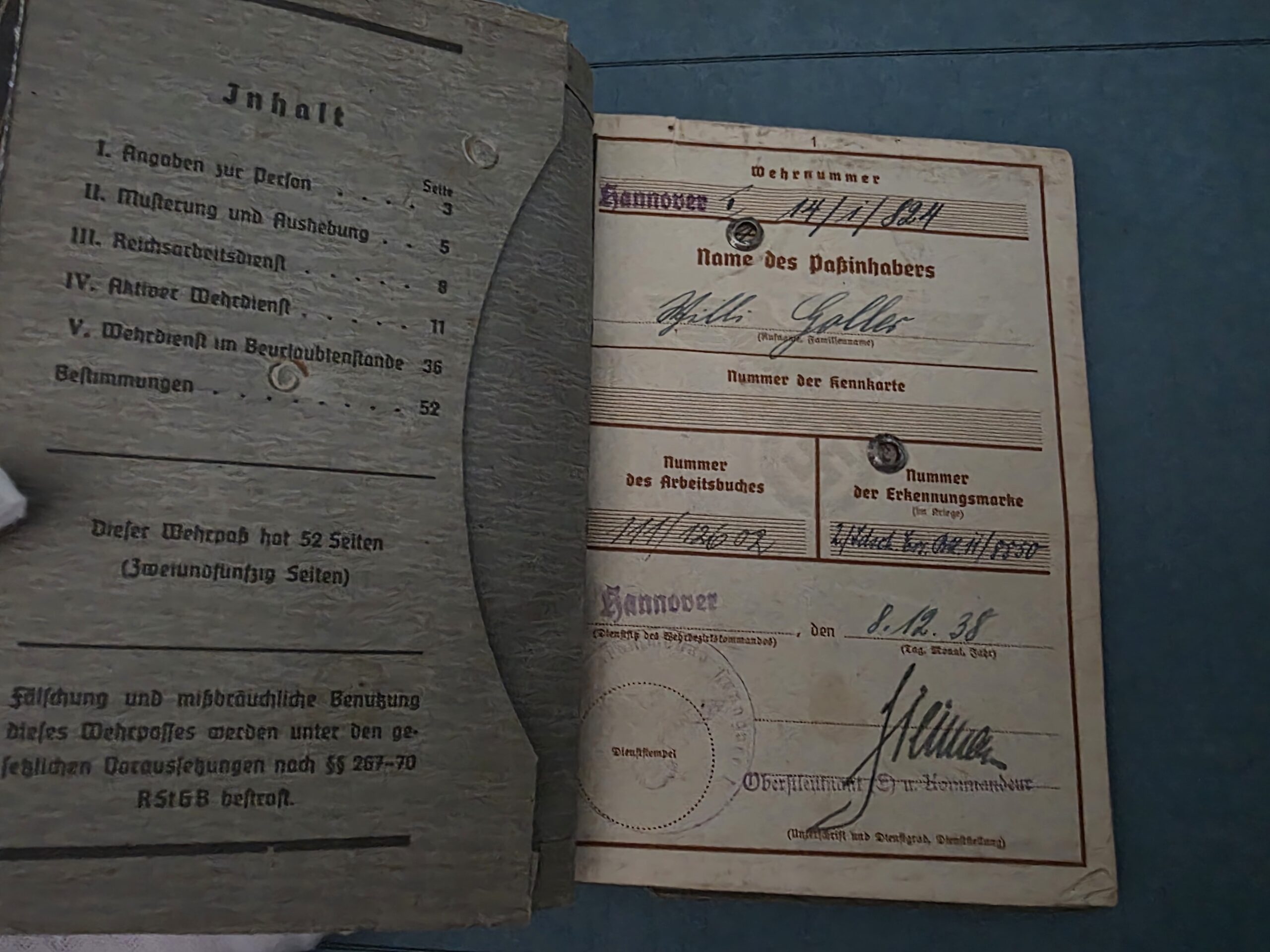
Issued in Hannover on 8 December 1938, the booklet retains Geller’s original identification photograph, handwritten personal information, signature, military-registration data and several official stamps relating to his later wartime classification.
Rather than documenting a conventional front-line career, this Wehrpass provides a particularly good example of the German system of conscription, medical classification and reserve administration. The surviving entries show that Geller was repeatedly reassessed during the Second World War and remained within the Ersatzreserve rather than being documented in the photographed pages as serving with an operational field formation.
For collectors interested in German military bureaucracy and individual personnel documents, this provides a different but historically valuable perspective on wartime manpower administration.
Willi Geller – Personal Details
The document identifies the holder as:
Willi Geller
His place of birth is recorded as Hannover, and his handwritten date of birth appears to read 20 March 1914.
The personal-information page records his nationality as Deutsches Reich and contains additional handwritten information concerning religion, marital status, occupation and family.
Geller’s profession is entered as:
Tapezierer
This German occupational term referred to a tradesman working with upholstery, wall coverings and interior decoration.
The facing page retains his original black-and-white portrait photograph. Geller is shown wearing civilian clothing, including jacket, shirt, tie and spectacles. His handwritten signature remains visible beneath the portrait.
The photograph and adjacent pages are crossed by period administrative stamps, helping connect the photograph directly to the military record.
Several circular perforations are also present. One passes through the lower portion of the photograph and another through the upper area. These are old filing or administrative holes and must be considered part of the document’s present condition.
Wehrpass Issued in Hannover in December 1938
The opening administrative page records:
Hannover – 8.12.38
placing the original issue of the document approximately nine months before the outbreak of the Second World War in Europe.
The same page records Geller’s Wehrnummer, the number of his Arbeitsbuch and information associated with his military identification record.
The Wehrpass formed part of Germany’s military personnel system. Unlike the Soldbuch carried by a serviceman during active duty, the Wehrpass served as the broader military record maintained for the individual and could contain personal information, medical examinations, reserve classification, training, military units, campaigns, promotions and decorations depending on the holder’s actual service.
The German Federal Archives continues to preserve military personnel records and associated documentation relating to members and registrants of the German armed forces up to 1945, and surviving named documents such as this Wehrpass can provide useful starting points for further biographical research.
Wehrbezirks-Kommando Hannover I
Later entries were made through:
Wehrbezirks-Kommando Hannover I (Stadt)
The Wehrbezirkskommandos were local recruiting and military-registration authorities responsible for such matters as registration, examination, classification and call-up.
Hannover formed the headquarters of Wehrkreis XI, one of the major military administrative districts of the Wehrmacht. Archival records identify Hannover as an important centre for the replacement and training system within Wehrkreis XI.
For this particular Wehrpass, however, the important point is the individual administrative history rather than the broader military organisation of Hannover.
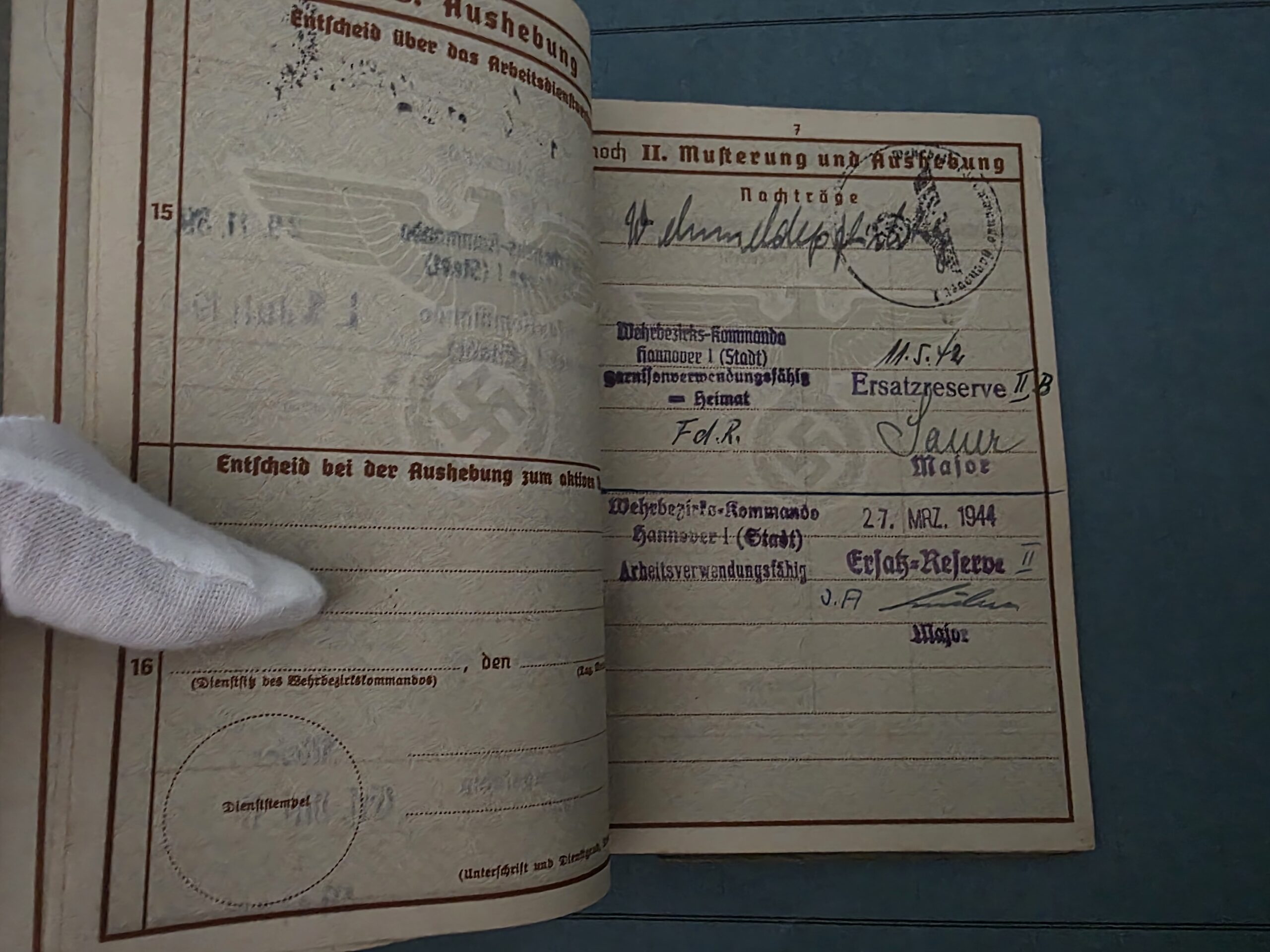
1942 Classification – Ersatzreserve II B
An entry dated:
11.5.42
is accompanied by the stamp:
garnisonsverwendungsfähig – Heimat
and the classification:
Ersatzreserve II B
This indicates that Geller’s military suitability was restricted rather than being assessed as fully fit for normal field service.
The broader category Ersatzreserve II is well documented. The official U.S. War Department handbook on German military forces, compiled from wartime intelligence and published in 1945, describes Ersatzreserve II as consisting of untrained men under 35 who were medically unfit or suitable only for restricted service.
Geller, born in 1914, was approximately 28 years old when this 1942 entry was made, making his placement in Ersatzreserve II consistent with the age structure of the category.
The additional “B” should be retained exactly as written in the document rather than expanded without stronger documentary evidence.
Reassessment in March 1944
A further significant entry appears on the same military examination section:
27. MRZ. 1944
This time the classification is:
Arbeitsverwendungsfähig
together with:
Ersatz-Reserve II
This represents another wartime reassessment of Geller’s suitability.
The 1945 U.S. War Department handbook records arbeitsverwendungsfähig as one of the German military fitness categories used from late 1943 and translates its practical meaning as fit only for labour service.
The 1944 entry therefore strengthens the interpretation that Geller remained within the military-liability system but was not considered suitable for ordinary unrestricted field service.
This is an important distinction.
The photographed pages do not establish that Willi Geller served with a combat unit, took part in a specific campaign or received military decorations. Those claims should therefore not be made unless other pages of the Wehrpass provide additional evidence.
A Wehrpass Focused on Military Classification Rather Than Combat Service
From a collecting perspective, Wehrpasses can vary enormously.
Some contain extensive campaigns, field formations, promotions, wounds and awards. Others primarily document the recruitment and reserve status of individuals who never developed a conventional military career.
This Willi Geller Wehrpass belongs primarily to the second category.
Its historical interest lies in the clear progression:
1938 – Wehrpass issued in Hannover
1942 – garnisonsverwendungsfähig / Ersatzreserve II B
1944 – arbeitsverwendungsfähig / Ersatz-Reserve II
This progression shows how one individual remained subject to repeated military review as Germany’s manpower requirements changed during the war.
The official German manpower system became progressively broader during the conflict. By the final years of the war, increasingly older men and those with restricted fitness classifications were repeatedly reassessed as military manpower became scarcer. The 1945 War Department handbook documents both this expansion of liability and the progressive lowering of medical standards after 1942.
That wider context makes even a non-combat Wehrpass useful as evidence of the pressures placed upon Germany’s military manpower system.
Collector’s Interest
The strongest features of this Willi Geller Wehrpass are:
- original WWII-period German military document;
- issued in Hannover in December 1938;
- named holder;
- original portrait photograph;
- original handwritten signature;
- personal and occupational information;
- Wehrbezirks-Kommando Hannover I markings;
- 1942 military classification;
- Ersatzreserve II B entry;
- further reassessment in March 1944;
- Arbeitsverwendungsfähig classification;
- visible wartime administrative stamps.
Unlike a blank or almost unused Wehrpass, it contains enough information to reconstruct part of Geller’s military-administrative history.
At the same time, it should not be marketed as a combat Wehrpass, Eastern Front document or specific-unit document unless further pages provide such evidence.
Its value lies instead in being a named and photographed Hannover Wehrpass documenting restricted wartime military fitness and reserve status.
Condition
The document remains in clearly used original condition.
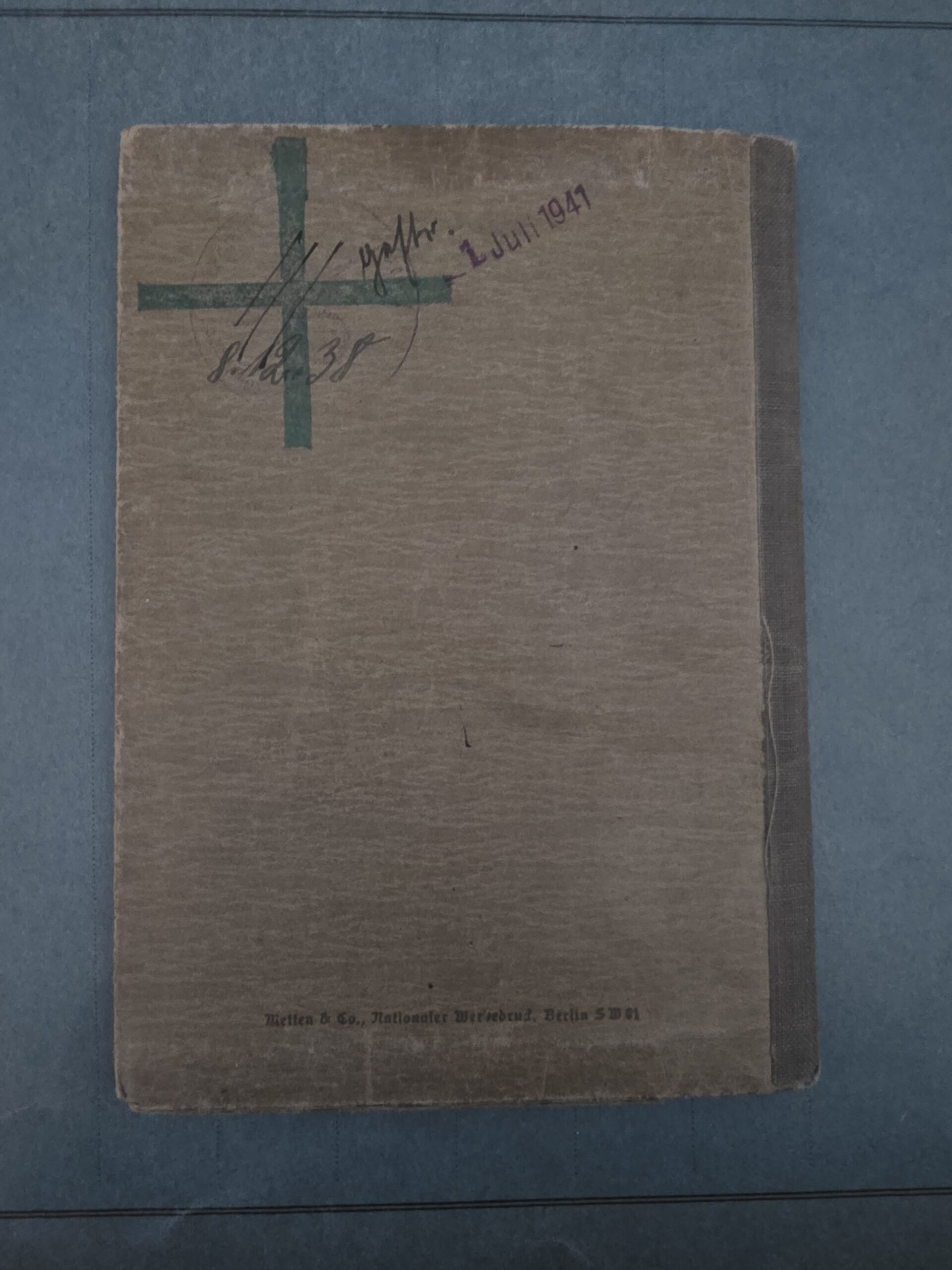
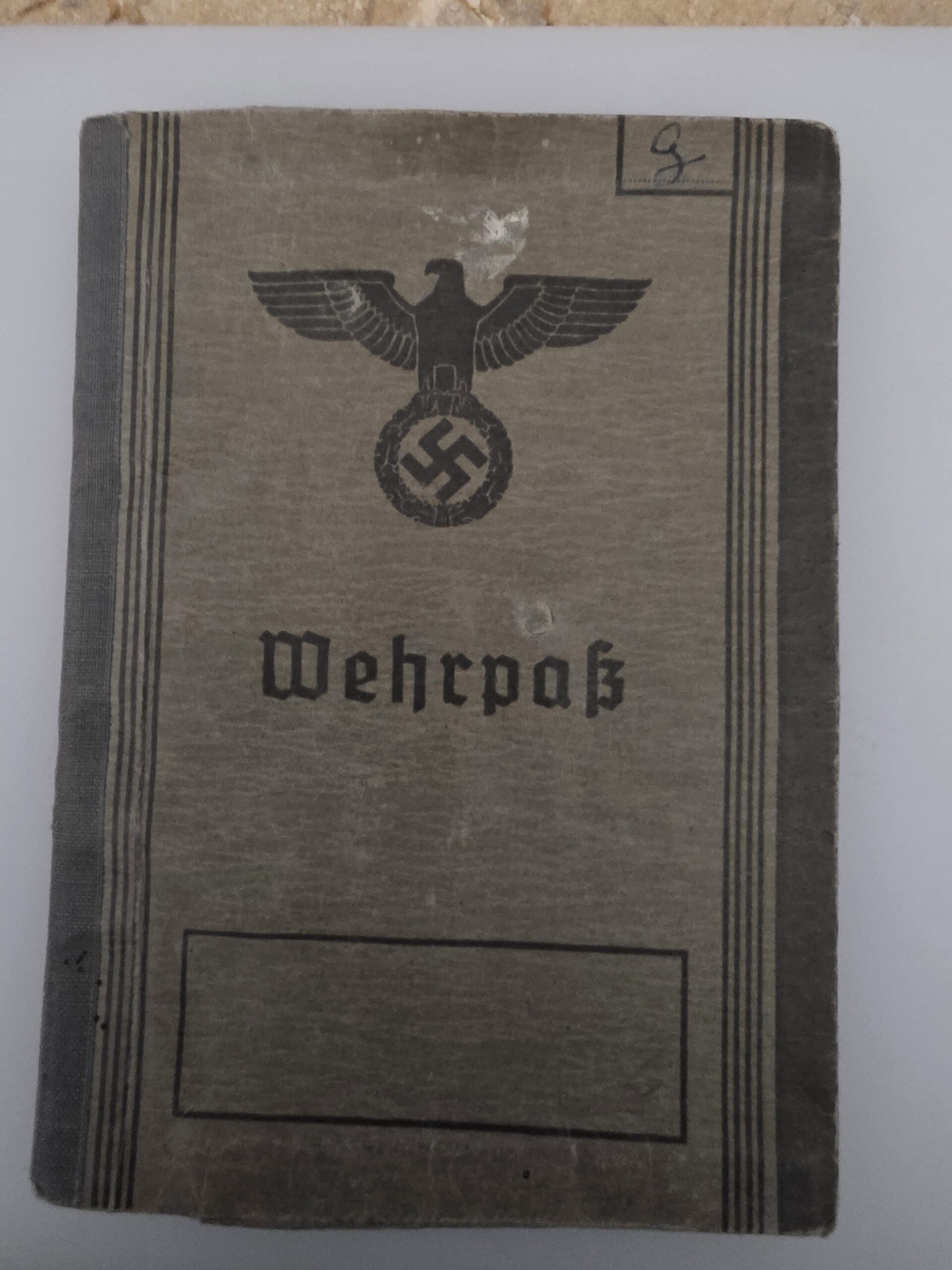
The front cover shows:
- general surface wear;
- age toning;
- rubbing;
- edge and corner wear;
- minor staining;
- marks and abrasions;
- wear to the spine and binding.
Internally, the pages show natural ageing and general handling marks.
Several old circular perforations pass through the booklet. Particularly noticeable are holes affecting the personal pages and the original identification photograph. The photograph remains largely complete and the holder’s face is unaffected, although one perforation passes through the lower portion of the image.
The handwritten information, principal stamps and military classifications remain legible.
The rear cover also retains an additional wartime marking dated 1 July 1941, together with handwriting and a green cross-shaped marking. No interpretation is assigned to this marking without additional supporting evidence.
The photographs supplied form an integral part of the condition description.
Authenticity
Original WWII-period German Wehrpass issued to Willi Geller.
The printing, binding, period portrait, handwriting, stamps, military-administrative format and physical ageing visible in the photographs are consistent with an original used Wehrpass.
No claim is made for combat service, decorations or membership of a specific field unit beyond what can be established directly from the photographed entries.
Historical Responsibility Notice
This original document is offered strictly for historical, documentary, educational, research and collecting purposes.
Autographs & Militaria has no political or ideological affiliation with, sympathy for or endorsement of National Socialism, the Nazi regime or the organisations and symbols represented by this historical material.
HISTORICAL CONTEXT
The Wehrpass formed part of Germany’s military registration and personnel system. German men were assigned to reserve categories according to age, previous training and physical suitability. The 1945 U.S. War Department handbook lists Ersatzreserve II for medically limited or unfit untrained men under 35 and records arbeitsverwendungsfähig as a later wartime category for men suitable only for labour-related military use.
COLLECTOR’S INTEREST
The main appeal of this example is its Hannover provenance, original portrait, 1938 issue date and repeated classifications in 1942 and 1944, providing an identifiable example of wartime German reserve administration.
CONDITION AND AUTHENTICITY NOTE
Original period Wehrpass showing substantial but honest age and handling. Filing holes affect several pages and the photograph. Cover wear, toning and marks are visible. Photograph, handwriting and principal wartime entries remain present.
HISTORICAL RESPONSIBILITY NOTICE
Offered solely as historical and documentary material. No ideological endorsement is intended or implied.
Is this an original WWII German Wehrpass?
Yes. It is an original period military record issued in Hannover in 1938 to Willi Geller and containing his portrait, signature and later wartime military classifications.
Who was Willi Geller?
The Wehrpass identifies Willi Geller as a man born in Hannover in 1914 and employed as a Tapezierer, an upholstery/interior-decoration tradesman.
Did Willi Geller serve in combat?
The pages supplied do not prove front-line combat service. Instead, they document restricted military suitability and Ersatzreserve status.
What does Ersatzreserve II mean?
A wartime U.S. War Department reference describes Ersatzreserve II as untrained men under 35 who were either unfit or suitable only for restricted military service.
What does Arbeitsverwendungsfähig mean?
It was a late-war military fitness classification. The contemporary Allied handbook describes it as fit only for labour service.
When was this Wehrpass issued?
The document is dated 8 December 1938 in Hannover.
What later dates appear in the document?
Important later classifications are dated 11 May 1942 and 27 March 1944.
Does the Wehrpass retain the original photograph?
Yes. The original portrait remains attached, although old filing holes pass through parts of the photograph and adjacent pages.
Additional information
| Availability | Available |
|---|
Only logged in customers who have purchased this product may leave a review.
Related products
German Document Archive 1911–1967 – DAF, University and Business Papers
Original price was: 249,00 €.199,00 €Current price is: 199,00 €.
20% Off
WWII German Wehrpass Group – 256th Infantry Division, Ostmedaille & Death Letter
590,00 €
WWII German Document Collection – U-Boat Training, DAF & Arbeitsbuch Archive
Original price was: 490,00 €.440,00 €Current price is: 440,00 €.
10% Off
WWII German Document Archive 1938–1945 – Wehrmacht, IDs & Ration Papers
Original price was: 275,00 €.240,00 €Current price is: 240,00 €.
13% Off
Reviews
There are no reviews yet.