The Collector’s Encyclopaedia · Decorations · Wehrmacht awards
War Merit Cross: History, Grades and Collector’s Guide
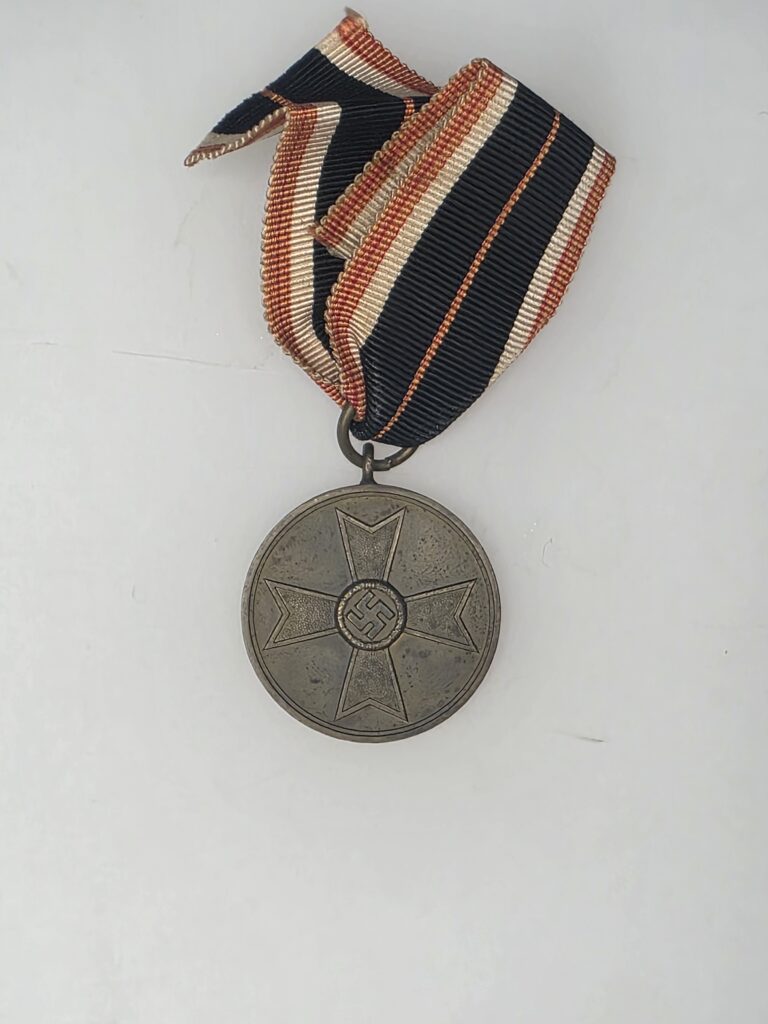
| Instituted | 18 October 1939 |
|---|---|
| Grades | Second Class; First Class; each with or without swords; Knight’s Cross of the War Merit Cross; War Merit Medal (lowest step) |
| Awarded to | Soldiers and civilians |
| Typical paperwork | Printed award documents; entries in service books or workplace records |
| In the collection | 6 pieces currently available (see below) |
The War Merit Cross recognised service to the war effort that did not qualify for the Iron Cross. It was awarded in large numbers to soldiers and civilians alike, which makes it one of the most common decorations of the period and an accessible starting point for collectors.
What Was the War Merit Cross?
Hitler instituted the War Merit Cross on 18 October 1939. It came in Second and First Class, each with or without swords. The version with swords was given for service under enemy fire that fell short of combat bravery; the version without swords for service away from the front, including on the home front. Above them stood the Knight’s Cross of the War Merit Cross, and below them the War Merit Medal for civilians.
Who Awarded It, and Which Documents Go With It?
Award documents were printed forms signed by the authorising officer or official; facsimile signatures are common on civilian awards. Military awards should appear in the Wehrpass. See award documents and War Merit Medal.
What Should Collectors Watch For?
- Materials changed during the war; later crosses were often made of zinc, which is prone to corrosion.
- Swords or no swords must match the document.
- Reproductions exist, especially of the First Class and the Knight’s Cross grade.
Legal note. In Germany the 1957 Orders and Decorations Act allows Second World War awards to be worn only without National Socialist emblems, which is why “1957 pattern” versions without the swastika exist. The public display of Nazi symbols is restricted in Germany, Austria and several other countries. Owning, buying and selling original decorations as historical objects is treated differently from country to country, so check the law where you live and where you ship.
Collector’s Note
The War Merit Cross is often undervalued. Its documents, though, can tell the story of factory workers, railwaymen and air-raid wardens that other awards leave out.
Related Entries and Pieces
Pieces in the Collection
Browse the full Collector’s Encyclopaedia →
Frequently Asked Questions
When was the War Merit Cross instituted?
On 18 October 1939.
What do the swords mean?
Swords mark service under enemy fire; crosses without swords were for service away from combat.
Could civilians receive the War Merit Cross?
Yes, mainly without swords.
Historical Responsibility Notice: this entry documents historical figures and artefacts of the National Socialist period for collecting, preservation, education and research. It does not endorse or glorify any ideology, and it is written in memory of the victims of the regime.
References & Further Reading
- Stadtmuseum Lippstadt, Kriegsverdienstkreuz mit Schwertern, 2. Klasse (inv. 8167), museum-digital: westfalen.
- United States Holocaust Memorial Museum, War Merit Cross Second Class with swords (Jahns/Berther family collection).
- Federal Republic of Germany (1957, as amended) Gesetz über Titel, Orden und Ehrenzeichen (OrdenG), §§ 6 and 15, Bundesministerium der Justiz / gesetze-im-internet.de.