The Collector’s Encyclopaedia · Signatories · Soviet leadership
Nikita Khrushchev (1894–1971): Signature, Documents and Historical Profile
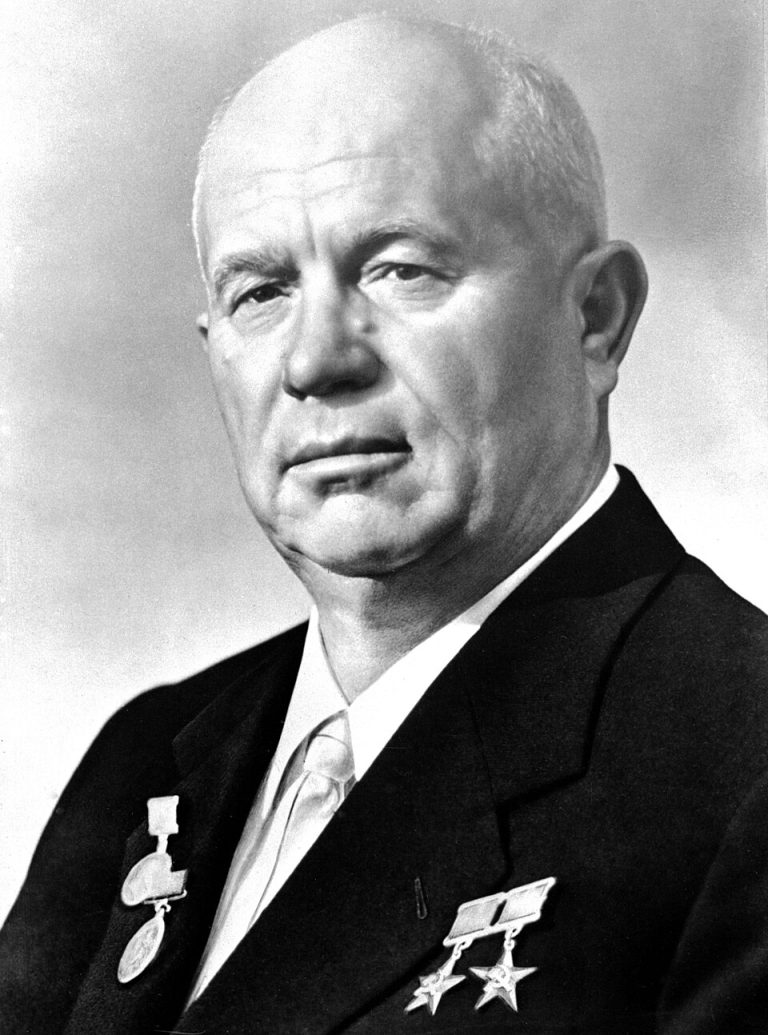
| Born | 17 April 1894 (5 April Old Style), Kalinovka |
|---|---|
| Died | 11 September 1971, Moscow |
| Key offices | First Secretary of the Communist Party (1953–1964); Premier (1958–1964) |
| Documents bearing his name | Party and state documents, correspondence, signed photographs |
| In the collection | No pieces currently available |
Nikita Khrushchev led the Soviet Union after Stalin, denounced his crimes and steered the country through the most dangerous years of the Cold War. His signature appears on party and state documents of the 1950s and early 1960s.
Who Was Nikita Khrushchev?
Khrushchev was born in Kalinovka in 1894. He became First Secretary of the Communist Party in 1953 and Premier in 1958, leading the policy of de-Stalinisation and “peaceful coexistence” with the West. He was removed from power in 1964 and died in Moscow in 1971.
What Documents Bear Khrushchev’s Signature?
His signature appears on party and state documents, correspondence and signed photographs. See original signature or facsimile.
Soviet documents bring their own checks. Signatures are usually in Cyrillic, and official papers combine typed text, printed forms, ink signatures and round seals. A collector should read the Russian text, compare the office named with the date, and remember that Soviet state papers were often reproduced, so many documents carry a printed or stamped signature rather than ink.
What Should Collectors Watch For?
- Read the Cyrillic text and check the office against the date.
- Distinguish ink signatures from printed or stamped ones.
- Soviet-era reproductions and later commemorative items are common.
- Ask for documented provenance on any important piece.
Legacy
Khrushchev had himself taken part in the repression of the Stalin years before denouncing it. His period in office included the suppression of the Hungarian uprising in 1956 and the Cuban Missile Crisis in 1962.
Collector’s Note
Khrushchev documents bridge the war generation and the Cold War. I find letters from his years in power especially revealing of the change in Soviet tone after Stalin.
Related Entries and Pieces
Browse the full Collector’s Encyclopaedia →
Frequently Asked Questions
When was Khrushchev First Secretary?
From 1953 to 1964.
What was de-Stalinisation?
Khrushchev’s policy of denouncing Stalin’s crimes and loosening repression.
When did Khrushchev die?
On 11 September 1971.
Historical Responsibility Notice: this entry documents historical figures and artefacts of the Soviet period for collecting, preservation, education and research. It does not endorse or glorify any ideology, and it is written in memory of the victims of political repression and war.
References & Further Reading
- Encyclopaedia Britannica, Nikita Khrushchev.