
The Collector’s Encyclopaedia · Documents · Civil papers
Ahnenpass: History, Contents and Collector’s Guide
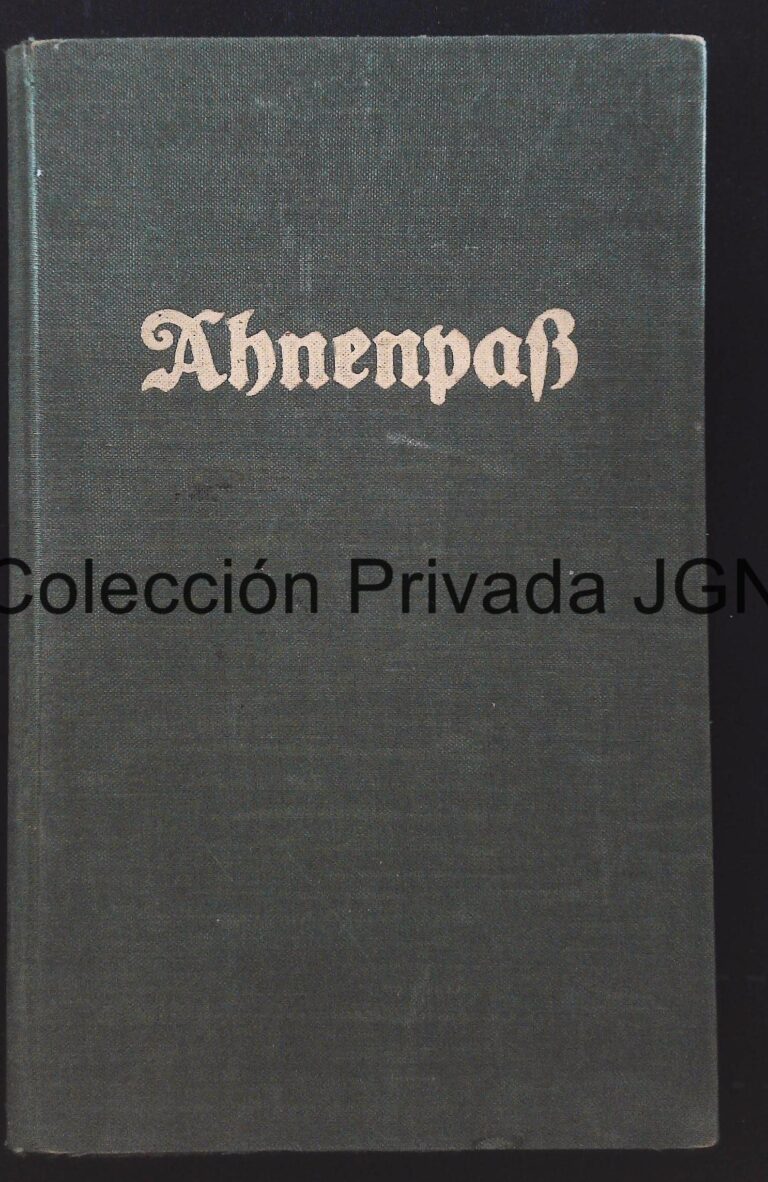
| Purpose | Proof of “Aryan” descent (Ariernachweis) |
|---|---|
| Legal background | The Nuremberg Laws of 1935, which limited Reich citizenship to people of “German or related blood” |
| Published by | Among others, the Reich Association of Registrars (Verlag für Standesamtswesen, Berlin) |
| Certified by | Registry offices and parish offices |
| In the collection | 2 pieces currently available (see below) |
The Ahnenpass recorded a person’s ancestors to prove “Aryan” descent. It is a common document today, but it embodies the racial ideology at the heart of the regime and its exclusion of Jews from German society.
What Is a Ahnenpass?
According to the Deutsches Historisches Museum, every citizen of the Reich had to provide proof of descent, and a complete Ahnenpass certified by registry or church offices could replace the birth, baptism and marriage certificates otherwise required. The legal background was the Nuremberg Laws, which tied full citizenship to “German or related” descent. The DHM’s example, published in 1940 by the Reich Association of Registrars, has 160 pages with handwritten entries and photographs.
Who Issued It, and Who Signed It?
The booklet was bought and filled in privately; each entry was then certified with the stamp and signature of the registry office or parish that held the original record.
What Should Collectors Watch For?
- Certification: entries without stamps and signatures were not valid.
- Personal data of real families: handle with discretion.
- Value lies in complete, certified examples with photographs.
Collector’s Note
Genealogists still use these booklets as family records. For me, they are also a lesson in how bureaucracy turned ancestry into a criterion of belonging.
Related Entries and Pieces
Pieces in the Collection
Browse the full Collector’s Encyclopaedia →
Frequently Asked Questions
What was the Ahnenpass used for?
To prove “Aryan” descent under Nazi racial laws.
Who certified the entries?
Registry offices and parish offices.
Is the Ahnenpass rare?
No, but complete certified examples with photographs are more interesting.
Historical Responsibility Notice: this entry documents historical figures and artefacts of the National Socialist period for collecting, preservation, education and research. It does not endorse or glorify any ideology, and it is written in memory of the victims of the regime.
References & Further Reading
- Deutsches Historisches Museum, Der Ahnenpaß, 1940 (DO 86/117 I), exhibition “Lebensstationen in Deutschland 1900 bis 1993”.