The Collector’s Encyclopaedia · Signatories · Wehrmacht
Claus von Stauffenberg (1907–1944): Signature, Documents and Historical Profile
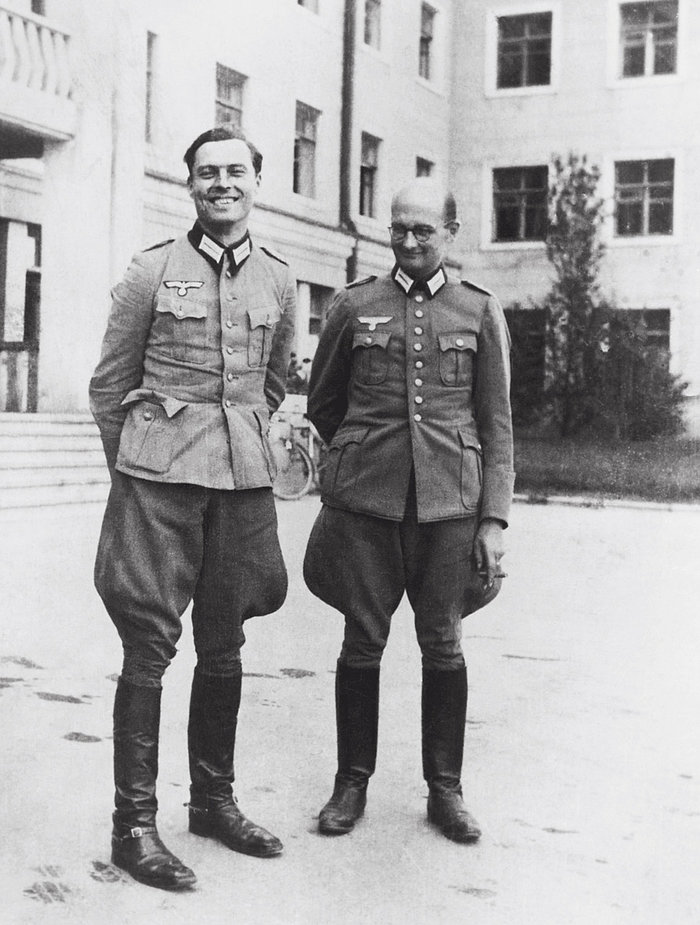
| Born | 15 November 1907, Jettingen |
|---|---|
| Died | 20/21 July 1944, Berlin, Bendlerblock (executed) |
| Key posts | Chief of staff, General Army Office (October 1943); chief of staff to the Commander of the Replacement Army (1 June 1944) |
| Documents bearing his name | Military documents and correspondence; very rare personal items |
| In the collection | No pieces currently available |
Claus Schenk Graf von Stauffenberg placed the bomb in Hitler’s headquarters on 20 July 1944 and was shot the same night in Berlin. He stands for the military resistance to Hitler. Documents with his signature are rare and highly sought after, which also makes them a target for forgers.
Who Was Claus von Stauffenberg?
Stauffenberg was born in Jettingen in 1907. In 1943, serving with the 10th Panzer Division in Africa, he was badly wounded in an air attack and lost an eye, his right hand and two fingers of his left hand. In October 1943 he became chief of staff of the General Army Office in Berlin, and on 1 June 1944 chief of staff to the Commander of the Replacement Army, which gave him access to Hitler’s briefings.
What Documents Bear Stauffenberg’s Signature?
His signature appears on military documents and correspondence. After his wounding he wrote with his left hand, so signatures before and after 1943 differ, an important point for any examination. Any Stauffenberg item needs exceptional provenance. See original signature or facsimile.
What Should Collectors Watch For?
- Signatures after his wounding in 1943 were written with his left hand.
- Rare and sought after: forgeries are a real risk.
- Demand documented provenance.
20 July 1944
On 20 July 1944 the bomb exploded at about 12:42 in the briefing room at the Wolfsschanze near Rastenburg, but Hitler survived. Stauffenberg was shot in the courtyard of the Bendlerblock in Berlin in the night of 20/21 July 1944.
Collector’s Note
Stauffenberg’s change from right to left hand after 1943 is exactly the kind of fact a handwriting examiner must know. A “late” signature that looks right-handed should prompt serious questions.
Related Entries and Pieces
Browse the full Collector’s Encyclopaedia →
Frequently Asked Questions
Why do Stauffenberg’s signatures change?
He lost his right hand in 1943 and afterwards wrote with his left.
When did the attempt on Hitler take place?
On 20 July 1944 at the Wolfsschanze near Rastenburg.
How did Stauffenberg die?
He was shot in the Bendlerblock in Berlin in the night of 20/21 July 1944.
Historical Responsibility Notice: this entry documents historical figures and artefacts of the National Socialist period for collecting, preservation, education and research. It does not endorse or glorify any ideology, and it is written in memory of the victims of the regime.
References & Further Reading
- Deutsches Historisches Museum, LeMO – Lebendiges Museum Online, Claus Schenk Graf von Stauffenberg 1907–1944 (S. Eckelmann; last updated 2014).