The Collector’s Encyclopaedia · Signatories · Wehrmacht
Wilhelm Keitel (1882–1946): Signature, Documents and Historical Profile
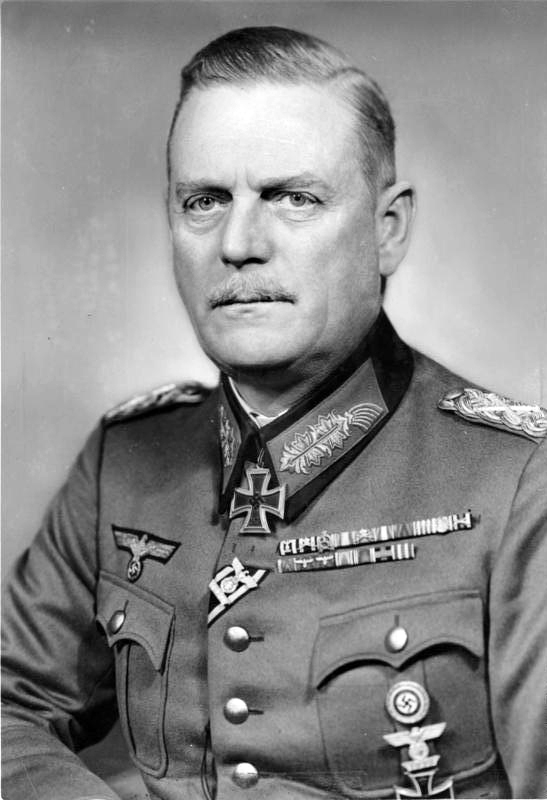
| Born | 22 September 1882, Helmscherode near Gandersheim |
|---|---|
| Died | 16 October 1946, Nuremberg (executed) |
| Key offices | Chief of the Armed Forces High Command (OKW) from February 1938; Generalfeldmarschall (1940) |
| Documents bearing his name | OKW orders and decrees, countersignatures on military appointments, correspondence |
| In the collection | No pieces currently available |
As head of the Armed Forces High Command, Wilhelm Keitel signed or countersigned a vast number of military orders, including some of the most criminal of the war. His signature is therefore common on documents of the Wehrmacht’s highest level, and it often appears beside Hitler’s.
Who Was Wilhelm Keitel?
Keitel was born in 1882 near Gandersheim. After the Blomberg–Fritsch crisis of early 1938 he was placed at the head of the new Armed Forces High Command (OKW). He was promoted to Generalfeldmarschall in 1940. On 8 May 1945 he signed the Wehrmacht’s unconditional surrender in Berlin-Karlshorst.
What Documents Bear Keitel’s Signature?
Keitel signed OKW orders and decrees and countersigned military documents issued in Hitler’s name. His signature can therefore appear alongside Hitler’s on appointment papers and orders. Many orders survive as typed copies. See original signature or facsimile and appointment certificates.
What Should Collectors Watch For?
- OKW documents cannot predate February 1938.
- Rank: Generalfeldmarschall from 1940.
- Distinguish ink signatures from typed copies of orders.
Responsibility and Fate
Keitel issued or passed on orders that violated the laws of war, including the Commissar Order of 6 June 1941 and the “Night and Fog” decree of 7 December 1941. The International Military Tribunal sentenced him to death, and he was hanged in Nuremberg on 16 October 1946.
Collector’s Note
Keitel’s countersignature is a useful check on Hitler documents of the military sphere. When the two signatures appear together, both must fit the date, the office and the document type.
Related Entries and Pieces
Browse the full Collector’s Encyclopaedia →
Frequently Asked Questions
When did Keitel become chief of the OKW?
In early 1938, after the Blomberg–Fritsch crisis.
Did Keitel sign the German surrender?
Yes, in Berlin-Karlshorst on 8 May 1945.
What happened to Keitel?
He was sentenced to death at Nuremberg and hanged on 16 October 1946.
Historical Responsibility Notice: this entry documents historical figures and artefacts of the National Socialist period for collecting, preservation, education and research. It does not endorse or glorify any ideology, and it is written in memory of the victims of the regime.
References & Further Reading
- Vogelsang, T. (1977) ‘Keitel, Wilhelm’, Neue Deutsche Biographie, 11, pp. 412–413.