The Collector’s Encyclopaedia · Signatories · Government & Party
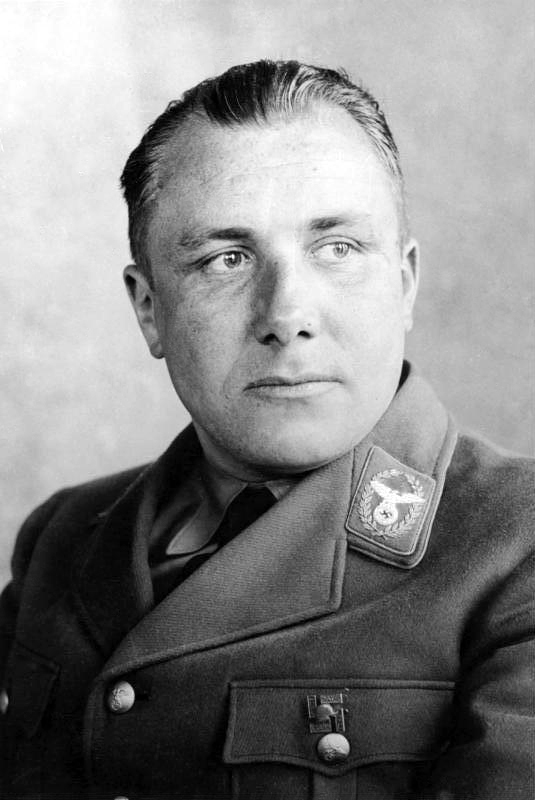
Martin Bormann (1900–1945): Signature, Documents and Historical Profile
| Born | 17 June 1900 |
|---|---|
| Died | 1945, Berlin, during the attempted breakout from the bunker; remains identified in 1973 |
| Key offices | Chief of staff to Hess and Reichsleiter (1933); Head of the Party Chancellery (12 May 1941); Secretary to the Führer (April 1943) |
| Documents bearing his name | Party Chancellery circulars and correspondence, party administration papers |
| In the collection | 1 piece currently available (see below) |
Martin Bormann rarely appeared in public, but by the end of the war he controlled access to Hitler and the machinery of the Nazi Party. His power rested on paper: circulars, directives and correspondence that passed through his office. That makes his documents important to collectors who want to understand how the party really governed.
Who Was Martin Bormann?
Bormann was born in 1900 and joined the Nazi Party in 1927. In July 1933 he became chief of staff to Rudolf Hess and a Reichsleiter. After Hess’s flight to Scotland he took over the office, renamed the Party Chancellery, on 12 May 1941, with the powers of a Reich minister. From April 1943 he was also Secretary to the Führer.
What Documents Bear Bormann’s Signature?
Most surviving material comes from party administration: circulars, directives and correspondence. Many circulars were distributed as typed or printed copies, so original ink signatures are much less common than documents bearing his name. Check the office in the letterhead against the date: the “Partei-Kanzlei” did not exist before May 1941. See original signature or facsimile.
What Should Collectors Watch For?
- Office and date: “Leiter der Partei-Kanzlei” from May 1941, “Sekretär des Führers” from April 1943.
- Many circulars are reproductions, not signed originals.
- Personal items attributed to Bormann require exceptional provenance.
Responsibility and Fate
Bormann drove the radicalisation of the party’s policies, including measures against Jews and the churches, and mobilised the party for the Volkssturm in 1944. He left the Berlin bunker on 1 May 1945 in an attempted breakout and disappeared. On 1 October 1946 the Nuremberg tribunal sentenced him to death in absentia. Remains found in Berlin were identified as his in 1973.
Collector’s Note
Bormann’s documents are rarely glamorous, but they are revealing. When a Party Chancellery circular is genuine, its file references, distribution list and letterhead form a coherent bureaucratic whole. That coherence is what I look for first.
Related Entries and Pieces
Pieces in the Collection
Browse the full Collector’s Encyclopaedia →
Frequently Asked Questions
When did Bormann head the Party Chancellery?
From 12 May 1941.
What happened to Martin Bormann?
He disappeared during the breakout from the Berlin bunker on 1 May 1945. Remains found in Berlin were identified as his in 1973.
Was Bormann tried at Nuremberg?
Yes, in absentia. He was sentenced to death on 1 October 1946.
Historical Responsibility Notice: this entry documents historical figures and artefacts of the National Socialist period for collecting, preservation, education and research. It does not endorse or glorify any ideology, and it is written in memory of the victims of the regime.
References & Further Reading
- Deutsches Historisches Museum, LeMO – Lebendiges Museum Online, Martin Bormann 1900–1945 (S. Eckelmann; last updated 2021).
- ‘Bormann, Martin’, Deutsche Biographie.