Products on sale
German Document Archive 1911–1967 – DAF, University and Business Papers
Original price was: 249,00 €.199,00 €Current price is: 199,00 €.
WWII German Wehrpass Group – 256th Infantry Division, Ostmedaille & Death Letter
590,00 €

WWII German Document Collection – U-Boat Training, DAF & Arbeitsbuch Archive
Original price was: 490,00 €.440,00 €Current price is: 440,00 €.
WWII German Document Archive 1938–1945 – Wehrmacht, IDs & Ration Papers
Original price was: 275,00 €.240,00 €Current price is: 240,00 €.







WWII German Document Collection – Rare 10-Piece Saxony Archive
Original price was: 349,00 €.290,00 €Current price is: 290,00 €.
17% Off
Interested in this item? Please contact us directly by email, WhatsApp or through the enquiry form below for availability or other information. Kindly include the item SKU/reference number in your message so we can identify the piece.
Description
WWII German Document Collection – 10-Piece Family Archive from Saxony
This WWII German document collection is an unusual group of 10 original documents belonging to a family from Saxony, with material spanning more than half a century from 1909 to 1963.
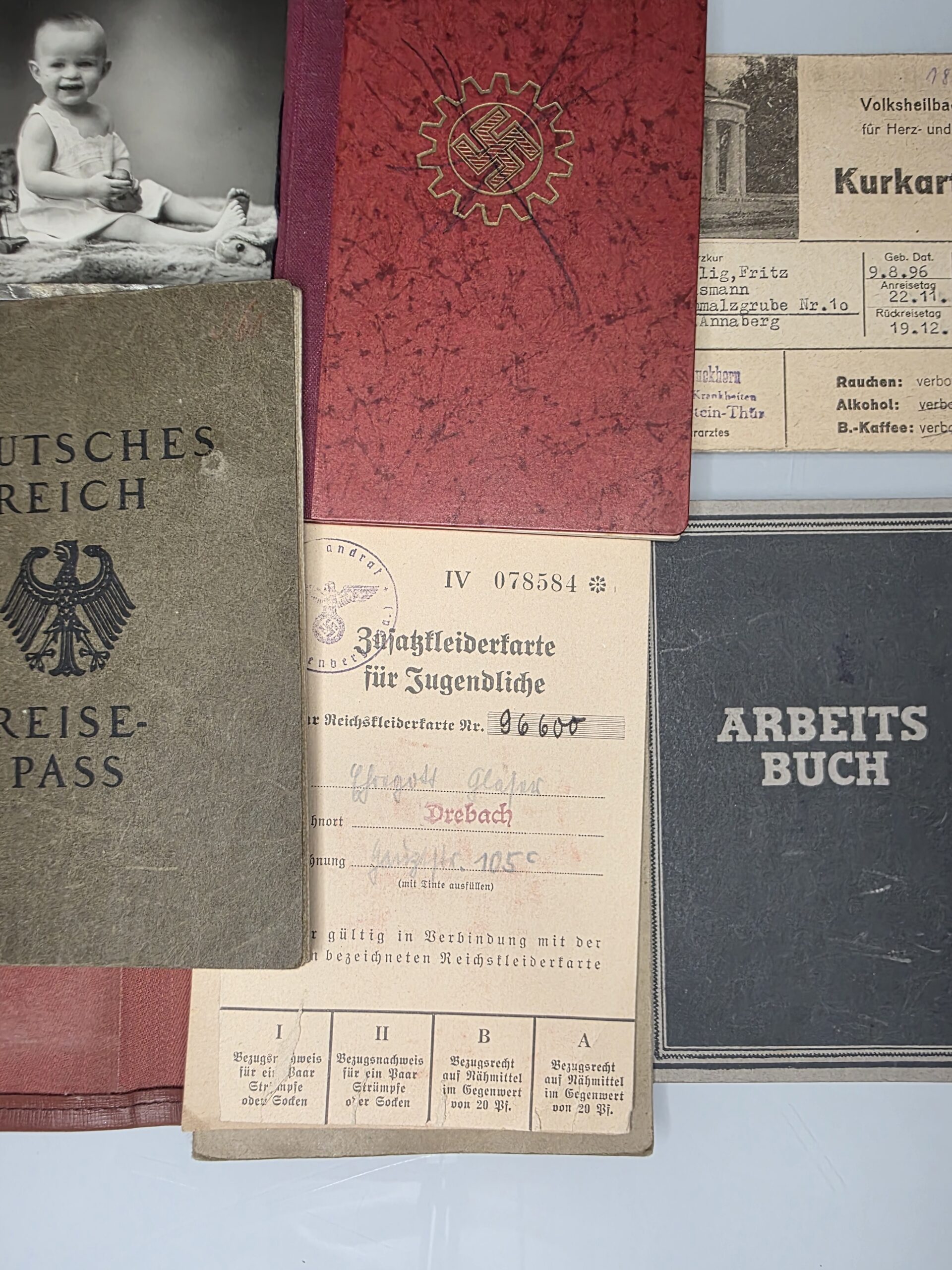
Although the complete archive extends beyond the Second World War, its principal collector interest lies in the substantial group of documentation from the 1930s, Third Reich and WWII period, including a Deutsches Reich Reisepass, Deutsche Arbeitsfront membership documentation, labour records, wartime clothing-related paperwork and personal identification material.
Several documents relate to Fritz Georg Hillig and the Hillig family of Schmalzgrube in the Annaberg district of Saxony, giving the collection something particularly valuable in documentary collecting: historical continuity.
Rather than ten unrelated papers assembled later, this is presented as a surviving family group showing different aspects of German civilian life before, during and after the Second World War.
Contents of This WWII German Document Collection
The archive contains 10 pieces in total, including, according to the original catalogue description and the documents visible in the photographs:
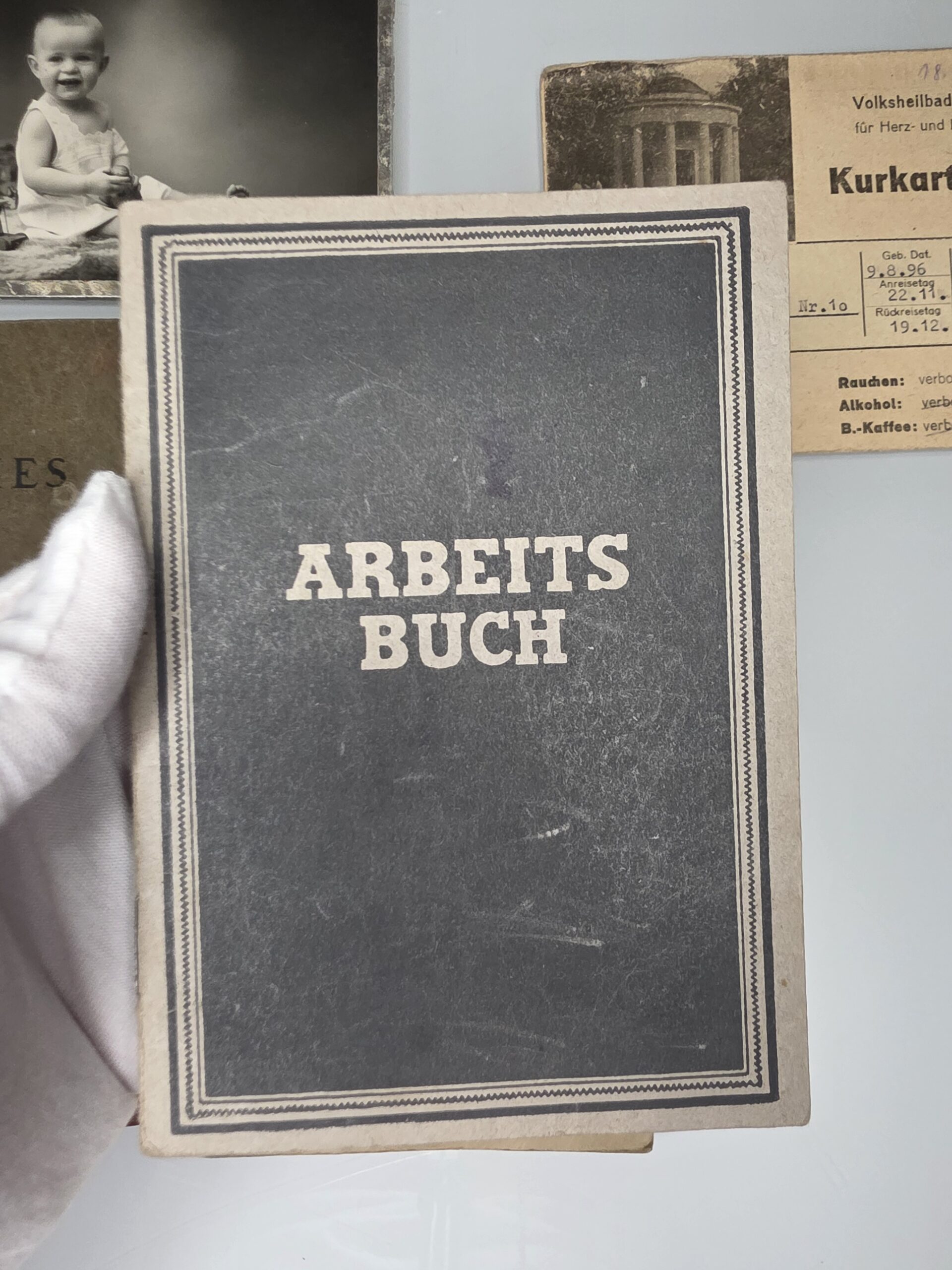
- an Arbeitsbuch issued in Grumbach in 1909;
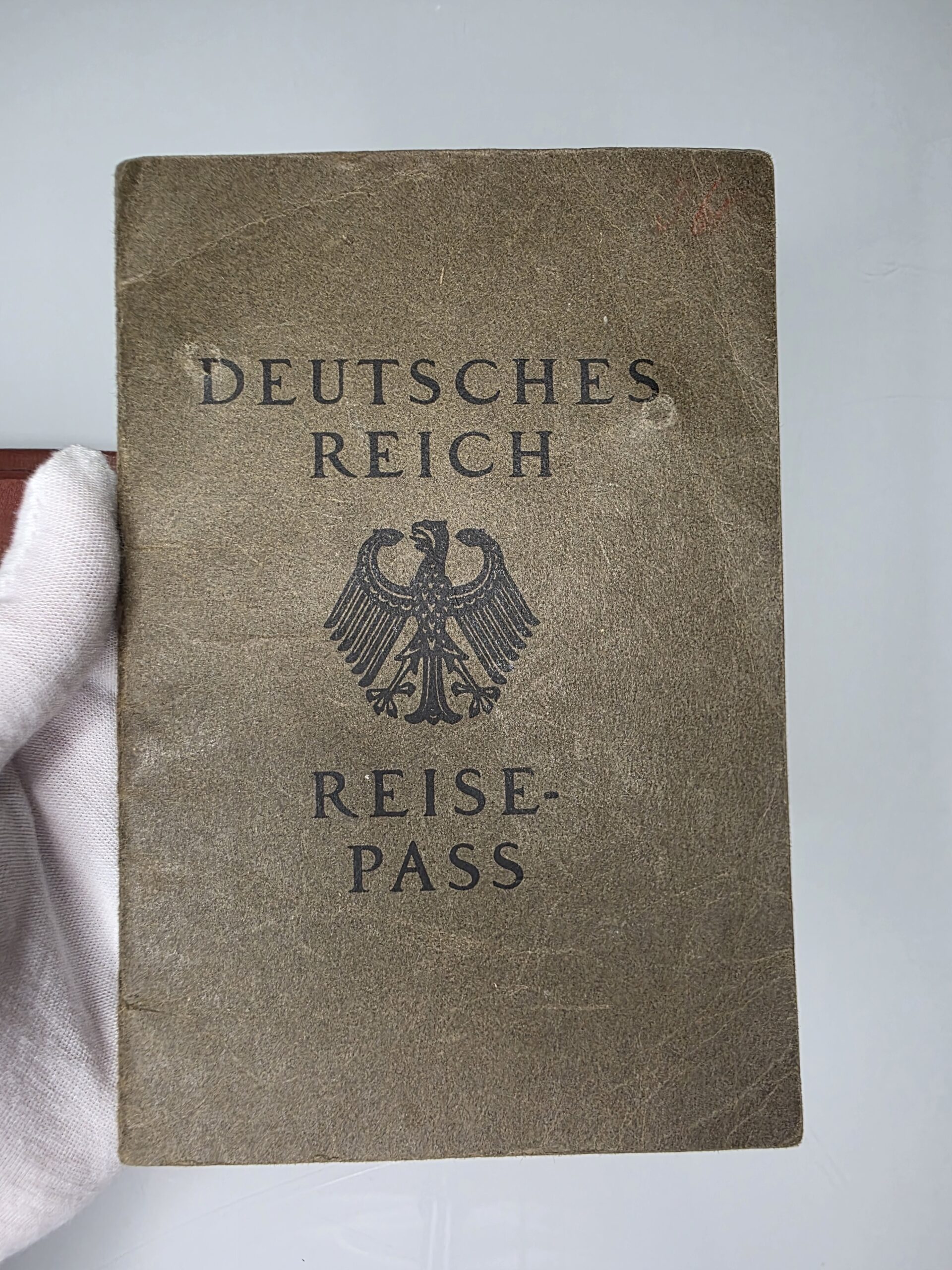
- a Deutsches Reich Reisepass, issued during the Third Reich period;
- a Deutsche Arbeitsfront membership book, issued in Annaberg in 1936;
- period clothing and ration-related documentation;
- an Ehrendienst-Einsatzkarte connected with voluntary labour activity;
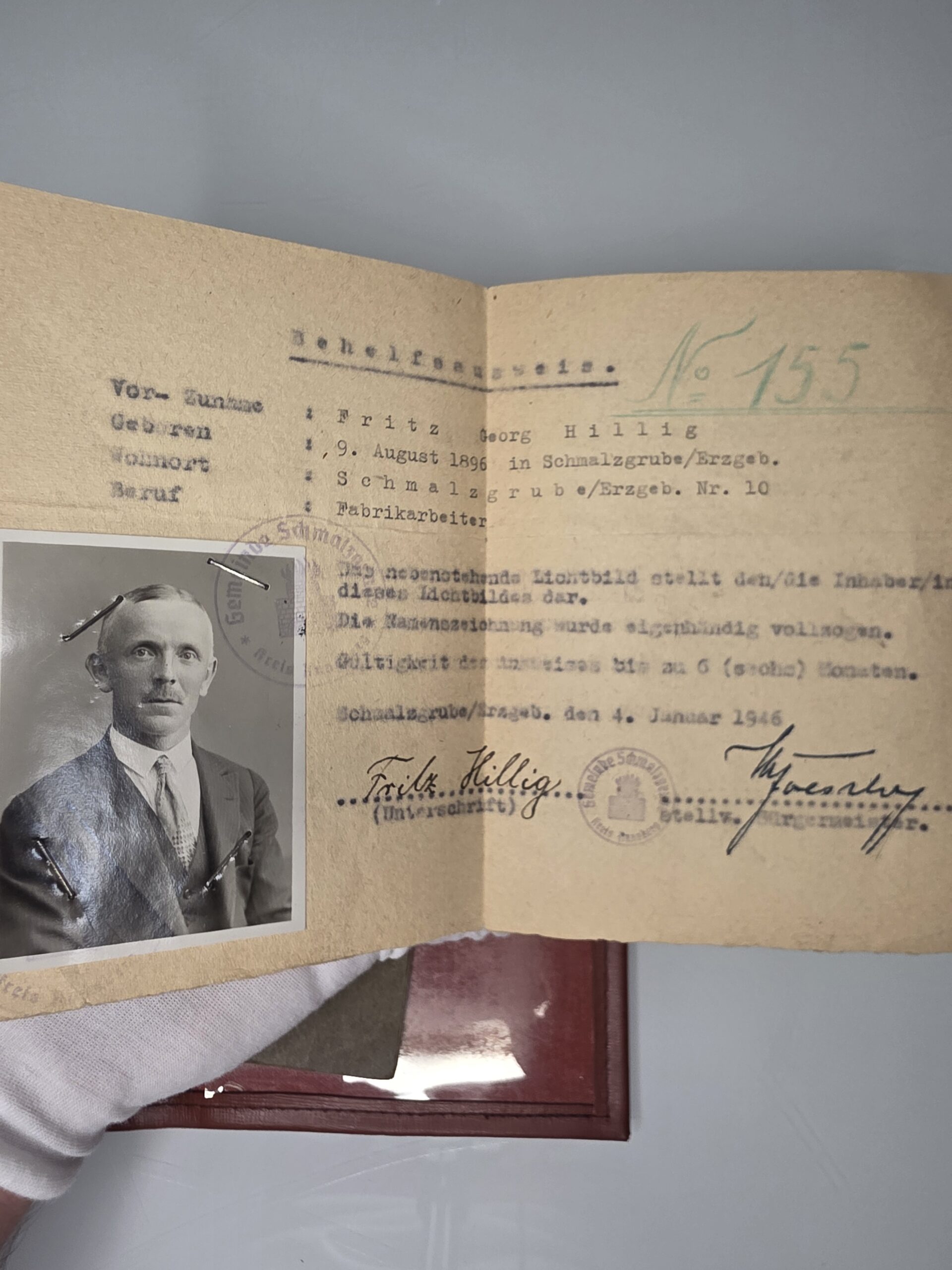
- a 1946 provisional identity document with original photograph;
- a later Arbeitsbuch;
- associated family and administrative documentation;
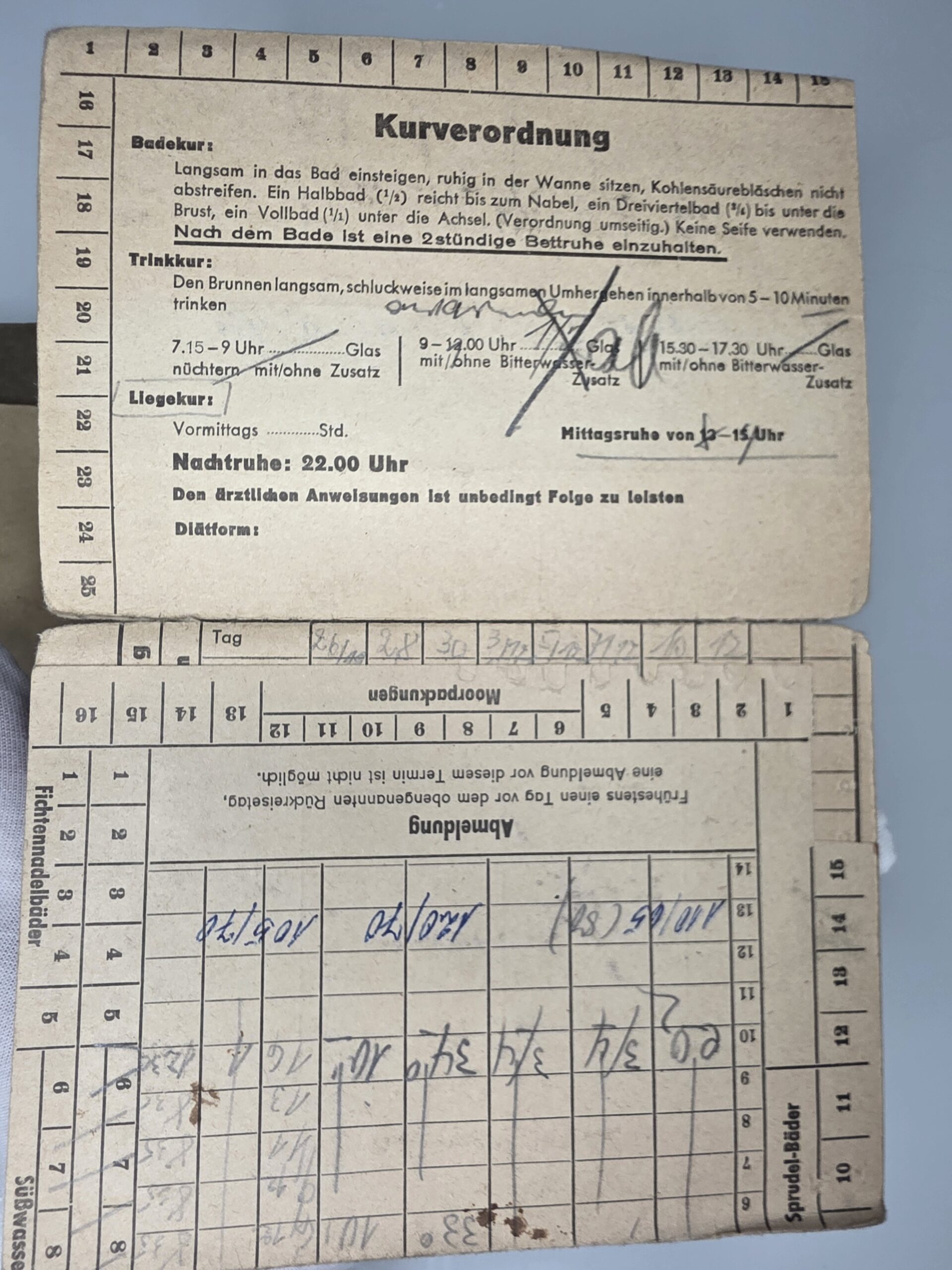
- a 1963 Volksheilbad Liebenstein Kurkarte;
- further related material preserved with the family archive.
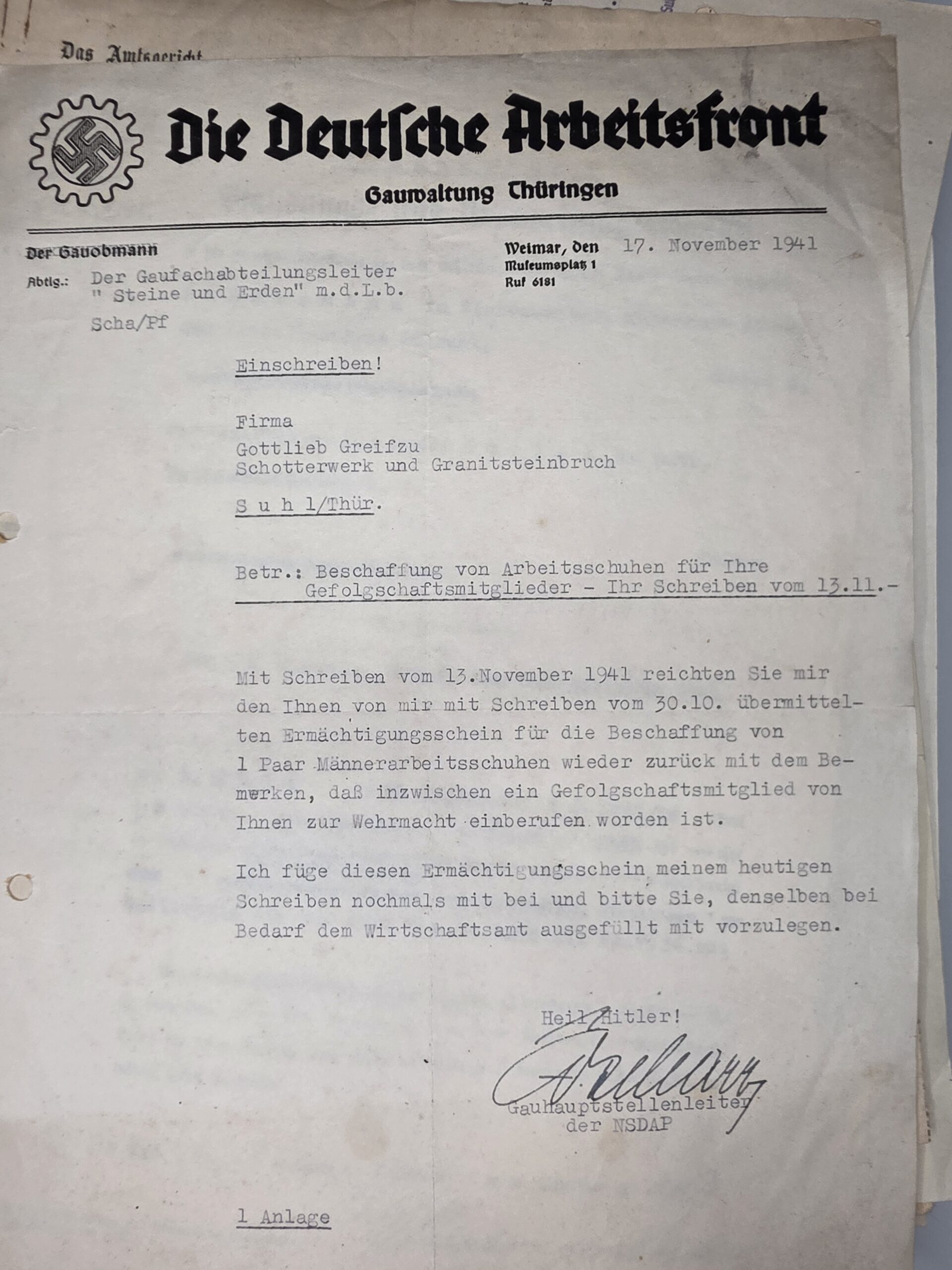
The photographs supplied should be considered an essential part of the description, as they show the individual documents, stamps, handwritten entries, photographs and condition.
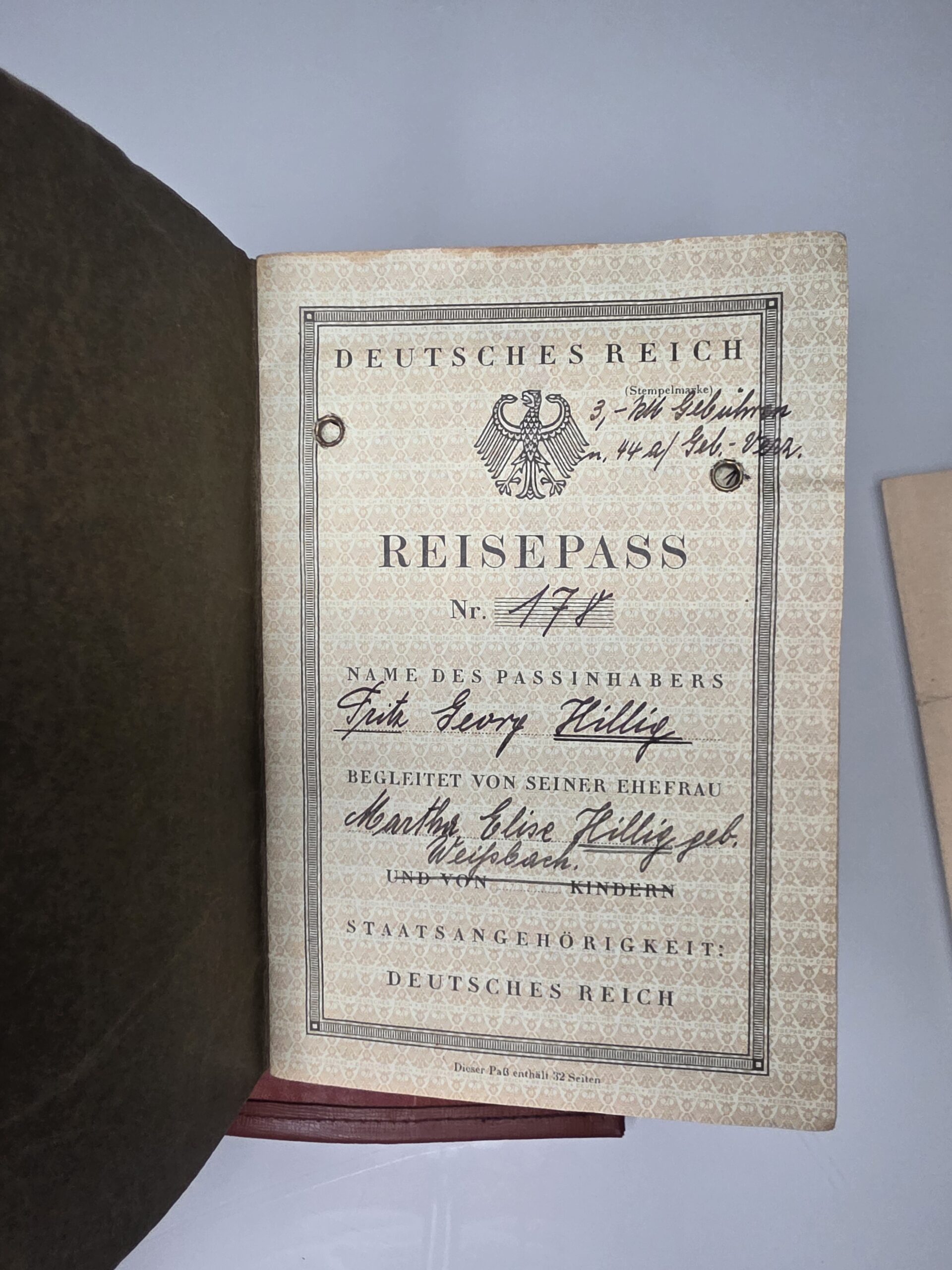
The 1936 Deutsches Reich Reisepass
One of the strongest documents in this WWII German document collection is the original Deutsches Reich Reisepass.
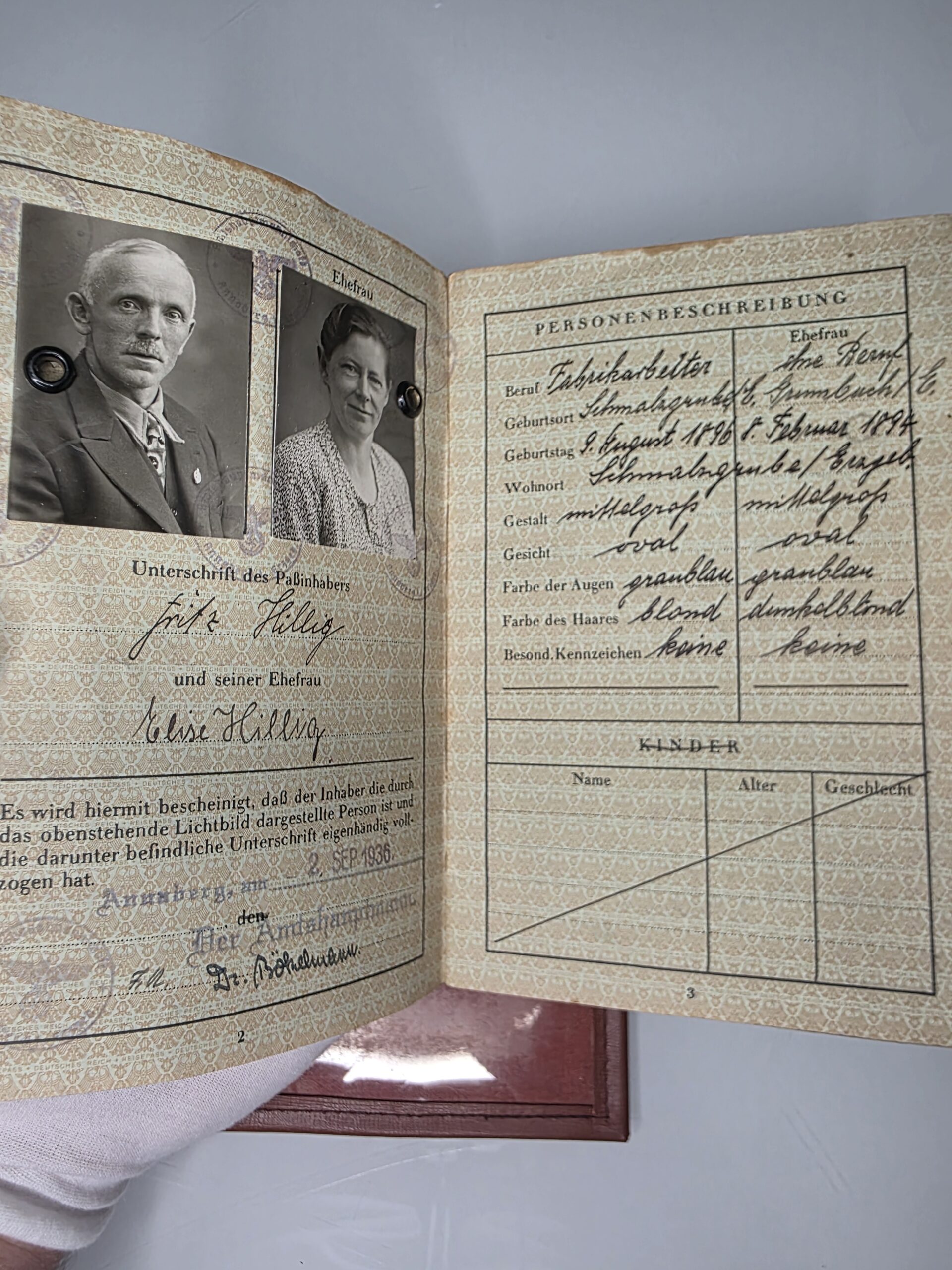
The passport identifies Fritz Georg Hillig and also includes his wife, with individual portrait photographs, handwritten personal information, official stamps and signatures.
The interior retains the distinctive printed Deutsches Reich design and official eagle used on passports of the period.
For collectors, passports are especially interesting because they combine several forms of evidence within a single object: an original photograph, signature, physical description, civil information and official administrative markings.
Unlike an anonymous form, the passport directly connects a named person with the wider documentary group.
Deutsche Arbeitsfront Membership Book
Another important component is the red Deutsche Arbeitsfront – DAF membership book.
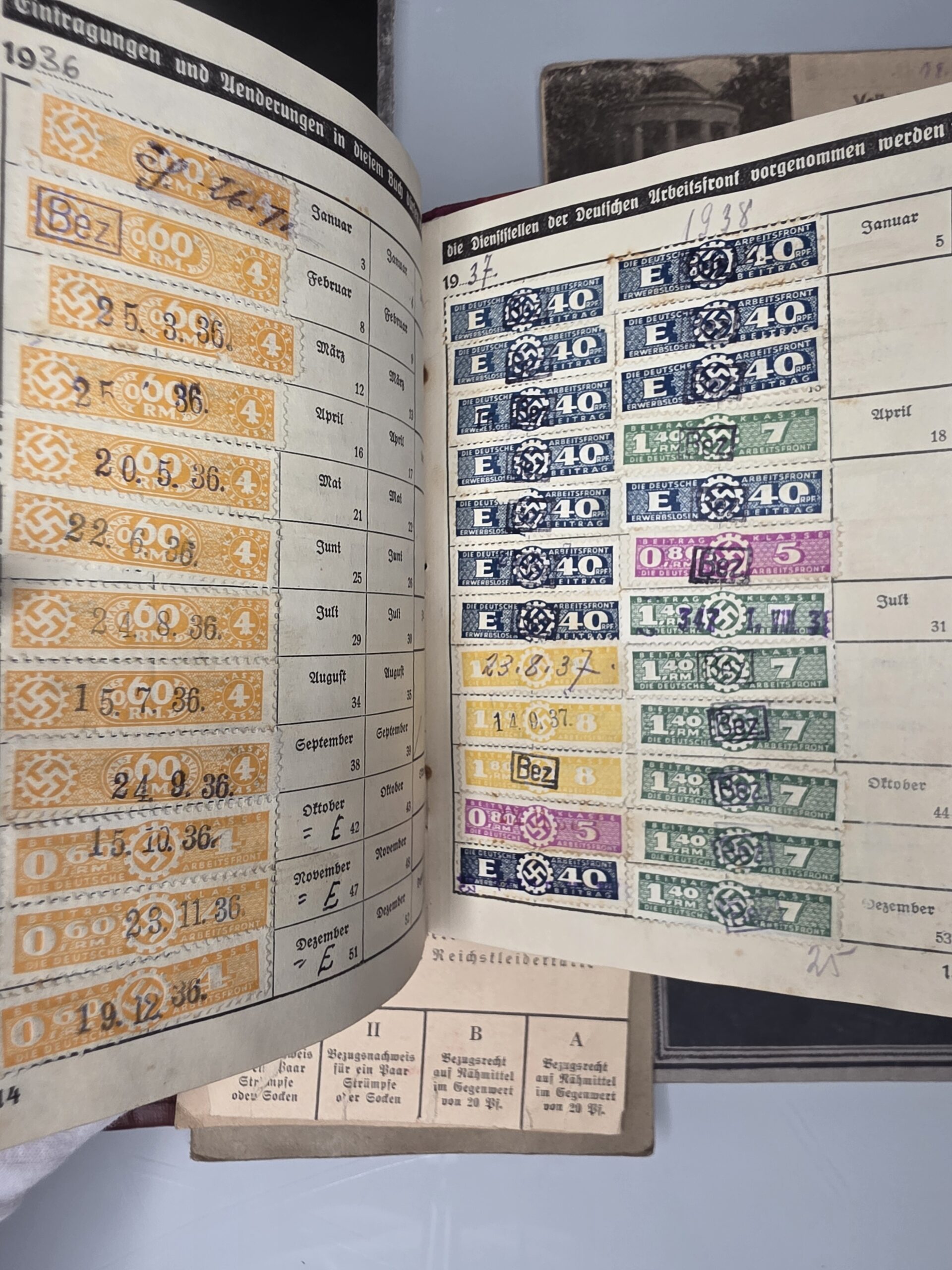
Its cover carries the characteristic cogwheel emblem, while the interior contains numerous coloured contribution stamps and dated cancellations.
The visible pages preserve contributions from the later 1930s, creating an excellent example of the bureaucratic documentation associated with employment and labour organisation under the National Socialist state.
The Deutsche Arbeitsfront was created in 1933 after the independent trade unions had been dismantled and became a major organisation through which the regime sought to regulate and influence working life. The German Historical Museum describes the DAF as an important element of the regime’s control of workers and of the German economy.
For collectors of WWII German documents, the large number of surviving contribution stamps makes this example visually much more interesting than an empty membership booklet.
Arbeitsbuch and German Labour Documentation
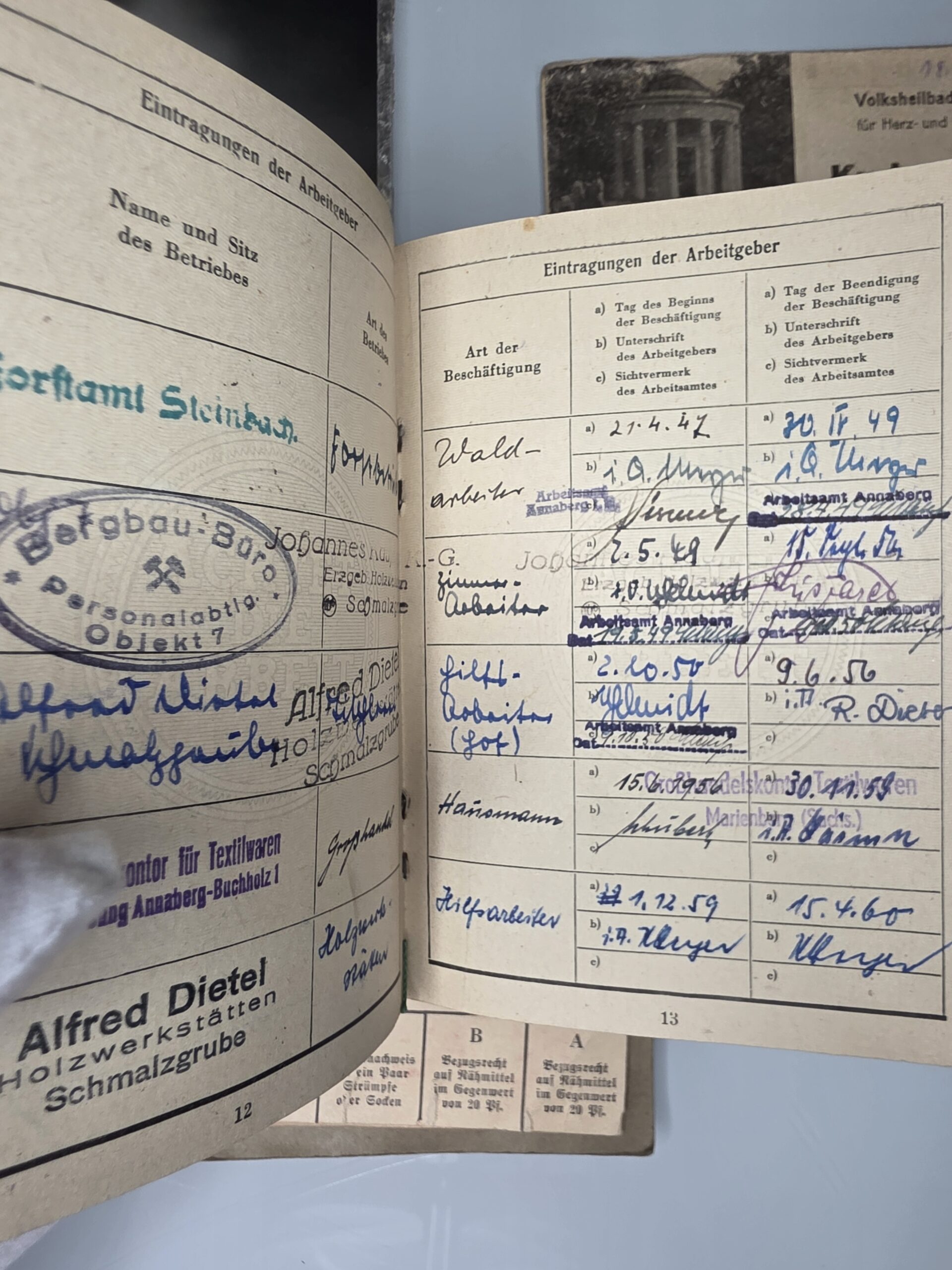
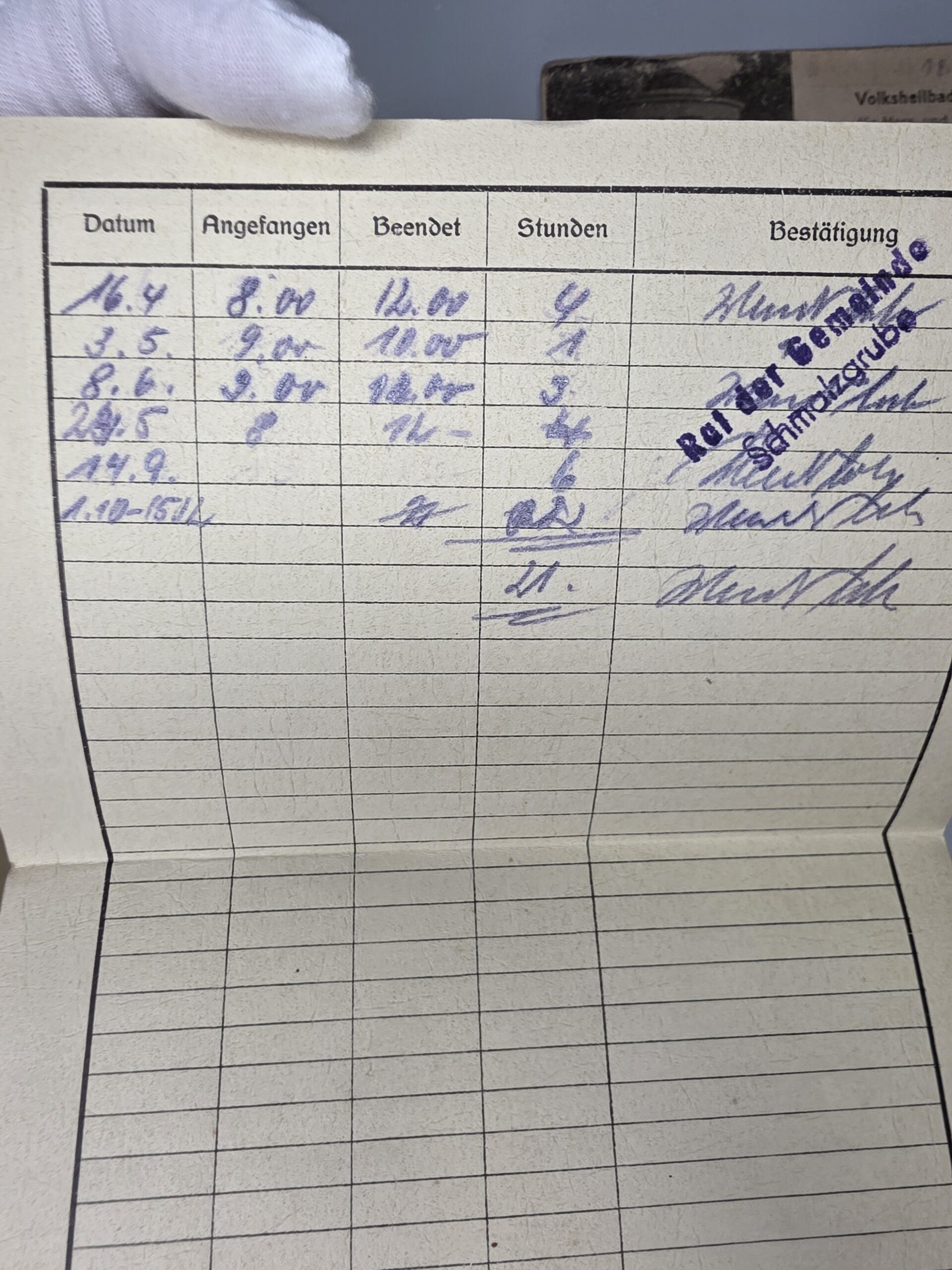
The archive also contains Arbeitsbuch documentation, allowing the collection to illustrate employment history over different German political periods.
One document dates as early as 1909, while later labour documentation continues the story into the twentieth century.
The Arbeitsbuch became particularly important during the National Socialist period. From the mid-1930s, its use was progressively expanded as part of state labour administration. Arolsen Archives notes that these books recorded personal information, professional qualifications and employers and were used in coordinating the German labour market.
This makes the WWII German document collection particularly interesting for anyone collecting the administrative rather than purely military side of the period.
Wartime Clothing and Civilian Documentation
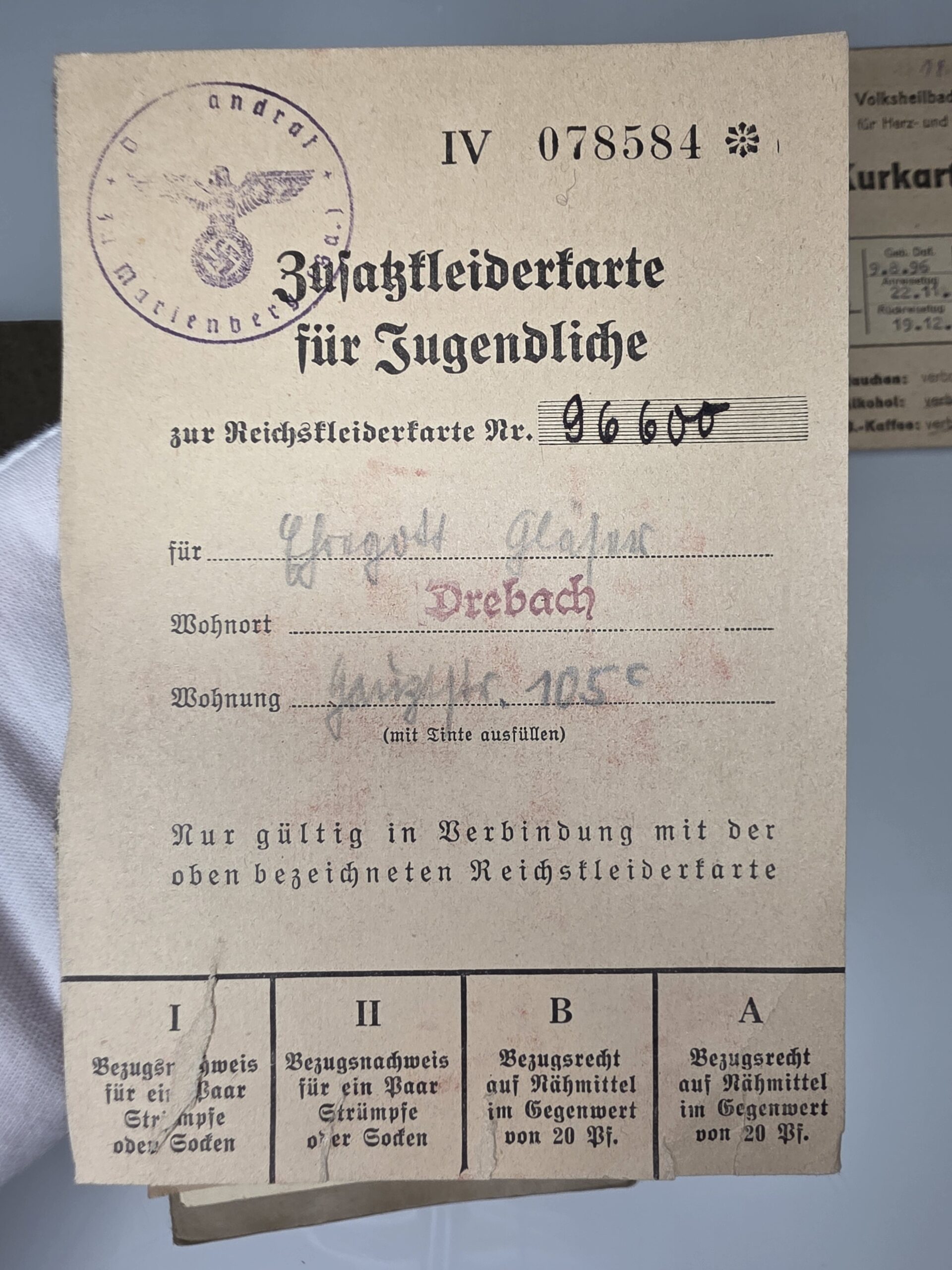
One visually interesting item is a Zuschneiderkarte für Jugendliche, connected to a Reichskleiderkarte and used within the clothing allocation system.
It retains official stamps, identification information and detachable sections along the lower edge.
Documents of this kind provide a different perspective on WWII history.
Rather than recording battles or soldiers, they document the increasingly regulated civilian economy and the everyday administrative systems that affected German families during the war years.
For a collection of WWII paperwork, this diversity significantly strengthens the archive.
A Family Archive from Schmalzgrube and Annaberg
Several pieces contain references to Schmalzgrube, Annaberg and the Erzgebirge region of Saxony.
The Reisepass identifies Fritz Georg Hillig, while a later photographic identity paper issued in Schmalzgrube in January 1946 again identifies Fritz Hillig and includes his portrait.
Later documentation continues the historical sequence.
A Volksheilbad Liebenstein Kurkarte from 1963 is also made out to Fritz Hillig of Schmalzgrube, providing a remarkable chronological link decades after the pre-war and wartime documents.
This continuity is one of the collection’s strongest characteristics.
Instead of stopping abruptly in 1945, the documents allow the collector to follow the changing administrative identity of an ordinary German family across the German Empire, Third Reich, Second World War and post-war period.
Original Photographs and Identification
Photographic material further enhances the archive.
The Deutsches Reich passport retains portrait photographs of the holder and his wife, while the provisional post-war identification document contains a further photograph of Fritz Hillig.
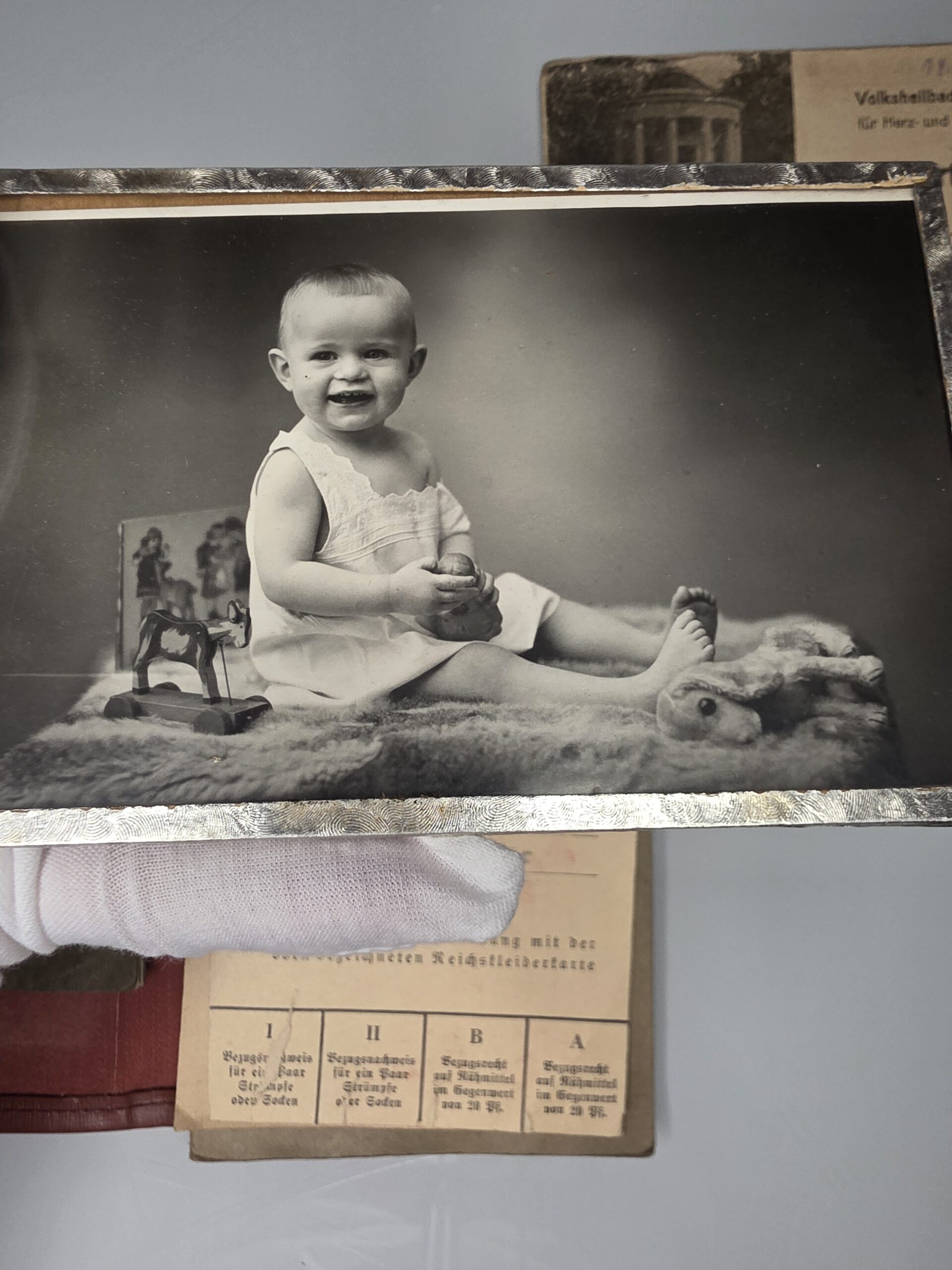
An additional family photograph is also present among the material shown.
For document collectors, photographs can considerably increase the research potential of a group because they put an identifiable face to the handwritten and typed information contained in the paperwork.
An Administrative View of WWII Germany
Military decorations and combat documents often dominate WWII collecting, but civilian administrative documents are equally valuable for understanding how the period functioned at an individual level.
This WWII German document collection combines employment, identity, travel, organisational membership, clothing allocation and later personal records.
Together they provide a much broader picture than any one isolated passport or membership card could offer.
The attraction is therefore not merely the presence of individual Third Reich-era symbols or stamps. It lies in the relationship between the documents and the historical information preserved across them.
Condition
All items show natural signs of age and use.
These include handling wear, discoloration, edge wear, folds, handwritten additions, stamps, minor marks and other characteristics consistent with documents that were actually used rather than stored unused.
The DAF membership book retains numerous contribution stamps.
The passport preserves its photographs and handwritten entries.
The later identification document also retains its photograph.
No attempt has been made here to attribute undocumented signatures or stamps beyond what can be read or reasonably identified from the documents themselves.
Please examine all photographs carefully, as they form an integral part of the condition report.
Collecting Interest
This WWII German document collection would be particularly relevant to collectors interested in:
German WWII documents, Third Reich civilian documentation, Deutsches Reich passports, Arbeitsbuch records, Deutsche Arbeitsfront material, wartime rationing, German identity documents, Saxony local history, personal archives and Second World War social history.
The fact that the archive extends from 1909 to 1963 adds an additional dimension: it documents not merely a political period but part of the administrative history of an identifiable Saxon family over approximately five decades.
The collection is offered solely as historical material for collecting, preservation, research and educational study. The presence of period political symbols forms part of the historical documents and does not represent endorsement of the ideology or organisations that produced them.
Additional information
| Availability | Available |
|---|
Only logged in customers who have purchased this product may leave a review.
Related products
German Document Archive 1911–1967 – DAF, University and Business Papers
Original price was: 249,00 €.199,00 €Current price is: 199,00 €.
20% Off
WWII German Wehrpass Group – 256th Infantry Division, Ostmedaille & Death Letter
590,00 €
WWII German Document Collection – U-Boat Training, DAF & Arbeitsbuch Archive
Original price was: 490,00 €.440,00 €Current price is: 440,00 €.
10% Off
WWII German Document Archive 1938–1945 – Wehrmacht, IDs & Ration Papers
Original price was: 275,00 €.240,00 €Current price is: 240,00 €.
13% Off
Reviews
There are no reviews yet.