Products on sale
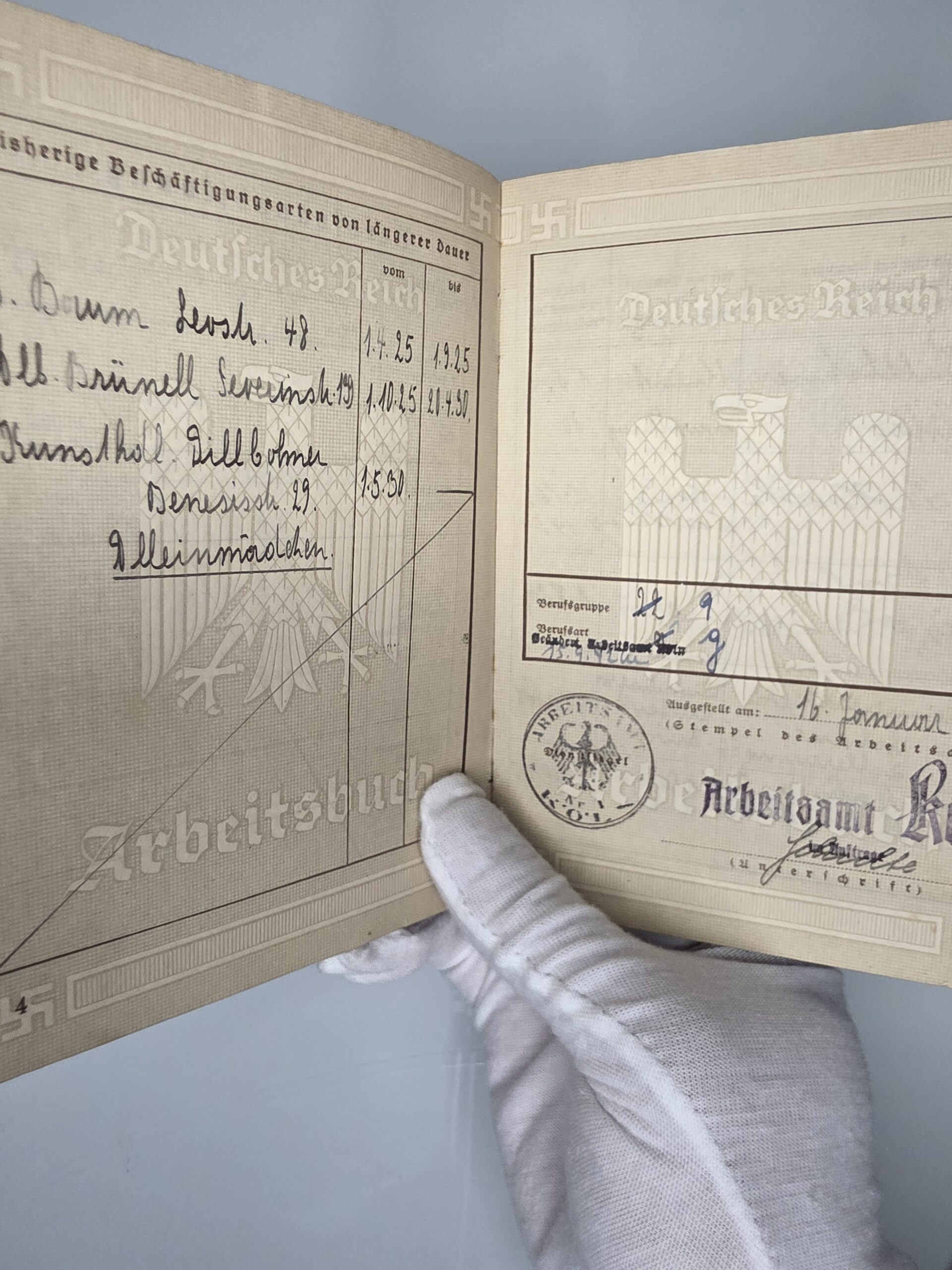
Third Reich Arbeitsbuch – Original German Worker’s Employment Book
30,00 €

WWII German Wehrpass – Rudolf Klinger 1943 Zweitschrift with Photo & Typhus Card
Original price was: 110,00 €.99,00 €Current price is: 99,00 €.

(no title)
Original price was: 299,00 €.245,00 €Current price is: 245,00 €.

Third Reich Tax Documents – 1937 Bavarian Ministry & Nuremberg Archive
Original price was: 150,00 €.99,00 €Current price is: 99,00 €.

Anmeldung zur polizeilichen Einwohnererfassung – Original WWII Poland
Original price was: 290,00 €.200,00 €Current price is: 200,00 €.
31% Off
Interested in this item? Please contact us directly by email, WhatsApp or through the enquiry form below for availability or other information. Kindly include the item SKU/reference number in your message so we can identify the piece.
Description
Anmeldung zur polizeilichen Einwohnererfassung – Original WWII Police Registration Forms
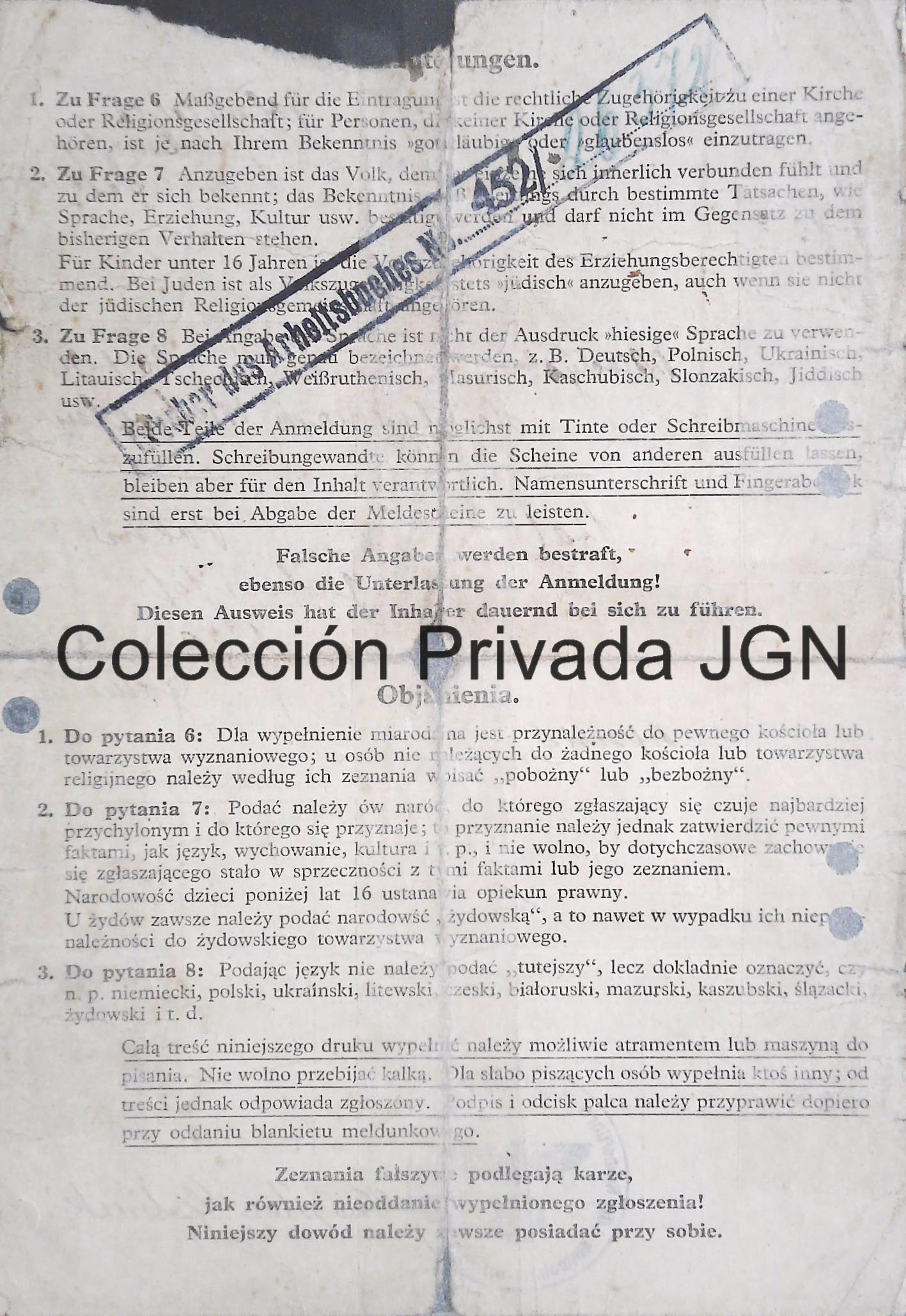
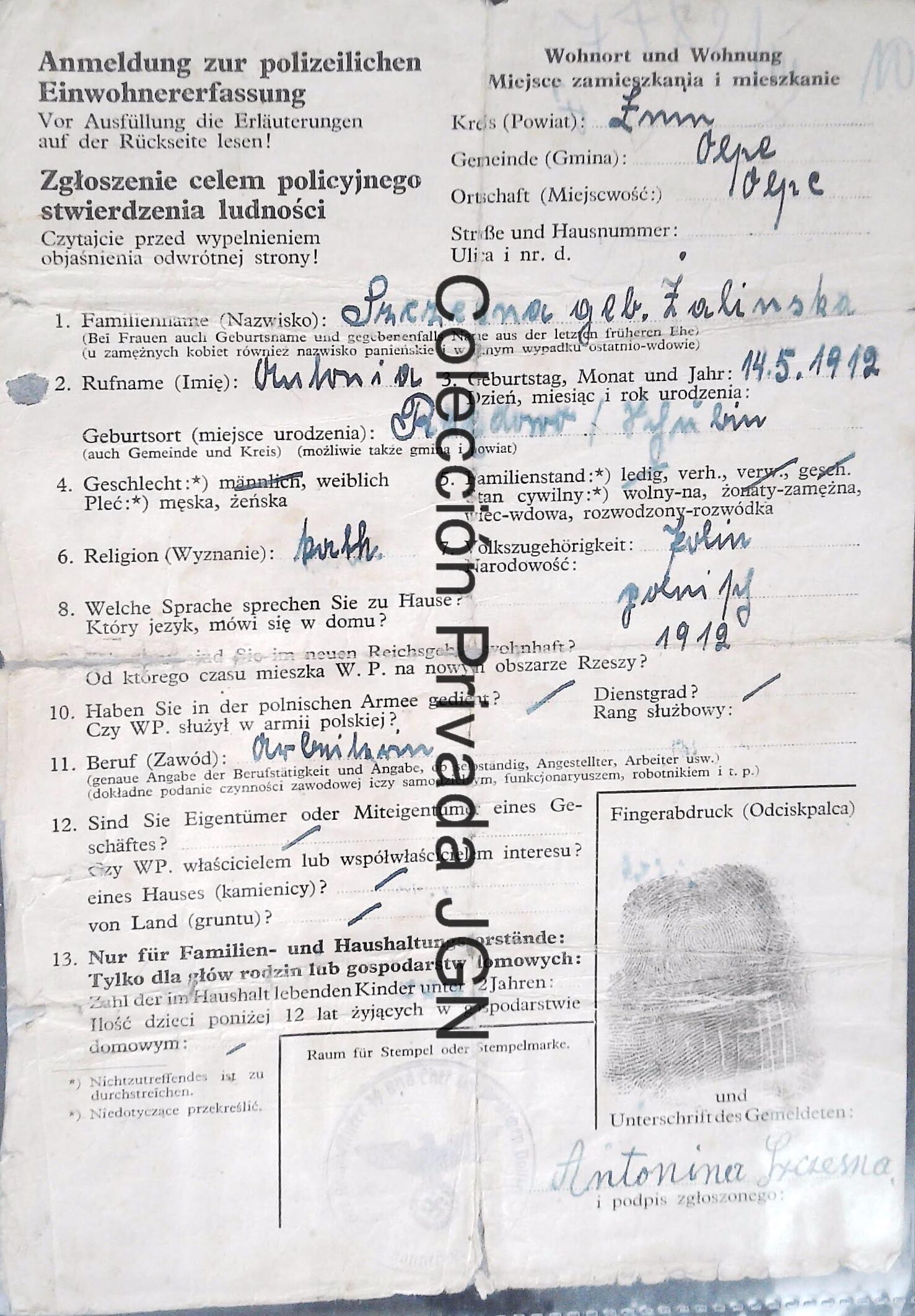
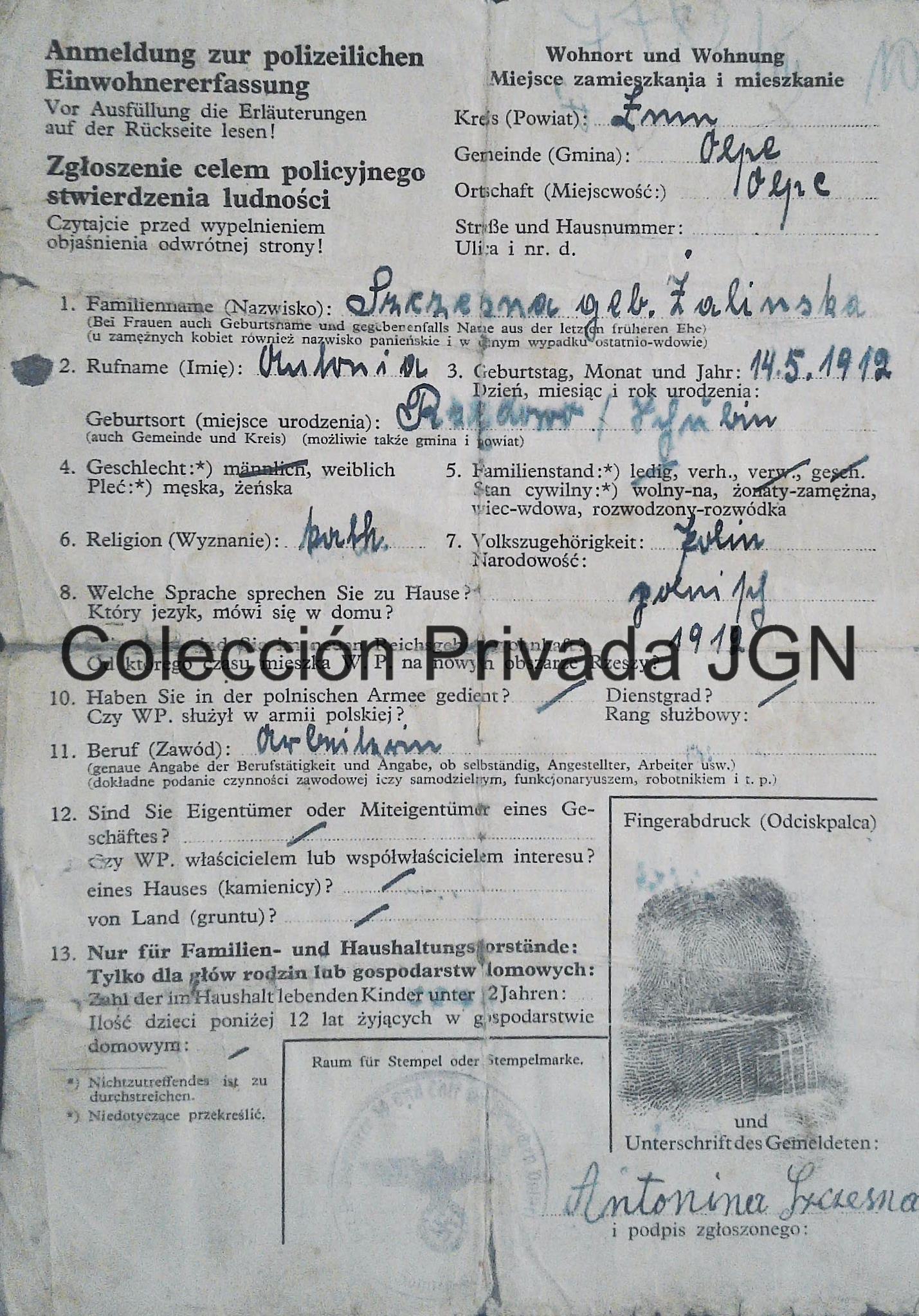
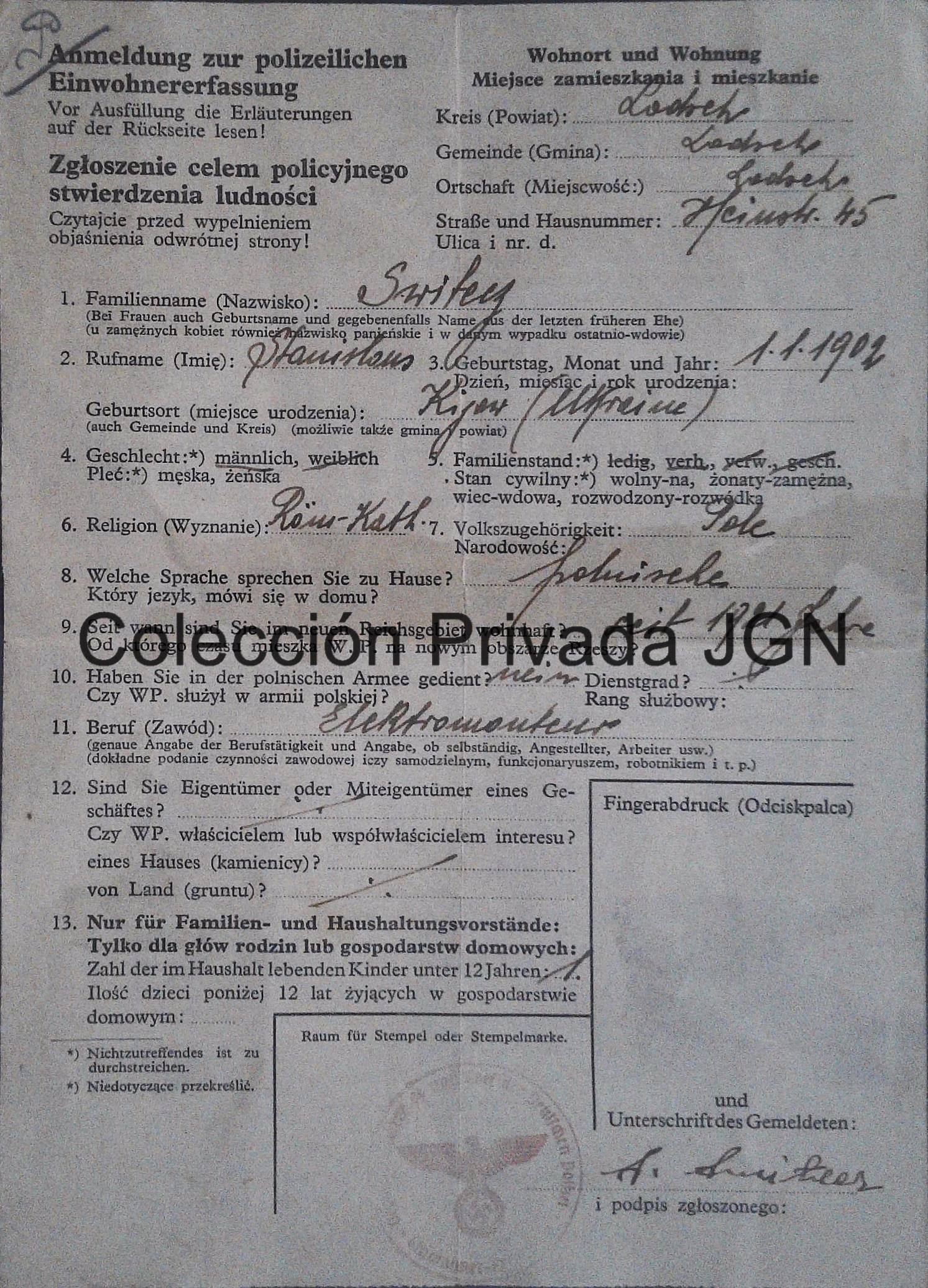
This group of Anmeldung zur polizeilichen Einwohnererfassung documents comprises three original bilingual German-Polish civilian registration forms from occupied Poland during the Second World War. Each individual sheet retains handwritten personal entries, ink signatures, fingerprint impressions and period police or administrative stamps. The documents are offered together as a coherent historical archive rather than as unrelated loose papers.
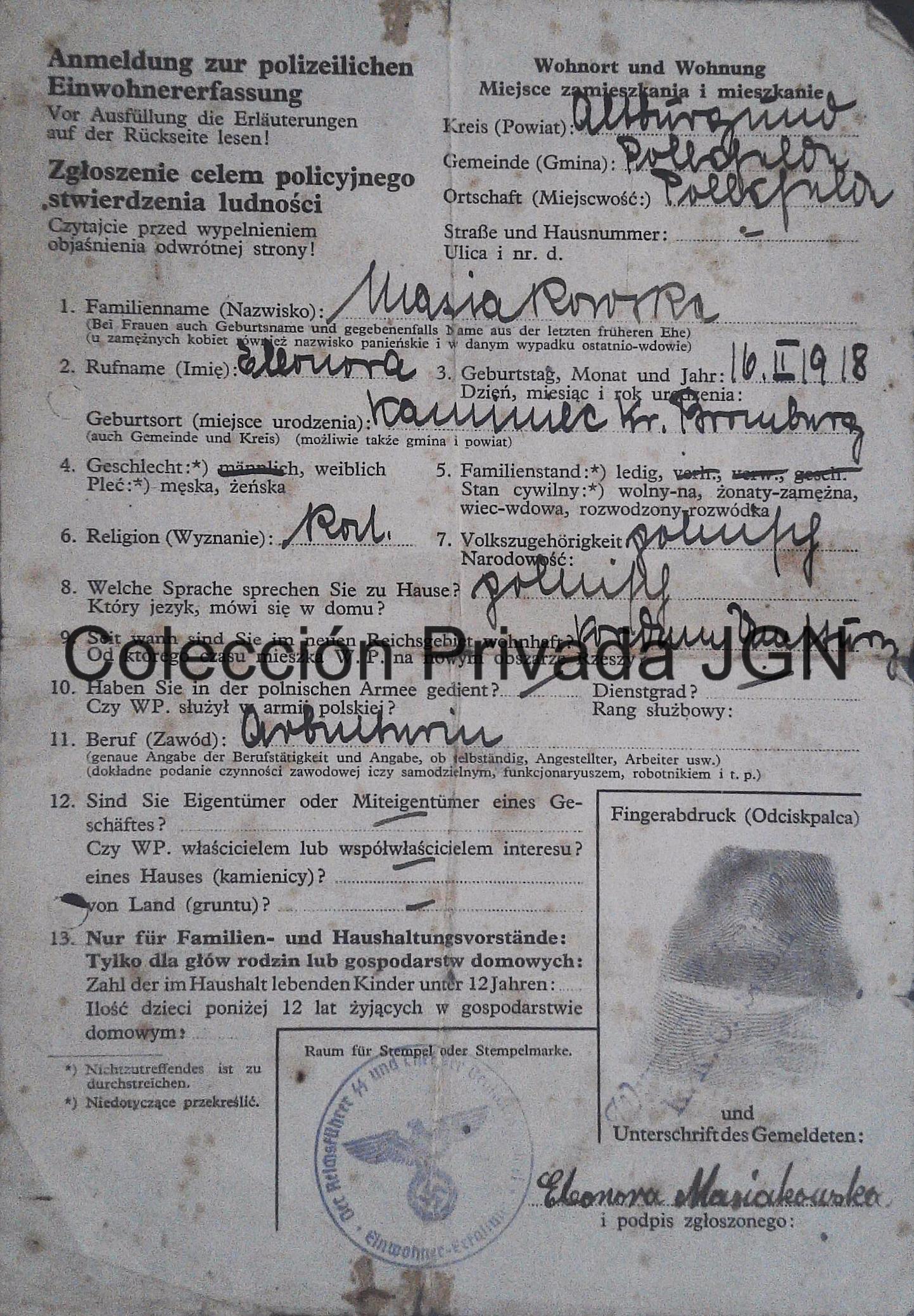
The title printed at the top of each form is “Anmeldung zur polizeilichen Einwohnererfassung”, accompanied by the Polish equivalent, “Zgłoszenie celem policyjnego stwierdzenia ludności”. In direct terms, these are police population-registration forms. Their bilingual German-Polish design identifies them as documents created for administrative use in Polish-speaking territories under wartime German control.
The three Anmeldung zur polizeilichen Einwohnererfassung forms preserve their original printed questionnaires. The fields include the holder’s surname and given name, date and place of birth, sex, marital status, religious affiliation, declared nationality, language spoken at home, occupation, previous service in the Polish Army, household details and questions relating to property ownership.
Each document also contains a designated field for a fingerprint and the handwritten signature of the person being registered. These elements give the group an especially personal and archival character, as the forms preserve direct identifying marks made by the original civilians during the period.
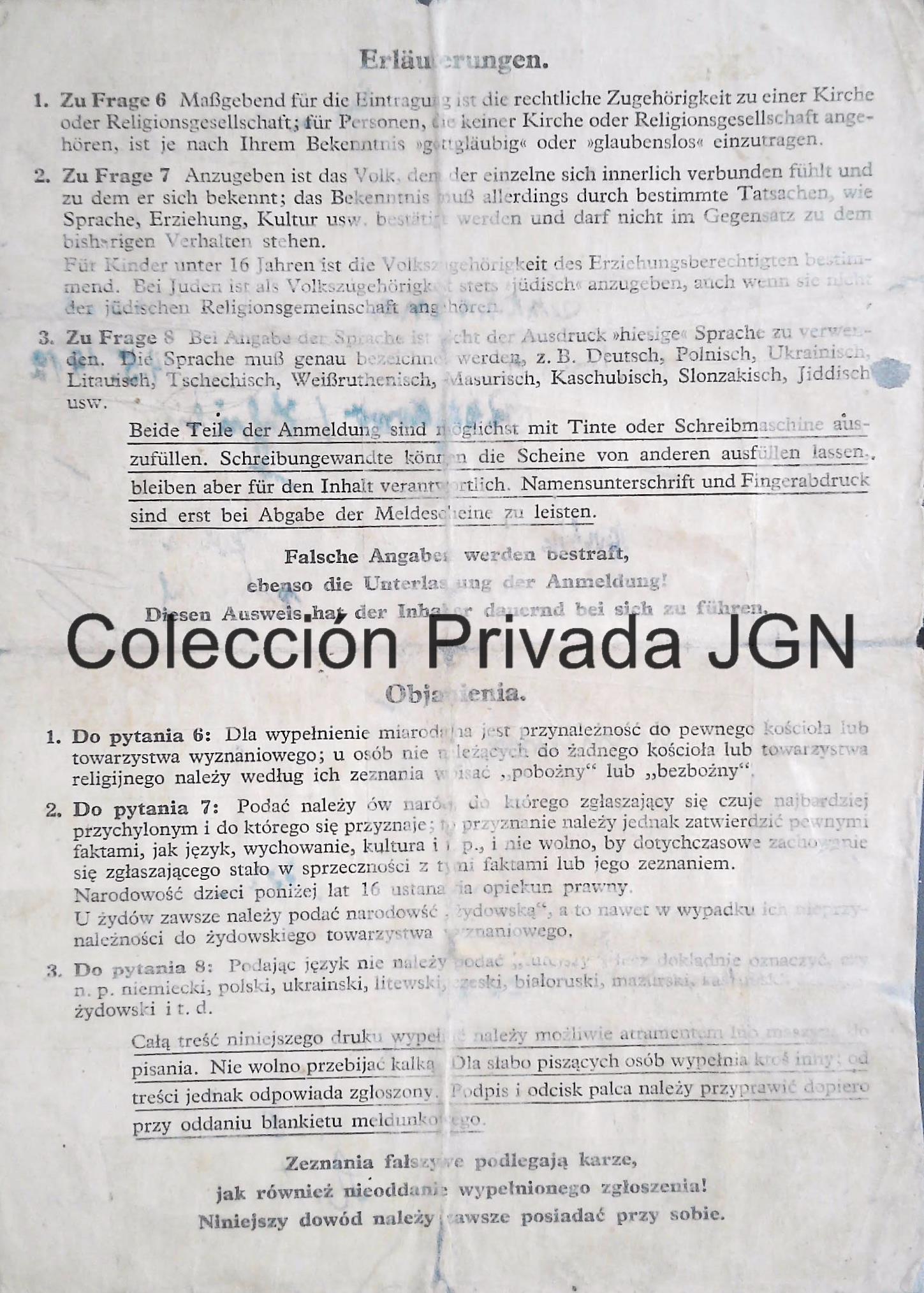
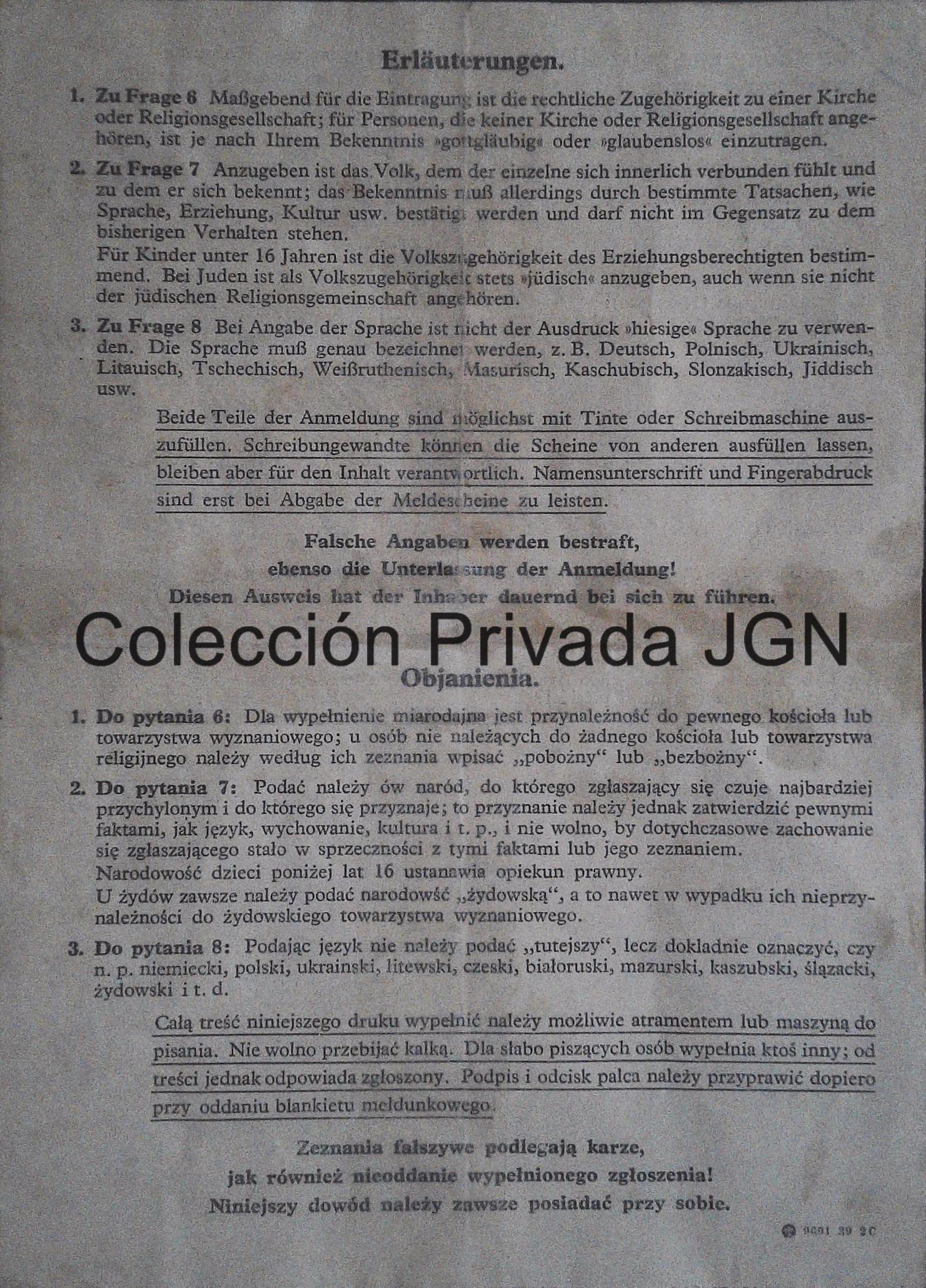
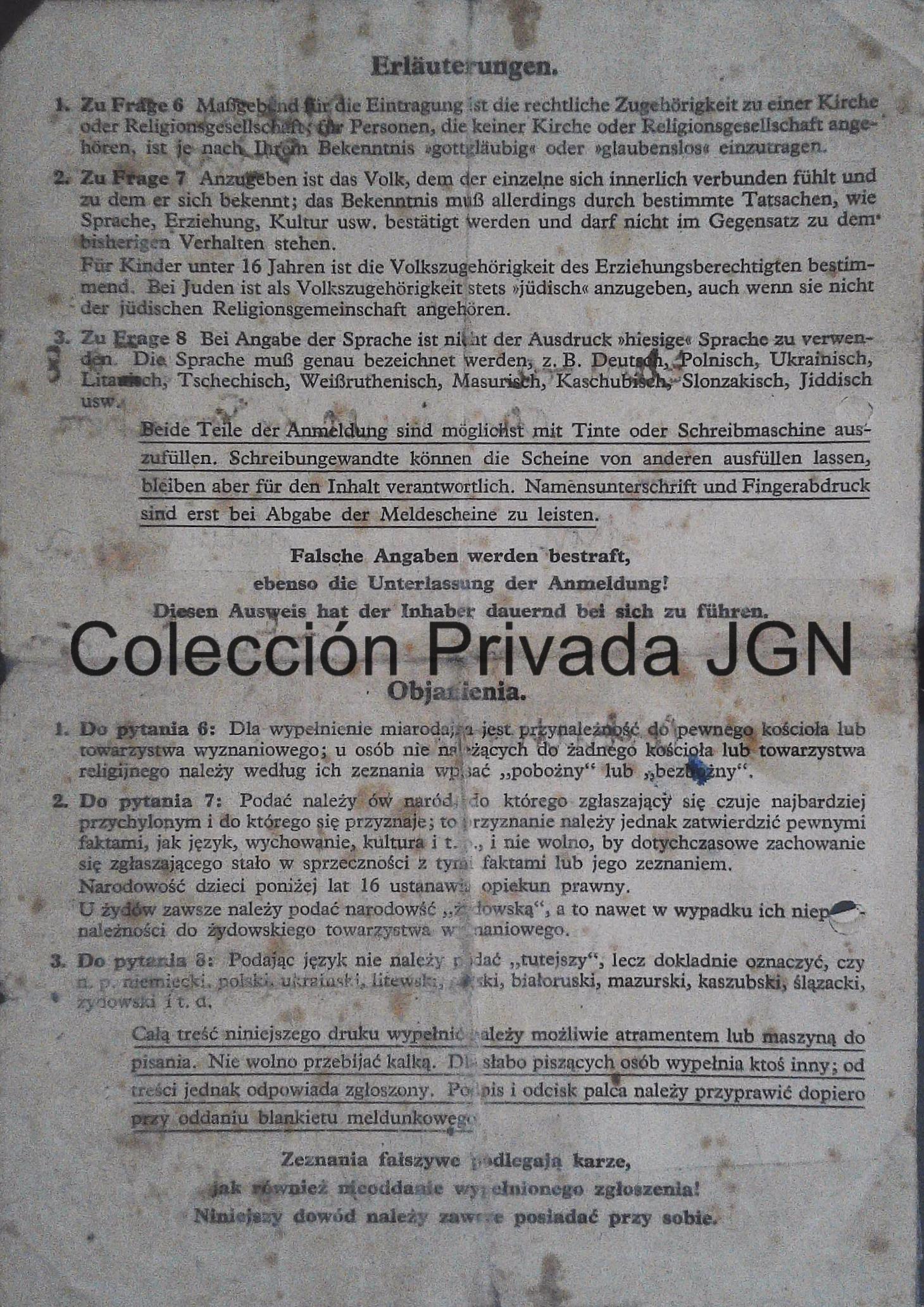
The reverse sides are equally important. They contain printed explanatory instructions in both German and Polish. The text states that the forms should be completed in ink or by typewriter, that false declarations and failure to submit the registration were punishable, and that the resulting document was to be carried by its holder.
The instructions within the Anmeldung zur polizeilichen Einwohnererfassung forms also demonstrate how religion, nationality and language were treated as compulsory registration categories. This makes the documents important primary-source records of wartime civilian bureaucracy rather than ordinary identification cards.
The supplied photographs show three separately completed forms relating to different individuals. Some handwritten entries remain clearer than others, but all three sheets retain the most significant original documentary features: bilingual printed text, manuscript information, original signatures, fingerprints and official stamps.
The condition also reflects their authentic use and survival. Folds, creases, stains, edge wear, small tears and occasional losses are visible across the papers. These condition issues should be considered part of the historical character of the lot and are consistent with civilian documents that were folded, carried and stored during and after the war.
This Anmeldung zur polizeilichen Einwohnererfassung group has particular research value because it preserves multiple examples of the same registration system. Seen together, the forms allow comparison between individual entries and show how a standardised administrative format was applied to civilians.
The group is particularly relevant for collectors and researchers of occupied Poland, civilian identity documents, police administration, family history, population registration, wartime bureaucracy and Second World War paper archives. Unlike a blank form, these examples retain completed information and physical evidence of administrative processing.
These are not military service books, passports or membership cards. They are civilian police-registration records. Their historical importance comes from their format, their period use and the personal documentary evidence recorded on each form.
The Anmeldung zur polizeilichen Einwohnererfassung documents should remain together as a three-document archive. Keeping the forms together preserves their shared historical context and makes the group more meaningful than selling the sheets separately.
For preservation, the forms should be stored flat in archival polyester sleeves or acid-free folders. They should be protected from direct sunlight, humidity, adhesive tape, glue and unnecessary handling. The fragile folds and worn paper edges should not be flattened aggressively or repaired without professional conservation advice.
Condition is fair to good for original wartime civilian paperwork. All three forms show signs of prior handling and storage, including folds, creases, stains, edge wear and occasional minor paper losses. Despite this, the principal titles, bilingual printed text, handwritten entries, signatures, official stamps and fingerprint impressions remain visible.
Only the three original Anmeldung zur polizeilichen Einwohnererfassung forms shown in the photographs are included. The visible digital watermark is not present on the original documents.
These documents are offered solely for responsible historical research, archival preservation, education and collecting. They do not promote, endorse, glorify, minimise or justify National Socialism, racism, antisemitism, persecution, political repression, violence or war.
Additional information
| Availability | Available |
|---|
Only logged in customers who have purchased this product may leave a review.
Related products
Third Reich Arbeitsbuch – Original German Worker’s Employment Book
30,00 €
WWII German Wehrpass – Rudolf Klinger 1943 Zweitschrift with Photo & Typhus Card
Original price was: 110,00 €.99,00 €Current price is: 99,00 €.
10% Off
(no title)
Original price was: 299,00 €.245,00 €Current price is: 245,00 €.
18% Off
Third Reich Tax Documents – 1937 Bavarian Ministry & Nuremberg Archive
Original price was: 150,00 €.99,00 €Current price is: 99,00 €.
34% Off
Reviews
There are no reviews yet.