Products on sale
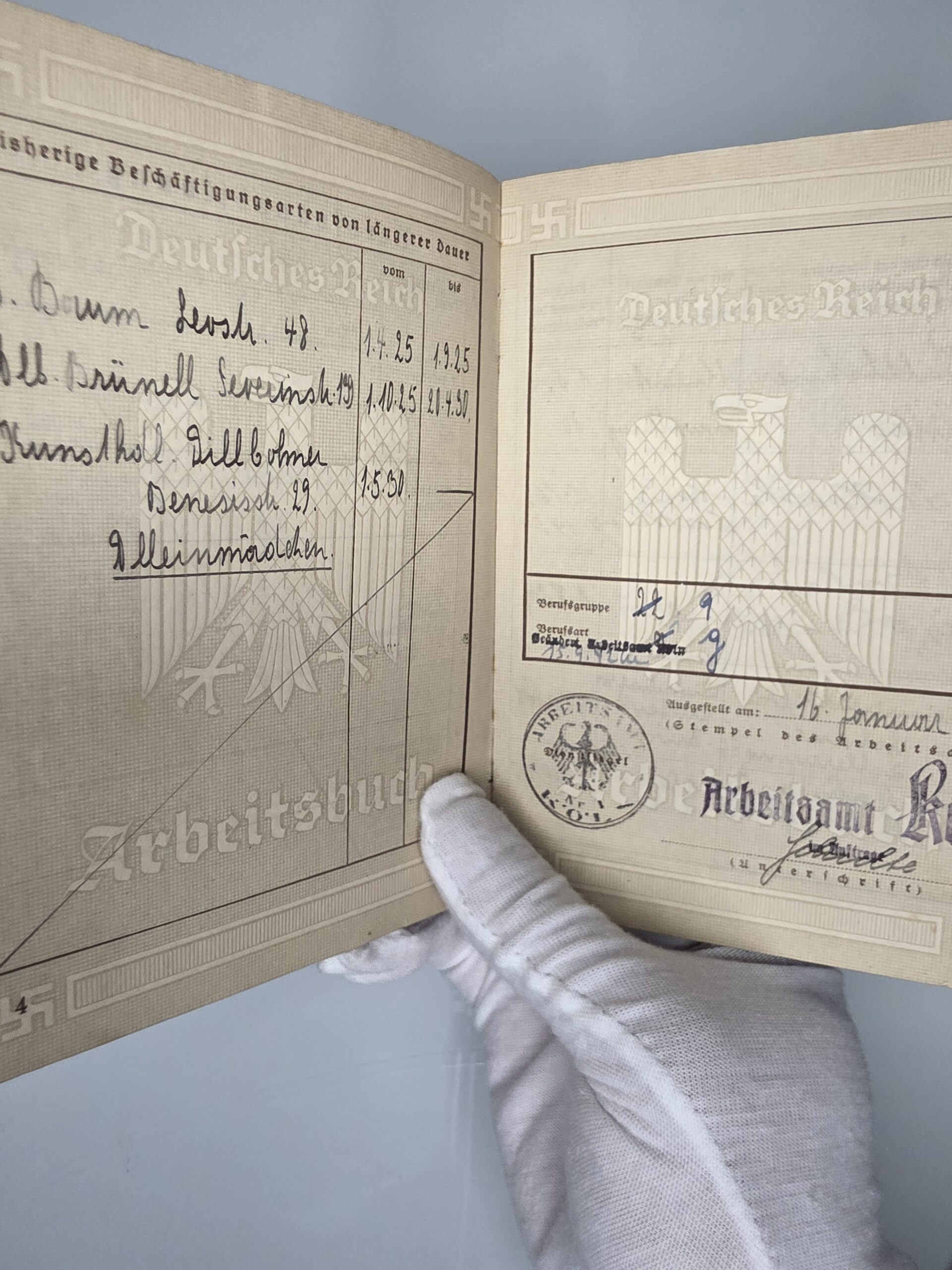
Third Reich Arbeitsbuch – Original German Worker’s Employment Book
30,00 €

WWII German Wehrpass – Rudolf Klinger 1943 Zweitschrift with Photo & Typhus Card
Original price was: 110,00 €.99,00 €Current price is: 99,00 €.

(no title)
Original price was: 299,00 €.245,00 €Current price is: 245,00 €.

Third Reich Tax Documents – 1937 Bavarian Ministry & Nuremberg Archive
Original price was: 150,00 €.99,00 €Current price is: 99,00 €.
Pair of Original 1935 Nuremberg Rally Postcards with Special Stamps
Original price was: 129,00 €.109,00 €Current price is: 109,00 €.
16% Off
Interested in this item? Please contact us directly by email, WhatsApp or through the enquiry form below for availability or other information. Kindly include the item SKU/reference number in your message so we can identify the piece.
Description
Original 1935 Nuremberg Rally Postcards
This pair of original 1935 Nuremberg Rally postcards represents an interesting combination of German postal history, political ephemera and pre-WWII propaganda material.
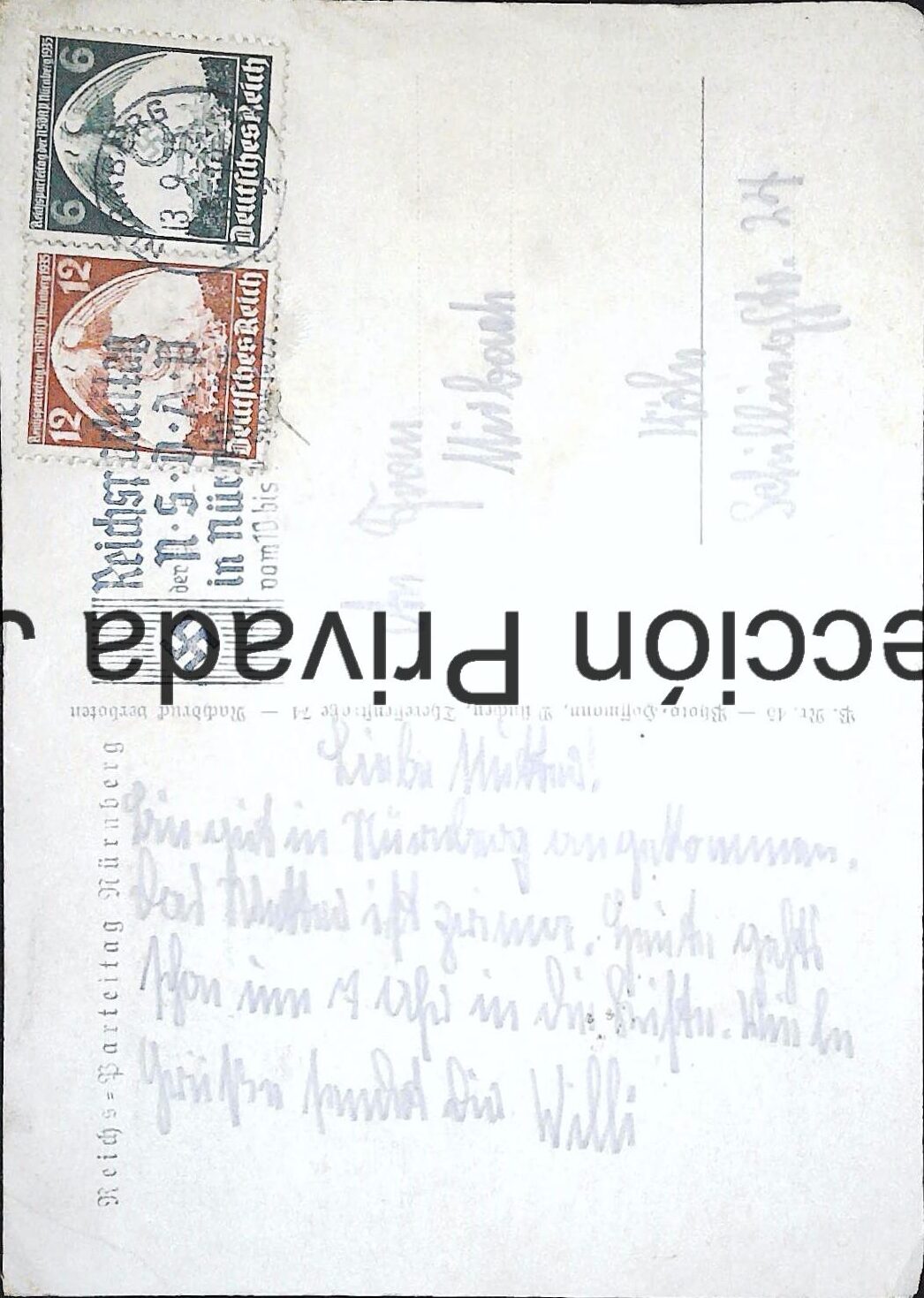
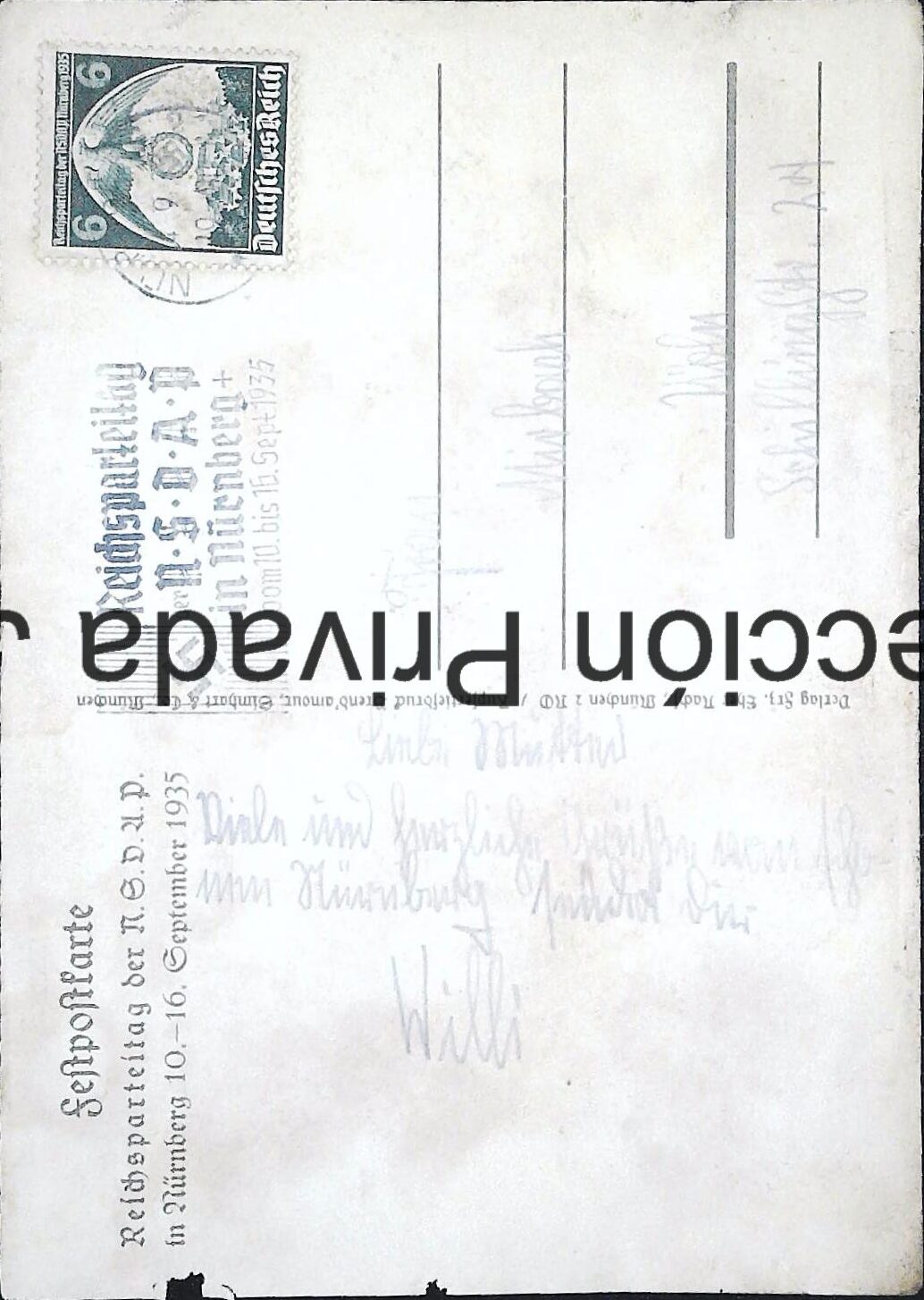
Both cards are period Festpostkarten, or commemorative event postcards, associated with the Reich Party Congress held in Nuremberg from 10 to 16 September 1935. They retain original postage stamps, handwritten correspondence and special cancellations connected directly with the event.
The group contains two separate postcards:
- One postcard bearing both the 6 and 12 Pfennig commemorative stamps.
- One postcard bearing the 6 Pfennig commemorative stamp.
- Both with special Nuremberg Rally postal cancellations.
- Both carrying handwritten period messages and recipient details.
The cards should be preserved together as a small postal-history group, although they are separate pieces and not the front and reverse of a single postcard.
Official Festpostkarte Designation
One of the postcards is explicitly headed:
“Festpostkarte”
followed by:
“Reichsparteitag der N.S.D.A.P. in Nürnberg 10.–16. September 1935.”
This can be translated as:
“Commemorative postcard for the Reich Party Congress in Nuremberg, 10–16 September 1935.”
The printed wording confirms that the card was produced specifically in connection with the political event rather than being an ordinary postcard to which commemorative stamps were added later.
The second card also carries printed wording referring to the Reichsparteitag in Nuremberg and an event-related machine cancellation.
Commemorative 6 and 12 Pfennig Stamps
The postage stamps were issued on 30 August 1935 for the seventh Nuremberg Party Congress.
The two denominations were:
- 6 Pfennig, printed in a dark green or blue-green colour.
- 12 Pfennig, printed in brown-red.
Their design depicts the imperial eagle holding a wreath above a view of Nuremberg Castle. The inscription identifies the 1935 Nuremberg Party Congress. The stamps are catalogued as Michel numbers 586 and 587.
One postcard retains both denominations positioned together. This produces a stronger and more visually complete philatelic presentation than an example bearing only the normal postcard rate.
The second postcard carries the 6 Pfennig stamp by itself, corresponding to the standard domestic postcard rate.
Special Nuremberg Event Cancellations
The postcards retain commemorative machine cancellations reading approximately:
“Reichsparteitag der N.S.D.A.P. in Nürnberg vom 10. bis 16. September 1935.”
The available images indicate that the stamps were cancelled during the actual rally period, including a visible date of 13 September 1935 on the card with the two-stamp combination.
Museum collections document the use of these commemorative stamps and corresponding Nuremberg event cancellations on postal cards connected with the 1935 rally.
This postal use is important. The postcards were not simply retained unused as souvenirs: they were written, addressed, stamped and processed through the German postal system while the event was taking place.
The 1935 “Rally of Freedom”
The congress of 1935 was officially presented as the “Reichsparteitag der Freiheit”, or “Rally of Freedom.”
The name referred to the regime’s rejection of the military restrictions imposed after the First World War and to the reintroduction of compulsory military service. These annual congresses were carefully orchestrated propaganda events involving parades, mass formations, speeches, ceremonies and displays by political and military organisations.
Postcards, stamps and special cancellations helped extend the event’s propaganda beyond Nuremberg. Visitors could send the imagery and slogans across Germany, turning ordinary personal correspondence into a form of political communication.
These two original 1935 Nuremberg Rally postcards illustrate this overlap between private postal use and state propaganda.
Connection with the Nuremberg Laws
The 1935 congress also became historically infamous because the discriminatory legislation collectively known as the Nuremberg Laws was announced and passed during the event.
On 15 September 1935, a special session of the Reichstag enacted the Reich Citizenship Law and the Law for the Protection of German Blood and German Honor. These measures established a legal framework for the systematic exclusion and persecution of Jewish people.
The postcards do not discuss these laws in their handwritten messages. Nevertheless, they were sent during the same congress and remain contemporary postal objects from that decisive week.
This association gives them relevance not only to collectors of German stamps and postcards but also to the wider study of dictatorship, propaganda and racial persecution.
Condition
The postcards display natural signs of postal use and age, including:
- General paper toning.
- Light stains and surface marks.
- Wear around the corners and edges.
- Faint handwritten messages.
- Postal ink and cancellation marks.
- Minor creasing and handling traces.
The commemorative stamps remain attached. The printed event headings and principal cancellation details are visible, although parts of the handwriting have faded.
The cards have not been removed from their historical context or restored. All photographs should be examined carefully, as they form an essential part of the condition description.
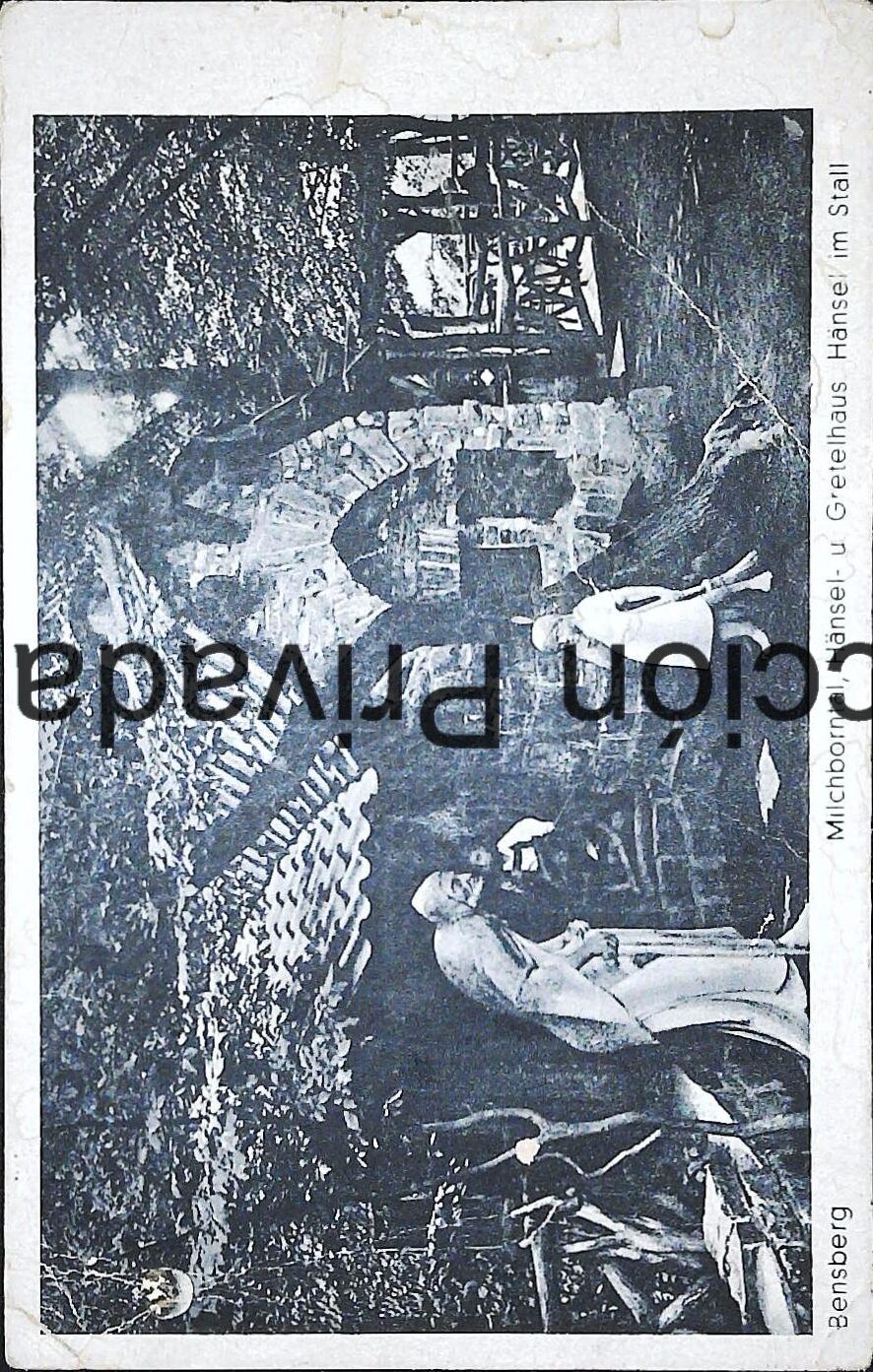
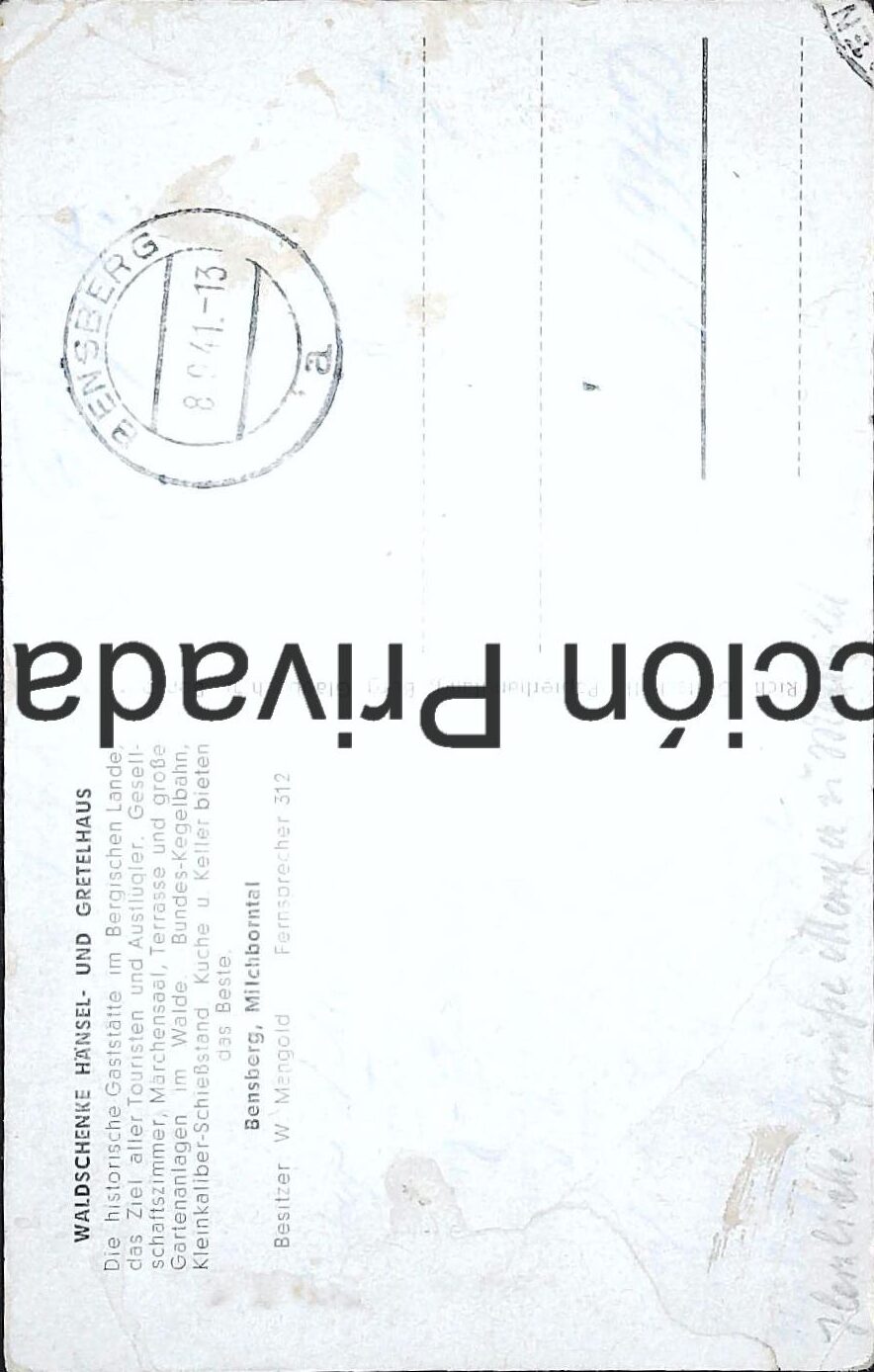
The third postcard shown in the supplied photographs—depicting the Hänsel and Gretel House in Bensberg and postmarked in 1941—is not included in this DOC-84 description.
Historical Collecting Interest
The pair would be suitable for collections focused on:
- German postal history.
- 1935 Nuremberg Rally material.
- Commemorative stamps and cancellations.
- Original German postcards.
- Pre-WWII political history.
- Third Reich propaganda studies.
- Nuremberg Laws historical context.
- European philately.
- Original twentieth-century ephemera.
The postcards are offered exclusively as original historical material for preservation, education and documentary research. Their sale does not endorse the political ideology, racial policies or persecution associated with the event.
Additional information
| Availability | Available |
|---|
Only logged in customers who have purchased this product may leave a review.
Related products
Third Reich Arbeitsbuch – Original German Worker’s Employment Book
30,00 €
WWII German Wehrpass – Rudolf Klinger 1943 Zweitschrift with Photo & Typhus Card
Original price was: 110,00 €.99,00 €Current price is: 99,00 €.
10% Off
(no title)
Original price was: 299,00 €.245,00 €Current price is: 245,00 €.
18% Off
Third Reich Tax Documents – 1937 Bavarian Ministry & Nuremberg Archive
Original price was: 150,00 €.99,00 €Current price is: 99,00 €.
34% Off
Reviews
There are no reviews yet.