The Collector’s Encyclopaedia · Signatories · Red Army
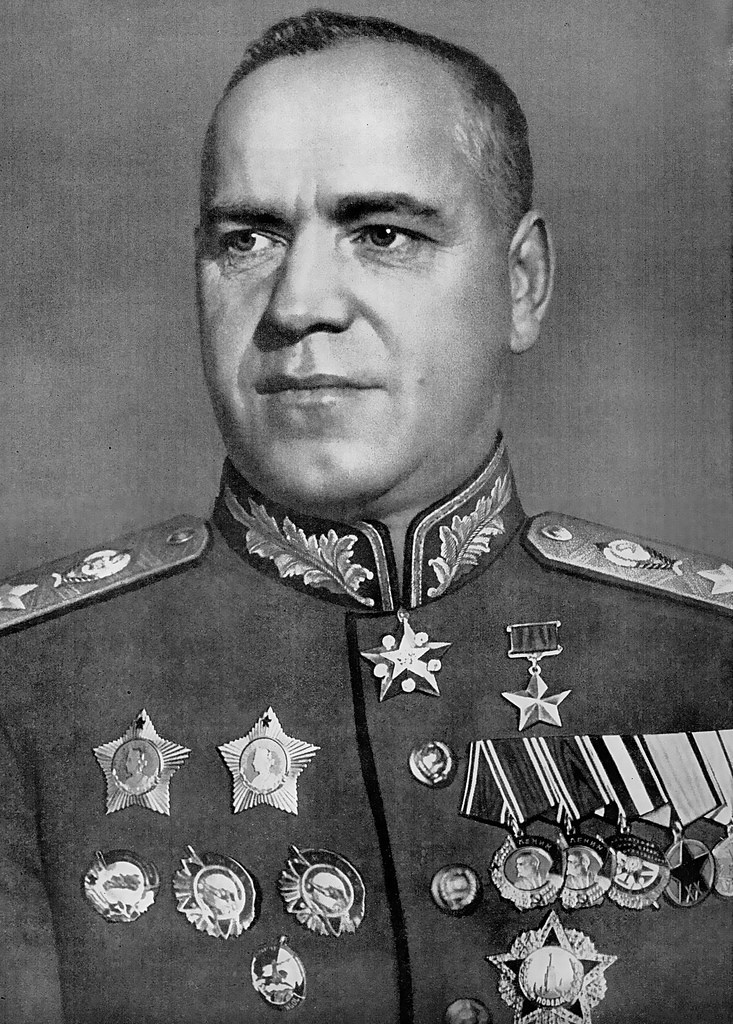
Georgy Zhukov (1896–1974): Signature, Documents and Historical Profile
| Born | 1 December 1896 (19 November Old Style), Kaluga province |
|---|---|
| Died | 18 June 1974, Moscow |
| Key roles | Chief of staff of the Red Army (January 1941); deputy supreme commander (August 1942); Marshal of the Soviet Union (1943); Minister of Defence (1955–1957) |
| Documents bearing his name | Military orders, award documents, signed photographs and post-war books |
| In the collection | No pieces currently available |
Georgy Zhukov was the most celebrated Soviet commander of the Second World War. He defended Moscow, planned the encirclement at Stalingrad, commanded the final assault on Berlin and represented the Soviet Union at Germany’s surrender on 8 May 1945.
Who Was Georgy Zhukov?
Zhukov was born in Kaluga province in 1896. In 1939 he defeated Japanese forces on the Manchurian border. Appointed chief of staff of the Red Army in January 1941, he organised the defence of Leningrad and Moscow in 1941. In August 1942 he became deputy supreme commander, oversaw Stalingrad and was made a Marshal of the Soviet Union in 1943. In April 1945 he commanded the assault on Berlin.
What Documents Bear Zhukov’s Signature?
His signature appears on military orders, award documents, signed photographs and copies of his memoirs, published in 1969. See original signature or facsimile.
Soviet documents bring their own checks. Signatures are usually in Cyrillic, and official papers combine typed text, printed forms, ink signatures and round seals. A collector should read the Russian text, compare the office named with the date, and remember that Soviet state papers were often reproduced, so many documents carry a printed or stamped signature rather than ink.
What Should Collectors Watch For?
- Read the Cyrillic text and check the office against the date.
- Distinguish ink signatures from printed or stamped ones.
- Soviet-era reproductions and later commemorative items are common.
- Ask for documented provenance on any important piece.
Later Life
After the war Stalin sent him to minor regional commands. He was Minister of Defence from 1955 to 1957 and died in Moscow in 1974.
Collector’s Note
Zhukov signatures connected with Berlin in 1945 are especially sought after. The more symbolic the moment, the more carefully I check the document’s date and context.
Related Entries and Pieces
Browse the full Collector’s Encyclopaedia →
Frequently Asked Questions
Did Zhukov accept the German surrender?
He represented the Soviet Union at Germany’s formal surrender on 8 May 1945.
When did Zhukov become a marshal?
In 1943.
When did Zhukov die?
On 18 June 1974 in Moscow.
Historical Responsibility Notice: this entry documents historical figures and artefacts of the Soviet period for collecting, preservation, education and research. It does not endorse or glorify any ideology, and it is written in memory of the victims of political repression and war.
References & Further Reading
- Encyclopaedia Britannica, Georgy Zhukov.