The Collector’s Encyclopaedia · Signatories · Government & Party
Arthur Seyss-Inquart (1892–1946): Signature, Documents and Historical Profile
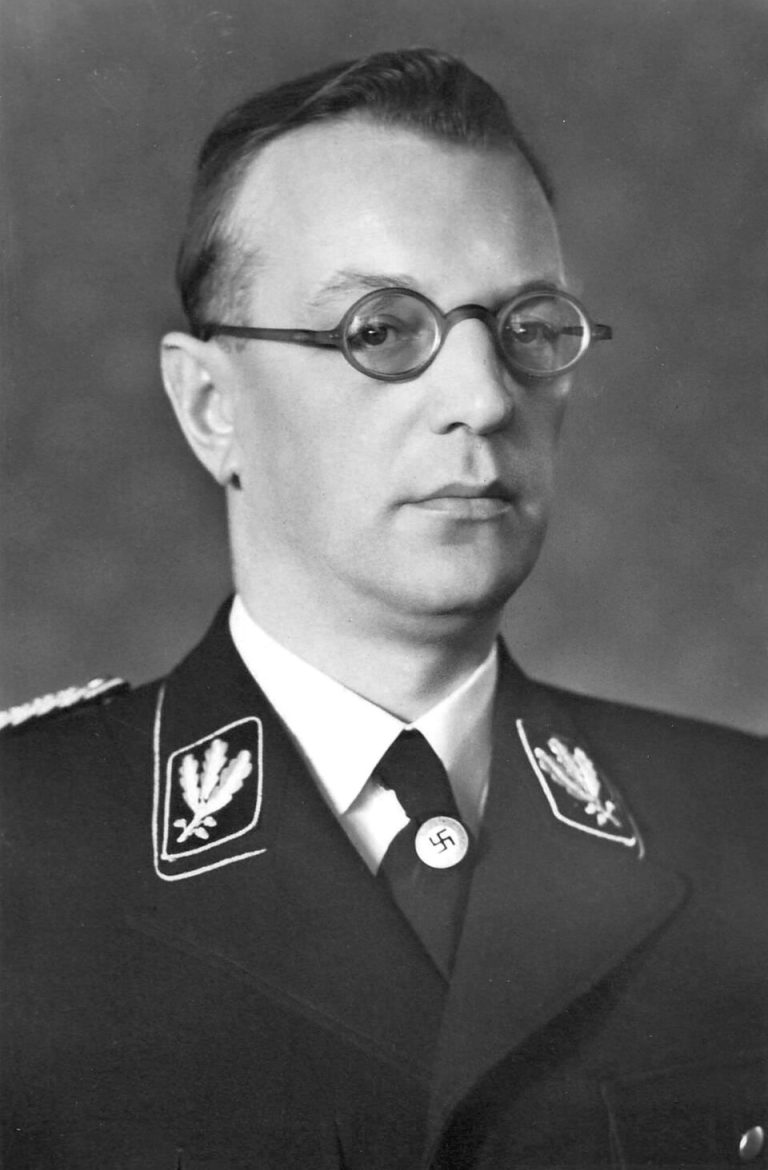
| Born | 22 July 1892, Stannern near Iglau |
|---|---|
| Died | 16 October 1946, Nuremberg (executed) |
| Key offices | Austrian Interior Minister and Chancellor (1938); Reich Governor in Austria (to April 1939); deputy governor in Poland; Reich Commissioner of the occupied Netherlands |
| Documents bearing his name | Austrian government papers of 1938, Dutch occupation decrees and correspondence |
| In the collection | No pieces currently available |
Arthur Seyss-Inquart was the Austrian Nazi who opened the door to the Anschluss and later ruled the occupied Netherlands. Documents of the Reich Commissioner’s office record the terror, the hostage shootings and the deportation of Dutch Jews.
Who Was Arthur Seyss-Inquart?
Seyss-Inquart was born near Iglau in Bohemia in 1892. Under German pressure he became Austrian Minister of the Interior and Security in February 1938 and replaced Kurt von Schuschnigg as Chancellor on 11 March 1938, the eve of the Anschluss. He then headed the provincial administration of Austria until 30 April 1939, served as deputy governor in occupied Poland and became Reich Commissioner of the occupied Netherlands.
What Documents Bear Seyss-Inquart’s Signature?
His signature appears on Austrian government documents of 1938 and on decrees and correspondence of the Reich Commissioner in The Hague. Decrees were published in print. See original signature or facsimile.
What Should Collectors Watch For?
- Austrian chancellor documents belong to March 1938 only.
- Printed decrees are not signed originals.
- Dutch occupation documents need full historical context.
Responsibility and Fate
He was chiefly responsible for a system of terror in the Netherlands and for the deportation of most of the country’s approximately 120,000 Jews, mostly to Auschwitz. He was tried at Nuremberg and executed on 16 October 1946.
Collector’s Note
Seyss-Inquart’s short spell as Austrian Chancellor in March 1938 makes such documents a precise test of dating. A “chancellor” document outside those days should raise immediate questions.
Related Entries and Pieces
Browse the full Collector’s Encyclopaedia →
Frequently Asked Questions
When was Seyss-Inquart Chancellor of Austria?
From 11 March 1938, on the eve of the Anschluss.
What did he do in the Netherlands?
As Reich Commissioner he ran a system of terror and the deportation of Dutch Jews.
What happened to him?
He was executed at Nuremberg on 16 October 1946.
Historical Responsibility Notice: this entry documents historical figures and artefacts of the National Socialist period for collecting, preservation, education and research. It does not endorse or glorify any ideology, and it is written in memory of the victims of the regime.
References & Further Reading
- Encyclopaedia Britannica, Arthur Seyss-Inquart.