
The Collector’s Encyclopaedia · Signatories · SS & Police
Adolf Eichmann (1906–1962): Documents and Historical Profile
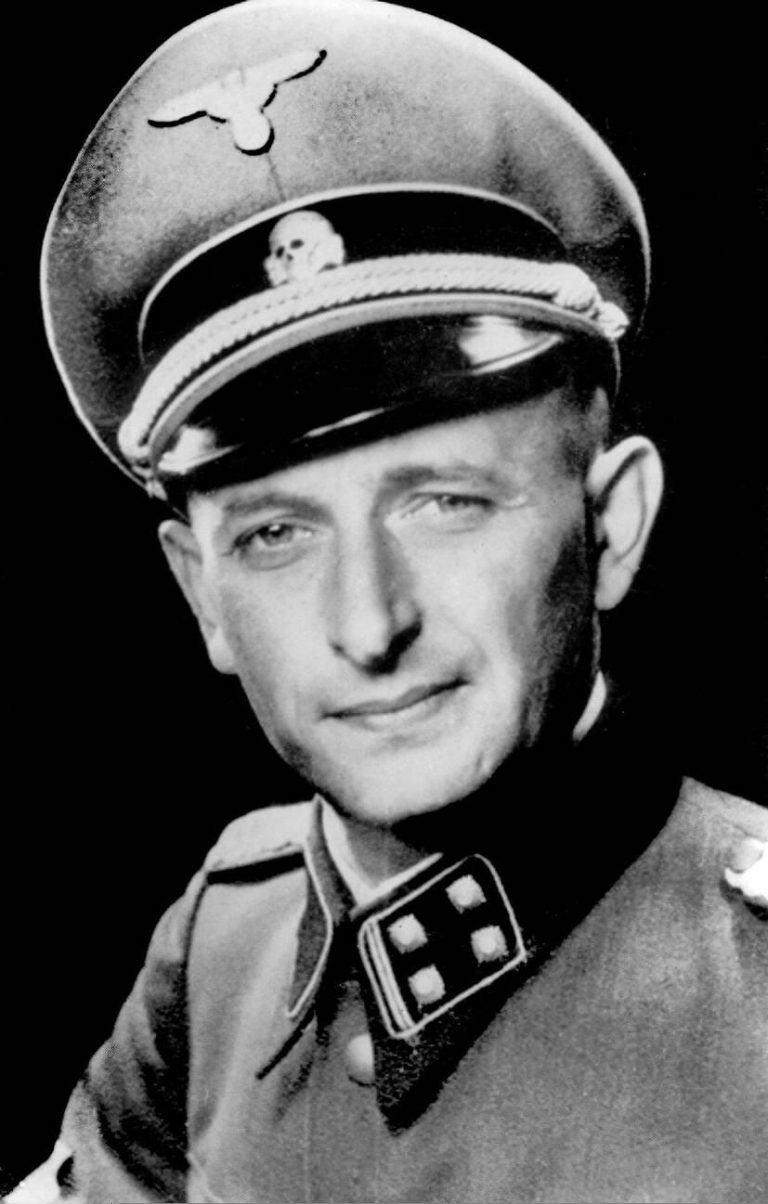
| Born | 19 March 1906, Solingen |
|---|---|
| Died | 31 May–1 June 1962, Israel (executed) |
| Key offices | Central Office for Jewish Emigration, Vienna (1938); head of RSHA section IV B 4 (1941) |
| Documents bearing his name | RSHA correspondence and deportation records; trial records |
| In the collection | No pieces currently available |
Adolf Eichmann managed the logistics of deportation that sent more than 1.5 million Jews to their deaths. His name appears in the files of the Reich Security Main Office and, later, in the records of his trial in Jerusalem. This entry is included because collectors and researchers encounter his name in documents, not because his signature has any place as a trophy.
Who Was Adolf Eichmann?
Eichmann was born in Solingen in 1906. He joined the Austrian Nazi Party and the SS in 1932 and the SD Main Office in 1934. After the annexation of Austria he set up the Central Office for Jewish Emigration in Vienna, opened on 20 August 1938. In March 1941 he became head of RSHA section IV B 4, the Jewish affairs office, from where he coordinated deportations across Europe. He prepared Heydrich’s papers for the Wannsee Conference of 20 January 1942 and in March 1944 went to Budapest to direct the deportation of Hungary’s Jews.
Where Does Eichmann’s Name Appear?
His name and office appear in RSHA correspondence, deportation orders and timetables, and in the files of other agencies that dealt with his office. Much of this material is held by archives and was used as evidence at his trial. Items attributed to him on the market are rare and require exceptional scrutiny.
Trial and Fate
Eichmann escaped from US custody in 1946 and fled to Argentina. In 1960 Israeli agents brought him to Israel to stand trial. He was found guilty on 15 December 1961 and hanged at midnight between 31 May and 1 June 1962.
Collector’s Note
Material connected with Eichmann belongs above all in archives and research collections. If a document with his name comes into a private collection, I believe it should be described with the full context of the crimes it records.
Related Entries and Pieces
Browse the full Collector’s Encyclopaedia →
Frequently Asked Questions
What was Eichmann’s role in the Holocaust?
As head of RSHA section IV B 4 he organised the deportation of Jews from across Europe to killing centres.
When was Eichmann tried?
In Jerusalem in 1961. He was found guilty on 15 December 1961 and executed in 1962.
Are Eichmann signed documents available to collectors?
They are rare, and any item attributed to him needs exceptional scrutiny and provenance.
Historical Responsibility Notice: this entry documents historical figures and artefacts of the National Socialist period for collecting, preservation, education and research. It does not endorse or glorify any ideology, and it is written in memory of the victims of the regime.
References & Further Reading
- United States Holocaust Memorial Museum, Holocaust Encyclopedia, Adolf Eichmann: Key Dates.