Products on sale
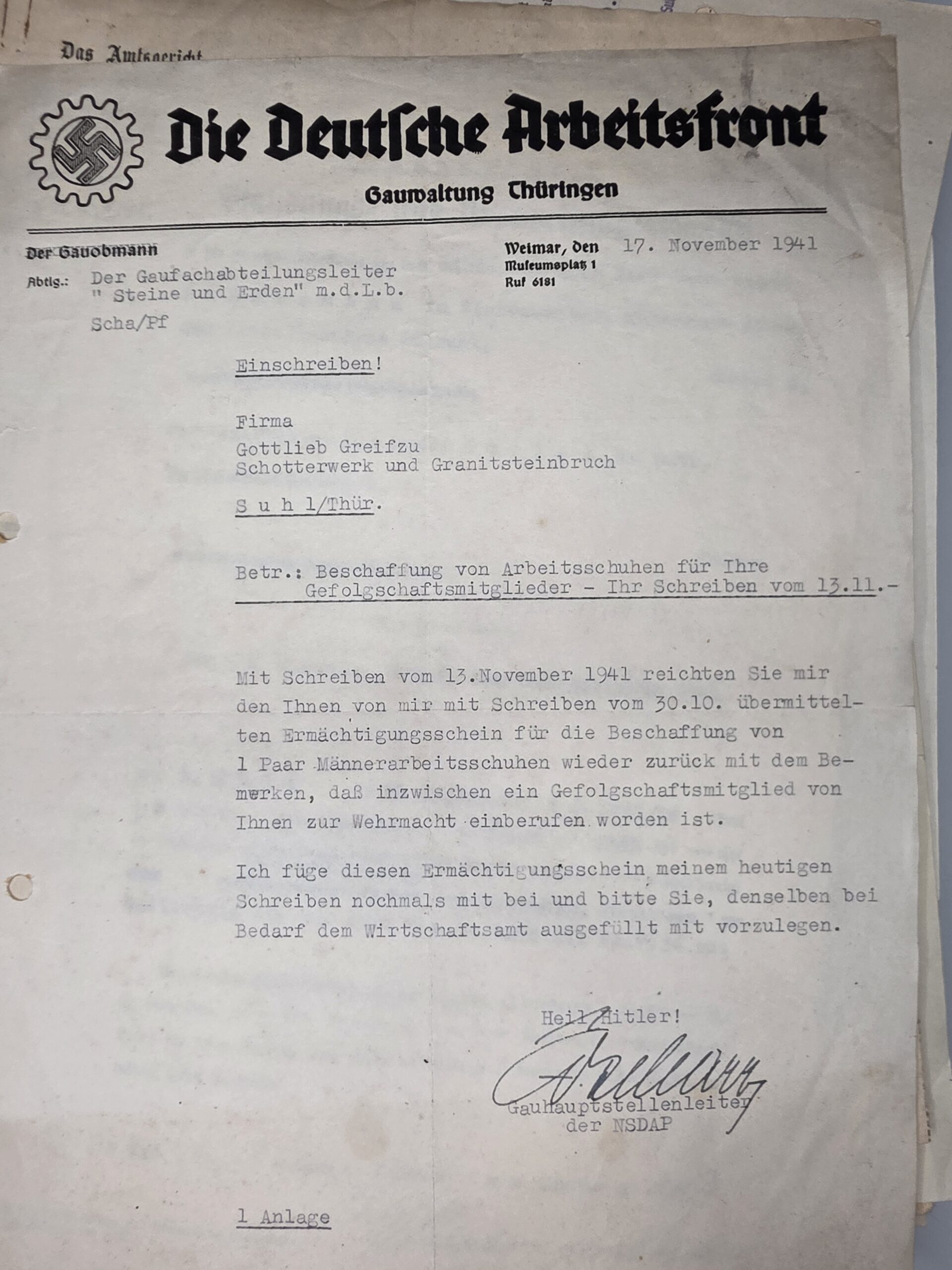
German Document Archive 1911–1967 – DAF, University and Business Papers
Original price was: 249,00 €.199,00 €Current price is: 199,00 €.
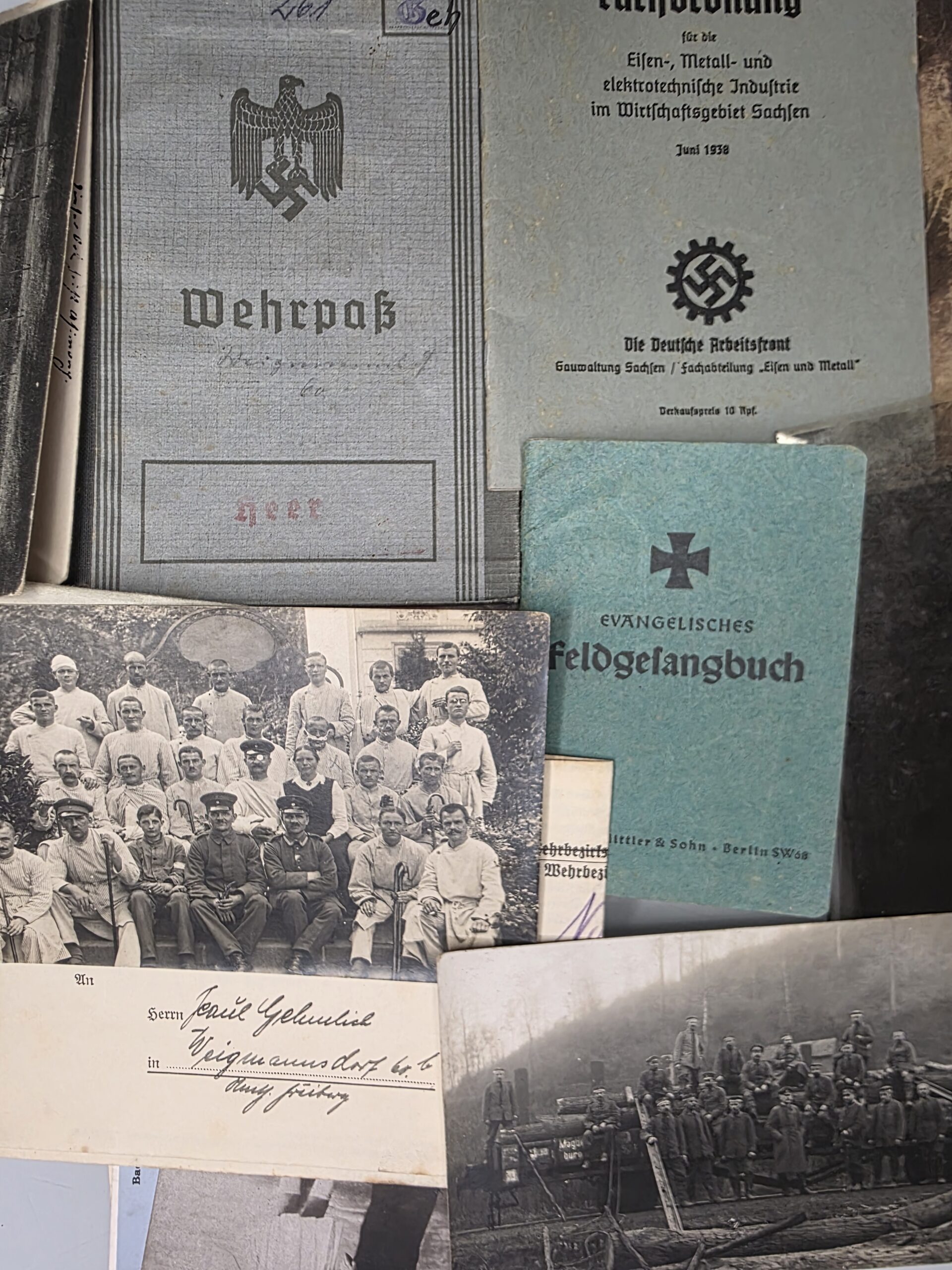
WWII German Wehrpass Group – 256th Infantry Division, Ostmedaille & Death Letter
590,00 €

WWII German Document Collection – U-Boat Training, DAF & Arbeitsbuch Archive
Original price was: 490,00 €.440,00 €Current price is: 440,00 €.
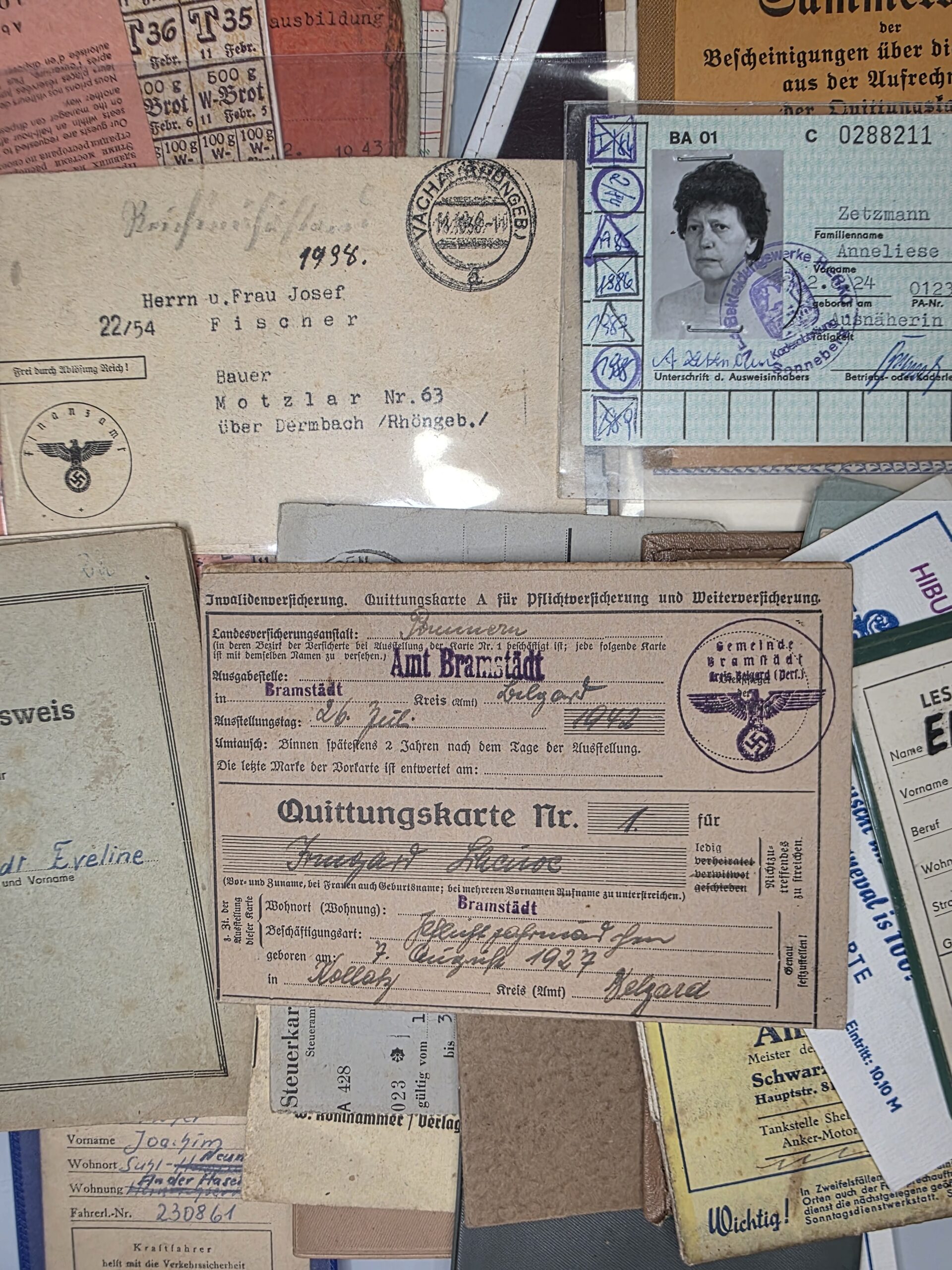
WWII German Document Archive 1938–1945 – Wehrmacht, IDs & Ration Papers
Original price was: 275,00 €.240,00 €Current price is: 240,00 €.





WWII German Wehrpass Archive – Feldpost & WWI Militärpass
Original price was: 380,00 €.340,00 €Current price is: 340,00 €.
11% Off
Interested in this item? Please contact us directly by email, WhatsApp or through the enquiry form below for availability or other information. Kindly include the item SKU/reference number in your message so we can identify the piece.
Description
WWII German Wehrpass Archive with Feldpost and WWI Militärpass
This WWII German Wehrpass archive is an extensive original German military document group preserving the history of military service across both the First and Second World Wars, together with a substantial collection of wartime Feldpost correspondence.
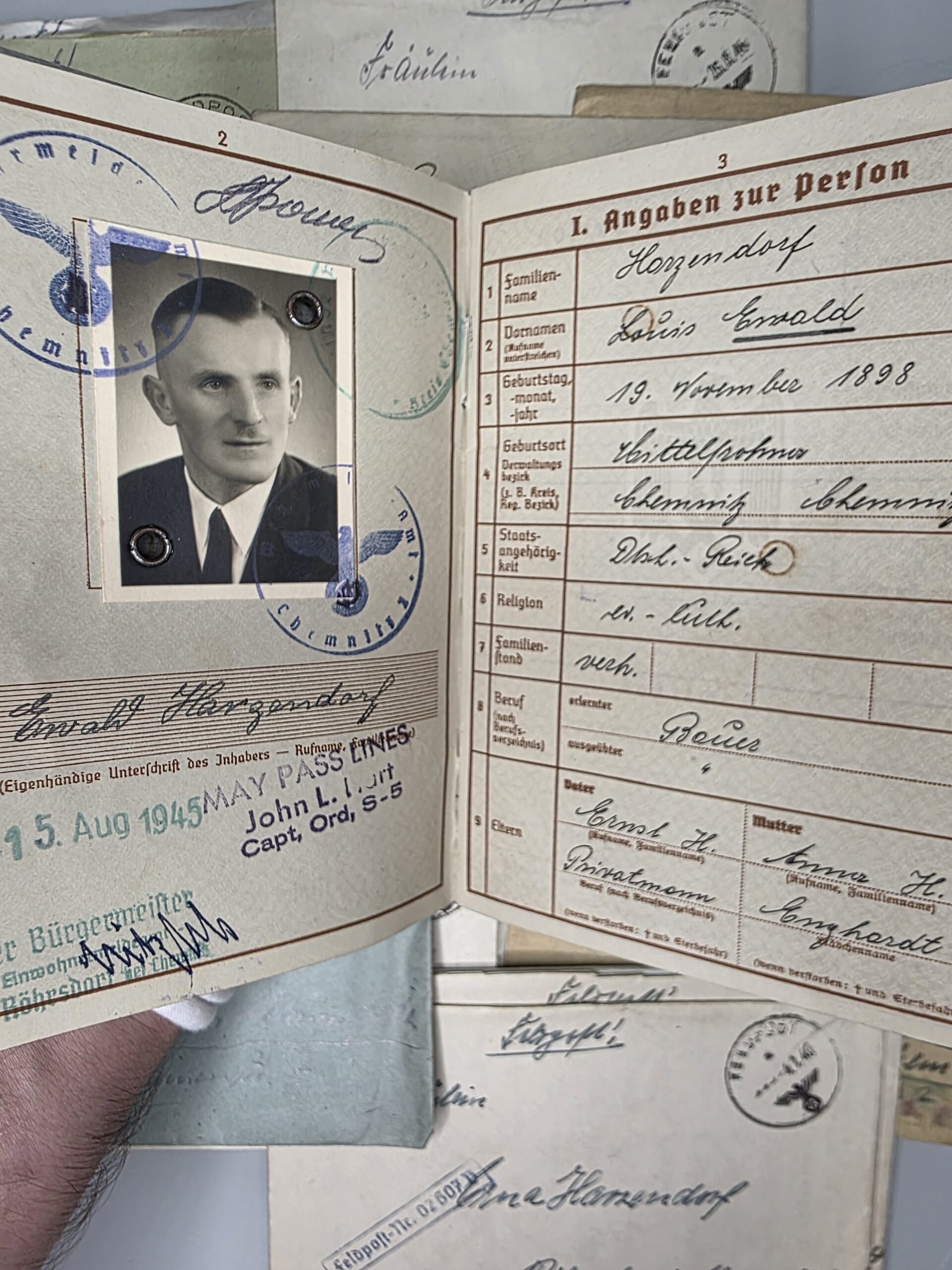
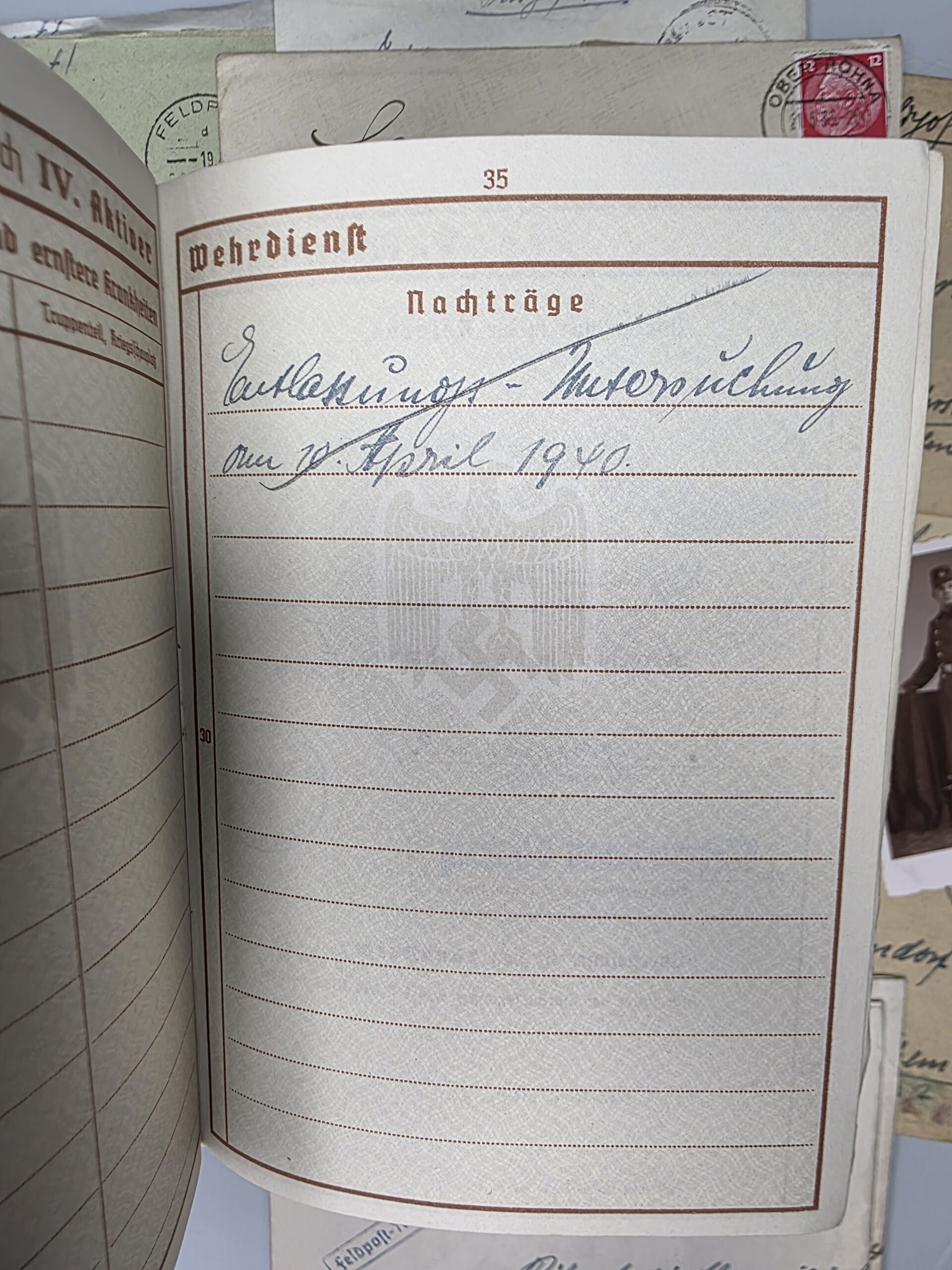
The central item is an original Heer Wehrpass with portrait photograph, containing numerous handwritten entries, official stamps and service records relating to active military service between 1939 and 1940.
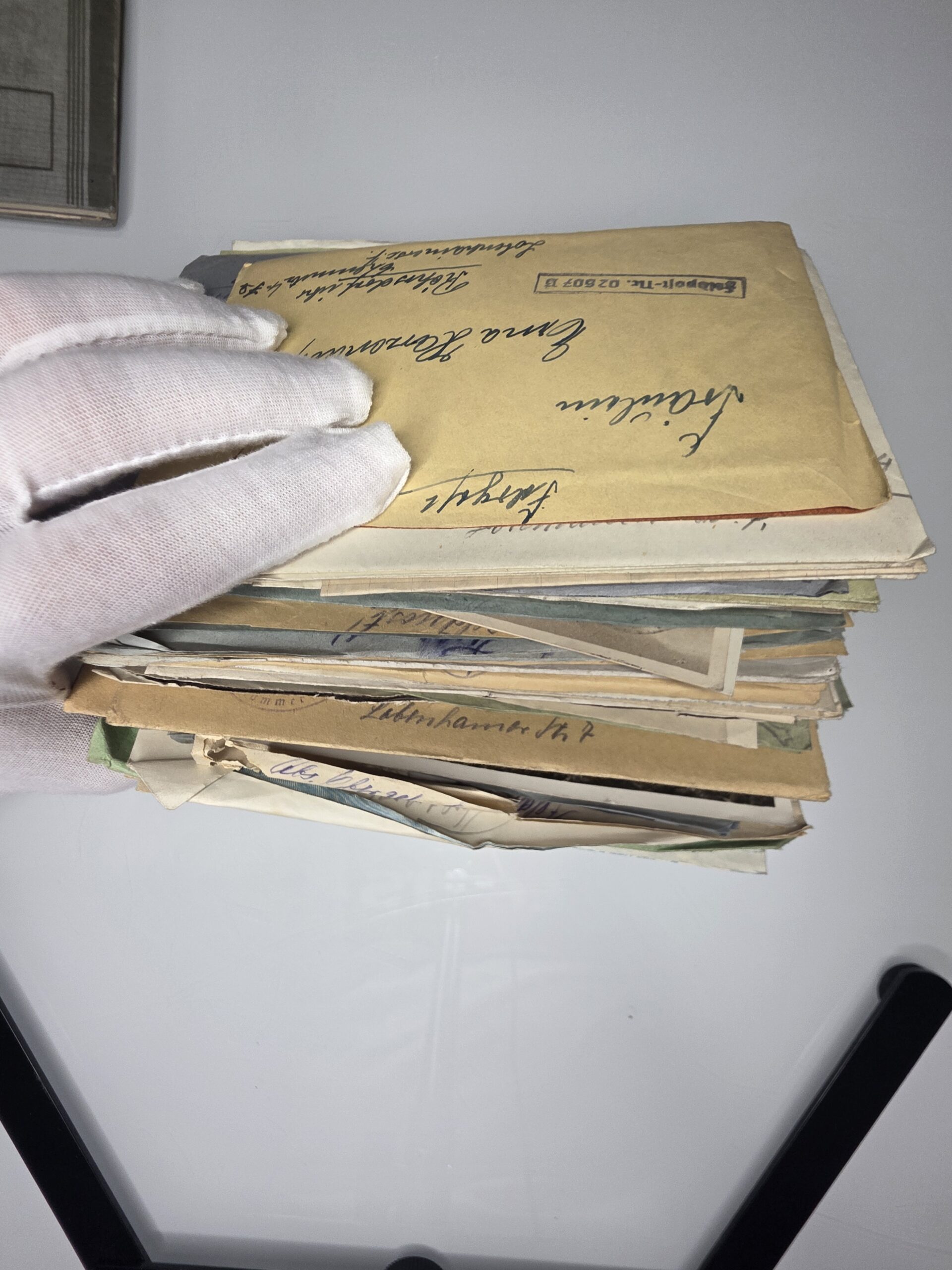
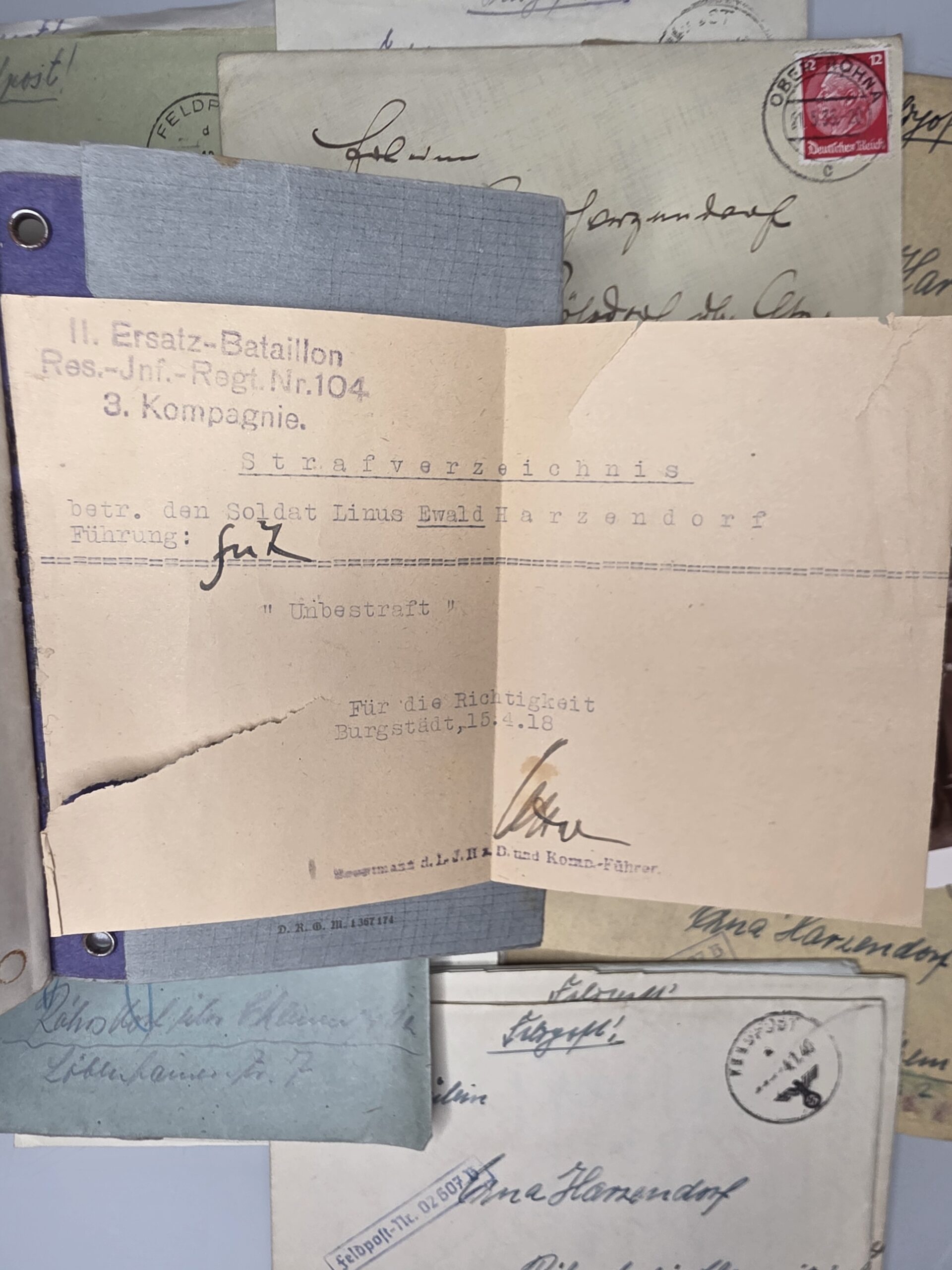
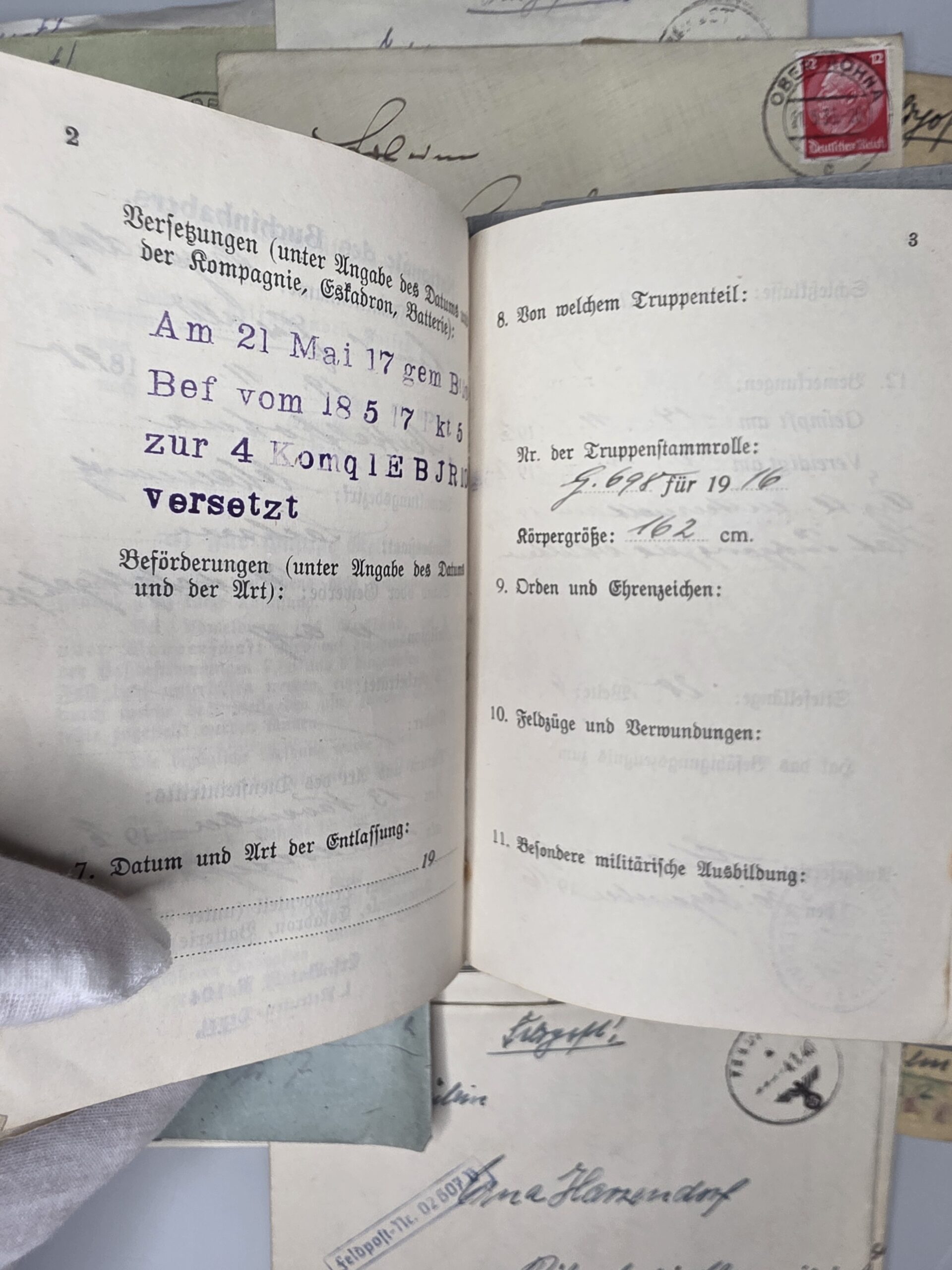
Accompanying it is an earlier First World War Militärpass with combat-related entries from 1917 and 1918, as well as a large, uncounted group of Feldpost letters, envelopes and cards dating mainly from 1940 to 1943.
Rather than an isolated military booklet, this is a genuine documentary archive combining military administration, personal correspondence and postal history.
Table of Contents
For Rank Math, insert an actual Table of Contents block here in WordPress linking to:
- WWII Heer Wehrpass
- Military Service 1939–1940
- Poland and Replacement Units
- WWI Militärpass
- WWII Feldpost Correspondence
- 1945 Occupation Markings
- Condition
- Collector Interest
The Heer Wehrpass
The principal document in this WWII German Wehrpass archive is a Heer Wehrpass containing an original identification photograph and personal information for a Landwehr soldier.
The booklet preserves handwritten entries and official markings on numerous pages, including pages 1–3, 5, 7, 11, 12, 24–26, 32, 35–37, 41, 46, 47 and 51 according to the original catalogue description.
The personal photograph remains fixed inside the booklet and is accompanied by official stamps and signatures.
This is particularly important for collectors because Wehrpass examples with extensive internal entries generally offer considerably more research potential than blank or minimally completed examples.
The German Bundesarchiv retains millions of surviving Wehrpässe, Soldbücher, health books and related military personnel records, demonstrating the importance of these documents for researching individual German military service before 1945.
Active Military Service 1939–1940
The WWII German Wehrpass archive documents active military service during the opening phase of the Second World War.
The recorded formations include Bäckerei-Kompanie 209, Fahr-Ersatz-Schwadron 209 and Fahr-Ersatz-Abteilung 24, with entries connected with service in the rear operational area and occupation duty in Poland.
The surviving unit information is particularly interesting because Fahr-Ersatz-Abteilung 24 was established on 1 April 1940 at Leitmeritz, and its formation incorporated elements including Squadron 209.
This relationship provides useful external context for the unit numbers appearing within the Wehrpass itself.
The booklet also records the soldier as healthy and fit for discharge following an operation in 1940, adding a medical and demobilisation element to the service record.
Poland and Rear-Area Service
One of the most historically relevant aspects of the Wehrpass is its connection with deployment in the rear operational area and occupation forces in Poland.
These entries place the document firmly within the early-war period of 1939–1940 and make it more interesting than a Wehrpass recording only training or administrative reserve status.
The value of this WWII German Wehrpass archive therefore lies not in a single decorative page but in the sequence of military entries preserved throughout the booklet.
For further research, the individual’s details and units could potentially be compared with surviving German military personnel records held by the Bundesarchiv.
Original WWI Militärpass
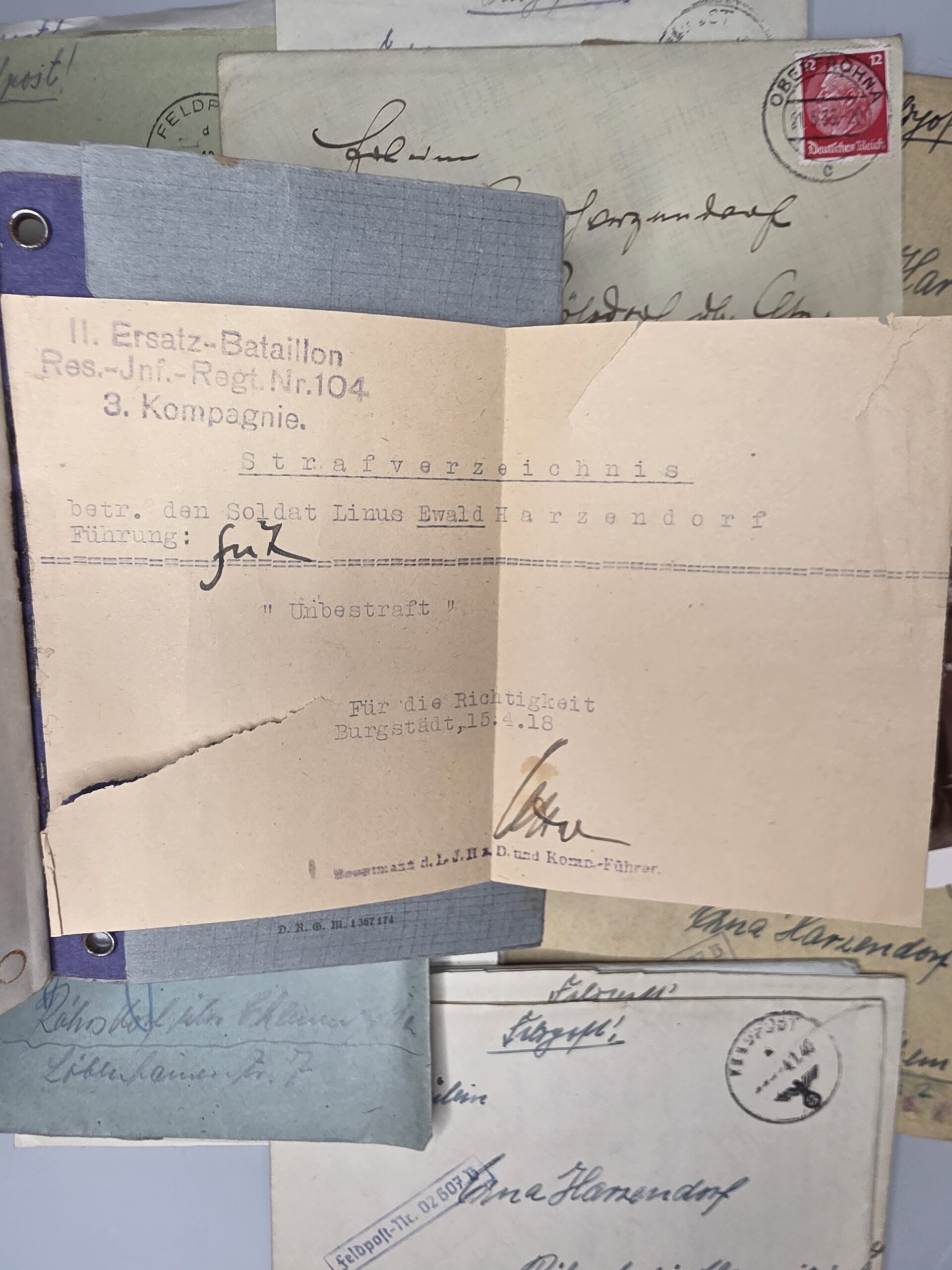
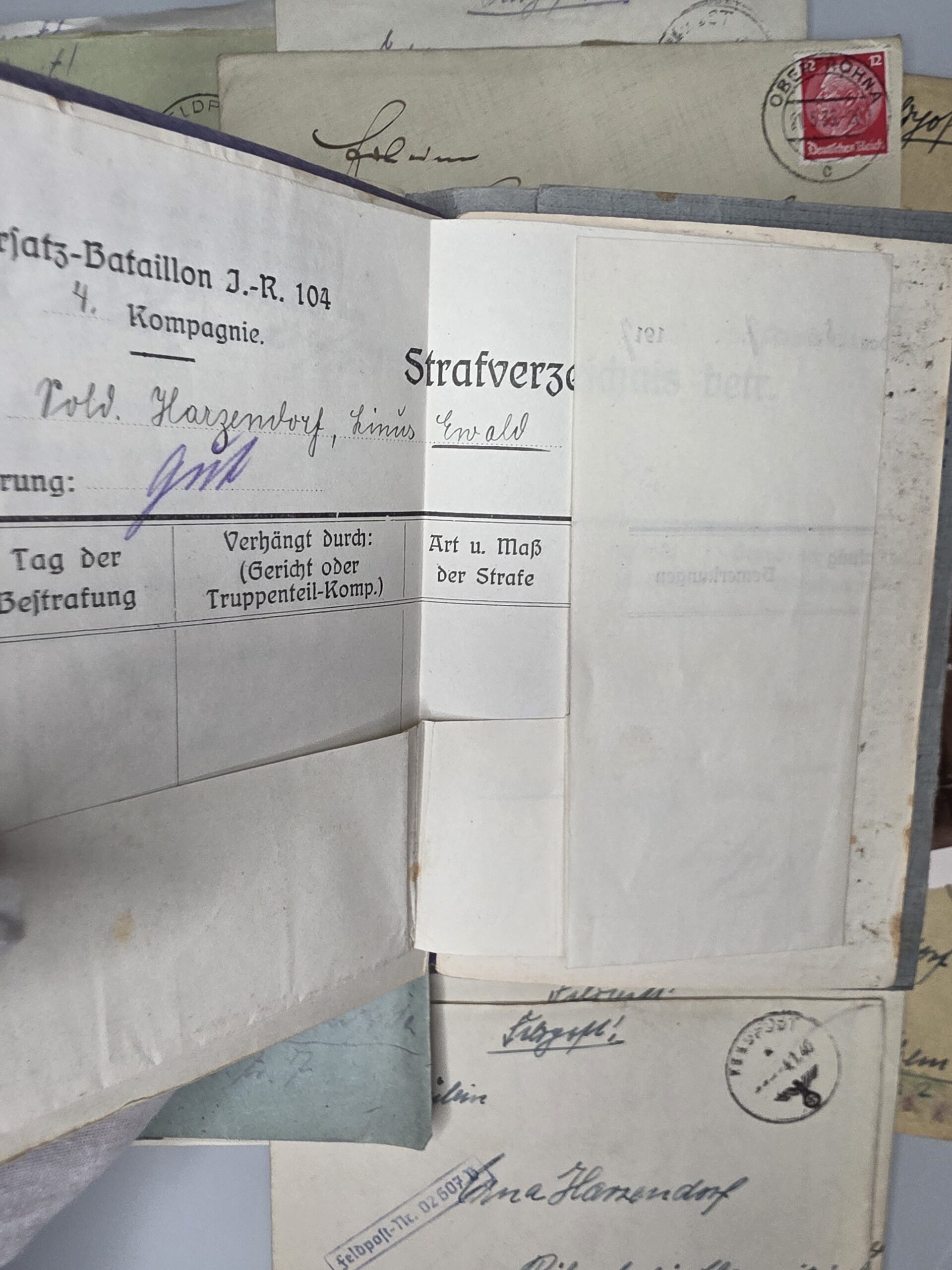
The collection becomes considerably more unusual through the inclusion of a Militärpass from the First World War.
This earlier booklet relates to the 1. Ersatz-Bataillon Infanterie-Regiment 104, 4. Kompanie.
Importantly, it contains entries connected with actual First World War operations.
The surviving records mention fighting at Narajowka and Zlota-Lipa in 1917, followed by operations in 1918 on the Ancre and between the Somme and Avre.
This gives the archive a chronological depth that a normal WWII Wehrpass group does not have.
Instead of documenting only the 1939–1945 conflict, the group preserves German military documentation relating to both World Wars.
WWII Feldpost Correspondence 1940–1943
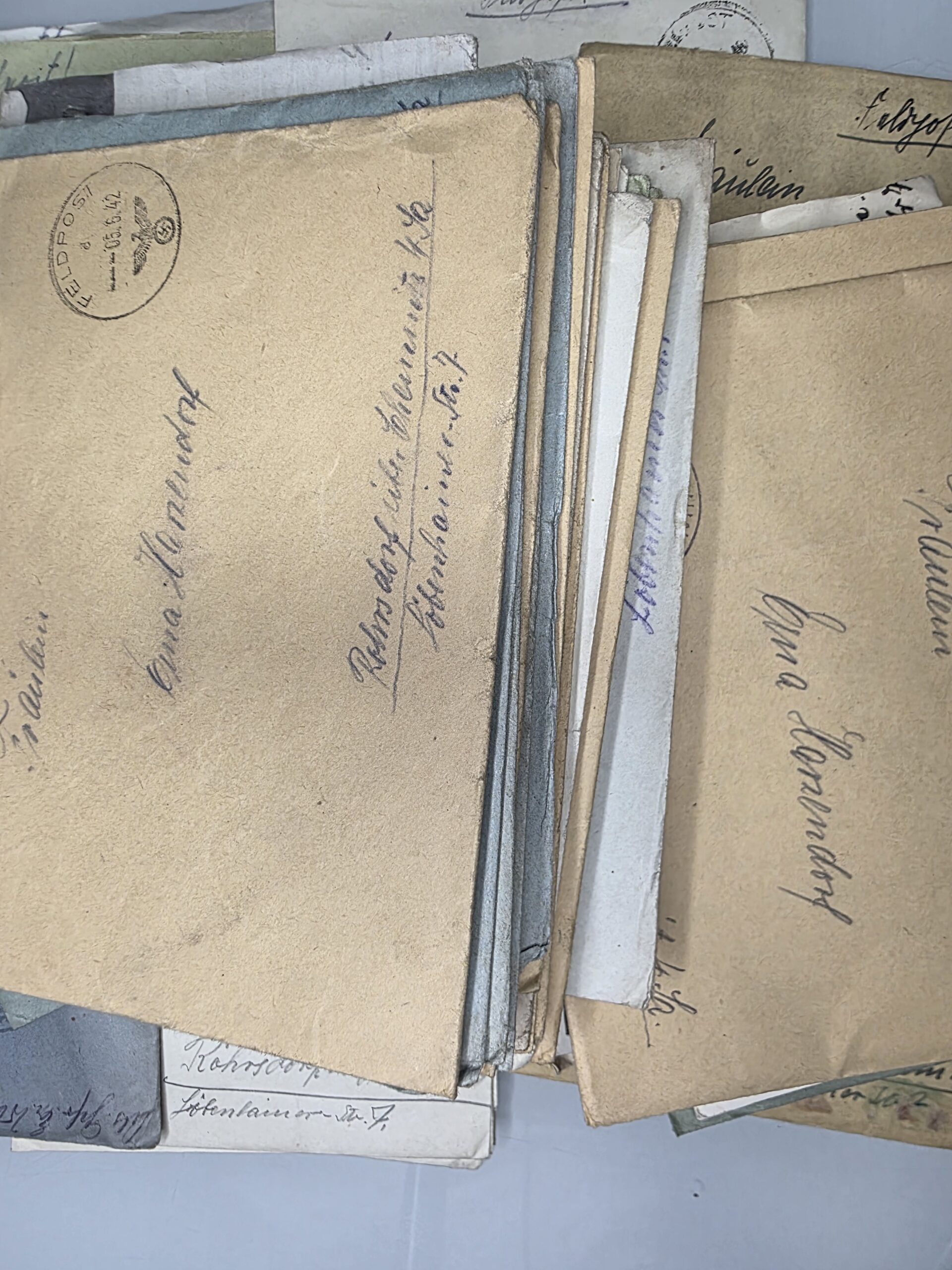
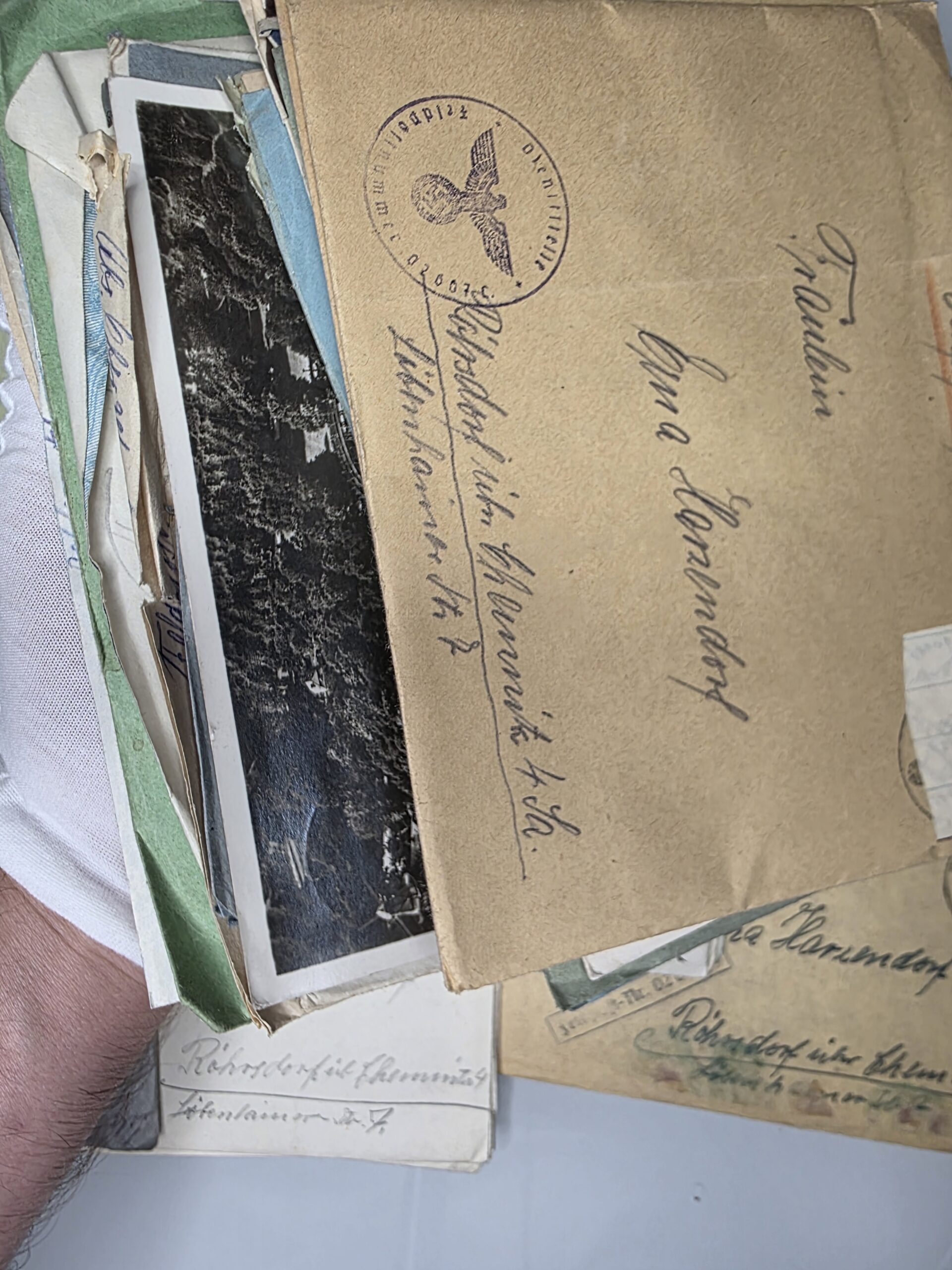
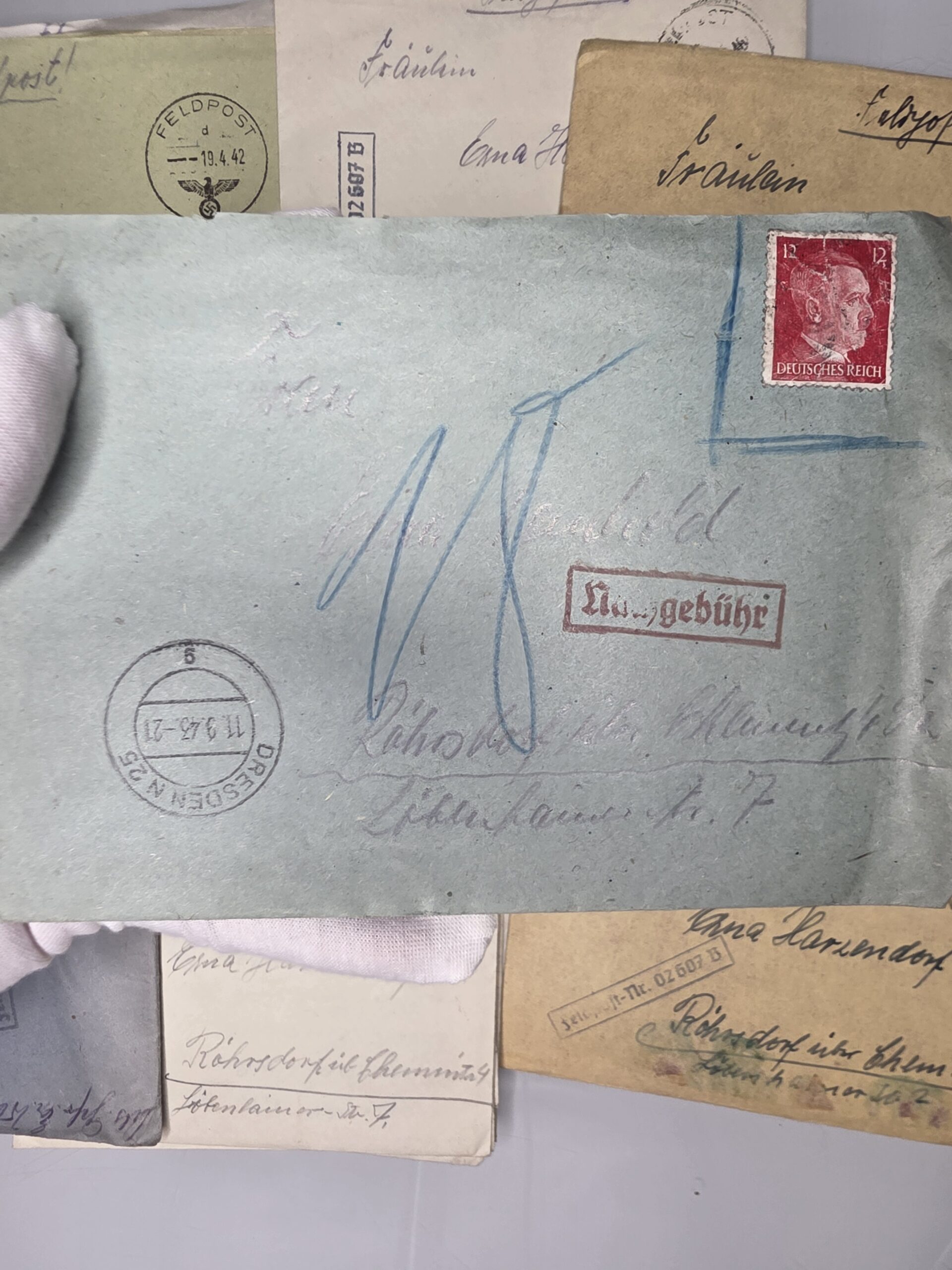
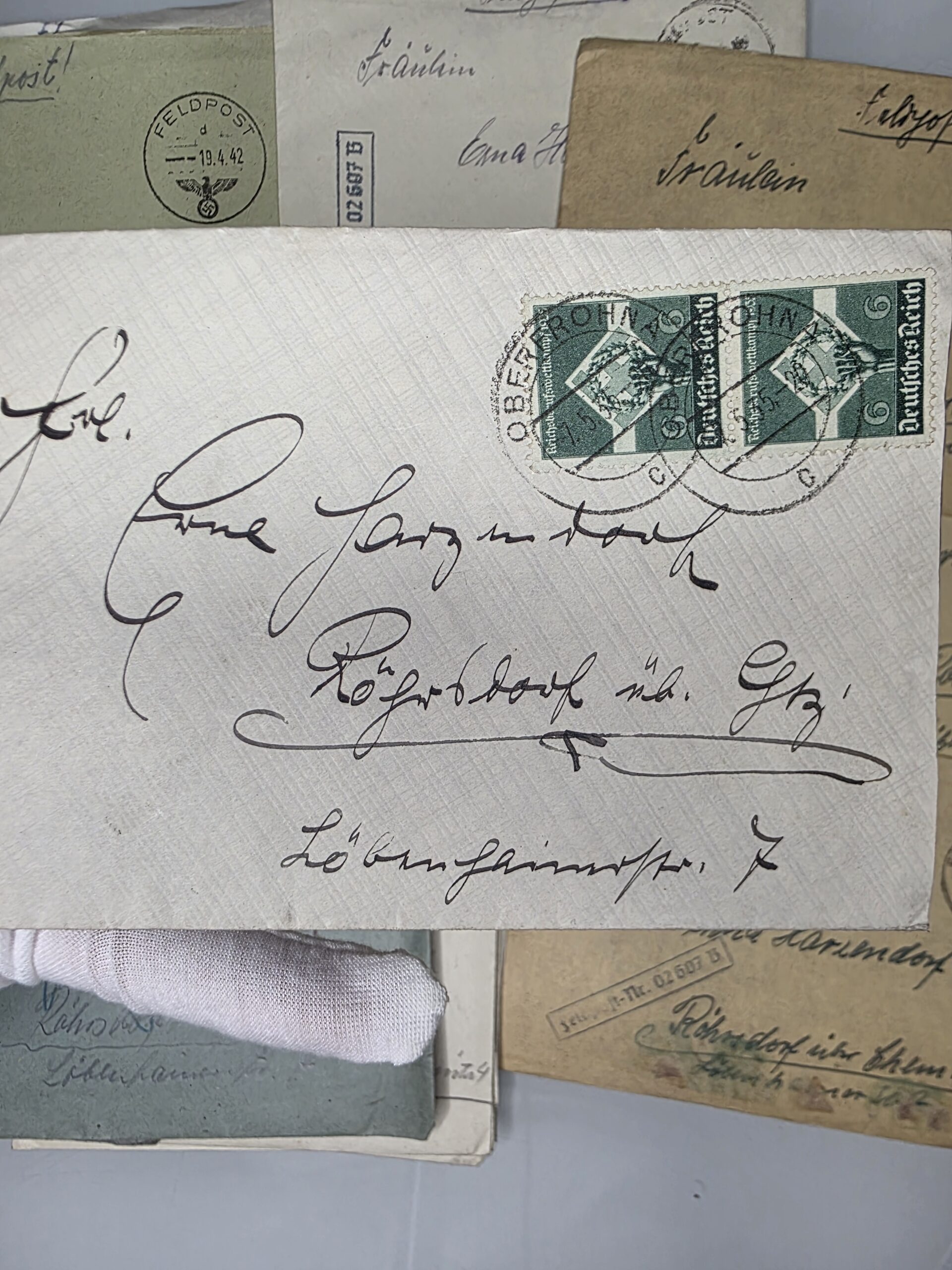
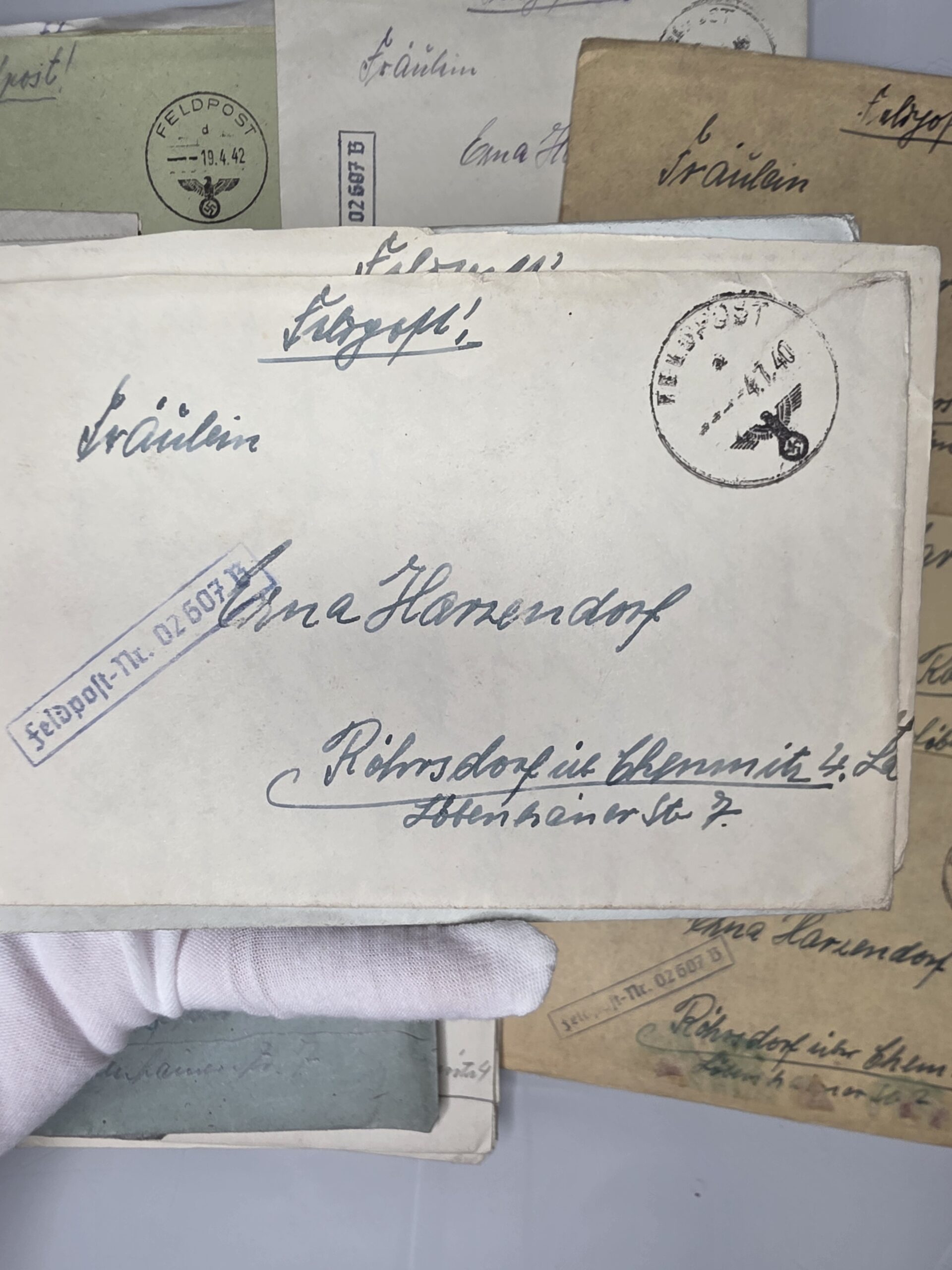
A major component of the WWII German Wehrpass archive is the substantial uncounted collection of original Feldpost.
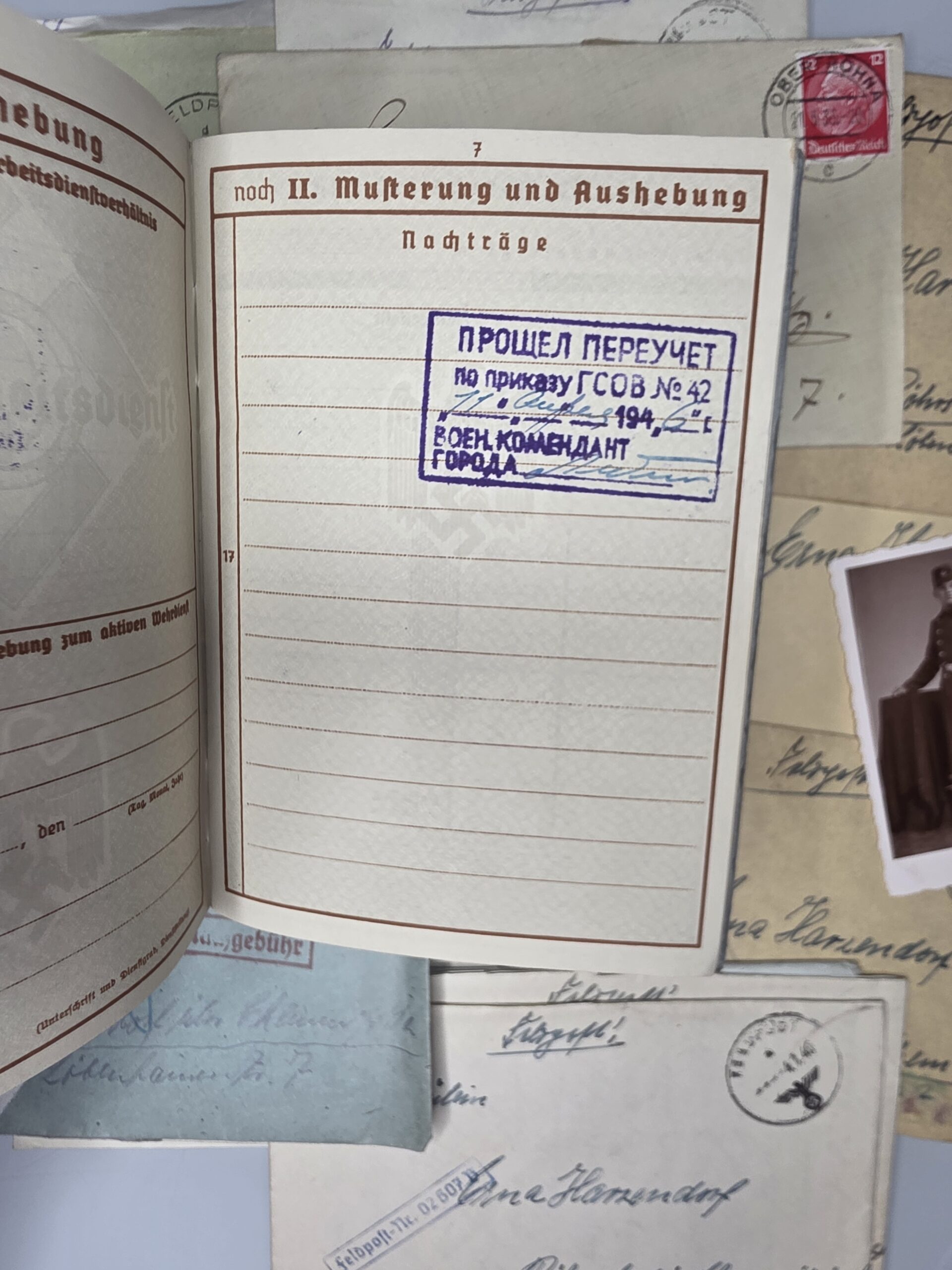
The photographs show a considerable stack of envelopes, letters and cards rather than only one or two postal items.
The correspondence dates primarily from approximately 1940 to 1943 and includes mail sent to a female recipient in Chemnitz, together with correspondence sent back to the soldier.
The envelopes retain a variety of period stamps, postal cancellations, Feldpost markings and handwritten addresses.
Some bear ordinary Deutsches Reich postage, while others carry military postal markings.
This correspondence is especially valuable when preserved together because it provides a personal dimension absent from administrative military records.
The Museumsstiftung Post und Telekommunikation describes Feldpost as the principal means of communication between the front and home during the Second World War; approximately 40 billion items were transported by the German Feldpost system during the conflict.
Historical institutions continue to preserve complete Feldpost groups precisely because their correspondence can document the everyday experience and communication of soldiers and their families.
1945 Occupation-Era Markings
Another particularly interesting feature visible in the photographs is the presence of post-war occupation-era markings inside the Wehrpass.
One page contains an English-language stamp including “MAY PASS LINES” dated 15 August 1945.
Another page contains a large Cyrillic military-command stamp, apparently connected with post-war administrative control.
I would deliberately describe these as Allied / occupation-era markings rather than attributing them to a specific authority without further research.
For the collector, however, their presence is significant because they show that the document continued to function or be presented administratively after Germany’s surrender.
This creates a documentary sequence extending from pre-war military administration through active WWII service and into the immediate post-war occupation period.
Why This Archive Is More Interesting Than a Standard Wehrpass
A normal Heer Wehrpass may contain only personal details and a handful of service entries.
This WWII German Wehrpass archive combines substantially more material:
- photograph Wehrpass with extensive entries;
- identifiable military formations;
- documented service during 1939–1940;
- occupation/rear-area service connected with Poland;
- WWI Militärpass with combat entries;
- a large WWII Feldpost family correspondence;
- period postal stamps and Feldpost markings;
- 1945 Allied/occupation-era administrative stamps.
Most importantly, the material has been preserved as a documentary group, rather than assembled as unrelated loose items.
That continuity is what I would emphasize when marketing DOC169.
Condition
All items show natural evidence of wartime and historical use.
The military booklets display handling wear, staining, ageing, handwritten entries, stamps and normal edge wear.
Some correspondence shows creasing, tears and paper deterioration consistent with letters and envelopes that were actually mailed and retained.
One WWI military document visible in the photographs has an old tear.
The postal material varies naturally in condition.
These features should not be concealed, as they form part of the historical character of the archive.
The photographs form an essential part of the condition description and should be examined carefully.
Collector Interest
This WWII German Wehrpass archive is particularly relevant to collectors of German military paperwork, Heer documents, Wehrpass and Militärpass material, Feldpost, Polish campaign and occupation documentation, WWI and WWII crossover archives, German postal history and named military research groups.
It provides three different forms of primary historical material in one archive: military personnel documentation, operational/service entries and private wartime correspondence.
The group is offered exclusively as an original historical collectible for preservation, research and educational study.
Autographs & Militaria does not endorse or promote the ideology or organisations represented by historical symbols appearing within these original documents.
Additional information
| Availability | Available |
|---|
Only logged in customers who have purchased this product may leave a review.
Related products
German Document Archive 1911–1967 – DAF, University and Business Papers
Original price was: 249,00 €.199,00 €Current price is: 199,00 €.
20% Off
WWII German Wehrpass Group – 256th Infantry Division, Ostmedaille & Death Letter
590,00 €
WWII German Document Collection – U-Boat Training, DAF & Arbeitsbuch Archive
Original price was: 490,00 €.440,00 €Current price is: 440,00 €.
10% Off
WWII German Document Archive 1938–1945 – Wehrmacht, IDs & Ration Papers
Original price was: 275,00 €.240,00 €Current price is: 240,00 €.
13% Off
Reviews
There are no reviews yet.